Found an old ₹2 or ₹5 stamp paper?
An old file can raise two different questions: can this stamp paper still be used, and might it be valuable? The printed denomination answers neither on its own. First establish whether you have unused paper, part of an already executed instrument or an item retained for collecting.
This guide separates denomination, legal use and possible collector value. It does not authenticate an individual stamp, promise a sale price or approve use in every Indian state.
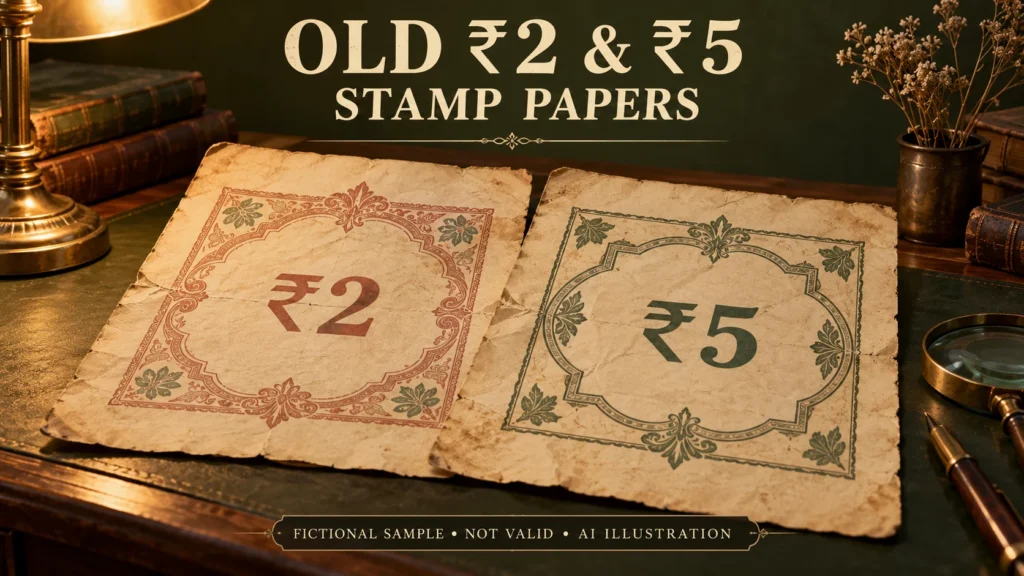
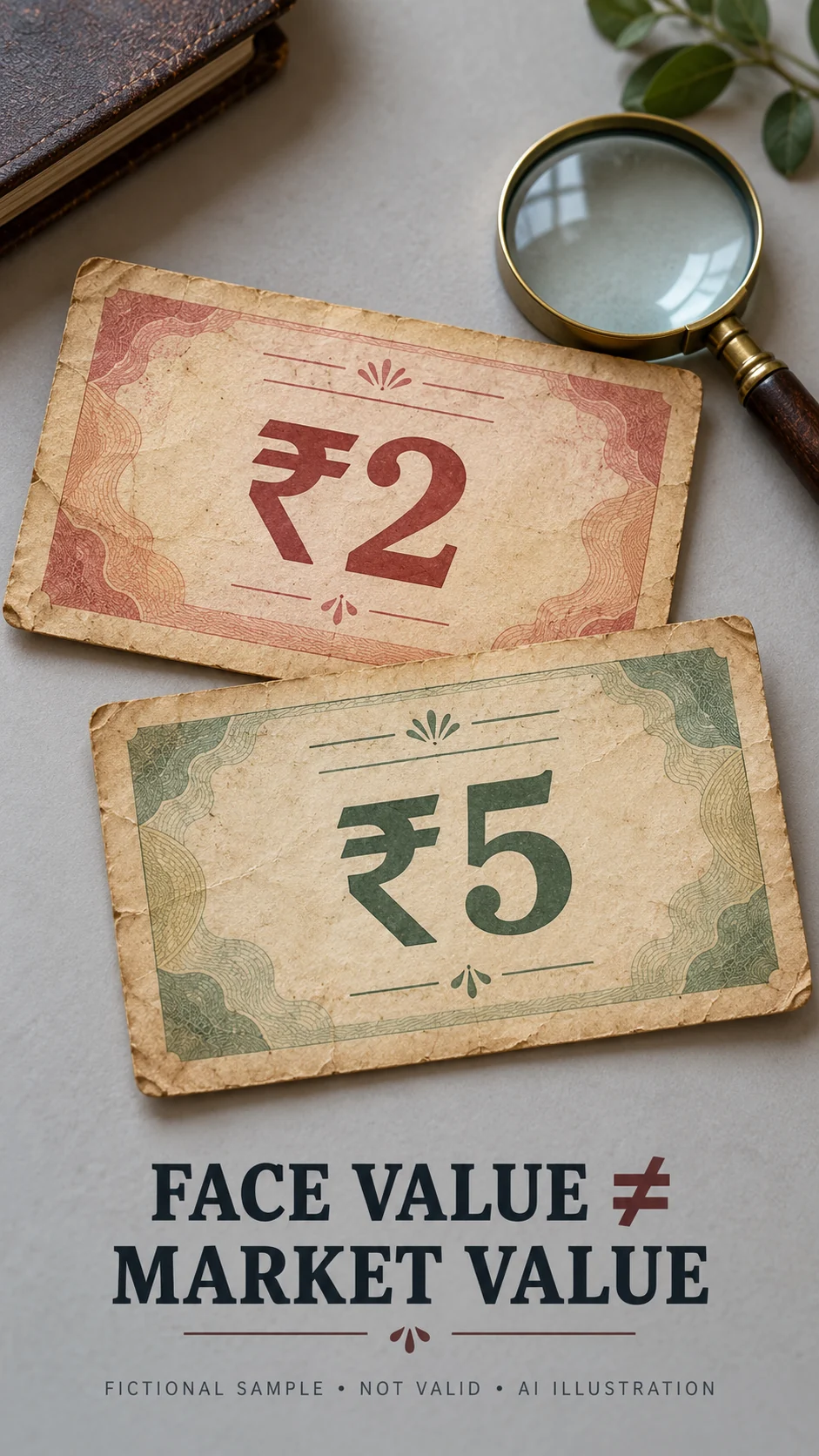
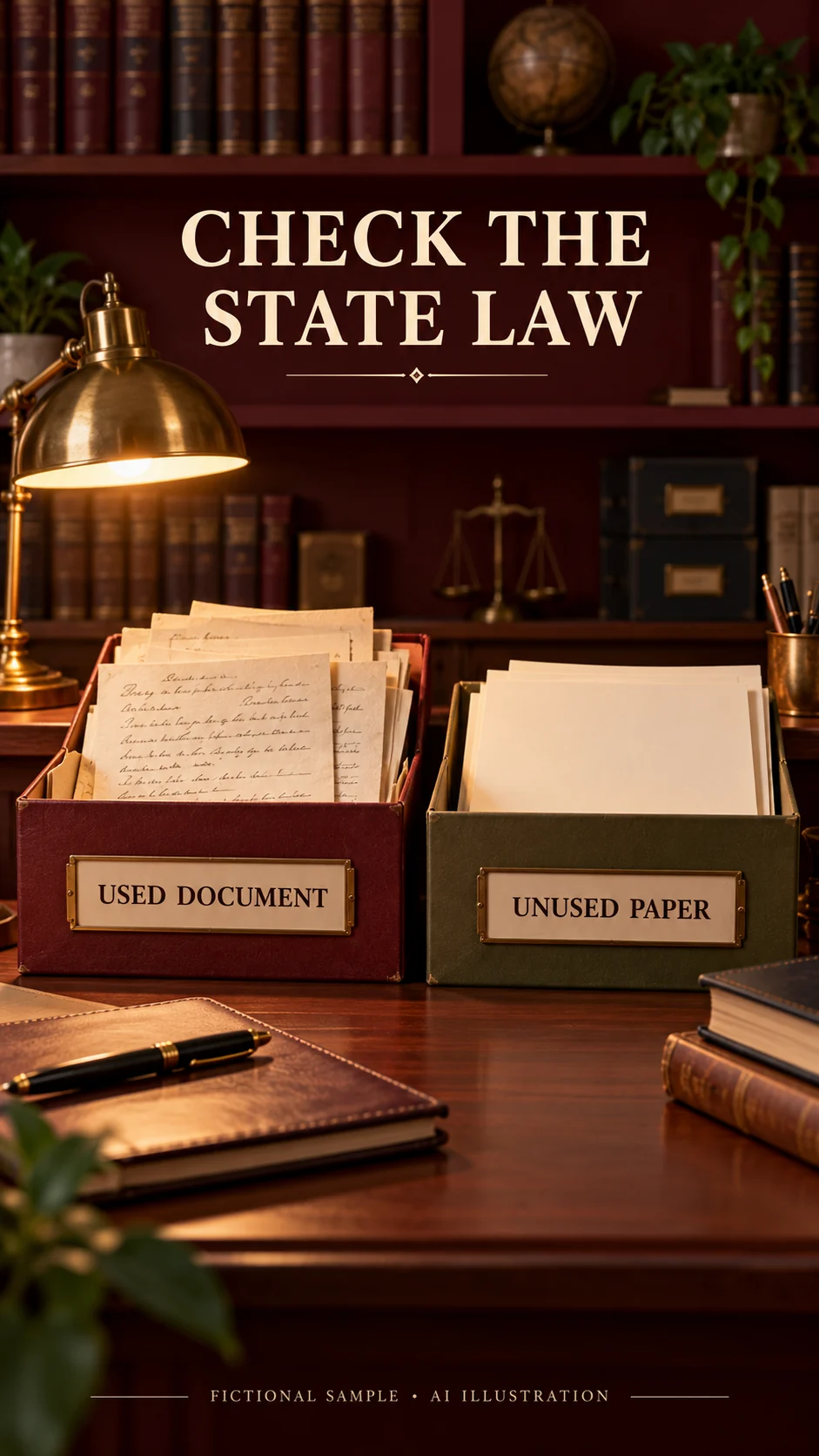
All three pictures are fictional AI illustrations, not replicas of genuine government stamp papers. They are not valid instruments and cannot be used to value or authenticate your paper.
What does the printed denomination tell you?
The ₹2 or ₹5 marking is an initial reference to face value. It does not automatically show the duty due on a particular instrument today, a property’s value or a price someone will pay in the collector market.
Identify the type and issuing jurisdiction. Non-judicial stamp duty and court fees should not be treated as interchangeable. StockHolding lists e-Stamping and e-Court Fee as separate services.
Colour, borders and printing can provide context but do not establish authenticity from a photograph. Record available dates, purchase references and reverse-side details separately.
An executed document and unused paper are different cases
Paper already used for an instrument is different from an unused sheet in a drawer. For the former, read the whole document, parties, actual execution date, terms and related records. For the latter, current eligibility for use and applicable rules are separate questions.
Do not dismiss a historical instrument solely because its paper has a small denomination. Conversely, writing something on stamp paper does not establish its complete validity or prove every claim in it.
Do not add new parties, terms or dates to a used instrument to present it as a fresh document. Preserve the source and seek the applicable process for any defect or dispute.
Expiry and a six-month refund condition are not identical
Section 54 of the Indian Stamp Act, 1899 includes a six-month purchase condition in its allowance provision for unused stamps. That provision alone cannot decide the period of use for every stamp in every state.
Maharashtra has a separate provision, section 52B, concerning invalidation and saving of stamps. A blanket claim that stamp papers never expire anywhere in India is therefore unsafe. Check the applicable state enactment, amendments, purchase date and condition of the paper.
Nor should a condition about unused paper be turned into an automatic expiry rule for an already executed historical instrument. Identify whether the question concerns new use, refund or the effect of an existing document.
Can a modern agreement be made on ₹2 or ₹5 paper?
Possessing a sheet does not make its denomination sufficient for every agreement. The duty depends on the instrument, jurisdiction and relevant facts; transaction or property value may matter for some instruments.
Madhya Pradesh’s official service directory describes stamp-duty and registration-fee calculations based on instrument type. West Bengal’s official FAQ refers to the applicable schedule for different instruments. Use the current requirements for the correct state.
Adequate stamping, registration requirements and authenticity are distinct questions. A 2023 Supreme Court judgment also separates admissibility in evidence from proof of genuineness. Do not assume one missing requirement can be resolved through your own alteration of the document.
Advice: preserve it and ask the right authority
Retain clear images of the whole front and reverse. Note issuer, denomination, available purchase information and whether it has been used. Conceal unnecessary personal details in shared copies and retain the original separately.
Do not assume an old physical sheet can be authenticated by entering a number into an e-Stamp website. Electronic certificates and historical physical papers may have different checking arrangements. Ask the relevant stamp or registration office.
An enquiry can state jurisdiction, known purchase date, used or unused status and the question about checking or use. This organises the information; it is not a prescribed application.
Do not erase entries, remove ink or change dates. Where an existing instrument or a new transaction has legal consequences, obtain appropriate local advice with the complete document.
Five questions about old stamp papers
Is ₹5 sufficient for every agreement? No. Check instrument-specific duty and state law.
Do all stamp papers expire in six months? Do not assume a universal rule; separate allowance provisions and state use conditions.
Do all stamp papers have unlimited validity? That is also an incorrect nationwide generalisation.
Can a used instrument be repurposed? Do not add names or dates to turn it into a fresh document; ask about the proper process.
Will an old ₹2/₹5 sheet sell for a fortune? No price is guaranteed; identification and actual market evidence are needed.
Sources and illustration disclosure
Disclaimer: general document-literacy information, not an opinion on an individual stamp’s authenticity, price, refund eligibility or legal use. Rules depend on jurisdiction and facts. All three images are AI-generated fictional illustrations. Sources checked: 25 October 2026.
- Government of India: Indian Stamp Act, section 54, allowance for unused stamps
- IGR Maharashtra: Maharashtra Stamp Act, section-wise official text, including 52B
- IGR Maharashtra: current stamp-duty schedule
- Supreme Court, 13 December 2023: stamping, admissibility and genuineness, paragraph 49
- Government of MP: stamp-duty and registration-fee services
- West Bengal Registration Department: official FAQ on duty and instruments
- StockHolding: e-Stamping and e-Court Fee are separate services
Related: reading old Urdu and Modi land documents