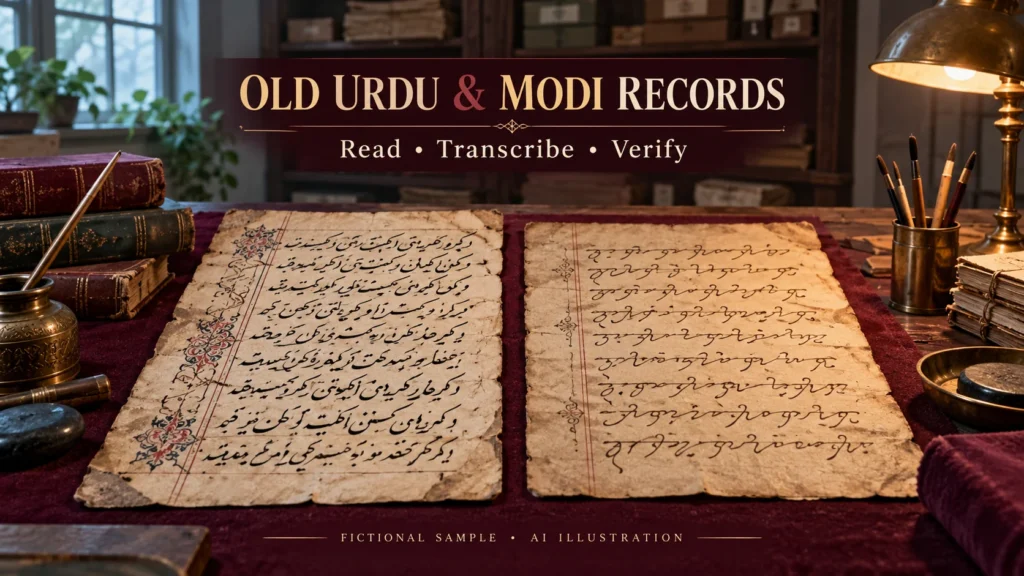
Reading an old page is not the same as deciding land rights
An old family document can contain a familiar-looking name in unfamiliar handwriting. Before drawing conclusions, separate four tasks: identifying the script, reading the words, explaining their meaning and connecting the document with today’s property records.
This guide concerns an initial approach to old documents found in India. It does not translate or authenticate a particular page or decide ownership. Nor does it assume every unfamiliar manuscript must be Urdu or Modi.
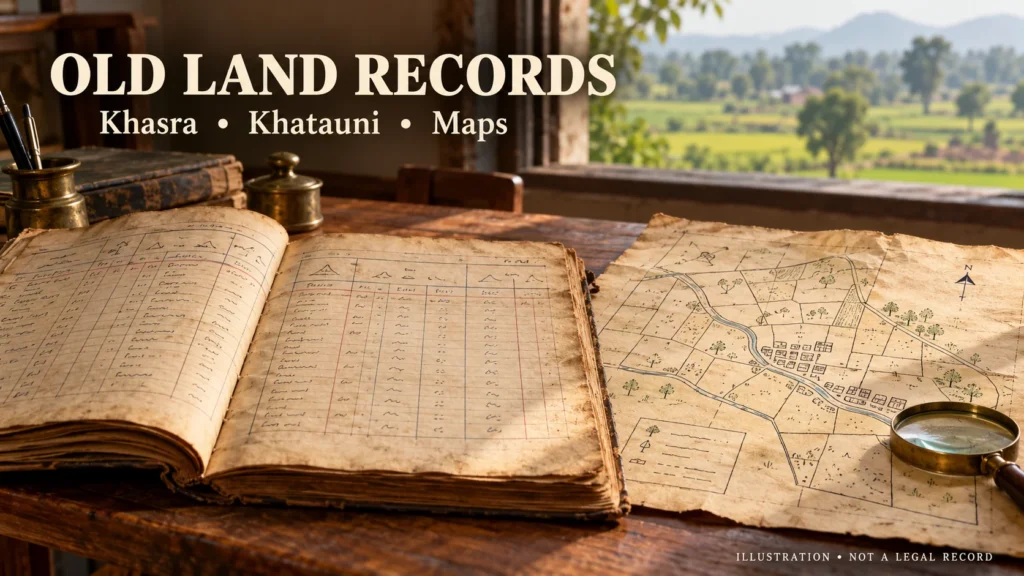
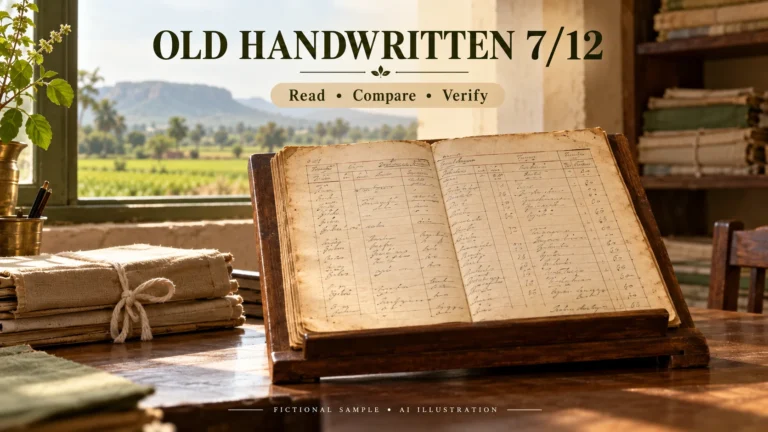
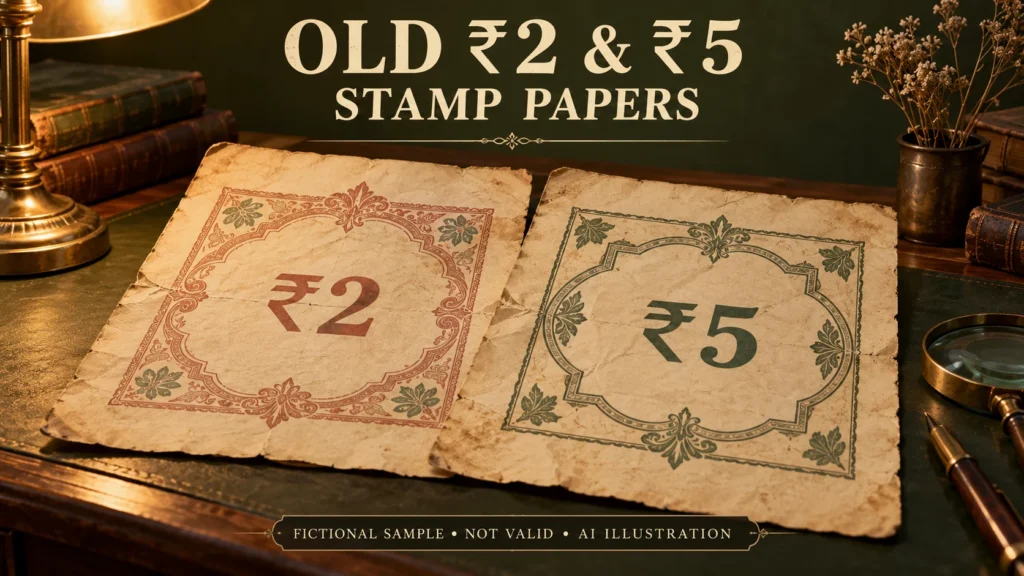
All three images are fictional AI illustrations. They are not verified Urdu or Modi letter samples, authentic land records or legal documents. Do not use their invented markings as a script-learning chart.
Identify the language and script first
Modi is a historical script used for Marathi; it should not be dismissed as badly written modern Devanagari. Old Urdu, Persian and other manuscript contexts can also require specialist identification.
The National Archives of India lists Urdu, Persian, Modi and other languages and scripts among its Oriental Records. That diversity is a reason to avoid labelling an unfamiliar page prematurely, not a promise that your family document is held there.
Record where the page came from, any known locality, related papers and visible date references. Letter shapes alone should not be used to announce an exact period, dynasty or landholder. If identification is unresolved, say so.
Transcription, transliteration and translation do different jobs
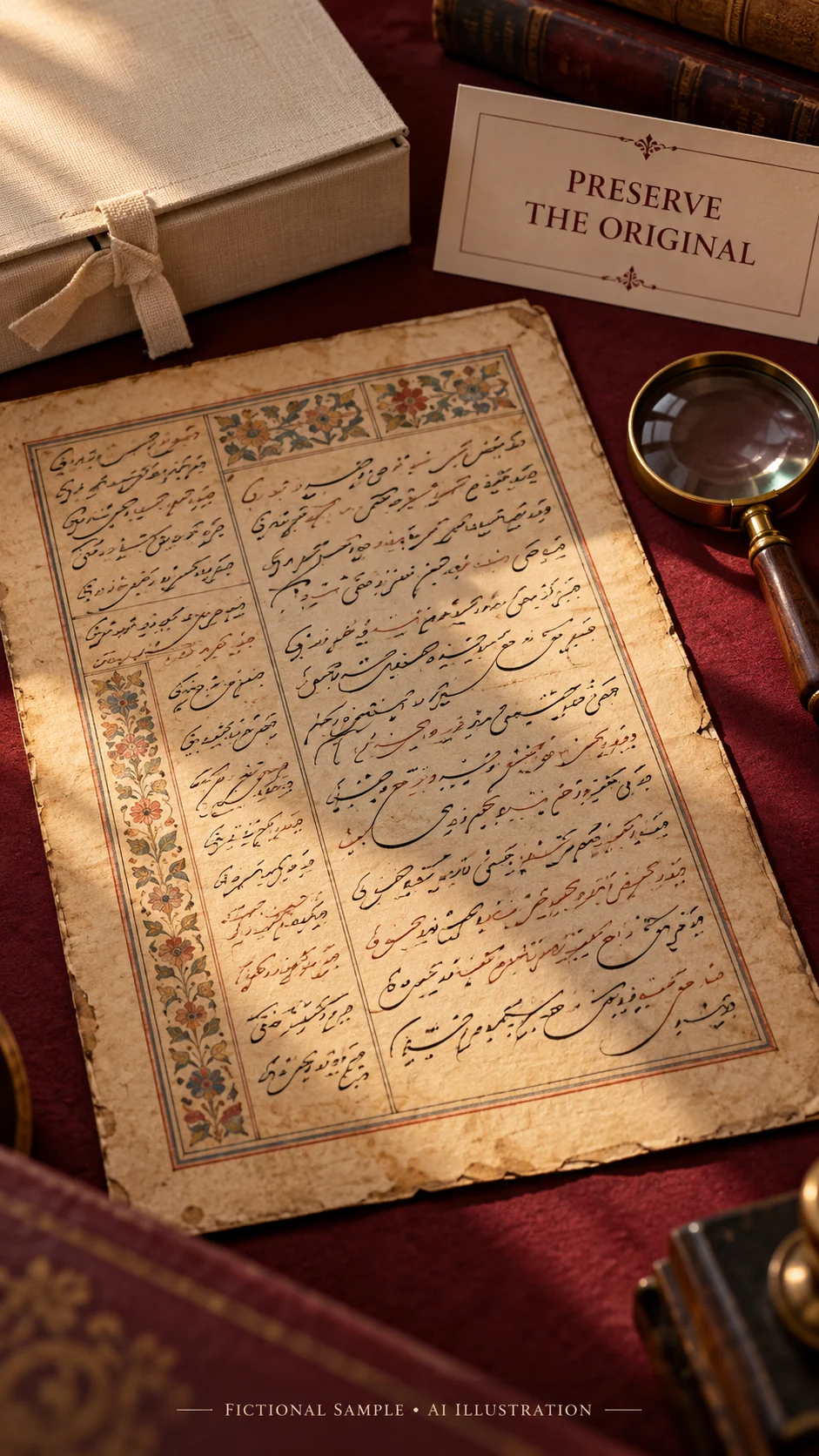
A transcription records the text that can be read. Transliteration represents text in another script; translation explains meaning in another language. Request the outputs separately when you need to distinguish source wording from interpretation.
Do not silently replace a historical spelling with a familiar modern family name. Keep the observed reading, a possible modern identification and the uncertainty distinct. A natural-language explanation is also not a final legal interpretation of historical revenue terminology.
Clarify whether you need line-by-line text, an accessible explanation, a translation or a copy acceptable to a receiving authority. Ask that authority or the relevant professional about its current requirements. An online translation is not automatically accepted for every official purpose.
Cross-check names, numerals, dates and units
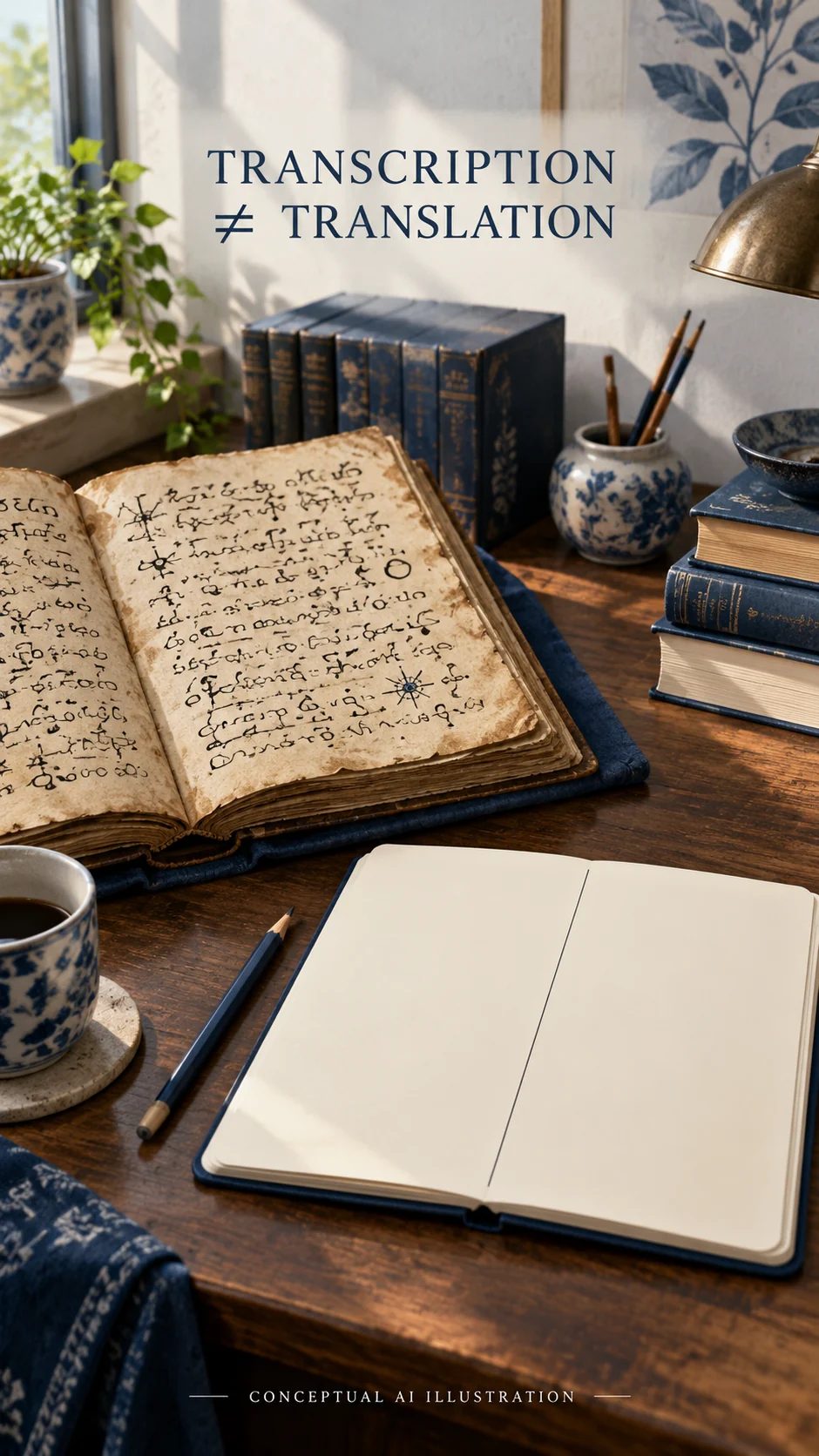
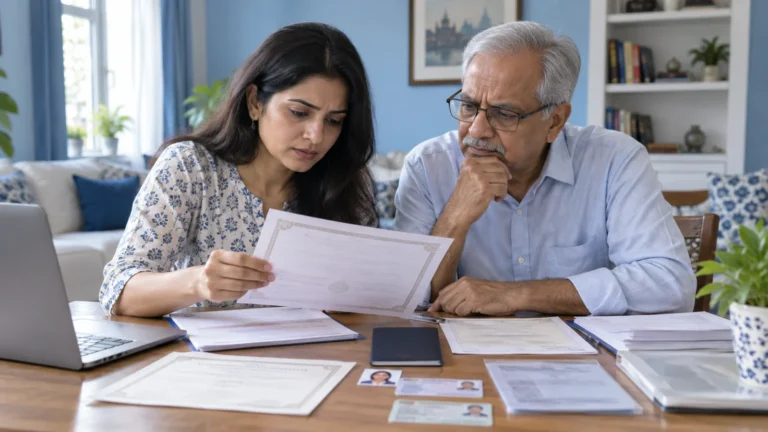
Supply the complete page, reverse and relevant continuation. Headings, places, register references and page numbers may matter. A cropped photograph of one name cannot establish the whole document’s meaning.
Read a name together with relationships and roles. A named person might be a witness or representative rather than a purchaser. Check locality, parent or spouse details and other records before identifying someone as your ancestor.
Retain numerals, fractions, decimal marks and area units as read. Do not convert a historical calendar reference or local measure without establishing the applicable system. Mark uncertain digits rather than replacing them with confident guesses.
Keep separate notes for source text, plain-language meaning and connections established through external records. A later conclusion should not be presented as if it appeared in the manuscript.
Where to seek a better copy or a skilled reading
Start with the source file and the responsible record office. A revenue register and a registered instrument can require different record searches. Establish who holds the relevant material rather than choosing an archive solely from the script.
For historical holdings, National Archives catalogues and Abhilekh Patal can provide available references or digitised material. The archive’s FAQ states that not all records are online. It is not a universal repository for every village’s personal land file.
Choose a reader with experience of the relevant historical language, handwriting and administrative records. Speaking modern Marathi or Urdu alone does not demonstrate that skill. Ask how the reader records uncertainty and separates transcription from explanation.
Advice: preserve the source and disclose uncertain readings
Retain clear, straight images and keep the source file separately. Label enhanced reading copies. Do not add ink, rub the paper or fill missing letters on the original. Seek trained conservation advice for fragile paper.
Ask the reader to preserve page and line references and mark unreadable passages. Do not replace a gap with an invented explanation. Keeping source spelling separate from interpretation helps another reader review the work.
A simple request can ask for language and script identification, readable text and plain meaning as separate outputs, with uncertainty in names, dates and numbers clearly flagged. It describes the assignment; it is not a certification form.
Before submission, confirm the receiving office’s translation and verification requirements. For a dispute, purchase or inheritance decision, obtain local legal review of the relevant document chain.
Five questions about Urdu and Modi manuscripts
Is every unfamiliar manuscript Urdu or Modi? No. Establish its identity first.
Are Modi and Marathi identical terms? Modi is a script; distinguish script from language.
Is transliteration the same as translation? Representing text in another script and explaining its meaning are different tasks.
Can AI conclusively identify a name? Do not treat a suggested reading as a certified record.
Does reading a historical page settle today’s rights? Provenance, later records, law and circumstances must also be considered.
Sources and illustration disclosure
Disclaimer: general archival and language-literacy information, not a certified translation, authenticity opinion or legal advice on title. All three images are AI-generated fictional illustrations. Sources checked: 25 October 2026.
- National Archives of India: Oriental Records, languages and scripts
- National Archives of India: FAQs, access and online availability
- National Archives of India: reprographic services
- Abhilekh Patal: National Archives search portal
- Kausadikar et al., 2025 research: Modi-to-Devanagari transliteration
- Ahmed et al., research: handwritten Urdu character recognition
Related: old Bengali porcha and land-record series
Related: old 2 and 5 rupee stamp papers, value and validity