An old family deed is a starting point, not the whole story
Finding an old property document in a family file can feel like recovering a missing piece of history. A familiar name attracts attention, but other questions follow: which property does it describe, what kind of instrument is it, and what happened afterwards? Answering them requires the full text and its registration context.
This guide explains an initial reading and record-search process. It does not authenticate a particular deed or decide ownership. Requirements depend on the state, office, year and type of instrument. A modern portal screen cannot be assumed to cover every historical record.
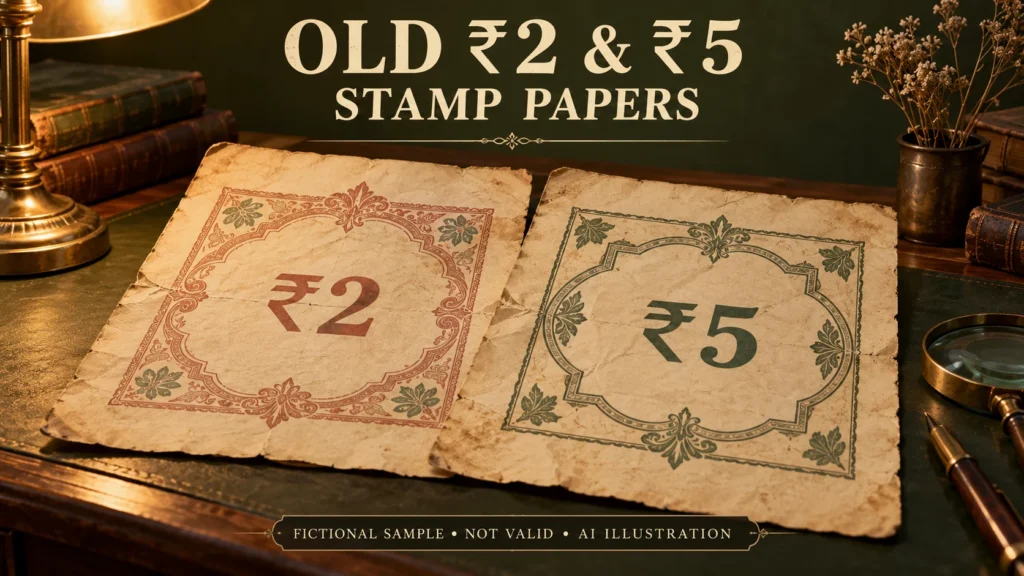
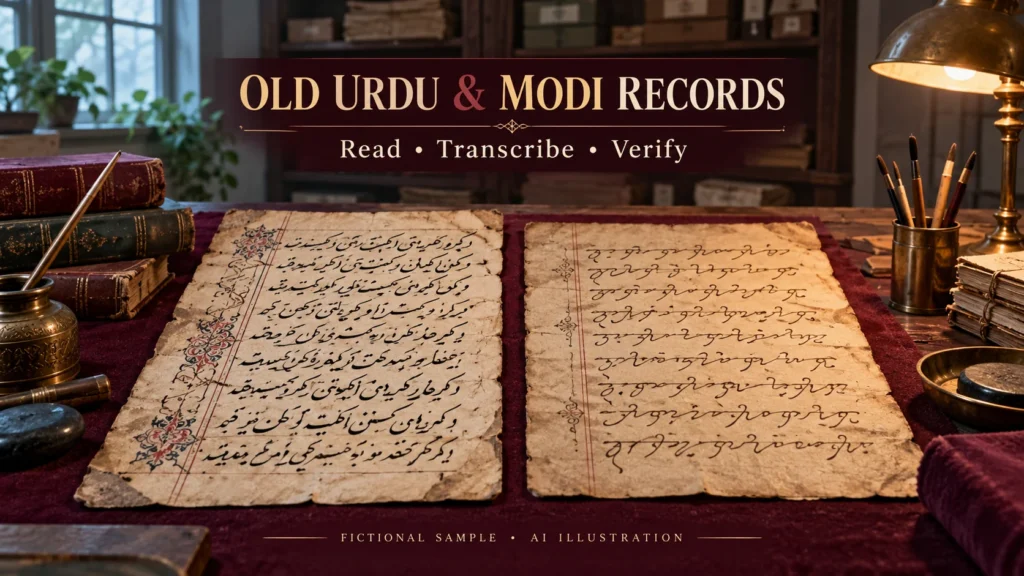
The three pictures are fictional AI illustrations. They are not authentic deeds, stamp papers, signatures, official seals or evidence of a real person’s property. Do not use them as document copies.
A registered deed and a revenue record serve different purposes
First identify the type of document. A sale, gift, mortgage and another registered instrument should not all be read as the same kind of purchase deed. The parties’ roles and the operative terms matter more than the general label “registry”.
A khasra or khatauni is part of a revenue-record system. Reading its entry and reading the terms of a registered instrument are different tasks. Mutation information can help with a comparison; it does not replace the full deed text.
Keep a family-held copy, an informational online scan and an officially issued certified copy in separate categories. Neither yellow paper nor a modern printing date, by itself, establishes authenticity or usefulness.
Record these details before interpreting the instrument
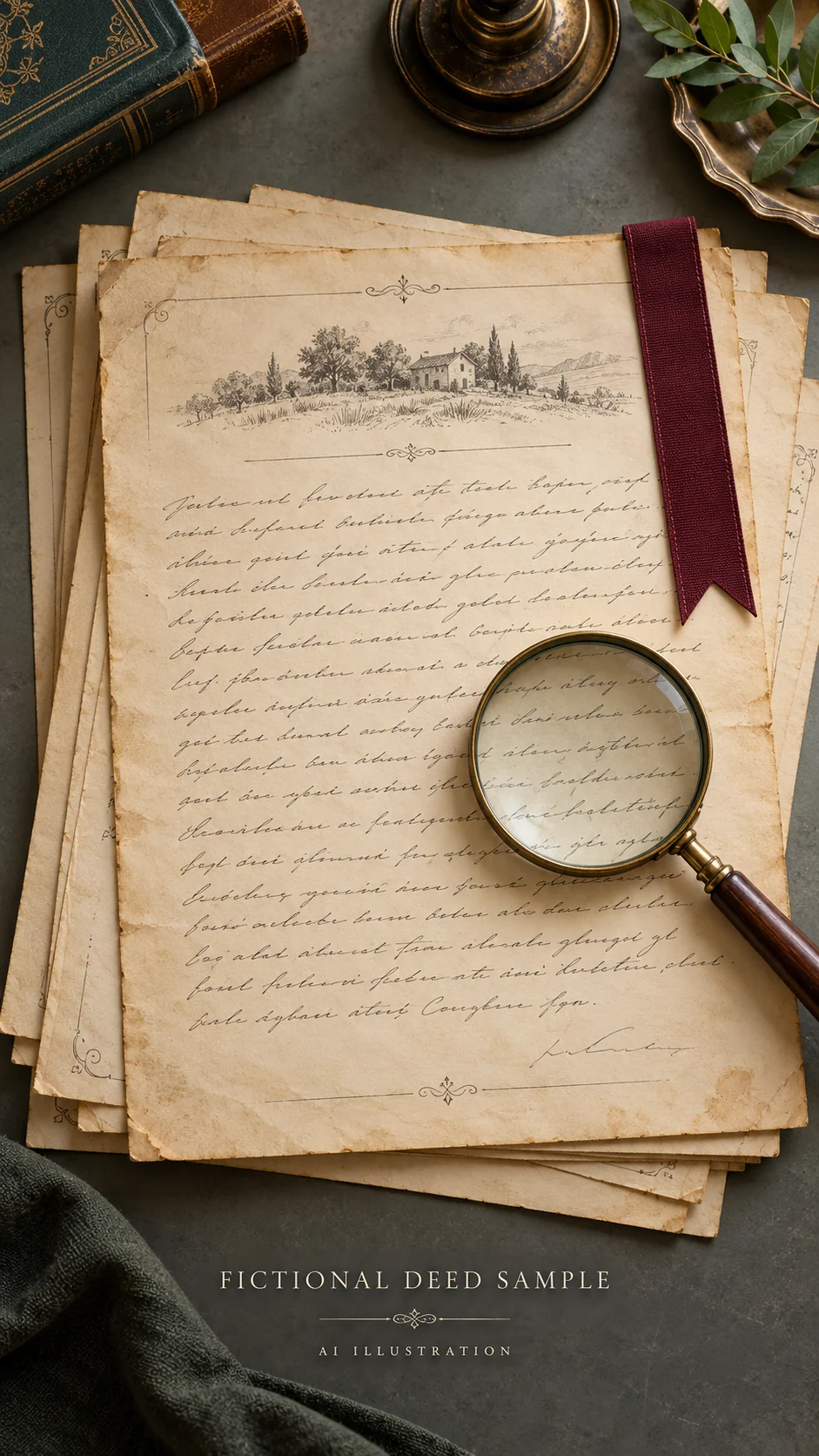
Note the document title, execution date and registration date separately. Record the registration office, document number and year, plus book, volume or page references where present. Do not assume a number printed on stamp paper is the registration reference.
Read names alongside parent or spouse details and each person’s stated role. A seller, buyer, representative and witness do not appear in the same capacity. A familiar name on one page does not show that person purchased the property.
Read the property description and schedule in full. Note village or locality, survey or parcel references, area, share and boundaries where stated. Preserve historical place names in your transcription rather than replacing them with guesses about current names.
Check page continuity and registration endorsements as well as the main narrative. An explanatory summary is useful but is not the deed itself. Mark uncertain words as unreadable; OCR suggestions are not a certified transcription.
Where to search for a historical copy

In Madhya Pradesh, begin with the official Registration and Stamps Department, MPIGR. A government SAMPADA 2.0 presentation describes year-wise and Sub-Registrar-wise index access and online requests for certified copies of legacy documents. This does not promise immediate access to every historical page.
Maharashtra’s official Copy and Search page lists document copies, index copies and inspection searches as separate processes. The department’s e-Search notice says downloads are informational, not certified, and are not ownership certificates.
West Bengal’s official service description includes searches by party name or property details and searches of legacy registration records. It also describes certified-copy services for digitised volume records. Check the current departmental route and coverage for the record you need.
What if you do not know the number or find no online result?
Gather what is available: a likely registration office, approximate period, party names and property description. Turning “my grandfather’s land deed” into these identifying details makes an enquiry more useful to the record branch.
Check spelling variants, the distinction between execution and registration dates, and the correct office. No online result does not by itself prove that a document was never registered. Whether a historical record has been digitised is a separate issue.
Ask the relevant Sub-Registrar or record branch about index searches and copy applications. Confirm current fees, eligibility and availability there. This article does not assign one universal charge or completion time to every state.
Advice: compare the deed with the wider record trail
Check the office, number, year, parties and property description against available registration references. This is preliminary checking, not an expert authenticity certificate. If pages are missing or references conflict, seek clarification from the issuing office.
An enquiry can ask for the search and certified-copy process for a stated office, year, document number or party. It is a way to organise the request, not a prescribed legal application form. Retain the application and response with the copy.
Current revenue entries, mutation references and later instruments may also matter. Reading one old deed is not a complete title search. For a purchase, inheritance decision or dispute, obtain local legal review of the relevant document chain.
Do not add ink, invent missing wording or alter the old paper while trying to read it. Work from a separate scan, preserve the source and conceal unnecessary personal information in publicly shared copies.
Five questions about old property deeds
Is every old stamp paper a registered deed? No. Check the instrument type and registration references.
Can a name help with a search? Some state services offer party-name searches, subject to office, period and available data.
Is every downloaded scan certified? No. Read the service’s certification and issuing arrangements.
Does an absent online result prove a forgery? No. Ask the responsible office about the underlying record search.
Does one historical deed finally identify today’s owner? Later instruments, applicable law and the facts must also be considered.
Sources and illustration disclosure
Disclaimer: general document-literacy and procedural information, not a legal opinion on any property title, deed validity or dispute. Requirements vary by state and record. All three pictures are AI-generated fictional illustrations. Sources checked: 25 October 2026.
- MP Registration and Stamps Department: official portal and certified deed copies
- Government presentation: SAMPADA 2.0, Search & Certified Copy including legacy records
- Government of MP eServices: deed search, certified copies and verification
- IGR Maharashtra: Copy and Search processes
- IGR Maharashtra e-Search: informational, non-certified download notice
- West Bengal Registration Department: services, searches and certified copies
- India Portal: Certified Copy of Registered Deed, West Bengal
- India Code: Registration Act, 1908, sections 57 and 60
Related: how to read old khasra, khatauni and land maps
Related: old handwritten Satbara and Maharashtra 7/12 comparison