 Vista
Children’s Day Speech 2026: English Samples for Students, Teachers and Anchors
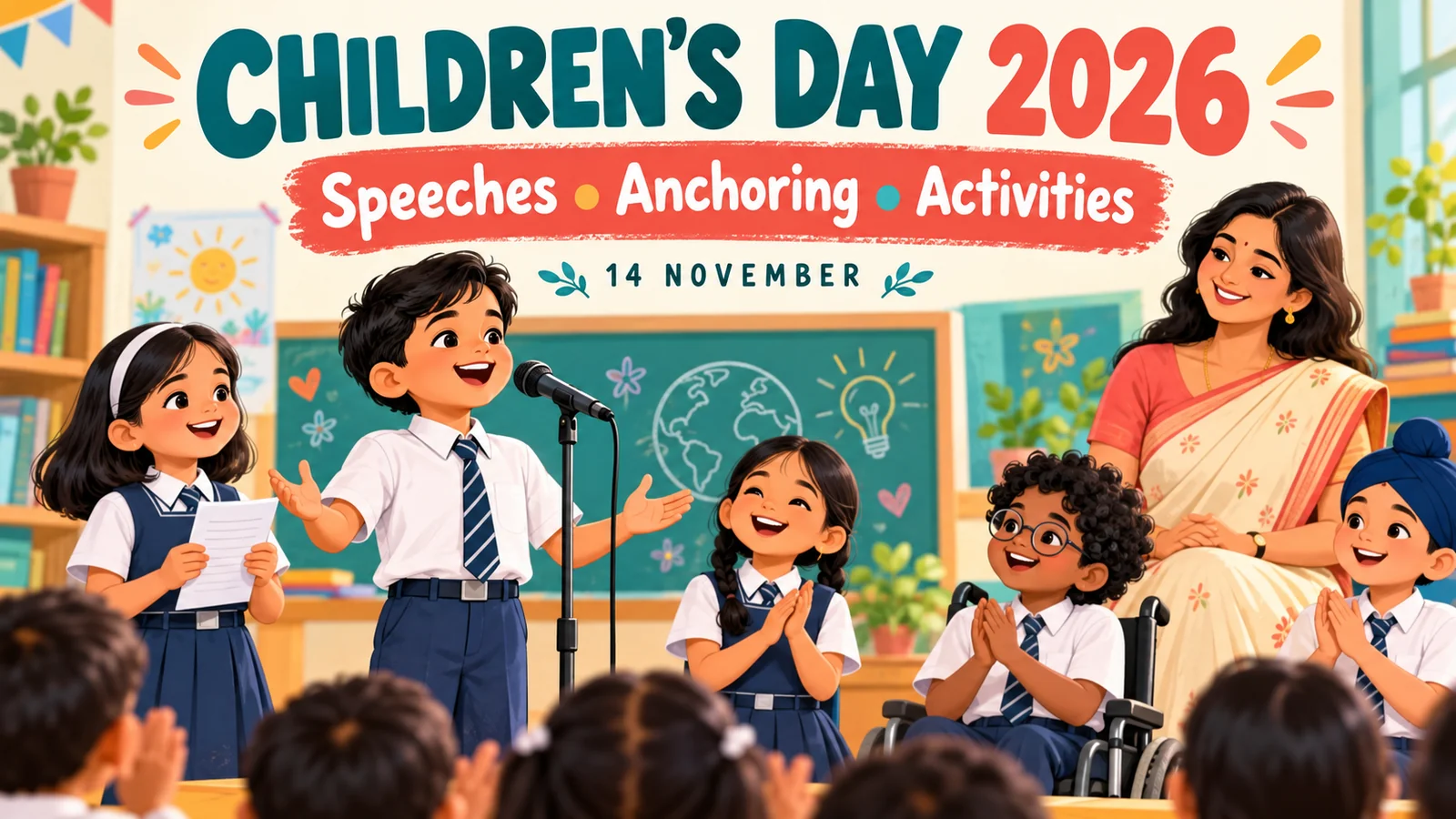
A useful Children’s Day speech should sound natural and be easy for a child to understand. Below are an original short speech, a longer student speech, a teacher’s address and ready-to-adapt anchoring lines. There are also low-cost activities for government schools and other classrooms, with an emphasis on participation rather than expensive decorations or competition.
When is Children’s Day celebrated in India?
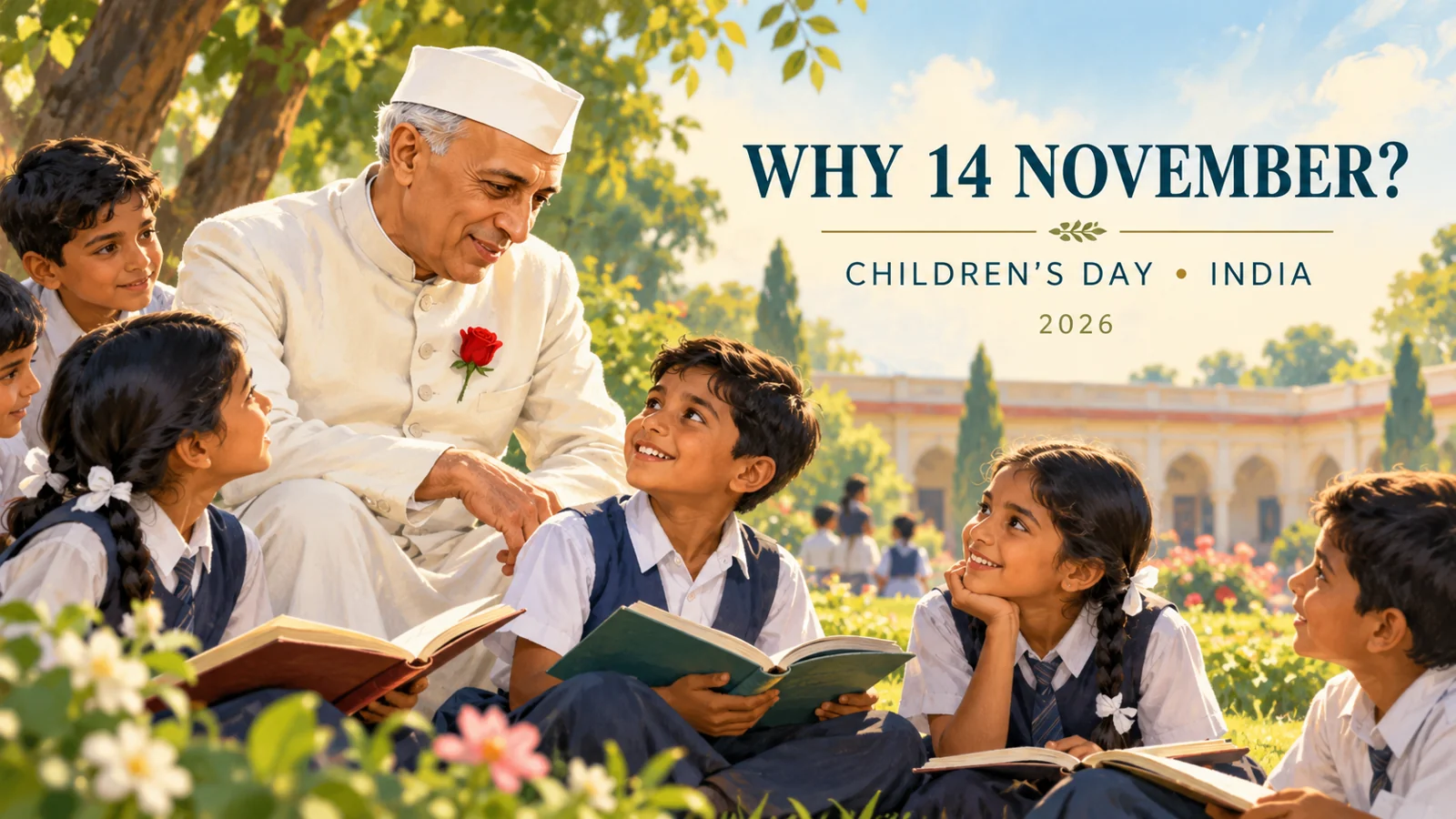
India observes Children’s Day on 14 November, the birth anniversary of its first Prime Minister, Jawaharlal Nehru. He was born on 14 November 1889. The occasion also creates space to discuss children’s education, dignity, safety, play and opportunities to express themselves.
All speeches on this page are original samples. Do not describe them as speeches delivered by Nehru or any other historical figure. Delivery time depends on the speaker’s pace and pauses. Help children understand the message before asking them to memorise it.
A short speech for younger children
Respected Principal, teachers and my dear friends, happy Children’s Day to everyone. My name is ______. Today is 14 November. We celebrate this day on the birthday of Pandit Jawaharlal Nehru. Children’s Day reminds us that every child deserves opportunities to learn, play and feel happy. We have different interests and talents. Some of us enjoy drawing, some enjoy sports and some enjoy telling stories. We should help one another and never make fun of a classmate. Let us make our school a place where every child feels safe and welcome. Thank you.
Remove any difficult line for a younger speaker. Offer a gentle prompt if a child pauses on stage. The purpose is to build confidence, not to test perfect memory in front of an audience.
A longer student speech for Children’s Day 2026
Respected Principal, teachers and my dear friends, warm wishes to you all on Children’s Day. We have gathered today on the birth anniversary of Jawaharlal Nehru. This occasion is more than a school celebration. It is also a chance to listen to children’s hopes and needs.
Every child should have time to study, play, ask questions and learn from mistakes. Marks can matter, but honesty, friendship and respect matter too. In our classroom, some children learn quickly while others need more time. Some speak a different language. Some need support with hearing, speaking or moving. Every one of us deserves equal dignity.
Today, we can make a simple promise. We will not leave a classmate out. We will not make fun of anyone’s appearance, family income, language or marks. If something worries us, we will seek help from a trusted teacher or adult. We will make space for games, rest and family alongside studies and screens.
We also ask the adults around us to listen. We want encouragement when we struggle and opportunities to discover what we enjoy. A child who loves music, gardening, stories or science should have room to explore. Let us make Children’s Day the beginning of a school year in which every child can participate and feel valued. Thank you.
Read this aloud during rehearsal and measure the actual duration. Shorten paragraphs if a two-minute slot is strict. Avoid asking a nervous speaker to rush simply to fit the entire text.
A Children’s Day address for teachers
Dear children, happy Children’s Day. Today, we have organised a programme for you, but our most important responsibility is to listen to you. Teaching means more than completing a syllabus. It also means building a classroom where you can ask questions and seek help without fear.
It is unfair to judge every child through constant comparison. You have different interests, circumstances and learning needs. Speaking on stage for the first time, improving a notebook or helping a classmate can all be meaningful steps forward. We should notice that effort.
If a lesson is confusing, someone is troubling you or a worry is affecting you, please speak to a trusted teacher or family member. You do not have to face every difficulty alone. Be considerate towards your friends as well. Never exclude a child because of language, identity, disability or financial circumstances.
Let us work together for a school that combines discipline with dialogue and hard work with joy. May your childhood be filled with respect, play, learning and safe relationships. Thank you.
Ready-to-adapt Children’s Day anchoring script
Welcome: “Respected guests, Principal, teachers and dear friends, welcome to the Children’s Day programme at ______ School. Today’s stage belongs to the ideas and talents of our children.”
Introducing a speech: “We now invite ______ from Class ______ to share their thoughts on Children’s Day. Please welcome them with a warm round of applause.”
After a performance: “Thank you, ______, for that thoughtful presentation. We now welcome ______ for our next performance.”
Teacher’s address: “May I invite our respected teacher ______ to speak with the children? Welcome, Sir/Ma’am.”
Closing: “Thank you to every child, teacher and member of staff who helped with today’s programme. Let us carry its spirit forward by making our school welcoming and respectful for every child.”
Check names and roles in advance. Announce only confirmed performances. Two anchors can divide the lines, while a teacher keeps an alternative running order ready if a participant is absent.
Low-cost activities for government schools
- A children’s meeting: Invite suggestions on one thing that would improve the school.
- Reused-paper posters: Choose themes such as a safe school, favourite games or future dreams.
- A story circle: Let children tell short stories in a language or dialect they know well.
- Cooperative games: Adapt activities so children with different physical abilities can participate.
- A teacher performance: Teachers can present a story, poem or short play for the children.
- Recognising effort: Appreciate cooperation, imagination and improvement alongside competitive achievement.
In Madhya Pradesh classrooms, children may use Hindi, local dialects or other languages at home. Keep instructions accessible. Participation should not depend on purchasing new supplies or making a compulsory contribution.
Advice and frequently asked questions
Use large-print cue cards and avoid pressuring children to memorise long speeches. Offer written messages, pictures, sign language or supported presentations for children who need them. Follow the school’s consent process before sharing identifiable photographs.
How should a child begin a speech?
Use a brief greeting, give their name and introduce the topic in one sentence.
Can teachers use the student sample?
They can adapt it, but the teacher’s address is a better starting point because the role and audience are different.
How many words should a two-minute speech contain?
There is no single number for every child. Rehearse, measure the time and edit the text to match the actual speaker.
Must the entire speech be about Nehru?
No. A short historical introduction can lead into education, dignity, play and children’s participation.
Does this article announce an official 2026 theme?
No. It does not claim an unverified official theme or government programme.
Note: The speeches and anchoring lines are original educational samples. Adapt them to the children’s ages and the school’s programme.
Sources
- Nehru Portal, Ministry of Culture: birth date and Children’s Day
- Prime Minister’s Office archive: Children’s Day message
Also read for school assemblies
MP Foundation Day history and short speech
Related reading: Constitution Day: Preamble meanings and school speeches
Related reading: Dr Harisingh Gour and the history of Sagar University · Jyotiba Phule: education and social reform
Related reading: Chhattisgarh Foundation Day: formation from MP · C. V. Raman and the Raman effect explained
Related reading: Children’s Day history: 14 and 20 November explained · 14 November: World Diabetes Day and health awareness









Share Your Opinion
Comments are closed on this post.