
You feel tired, but sleep still does not come
You worked all day and your eyes feel heavy. Then you get into bed and start thinking about tomorrow. You pick up your phone, check the time and tell yourself you should be asleep already. A night like this can feel frustrating. The answer is not always one trick, one drink or simply putting the phone down.
Start by describing the actual problem. Is it taking a long time to fall asleep? Are you waking repeatedly? Do you wake much earlier than you want? Someone else’s successful tip does not tell you which situation you are dealing with or what is causing it.
Look at stress, changing schedules and evening caffeine
NHLBI lists stress, changing sleep schedules, shift work, nighttime light and noise among factors linked with insomnia. Long daytime naps and caffeine can also matter. These are possible contributors, not a diagnosis made from a checklist. More than one may be present.
Write down a typical evening: when work ends, when you have tea or coffee and when you get into bed. You might notice that an evening tea was followed by another coffee during late work. Looking only at the morning drink would leave out part of the picture.
Consider the whole evening, not just a phone setting
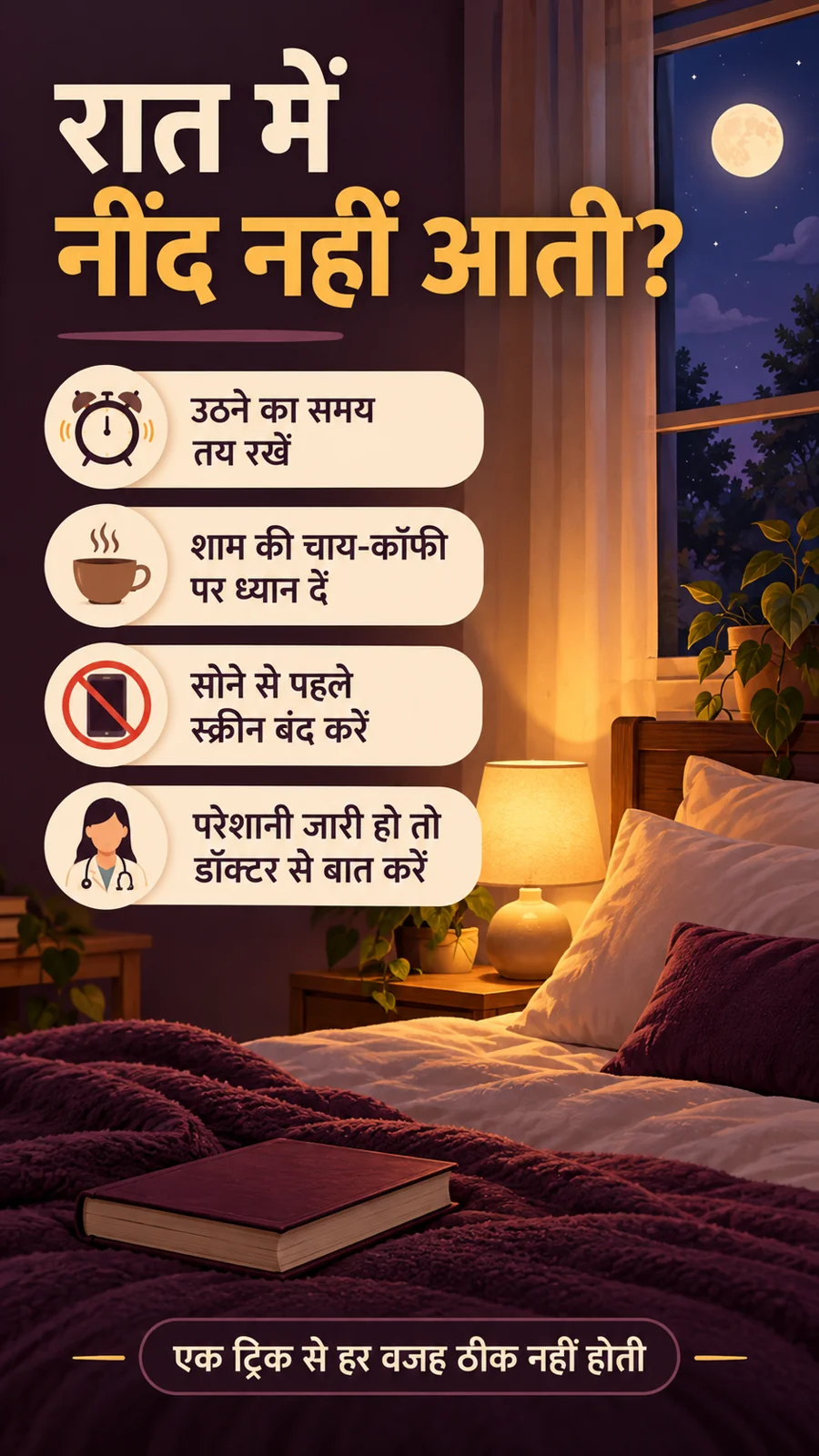
CDC advises switching electronic devices off at least 30 minutes before bedtime and avoiding afternoon or evening caffeine. NHS also advises avoiding devices close to bed. Treat this as a practical starting point, rather than a guaranteed cure for every sleep problem.
You can set an alarm and handle essential messages before putting your phone away. A usual charging place may make the decision easier. If you need to receive work calls, choose a boundary that fits your situation rather than pretending your responsibilities have disappeared.
FACT: A bad night does not prove chronic insomnia
Do not give yourself a chronic insomnia label after a couple of difficult nights. NHLBI describes chronic insomnia as trouble on at least three nights a week lasting three months or longer. This is context for assessment, not an instruction to diagnose yourself or wait three months before getting help.
Poor sleep is not simply a failure of willpower. NHS lists other possible contributors, including pain, some medicines, restless legs and breathing interruptions during sleep. A list does not mean you have one of these conditions. Persistent symptoms are a reason to discuss assessment.
Make a small change tonight without fighting sleep
Start with a regular getting-up time, going to bed when sleepy and a comfortable room. If you remain awake and frustrated, get up for a quiet activity when safe and practical, then return when sleepy. You do not need to keep checking the clock.
A quiet activity could be a few pages of an ordinary book. You do not need new equipment, a special music subscription or a bedroom makeover. If noise or light is an obvious problem, look at the adjustment you can actually make, especially in a shared home.
This is not a promise to fix tonight. You might simply decide to end the work chat before bed. Applying ten tips at once and grading yourself in the morning adds another task. An immediate result is not required to justify taking the problem seriously or seeking more help.
Use a sleep diary without turning it into an exam
NHLBI suggests a sleep diary for one to two weeks before seeing a clinician. Note sleep and waking times, naps, daytime sleepiness, caffeine and exercise. CDC also includes medication timing. The aim is useful information, not perfect tracking that keeps you awake.
Make a short note in the morning: roughly when you went to bed, whether falling asleep felt difficult, whether you woke and how the next day felt. Add relevant details such as a late coffee. Estimates are fine; you do not need to open your phone for every awakening.
An entry might say: Tuesday, worked late, woke twice, difficult morning. That single entry does not prove a cause. Several days can support a conversation. An ordinary notebook is a reasonable way to organize your experience; do not change what you record just to make an app’s score look better.
When to seek help and what treatment may involve
Talk to a clinician if changes do not help, the problem continues for months or daily life is affected. Mention loud snoring with breathing pauses, waking gasping or marked daytime sleepiness. Do not drive when sleepy. These signs deserve attention rather than being dismissed as late-night habits.
For long-term insomnia, NHLBI usually recommends CBT-I as the first treatment option. This is structured work on thoughts and behaviours connected with sleep. Parts such as setting time in bed belong in a supported treatment plan. Do not use this article to start reducing your sleep on your own.
A clinician can discuss whether medication is appropriate for your circumstances. Do not copy a friend’s prescription or start or stop a product after seeing an advertisement. Bring your existing prescriptions, other products and notes to the appointment. Accurate information makes the conversation more useful; you do not have to present a flawless routine.
Advice
First identify your main difficulty: getting to sleep, waking during the night or having too little time available. Choose one manageable change and keep a brief note. For example, plan a regular getting-up time and a place to put your phone before bed. Add other changes as your circumstances allow.
Include how the following day feels. Is work, study or safe travel affected? These ordinary details help when you speak to a clinician. If an estimate in your diary seems wrong, you can simply keep the next entry clear and brief instead of abandoning the whole notebook.
Do not expect a viral trick to address every cause. If problems continue, getting help is a sensible next step. You can say: I leave time for sleep, but I often stay awake and it affects my day. A clear description gives the treatment conversation somewhere useful to begin.
FAQ
Does not sleeping at night always mean insomnia?
A difficult night does not establish a diagnosis. Frequency, duration, sleep opportunity and daytime effects matter. Seek assessment for persistent problems.
Will stopping evening tea or coffee guarantee sleep?
Caffeine may contribute, but it is not everyone’s only cause. Note timing and changes, and report other symptoms too.
Do I need exactly eight hours?
There is no exact eight-hour rule for everyone. CDC recommends at least seven hours for adults aged 18–60. Consider enough opportunity and the quality of sleep as well.
Should I start melatonin or sleeping tablets myself?
Do not start them on the basis of this article. Discuss your circumstances, current medicines and potential benefits and risks with a clinician. A natural label does not establish personal safety.
When should I see a clinician?
Talk about ongoing problems or daytime effects. Mention breathing pauses with snoring and substantial sleepiness too. The definition of chronic insomnia is not a reason to delay help.
Sources
- NHS: insomnia
- NHLBI: insomnia causes
- NHLBI: insomnia diagnosis
- NHLBI: insomnia treatment
- CDC: about sleep
Health disclaimer: This article is general information, not a diagnosis or personal treatment plan. Seek qualified medical advice for persistent sleep problems, interrupted breathing during sleep or marked daytime sleepiness. Do not start, stop or change medicines or supplements yourself.