
In bed, but your mind is still at work?
The phone is finally down, yet tomorrow’s jobs keep running through your mind. You wake during the night and start worrying that morning will arrive before sleep does. Looking for a simple way to sleep without a pill is understandable. There are useful starting points, but everybody’s difficulty does not have the same cause.
Better sleep without sleeping pills can involve your schedule, daytime habits and appropriate treatment when needed. No technique here promises sleep within two minutes or the end of every sleep problem in a few days.
If you already take prescribed medicine, this article is not an instruction to stop it suddenly. It discusses general habits. Reducing or changing a medicine belongs in a personal review with the clinician who prescribes it.
FACT: Too little opportunity and insomnia can differ
If work finishes at two in the morning and your alarm rings at six, the available sleeping time is short. That differs from allowing enough time but repeatedly being unable to sleep. Treating both situations as the same problem can lead to the wrong next step.
The NHS says adults need around seven to nine hours on average and describes persistent insomnia lasting three months or longer as long-term insomnia. These facts are context, rather than a way to diagnose yourself. Regular difficulties deserve attention instead of being dismissed as an ordinary busy week.
Start by asking whether you left enough opportunity to sleep. If not, the evening needs somewhere for work to finish. If adequate opportunity exists and the difficulty continues, blaming yourself for poor discipline will not identify the cause.
Choose a waking time that fits your life
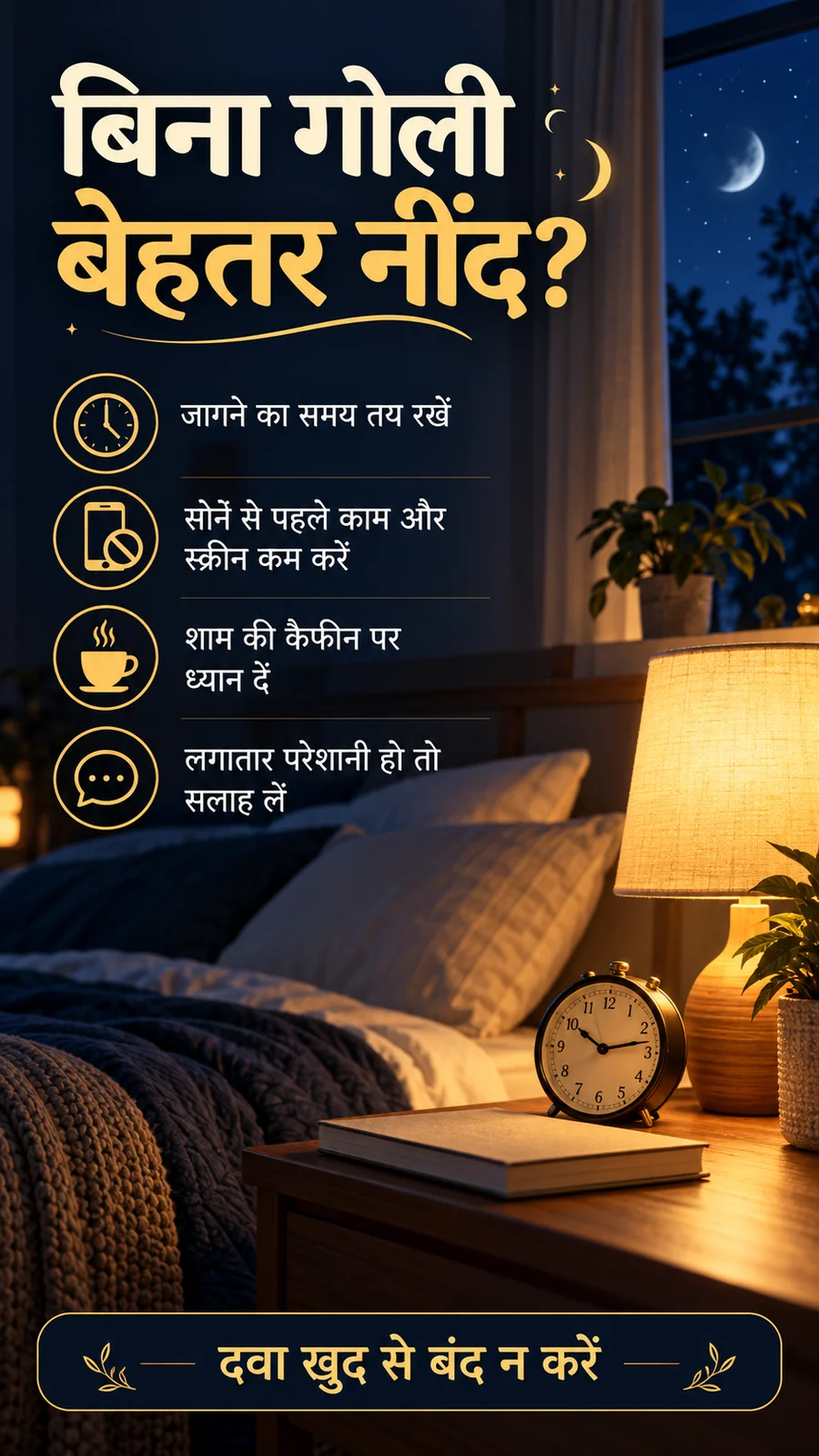
The NHS advises getting up at roughly the same time each day and going to bed when sleepy. Sleeping very late after a difficult night can disrupt your usual timetable. Select a waking time you can realistically maintain.
Write down the morning responsibility first. A bus, school run, household task or work start may decide when you need to be up. Work backwards through the necessary evening tasks. An ideal timetable from somebody else’s video is less useful than identifying the room available in your own day.
Make your screen and caffeine habits visible
CDC recommends turning off electronic devices at least thirty minutes before bedtime and avoiding caffeine in the afternoon or evening. Begin by noting the timing of your last tea, coffee and screen use. It is easier to discuss an actual habit than one you are guessing about.
Set your alarm before the evening winds down. Choose a charging place that makes repeated scrolling less automatic. If essential calls mean your phone must remain nearby, consider how you will limit nonessential notifications while keeping the contact you need.
A single phone setting is not a complete treatment. Changing the screen colour while continuing work, arguments or a steady stream of messages does not turn the evening into a quiet one. Consider what you are doing, why it is continuing and where you can reasonably stop.
Create a short, comfortable evening sequence
The NHS recommends time to relax before bed and a dark, quiet sleeping environment. You do not need an expensive sleep kit to review your room. Identify a real problem with light, noise or comfort and make a manageable change where possible.
You can write tomorrow’s jobs on paper and put the note aside. This is not a treatment for anxiety; it is a way to stop carrying every reminder in your head. Keep it small: the first morning task, something to take with you and an issue to revisit tomorrow.
Choose a paper book or quiet music if you enjoy it. Searching for a new relaxation method every evening can make preparation longer than you intended. Comfortable, unforced breathing may be part of settling down, but breath-holding challenges are unnecessary. Your evening does not need another performance target.
Why CBT-I matters for ongoing insomnia
NHLBI describes cognitive behavioural therapy for insomnia, or CBT-I, as a usual first treatment option for long-term insomnia. It works on thoughts and behaviours connected with sleep. It is a structured treatment approach, rather than simply being told to think positively.
Its different parts should be selected for your situation. Do not turn guidance about time in bed into a self-directed plan to sleep very little or stay awake all night. Ask a qualified provider how an appropriate plan would work for you.
Mention snoring, daytime sleepiness and medicines
Loud snoring with breathing pauses, gasping or marked daytime sleepiness can be signs of sleep apnoea. NHS guidance recommends assessment for these symptoms. Another sleep trick is not a substitute for checking them. Do not drive when sleepy.
Tell your clinician about prescribed medicines, pharmacy sleep aids and supplements. A natural label does not automatically make a product suitable for you. Understanding the concern and the other products you take matters before adding another bottle.
Seek advice if difficulties continue for months, habit changes have not helped or everyday life is becoming hard to manage. Bring a simple account of bedtime, waking, interruptions and daytime effects. The aim is useful information for an assessment, not a perfect chart that makes you postpone the appointment.
Advice
Choose three manageable decisions today: tomorrow’s realistic waking time, the timing of your final caffeinated drink and a stopping point for evening work. Then choose a short calming sequence. A plan you understand is easier to use than ten new rules started all at once.
Write brief observations over the next few nights. Note a long period awake or a noticeable effect at work, without checking the clock to record every minute. Whether the change fits your life also belongs in the review.
If sleep does not arrive immediately, avoid treating that as a personal failure. Everyday habits offer support; they do not treat every condition. Ask about CBT-I or other suitable care when needed. The goal is to understand a safe route to adequate rest, rather than compare people who take medicines with people who do not.
FAQ
Can every insomnia problem improve without pills?
No single outcome applies to everybody. Habits may help, and CBT-I is an important option for persistent insomnia. A clinician may recommend other care according to the cause and your situation.
How many days will better sleep take?
A fixed deadline cannot be guaranteed. Review your routine and daytime effects. Get help for persistent problems rather than spending months switching between new remedies.
Can I start melatonin or a herbal supplement myself?
Do not assume these are automatically safe alternatives. Discuss suitability, possible effects and other medicines with a qualified clinician. Wanting fewer pills does not make a new bottle the necessary answer.
Should I stop my current sleeping pill?
Do not stop it suddenly. Review it with your prescribing clinician, who can arrange an appropriate personal plan if a change is needed. This article does not provide a tapering schedule.
Is it fine to sleep little if I still get work done?
Finishing tasks is not proof that your sleep is sufficient. Notice daytime sleepiness, concentration and fatigue. Regular difficulty or disruption to daily life deserves medical advice.
Sources
- NHS: insomnia
- NHLBI: insomnia treatment and CBT-I
- CDC: sleep habits and sleep diary
- NHS: sleep apnoea
Health disclaimer: This article is general information, not a diagnosis or personal treatment plan. Consult a qualified clinician for persistent sleep problems, breathing pauses or marked daytime sleepiness. Discuss any change to prescribed medicine with your prescriber before changing a dose or stopping it.