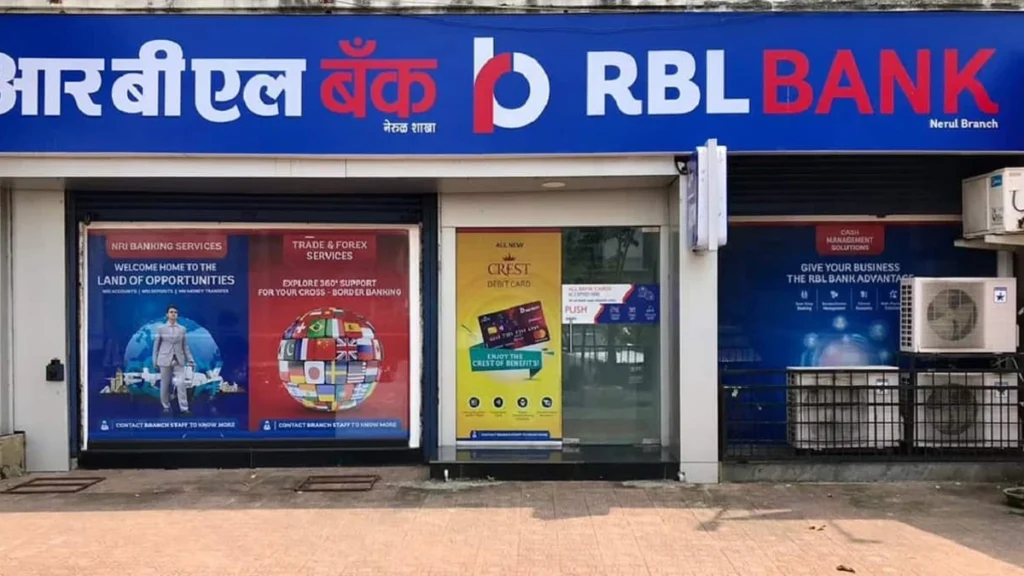
Emirates NBD–RBL Bank: what has RBI approved?
The latest Emirates NBD and RBL Bank development concerns the merger of the Dubai-based lender’s Indian branches into RBL Bank. RBL has disclosed that RBI approval has been received, with the amalgamation taking effect on December 1, 2026. This is not an announcement that the entire international Emirates NBD banking group is merging into RBL.
As of October 17, the official record separates two stages: the majority-shareholding acquisition completed in June, followed by approval for integrating the Indian branch business. Understanding that distinction makes the latest news much clearer for customers and readers following the transaction.
What does the October 16 filing say?
In its October 16, 2026 stock-exchange disclosure, RBL Bank says it received an RBI approval letter dated the same day. The amalgamation was sanctioned under Section 44A(4) of the Banking Regulation Act, 1949. The filing identifies December 1, 2026 as the effective date.
From that date, all Indian branches of Emirates NBD Bank P.J.S.C. will function as RBL Bank branches. RBL is identified as the transferee bank. The direction of the transaction therefore matters: the Indian branch business is being brought into RBL.
The disclosure does not itself provide every customer’s replacement account number, new IFSC or card-migration instructions. Those are operational questions that require customer communications from the relevant bank. An assumption about an account change should not be presented as an announced instruction.
How this differs from the 60% stake acquisition
The banks’ joint announcement dated June 18, 2026 confirmed completion of Emirates NBD’s majority-stake acquisition. It reported a primary capital infusion of approximately USD 2.75 billion, or around Rs 26,000 crore, and a resulting holding of 60% of RBL’s expanded share capital.
Acquiring shares changes ownership. Amalgamating branch operations is a further step involving the business structure. Describing October’s development as the first announcement of the 60% acquisition would therefore confuse the timeline. The original transaction was announced on October 18, 2025.
Earlier proposal-stage reports may refer to approximately USD 3 billion or Rs 26,850 crore. Those numbers should be read in their original context rather than silently substituted for the figures in the completion announcement. This report uses the June announcement when explaining the completed investment.
Transaction timeline at a glance
| Date | Development |
|---|---|
| October 18, 2025 | Original strategic investment announcement |
| January 20, 2026 | CCI approval of the proposed combination |
| May 15, 2026 | Announcement that required regulatory and government approvals had been received |
| June 18, 2026 | Majority-stake acquisition completion announced |
| October 16, 2026 | RBL files RBI approval for the Indian branch amalgamation |
| December 1, 2026 | Effective date of branch amalgamation |
The PIB statement on CCI approval described share acquisition, a mandatory open offer and the proposed Indian branch amalgamation as parts of the wider combination. A large banking transaction can consequently have several milestones rather than one approval that settles every subsequent operational step.
FACT CHECK: Completion of the 60% investment was announced in June. The December effective date concerns the Indian branches. The entire international Emirates NBD group is not being merged into RBL. Earlier permission for a holding of up to 74% should not be mistaken for proof of an actual 74% holding.
Which operations are involved?
The official May announcement identified Emirates NBD’s Indian branches in Mumbai, Chennai and Gurugram as the operations intended for eventual amalgamation. The October disclosure now confirms approval and an effective date for all its Indian branches.
A foreign bank’s local branch business is different from its worldwide operations and overseas headquarters. Integrating branches in one country does not mean that the parent bank’s international legal existence has ended. Keeping the scope clear avoids overstating the latest regulatory development.
The banks have presented their partnership as a way to connect an Indian banking franchise with a regional international network. That strategic rationale does not automatically establish that every cross-border service, fee benefit or new product is immediately available to every customer. Product eligibility and rollout details require their own announcements.
What should account, deposit and loan customers check?
Customers will naturally ask about payments and documentation. The amalgamation filing does not announce a specific change to an individual fixed-deposit rate, EMI, card validity or online-banking login. Readers should avoid inventing a personal action deadline from a general corporate disclosure.
If the bank communicates changes to an account number, IFSC, app, cheque book or automatic debit, verify the instructions through its official website, app or branch. Customers receiving salaries or business payments should update others only after receiving authenticated information about an applicable change.
Borrowers should continue to follow their loan agreement and authorised bank instructions. A change in ownership or branch structure is not a reason to assume that repayment obligations have disappeared. If an individual rate or payment issue arises, seek written clarification and keep a record of the response.
Advice: how customers and investors can read the news
For customers, the most useful follow-up will be a notice explaining the arrangement for their particular service. Read the effective date, scope and any required action carefully. Do not disclose an OTP, PIN or password to someone who contacts you using the merger as a pretext; initiate necessary contact through the bank’s own channels.
For shareholders, business integration and the market price of a share are separate subjects. This article does not provide a target price, assured return or buy-and-sell recommendation. A capital injection or international shareholder does not make future profits automatic; operating results and risks still matter.
Through December, watch for official customer-service updates rather than treating speculation as a migration plan. Begin with what each document actually establishes: approval, ownership, timing or instructions. That approach prevents an older proposed deal from being recycled as an entirely new acquisition.
Frequently asked questions
When does the amalgamation take effect?
RBL’s filing gives December 1, 2026 as the effective date.
Is all of Emirates NBD merging into RBL?
No. The approval concerns Emirates NBD’s Indian branches.
Was the 60% stake acquired only now?
No. Completion of that investment was announced on June 18, 2026.
Must customers immediately change their IFSC?
The filing does not issue that individual instruction. Follow authenticated account-specific bank communications.
Is this a recommendation to buy the shares?
No. This is a news explainer, and a merger headline does not establish a guaranteed investment return.
Sources: RBL October disclosure, June completion announcement, PIB/CCI statement and official May announcement. For individual banking matters, consult authorised bank communications and applicable terms.