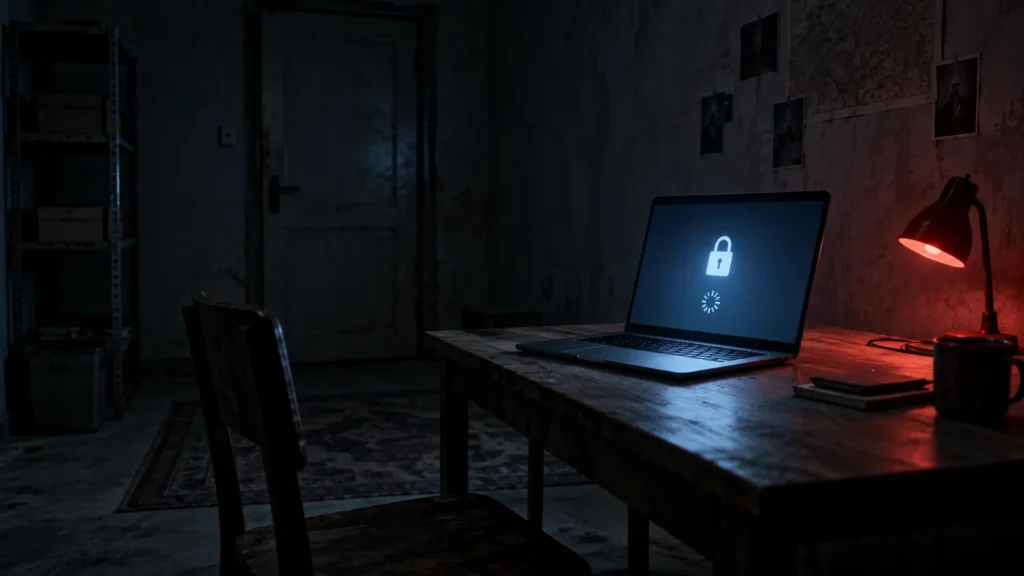
A YouTube thumbnail promises the same night-terror: a hidden room on the dark web, a crypto ticket, a live camera, viewers voting on torture. The product name is always “red room.” The honest question is narrower. Is that room a documented service — or a story that sells ads and Bitcoin to the curious?
Short answer first. The classic red room — a hidden live-stream where strangers pay to watch or direct murder and torture — has never been produced as a verified, working operation in the public record. Pages that sell “entry” are, in the cases researchers actually open, payment traps. Films and “I went on the dark web” videos did the rest. This article is a definition, an evidence check, a scam map, and a media autopsy. It is not a guide to go looking.
What people mean by a red room
The folklore kit is stable. A secret page. Crypto at the door. A camera on a victim. Chat that “chooses” what happens next. “Red” is branding for blood. The tale is the old snuff-film panic with a webcam and a wallet bolted on. In the 1970s–90s, rumour said rich buyers circulated real murder tapes. Proof of that cottage industry did not arrive. When headlines taught the public the words dark web and Bitcoin, the same fear got a new stage.
Keep two “red rooms” apart. Japan’s older Red Room Curse (Akai Heya) is a late-1990s / early-2000s flash-horror legend: a red pop-up, a question about liking the red room, a cursed death. That is not a Tor torture show. The phrase that trends on explainer channels is the second meaning: paid live violence. Only that second meaning is under review here.
Crime on hidden services is real and separate. Courts have seen drug markets, fraud shops, stolen-data dumps, exploitation rings. The public case most people know is Silk Road, which ran from 2011 until a takedown in October 2013. A marketplace existing is not a red room existing. Mixing the two is how a legend eats the news cycle.
The evidence problem
You cannot prove a negative to mathematical certainty. You can demand that a huge claim leave a huge trace. A standing commercial live-murder theatre would be a huge claim.
Journalists who spent years on dark-net markets say the classic room has not shown up outside fiction. Eileen Ormsby has called it an urban myth built from snuff lore and torture cinema, and has said there has not been a verified example matching the definition. Jamie Bartlett, author of The Dark Net, has written that he has never seen a functioning red room, nor working links to one; the sites that use the name, he and Ormsby argue, are built to take coin for a stream that never arrives — and buyers will not file a normal fraud report.
Police and intelligence services have spent those same years breaking child-exploitation networks, narcotic markets, ransomware crews, weapons stalls. Those operations are public. A courtroom-ready case for the folklore model — ticketed, interactive, live execution as a product — has not arrived with them. When analysts follow “red room tonight” pages, they tend to find a wallet address, recycled shock files, or a dead URL.
A 2015 burst of posts on 4chan and Reddit advertised a live torture stream of captured militants. Coverage that checked the aftermath found a “crash,” then uploaded clips that looked staged. Belief outran the file. That pattern keeps repeating.
FACT: The Japanese Red Room Curse is a pop-up horror legend. The dark-web “red room” is a later crypto-and-livestream story. Same nickname, different object. Treating them as one file is how the myth travels.
Real crimes people paste onto the myth
Documented horror is not the same as the legend. People flatten both into one headline.
Violence has been streamed on the clear web — including murders on public apps such as Facebook Live. Those broadcasts used ordinary platforms and ordinary cameras. They were not a hidden paid theatre.
Luka Magnotta’s 2012 Montreal murder video circulated online and ended in a public trial. It gets mislabeled as “red room footage.” It was not a ticketed interactive dark-web room. Pascal Plante’s Canadian film Red Rooms (2023–24) drew part of its atmosphere from that case and from online obsession around a killer’s trial. A film is not a forensic exhibit.
Peter Scully’s Philippines case is in court records: trafficking and the gravest crimes against children, with material moved on dark-net channels. Some writers call it the “closest” file. Specialists still separate a closed exploitation operation from the folklore product — an open, pay-per-view execution stage. This article stops at that distinction. No description, no hunt path.
South Korea’s Nth Room (roughly 2018–2020) was a Telegram sexual-extortion network. Arrests and long sentences followed. Telegram is not the folklore room. Sharing the word “room” is not sharing a category.
In the Brianna Ghey murder trial in the UK, one teenage defendant claimed she had “finally found a good red room.” Tabloids treated the boast as a tour of a real venue. Ormsby and Bartlett’s rebuttal was blunt: saying you found a room is not evidence the folklore service runs, and a working example still has not been produced.
In 2020, Italian police investigated two teenagers over an alleged “execution room” page reported under a name like Hell of Horrors. An investigation of attempted access is not proof the campfire story was on the other side of the payment form.
Why the tech story undercuts the legend
Hidden services that prize anonymity typically sit on networks that shuffle traffic through extra hops. Latency goes up. Live, clean, many-to-one video with a command chat is a poor fit. Writer-researcher Eric Pudalov has put it plainly: live video over Tor-class anonymity networks is close to unworkable, which makes a profitable red room of the advertised kind hard to take seriously.
“Close to unworkable” is not a law of physics. Someone could try another path tomorrow. The public record for today is smaller: claim pages exist; the commercial live room in the story has not been verified. The torture, if any, is the buffer wheel.
Do not read that as “the dark web is a theme park.” Fraud, markets, exploitation rings, and malware are documented. Debunking a gothic product is not a pardon for the rest.
The scam is the working machine
Fear has a checkout page. Curiosity pays. Operators sell the picture YouTube already installed.
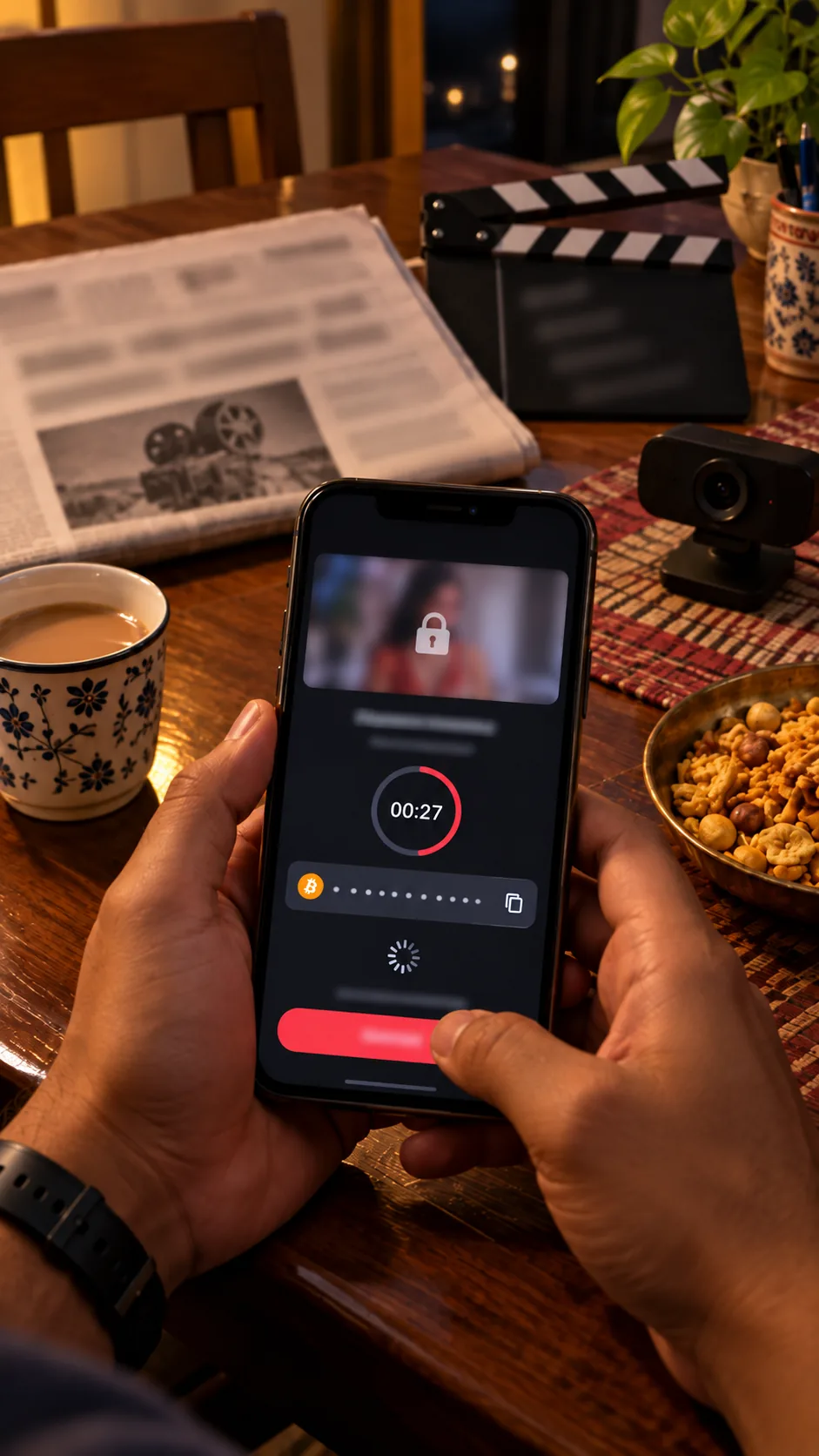
The usual shape: a countdown, a “limited seats” pitch, a crypto demand. After payment — silence, an old gore clip, or a malware/phishing hit. Complaints stay rare. Few people walk into a police station to say they bought a murder ticket.
That silence is the business model. New name, new page, same wallet story. Thumbnail channels that swear they “found the room” feed the funnel even when they never ran a site. Cheap red type and a ticking clock look like cinema. Durable crime groups that courts actually dismantle did not advertise an execution matinee. A page that shouts “watch a killing” is usually a till, not a room.
The Indian WhatsApp version is the same file with local cousins: a friend’s brother, a link, a sudden death. No docket. No agency note. Just forward buttons.
What films and series sold
Writers like the red room because it packs three cheap voltages: gadgets, anonymity, and absolute cruelty. Easy to script. Hard to source.
David Cronenberg’s Videodrome (1983) already imagined a torture broadcast. Found-footage horror trained audiences to ask “is this real?” Unfriended: Dark Web (2018) turned a laptop into a haunted hidden-web set. Netflix’s Luther: The Fallen Sun even lets a character say red rooms do not exist — then builds a villain who wants to force the myth into flesh. The script admits the gap and uses it anyway.
Plante’s Red Rooms stays mostly in courtrooms and obsession, and reviews (including in The Guardian) noted the film’s nudge: if the room is not here, it is coming. That is a thriller beat, not a finding. A whole YouTube tier now lives on black hoodies and terminal-green type. Some hosts say the evidence is thin. Many leave the blood-room thumbnail up because dread pays. Cinema turns myth into entertainment. The thumbnail sells it as news.
What to fear instead of the folklore room
Rejecting the campfire story does not erase online harm. It says the loudest package is often the emptiest, while recorded exploitation, extortion, fraud, open-app cruelty, and child-abuse material — none of which this article describes or directs anyone toward — are the files agencies actually work. Those fights run through reporting and courts, not through a ticket window in a comment section.
Curiosity is ordinary. Do not convert it into a search for illegal streams. Do not ask for links. Do not pay “just to see.” Asking for illegal content is how people walk into a crime, not out of a rumour. Treat a page that sells a red room as a scam, not a door.
FAQ
What is a red room supposed to be?
In folklore: a paid live torture or murder stream on the dark web, sometimes with viewer commands. Japan’s older Red Room Curse is a separate pop-up horror tale.
Has a verified room been documented?
Not in the classic sense. Ormsby, Bartlett, and security researchers describe claim sites as scams, shock pages, or dead links. No public law-enforcement exhibit matches the ticketed interactive product.
Why does the story stick?
Snuff panic, horror cinema, the romance of secrecy, and thumbnails. Hidden places make disproof feel incomplete. Scams bill that feeling.
Are Magnotta, Scully, Nth Room, or Facebook Live red rooms?
No. They are different recorded crimes or public streams. A shared mood is not a shared system. No further detail belongs here.
Can I look “only to understand”?
No. This is not permission to hunt pages or pay for a stream. Seeking illegal material can be a crime. The claim pages are scams.
Disclaimer: This article is not a guide to visit the dark web, open hidden pages, pay for a “show,” or locate illegal content. Red-room claim pages are scams. Seeking illegal goods or violent illegal material is a crime. The red-room story is stronger in films than in evidence. For real cybercrime, use official investigations and court records — not a countdown thumbnail.