Why do scary online stories feel real even without proof?
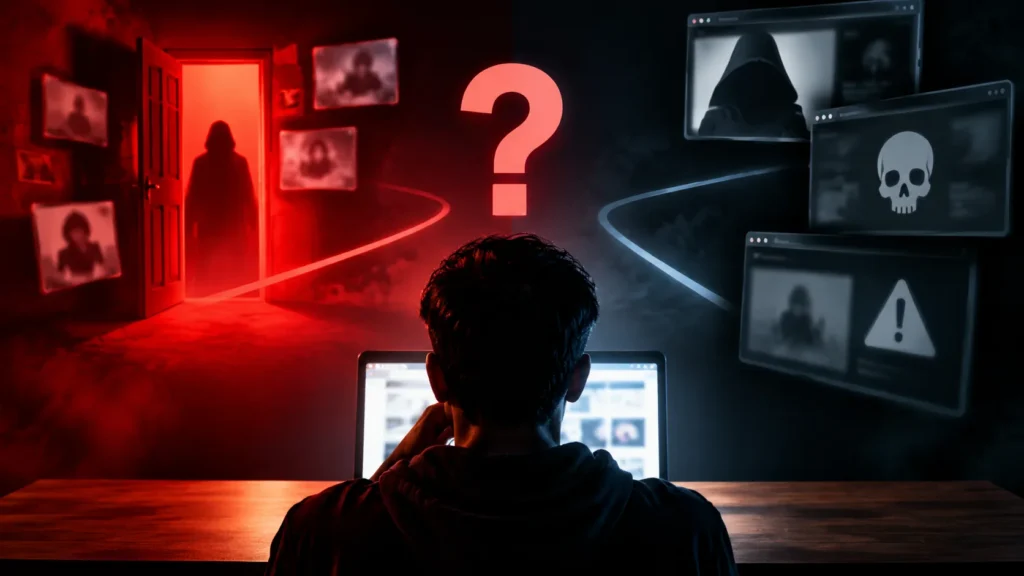
The internet is full of strange stories, shocking claims, and mysterious topics that quickly capture people’s attention. Red room stories are one example of how fear and curiosity can combine to create powerful online rumors. Many people hear these claims and immediately wonder, “Could this really be true?” That question itself is what keeps such stories alive.
The interesting part is not only whether a claim is true or false. The bigger question is why human beings are naturally attracted to frightening and mysterious information. Our brain is designed to notice possible danger. Even when we are sitting safely at home, a scary story can trigger the same attention system that once helped humans survive real threats.
Unknown things often feel more important than normal things. A regular piece of information may be ignored, but a mysterious story with fear, secrecy, and uncertainty can stay in our minds for a long time. This is why online rumors with emotional impact often spread faster than ordinary facts.
Red room stories are often discussed because they mix several powerful human emotions: fear, curiosity, imagination, and the desire to discover hidden information. These emotions can sometimes make a story feel believable even when strong evidence is missing.
Understanding this psychology helps us become smarter internet users. Instead of only asking, “Is this scary story real?” we can also ask, “Why does this story attract my attention so strongly?” That small change in thinking helps separate emotions from facts.
The psychology of fear: Why does the human brain focus on unknown things?

Fear is one of the oldest human emotions. It exists because our brain wants to protect us from possible danger. In ancient times, quickly noticing a possible threat was important for survival. Today, the dangers around us are different, but the basic reaction system of the brain still works in a similar way.
When people hear about something mysterious or frightening, the brain naturally tries to understand it. If there is incomplete information, the mind often attempts to fill the missing pieces. This is why unknown situations can create strong feelings.
A mysterious online story can become more interesting because the brain dislikes uncertainty. People often want a clear answer. When an explanation is missing, imagination may become stronger than available evidence.
Red room rumors use this exact human tendency. The topic sounds unusual, hidden, and frightening, which makes people curious. The brain gives extra attention to things that appear unusual because unusual information may have been important in human history.
However, attention does not always mean truth. A story can be fascinating without being factual. A movie, fictional story, or internet rumor can create strong emotions because it is designed to affect the imagination.
Learning about fear psychology does not mean ignoring all warnings. It means understanding how emotions work. When a topic creates a strong fear reaction, it becomes even more important to slow down, check information, and look for reliable evidence.
How online rumors spread and why people share them
The internet has changed the way information travels. A single post, video, or message can reach thousands or millions of people very quickly. This speed is useful for sharing knowledge, but it also allows rumors to spread easily.
Online rumors often grow around topics that create strong emotions. Fear, surprise, anger, and curiosity are powerful reasons why people stop scrolling and pay attention. A normal fact may not receive much reaction, but a shocking claim can create immediate discussion.
Many people share such content without trying to spread false information. Sometimes they share because they are surprised, worried, or simply want to know what others think. But when information is shared before checking facts, confusion can increase.
Red room stories continue to appear online because they contain elements that naturally attract attention. They involve mystery, uncertainty, and the feeling that there is hidden information. These elements make people want to discuss the topic.
Another reason rumors survive is repetition. When people see the same claim many times, it can start feeling familiar. The human brain sometimes connects familiarity with truth, even when repeated information does not have strong evidence.
This is why digital awareness is important. A claim becoming popular does not automatically make it correct. Popularity shows that people are interested, not necessarily that the information is accurate.
FACT BOX:
Red room stories are commonly discussed as examples of internet myths and fear-based rumors. A viral online claim should be checked through reliable evidence and trustworthy sources before being accepted as true.
Why mystery stories have such a strong effect on our imagination
Humans have always loved stories. From childhood, people learn and remember information through stories because stories create emotions and mental pictures. A mysterious story can stay in memory longer because it feels like an experience rather than simple information.
Red room rumors attract attention because they combine several storytelling elements. There is mystery, uncertainty, fear, and the idea of hidden knowledge. These elements make the human mind more active.
People are naturally interested in things that seem secret or unknown. Many individuals enjoy solving puzzles and discovering explanations. This curiosity is a normal part of human behavior. However, curiosity can sometimes make people accept weak information if the story is emotionally powerful.
The difference between a strong story and a true story is important. A well-designed story can feel realistic because it creates emotions. But emotional impact is not the same as proof.
Modern entertainment also influences how people imagine online mysteries. Movies, series, and fictional content often create dramatic ideas about hidden internet worlds. Sometimes people mix fictional images with real-world information without realizing it.
Psychology teaches us that the brain searches for patterns. Sometimes it finds connections even when evidence is limited. This is called a natural thinking process, but it can lead to misunderstandings.
The best approach is not to remove curiosity. Curiosity is valuable. The goal is to combine curiosity with critical thinking. Ask questions, look for evidence, and remember that a fascinating story is not automatically a factual one.
Why some people believe frightening internet claims quickly
People do not all react to information in the same way. Some people immediately check sources, while others may believe a claim because it creates a strong emotional reaction. This difference is a normal part of human thinking.
One reason people may accept frightening stories quickly is anxiety. If someone already feels worried about online dangers, a scary claim may appear more believable because it matches their existing concerns.
Another reason is social influence. When friends, communities, or many online users discuss the same topic, people may feel that there must be some truth behind it. Humans are social beings, and opinions from others can influence how we understand information.
Lack of background knowledge can also create confusion. When people do not know much about a subject, they may depend more on emotional explanations or popular opinions.
This does not mean people who believe rumors are foolish. The human brain has built-in shortcuts that help us make quick decisions. These shortcuts are useful in many situations, but sometimes they can lead to mistakes.
A better habit is to create a small pause between seeing information and believing it. Ask simple questions: Who is making this claim? What evidence supports it? Are reliable sources saying the same thing?
Digital literacy is not about being suspicious of everything. It is about learning how to think carefully when information creates strong emotions.
Advice
The internet will always have mysterious stories, scary claims, and rumors that attract attention. The best way to handle them is to understand both technology and human psychology.
When a post tries to create extreme fear or curiosity, take a moment before reacting. Emotional content is often designed to get quick attention. A calm mind makes better decisions than a rushed emotional reaction.
There are a few simple habits that can help. First, check the source of information. Look at who created the claim and whether there is reliable evidence behind it. Second, notice the language being used. Posts that depend heavily on fear, shock, or secrecy deserve extra attention. Third, understand your own reaction. If something creates a very strong emotional response, that is a good moment to slow down and think.
💡 Remember: A mysterious story can be interesting without being true. Curiosity is good, but curiosity works best when combined with facts.
Being a smart internet user does not mean avoiding every unusual topic. It means enjoying information while keeping a balanced mindset. Ask questions, verify important claims, and avoid spreading information that has not been checked.
Fear is a powerful emotion, but knowledge helps reduce unnecessary panic. Understanding the psychology behind rumors gives people more control over how they respond to online information.
FAQ: Red rooms, online rumors, and fear psychology
Q1. Why do people believe red room stories?
People may believe such stories because they combine fear, mystery, curiosity, and uncertainty. Emotional topics often receive more attention from the human brain.
Q2. Are all viral internet stories true?
No. A story becoming popular only means many people are discussing it. Popularity alone is not proof of accuracy.
Q3. Why are scary stories more memorable?
Fear creates a strong emotional response, and emotional experiences are often remembered more easily than ordinary information.
Q4. How can someone avoid believing online rumors?
Check sources, look for evidence, compare information from reliable sources, and avoid sharing claims immediately.
Q5. Does curiosity make people believe false information?
Curiosity itself is normal and useful. Problems can happen when curiosity is not balanced with careful checking.
DISCLAIMER:
This article is for educational purposes about psychology, online rumors, and digital awareness. It does not provide instructions for accessing illegal content or unsafe online activities. Always verify online information through reliable sources.