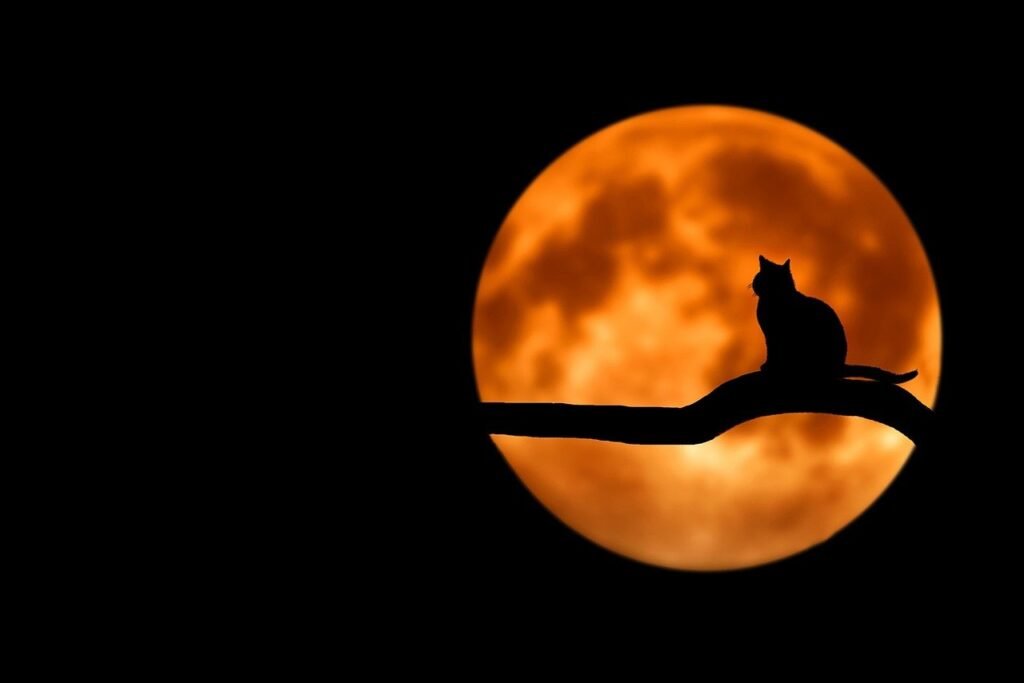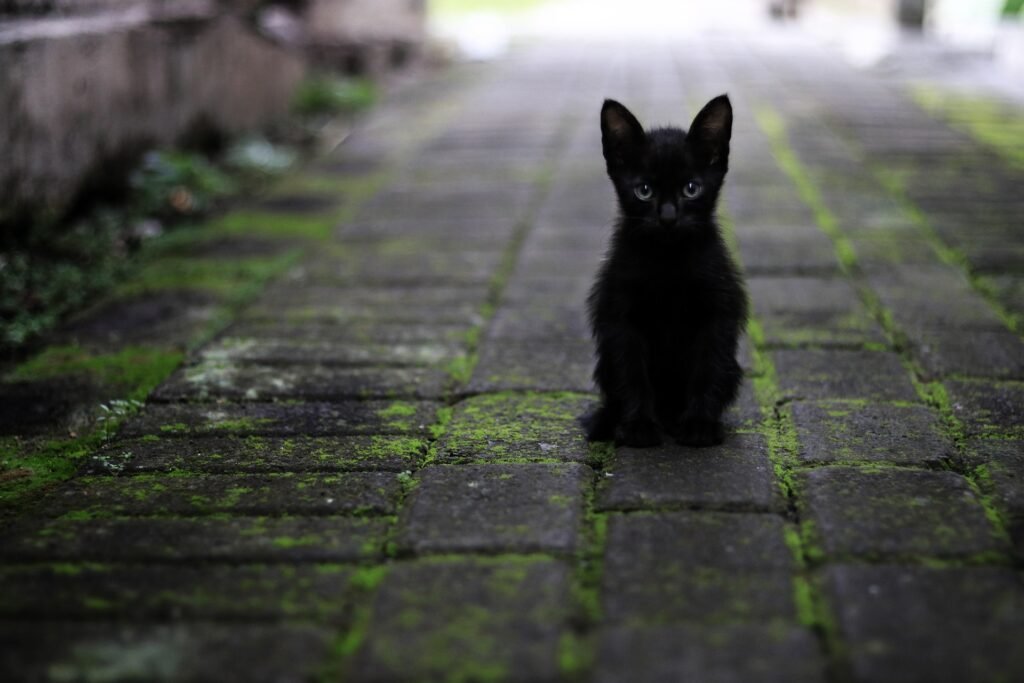
A stray walks through an open door and the room splits in two. One person smiles. Another goes quiet. That is the everyday shape of the black cat entering house superstition: same animal, same doorway, two opposite stories. This piece stays with that confusion. It lays out Indian folk readings, the Western shadow some people borrow, and the ordinary reasons a cat may simply want food, shade, or a quiet corner.
The question is not whether cats matter. They do. The question is whether coat color is a message about money, danger, or news. Indian households have argued this for a long time. Some call the visit lucky. A smaller group calls it unlucky. A calm look at both claims, plus the practical side, is more useful than either panic or blind faith.
Indian Folk Beliefs About Animals and a Black Cat in the House
Indian life has always lived close to animals. Cows, dogs, crows, owls, and cats all pick up meanings in village talk, family stories, and regional custom. Those meanings are not one national rule. They change from place to place. The Hindi source is clear on this point: beliefs about a black cat arriving or being seen at home differ by region, and people often stay confused because the stories do not agree.
That confusion is the first fact worth holding. If a visit were a single, settled sign, there would be no argument. Instead, one household treats the cat as a guest carrying good fortune. Another treats the same guest as a warning. Both readings sit inside culture. Neither reading, on its own, proves that an event in the outside world has already been decided.
It also helps to separate two different scenes that get mixed in conversation. One scene is a cat stepping into a house. The other is a cat crossing a road in front of someone. The source treats the road-crossing idea as a very common superstition and as something slightly different from a cat coming indoors. Mixing the two scenes makes the fear larger than the event.
Folk belief is not the same thing as a laboratory finding. It is a traditional account people repeat because elders repeated it, or because a neighbor once linked a bad week to a cat on the verandah. Seeing those stories as folk tales, not as sealed truth, is the stance the source asks for. You can respect the culture that produced them without handing your next decision to a coat of fur.
The rest of this article keeps that line. Where a claim is a folk belief, it is labeled as one. Where a reason is practical — hunger, heat, curiosity, territory — it is labeled as that. Color is part of the animal’s body. Luck is a story people attach to the body. Those two things should not be glued together without saying so.
When a Black Cat Is Treated as a Good Omen
On the hopeful side of Indian folk talk, a black cat at the door is not always a scare. Some traditions read the visit as a sign of wealth and prosperity. The idea, as the source records it, is that the animal arrives with positive energy and fortune. That is a cultural belief, not a measured transfer of money from the cat to the cupboard. Still, it is one of the older friendly readings, and it is why some families feel relieved rather than alarmed.
A second friendly reading is protection. In several cultures mentioned in the source, a black cat is thought to guard the house from harmful forces and negative energy. People say it stops that energy from coming in. Again, this is belief language. It describes how some communities imagine safety, not a test that has isolated “negative energy” as a substance a cat can block. The feeling of being watched over can still be real for the believer, even when the mechanism stays unverified.
A third reading is news. Some people take the arrival as a hint that good news or an auspicious piece of work is near. The cat becomes a messenger in the story, not because it speaks, but because the household wants a sign and the animal is the nearest unusual guest.
There is also a pet-specific version. If someone is already thinking of keeping a cat, and a black cat walks in on its own, folk talk often treats that as a lucky hint that the animal will be a good companion. The source frames this as a common hopeful reading, not as proof that the cat chose the family by destiny. Companionship can still grow after that. The luck label is optional. The care is not.
Notice what all four friendly readings share. They attach a human hope — money, safety, good news, a loyal pet — to an animal that cannot confirm or deny the story. That does not make the hope ugly. It does make it a story. Holding the story lightly is kinder to both the person and the cat.
The Inauspicious Reading and the Path-Crossing Fear
The other side exists, but the source describes it as a smaller circle. Some people treat a black cat in the house as an ill omen. They may expect misfortune or coming obstacles, especially if the cat behaves in a particular way. The source does not list a catalogue of those behaviors. It only notes that “a particular way” can trigger the fear. That vagueness itself matters. Once “particular” is undefined, almost any stretch, stare, or sudden run can be drafted into the omen.
The source also says this darker reading looks more influenced by Western cultures. In the medieval West, black cats were tied to witchcraft and evil spirits. That association traveled. In India, some people now speak in a similar key even when their own region also holds the prosperous or protective readings above. Two inheritances sit in the same street: a local hope and an imported dread.
Separate from the house visit is the road. A black cat crossing someone’s path is a very common superstition and is often treated as inauspicious. The source is careful: that scene is a little different from a cat entering a home. People still mash them together. A cat that only wanted to cross a lane gets blamed for a delayed bus. A cat that only wanted shade gets blamed for a quarrel. The pattern is the same. An animal moves. A human writes a plot.
Calling these ideas folk tales is not mockery. It is a boundary. If every dark-coated animal is a verdict, then ordinary life becomes a courtroom. The source’s warning is simple: do not accept these beliefs with closed eyes. You can know the story, even repeat the story, and still refuse to let it steer a medical choice, a job choice, or cruelty toward a living creature.
Fear also has a practical cost the omen itself never pays. A frightened household may shout, throw things, or slam a door on an animal that came in because a window was open. The superstition then creates the only real harm in the scene. That is worth noticing before the next cat arrives.
Black Cat Entering House Superstition Versus Everyday Animal Behavior
From a scientific point of view, as the source states it, an animal’s color has no direct link to luck or to a coming event. Black fur does not write a future. The black cat entering house superstition treats color as a signal. Biology treats color as pigment. Black cats are black because of a particular gene. That gene does not make them mysterious or magical. Cats of every color, the source says, are affectionate and intelligent living beings.
If color is not the cause, why does the cat come in at all? The source gives ordinary reasons. Cats wander looking for food, water, and safe shelter. If the area around a house offers scraps, a bowl, or a quiet ledge, they may step inside. Curiosity is part of their nature. An open door or window is an invitation to look around. In extreme heat or cold they look for a place that feels safer and more comfortable, and a human home can look like that place. They also mark territory. The house may simply sit inside a range they already treat as theirs.
None of those reasons needs an omen. They need a gap under a door, a smell of milk, a warm motor, or a shaded corridor. Once you list them, the visit looks less like a message and more like an animal solving a problem. That is the practical layer the superstition skips.
FACT BOX
The Hindi source’s core claims, kept as claims: coat color has no direct connection to fate or to a coming event; black fur comes from a particular gene and does not make a cat magical; cats enter homes for food, water, shelter, curiosity, weather relief, or territory; a cat crossing a path is a separate, very common superstition from a cat walking into a house; the unlucky reading in India is described as a smaller view and as more influenced by Western medieval links between black cats, witchcraft, and evil spirits. These are the source’s distinctions. They are not new studies added here.
Keep the two layers apart and the argument gets quieter. Layer one is the body of the cat — gene, hunger, heat, curiosity. Layer two is the story the household tells. The superstition lives almost entirely in layer two. Layer one would still be true if nobody in the room believed a thing.
Superstition Versus Reality: How Belief Shapes the Story
The source asks for a balanced view rather than a new ritual. In a modern setting, it says, it is better to rise above superstition and use reasoned thinking. An event should not be judged only by its outer look. A black coat is an outer look. So is a sudden entrance. Neither one, by itself, tells you what your week will contain.
Mind plays a part. The source’s point is straightforward: people often meet the world in the mood they already carry. If you decide the visit is auspicious, the mind stays positive and later events are read in a kinder light. If you decide the visit is inauspicious, the mind turns sour and small troubles get stapled to the cat. That is not a magic law. It is a description of attention. What you watch for, you find. What you fear, you name.
There is also a moral layer the source does not bury. An animal walking into a house, whatever its color, is a chance to meet another life with kindness. Challenges in a human life, it adds, come from actions, decisions, and outside circumstances — not from a cat crossing a threshold. That sentence is the source’s way of returning responsibility to the person. Fate, in that framing, is not stored in fur.
This is where coincidence and cause get confused. A bill arrives the same afternoon. A child falls ill the same night. The mind wants a single culprit and the cat is standing there. Linking those things is a story move, not a demonstrated chain. The honest sentence is: two things happened near each other. The dishonest sentence is: the cat made the second thing happen. Critical thinking starts by refusing the second sentence unless there is a real mechanism, not only a matching mood.
None of this requires contempt for people who grew up with the omen. It requires a pause. Pause long enough to ask what the cat needed. Pause long enough to ask what you are about to decide out of fear. Those two pauses already separate a folk tale from a plan.
If a Black Cat Walks In, What Then?
The source’s practical list is calm on purpose. First, stay calm. Do not frighten or chase the cat. Cats are sensitive. Fear can make them bolt or defend themselves. A slammed door and a shouted omen help nobody in the room.
Second, if the animal looks hungry or thirsty, you may offer a little water and cat food, or milk, as the source mentions. That is care, not a ritual. It does not “buy” luck. It answers a body that may have walked a long lane.
Third, keep a safe distance until you understand the behavior. Some cats are social. Some are shy. Rushing in for a hug can turn a quiet visit into a scratch. Distance is not coldness. It is reading the guest before you decide what kind of guest it is.
Fourth, if the cat looks ill or injured, contact a local animal-welfare group or a veterinarian. That step is about the animal’s body, not about clearing a curse. Fifth, if the cat seems at ease with you and you already want a pet, you may consider keeping it. The source calls cats wonderful companions. Sixth, if it is only wandering and wants to leave, give it a safe way out. Do not trap a visitor who did not ask to become a resident.
Read as a whole, the list is almost the opposite of an omen script. It does not tell you to lock the house, break a coconut, or cancel a journey. It tells you to lower your voice, offer water if needed, watch, get help if the animal is hurt, and let it go if it wants to go. That is a humane response. It also happens to be the response that does not manufacture extra fear.
Advice
Keep the visit small. A cat in the hallway is a cat in the hallway. It is not a court verdict on your year. Distinguish coincidence from cause: two events can share an afternoon without one creating the other. If you feel the old fear rise, name it as fear, not as evidence.
Do not make a money choice, a travel choice, or a family choice because of coat color. Those choices need your work, your timing, and your judgment. The source’s line is the same in plainer English: luck is not sitting in an animal’s color. Conduct and intention sit closer to the life you actually live.
Treat the animal as an animal. If it needs water, offer water. If it needs an exit, open an exit. If it is hurt, call someone who can treat animals. Cruelty dressed up as “removing a bad omen” is still cruelty. Kindness does not require you to believe the friendly folk tale either. It only requires that you not punish a living body for a story.
💡 If a black cat walks in, feed the fact in front of you — hunger, heat, curiosity — before you feed the omen. The omen can wait. The animal cannot.
FAQ
Is a black cat entering the house good luck or bad luck?
The source’s conclusion is that it is neither a supernatural good sign nor a doomed omen. It is a natural event. People then paint it lucky or unlucky with their own outlook. Folk beliefs exist on both sides. Color itself is not presented as a cause of fortune.
Why do some Indian families call the visit auspicious?
Traditional accounts in the source mention wealth and prosperity, protection from harmful or negative forces, a hint of good news, and, for people already thinking of a pet, a hopeful sign that the cat may be a good companion. Those are cultural readings, not measured results.
Why do others treat a black cat as unlucky?
The source describes this as a smaller view and as more influenced by Western cultures that, in the medieval period, linked black cats to witchcraft and evil spirits. Some people in India also connect the visit to misfortune or coming obstacles, especially if the cat behaves in a way they find striking. A cat crossing a path is a separate common superstition.
What does a scientific or practical view say?
Color has no direct link to luck or to a coming event. Black fur comes from a particular gene. Cats come indoors for food, water, shelter, curiosity, relief from extreme weather, or because the house sits in a range they already treat as territory.
What should you do if one walks in?
Stay calm. Do not scare or chase it. Offer water and food if it looks hungry or thirsty. Keep a safe distance until you read its mood. Get veterinary or welfare help if it looks sick or hurt. Consider keeping it only if it is at ease and you want a pet. If it wants to leave, let it leave safely.
Disclaimer: This article explains folk beliefs, a Western historical association as described in the Hindi source, and everyday reasons a cat may enter a home. It is not a religious ruling, a veterinary manual, or a promise about luck. Beliefs vary by family and region. For an injured or ill animal, speak to a local veterinarian or animal-welfare group. Do not harm an animal in the name of an omen.