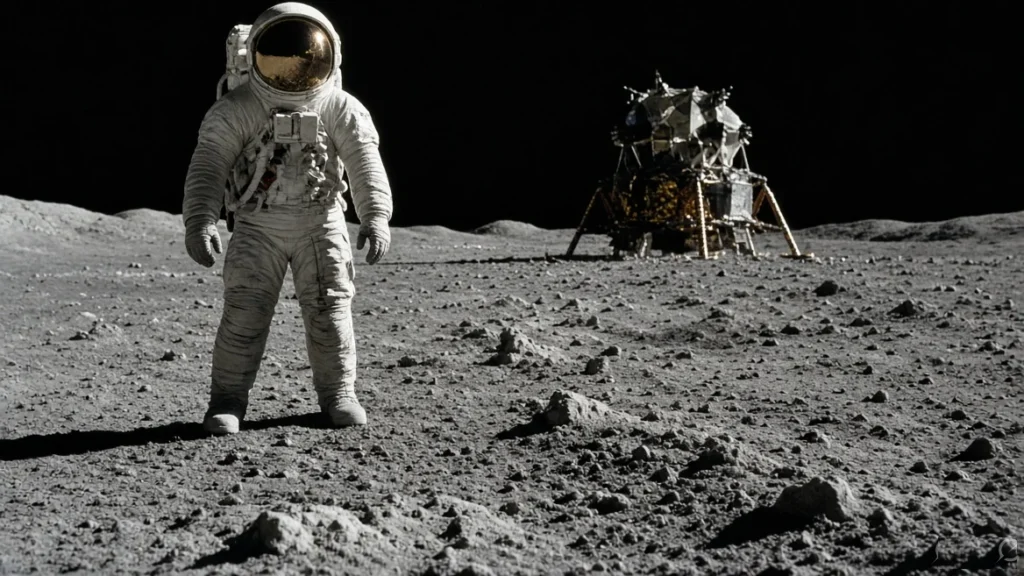
On the night of 20 July 1969, a huge share of the planet sat in front of a television. The picture was grainy: dust, a ladder, a white suit. Then came the line schoolchildren still recite. The Apollo 11 moon landing 1969 was not only a flight plan. It was the first time a human being stepped onto another world while the rest of us watched.
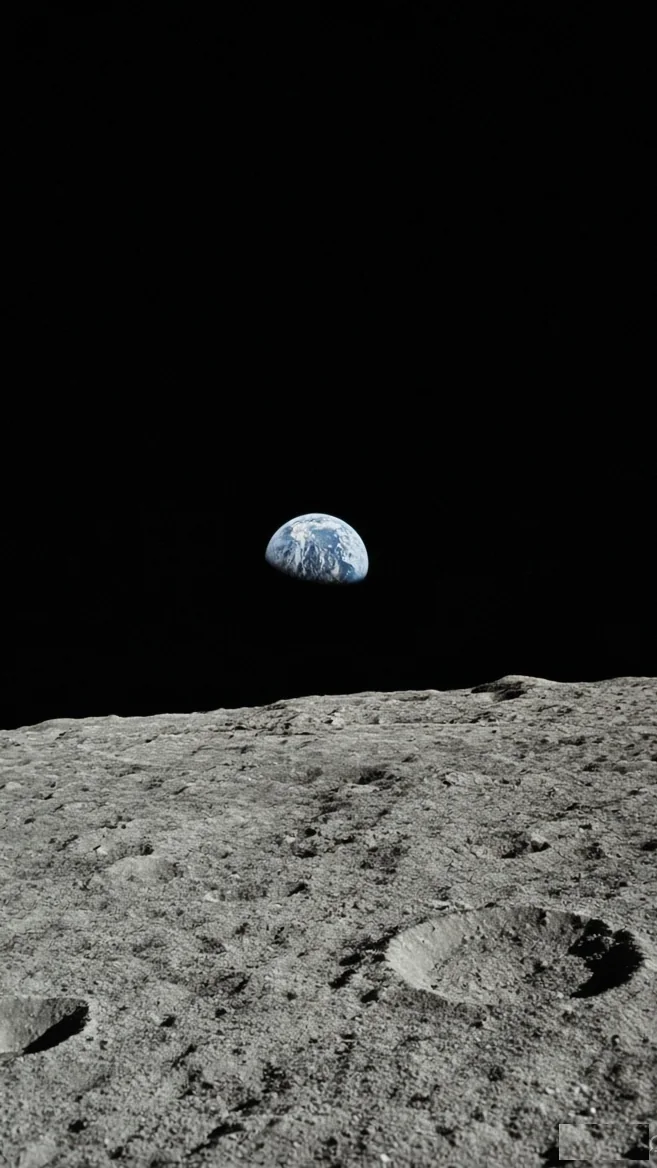
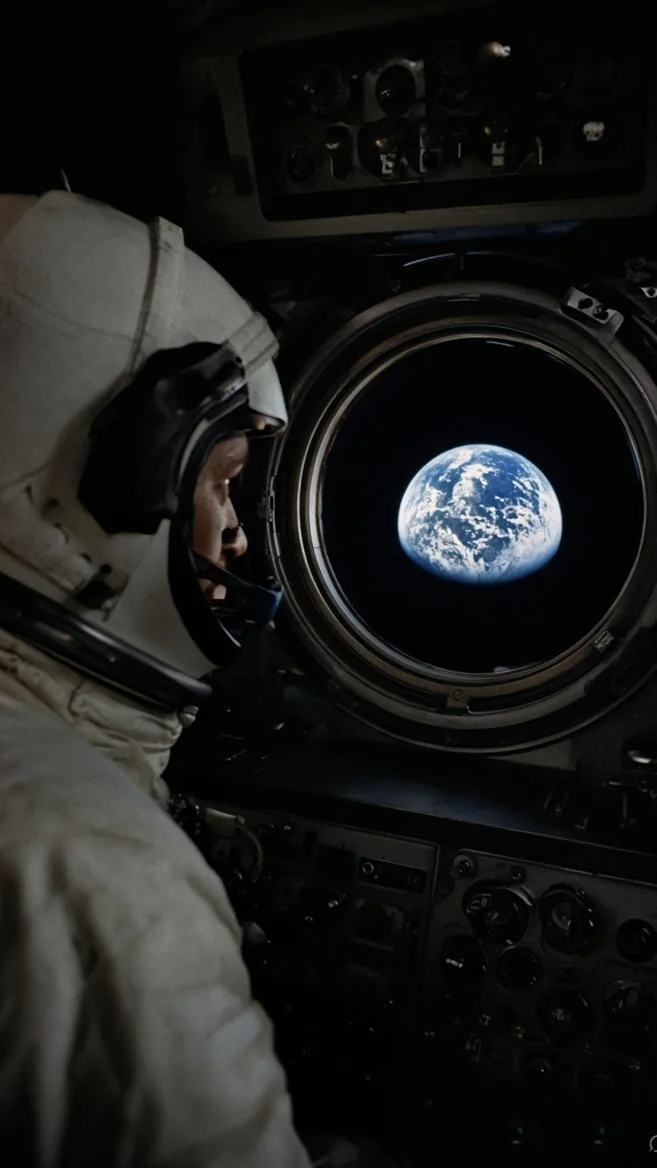
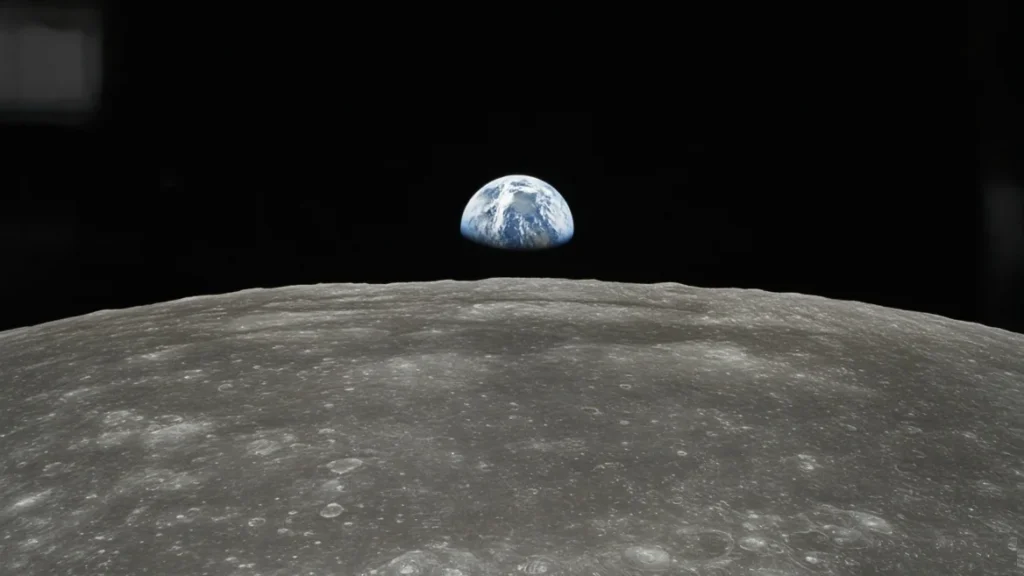
Photographs changed after that night. The Moon stopped being a metaphor. It became a cold, dusty place where a person could walk, kneel, and look up at a blue marble pinned to a black sky.
Why the 1969 moon landing still holds
People still search moon landing 1969 because the event ties science, politics, and television into one frame. The Cold War was on. The Soviet Union had already sent the first satellite and the first person into space. President John F. Kennedy had set a deadline: a crewed landing before the decade ended. Apollo 11 became the last act of that race.
The pictures do not only show a win. They show an empty sky, long shadows, and a thin line of survival. One wrong crater, one low fuel reading, and the story turns. That tension is why the frame still feels new.
Neil Armstrong spoke as he left the ladder: “That’s one small step for [a] man, one giant leap for mankind.” Some hear the “a.” Some do not. The argument continues. The photograph argues less. The frame is plain: a person was there.
Three men, two ships, one night
Commander Neil Armstrong, lunar module pilot Buzz Aldrin, and command module pilot Michael Collins lifted off from Cape Kennedy on 16 July 1969 aboard a Saturn V. The command module was Columbia. The lander was Eagle.
They entered lunar orbit on 19 July. On 20 July, Armstrong and Aldrin moved into Eagle. Collins stayed alone in Columbia. During descent the computer aimed them at a boulder field. Armstrong took partial manual control. Fuel was low. Dust blew up from the engine. Then the call that let Mission Control breathe: “Houston, Tranquility Base here. The Eagle has landed.”
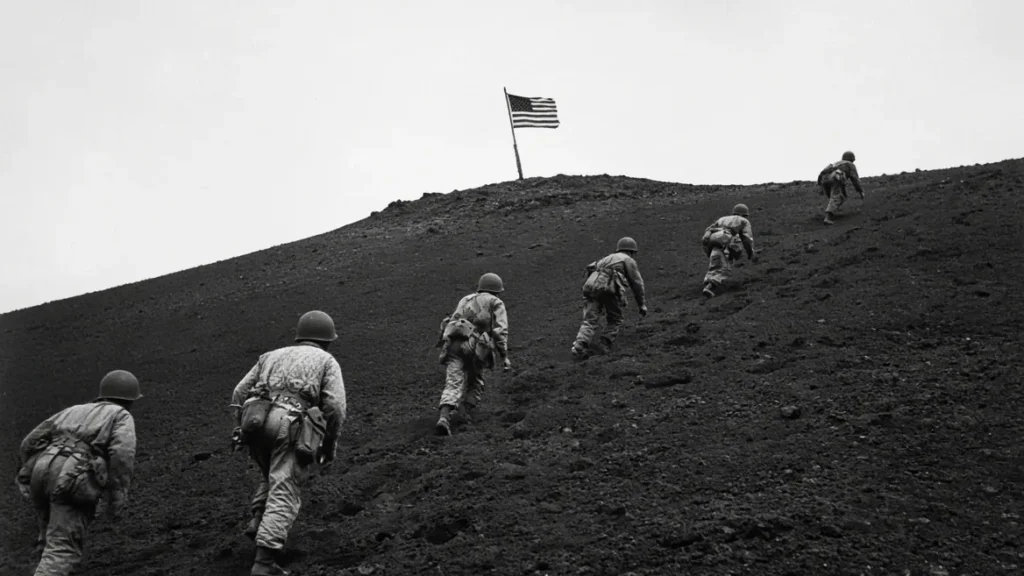
Official touchdown: 20:17 UTC on 20 July 1969, in the Sea of Tranquility. Armstrong’s first step came hours later, at 02:56 UTC on 21 July. Aldrin followed about 19 minutes after him. They spent roughly two and a half hours on the surface, collected rocks, set up experiments, raised a flag, and left the pictures the world still opens.
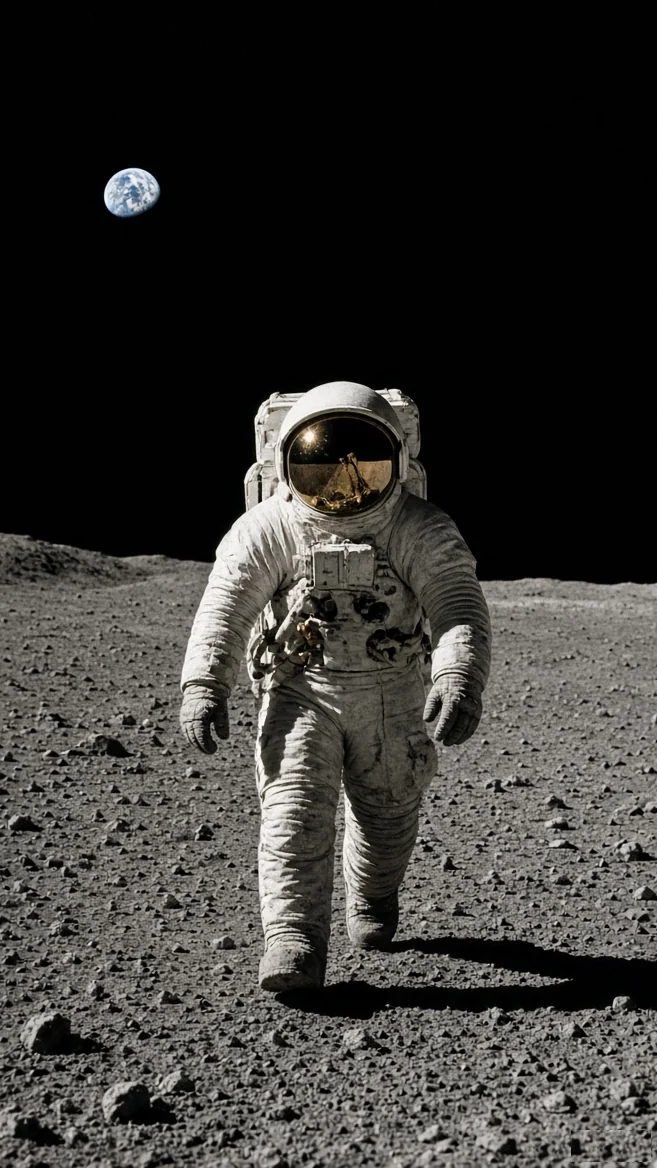
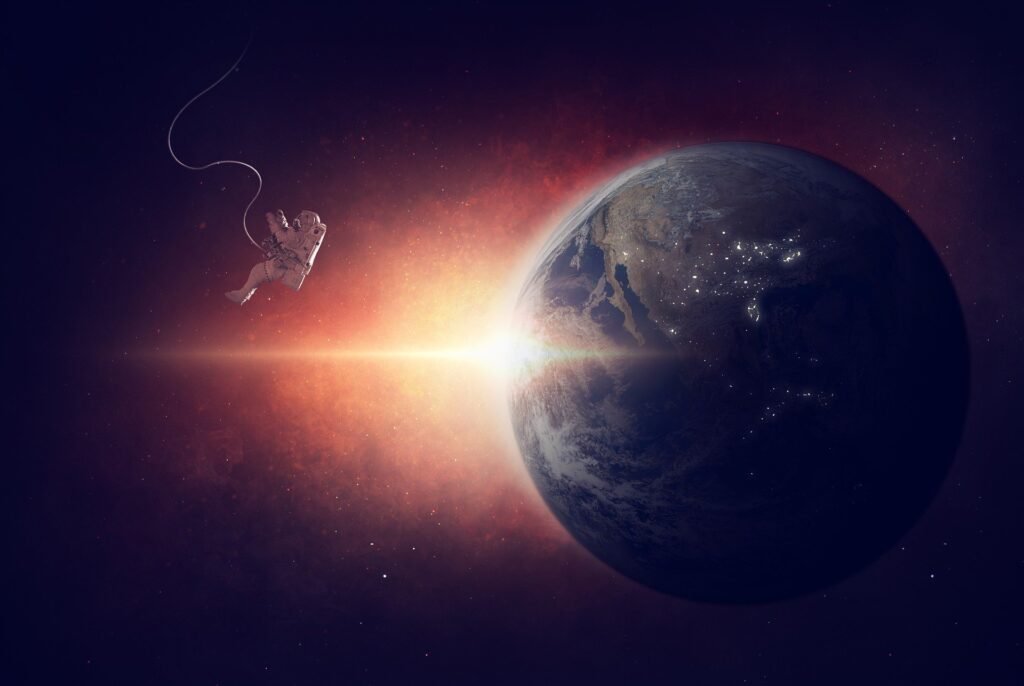
Earth hangs over an Apollo 11 astronaut walking across the lunar dust.
How the photograph changed television
NASA estimated that hundreds of millions of people followed the broadcast — often cited around 650 million. The exact figure shifts by source. The scale does not. For the first time a large part of Earth watched one moment together. The signal was black and white and rough. The ladder, the boot, and the slow walk still reached living rooms.
The frames that travel farthest were made on Hasselblad cameras. Film caught lunar dust, gold visors, and the lander’s foil with a clarity that feels half camera, half place. Posters, textbooks, and newsrooms locked onto those stills.
That is why people hunt for an “original moon landing photo.” They want a sacred master print. The mission produced many frames. Some are public. Some sit in archives. Some spread with a crop and a caption. This story is about that night — not a fake claim that one file is the original NASA still.
The man outside the famous frame: Michael Collins
Two men stood on the Moon. A third circled above them. If Eagle had failed to rise, Collins had a way home and the weight of leaving his crew. His quiet orbit is less romantic, so it appears in fewer pictures. Without that orbit the landing is incomplete.
All three splashed down in the Pacific on 24 July 1969. The mission lasted a little more than eight days. On Earth they were heroes at once. The photograph’s work did not stop there. Each new generation opens the same frame and asks if it was real, where the camera sat, why the flag looks as if it waves, why the shadows fall at that angle.
Most of those doubts come from not reading light. There is no air, so the flag does not flutter; a rod holds it out. The sky is black because, even in daylight, the Moon has no atmosphere to scatter blue. The shadows are long because the Sun sat low. The picture is not lying. We often under-read the physics.
Why the search returns every July
Around 20 July the queries rise again. A new class asks why people do not go to the Moon the way they did then. They do go — just not in the same costume. Landers have returned. New crews are on the books. Private firms fly in orbit. The 1969 frame is no longer a catalogue of hardware. It is a promise that a far place can still become a human story.
The photograph also lasts because it does not read as a clean political poster. Yes, the flag is American. Yes, the race was a Cold War project. But the top of the frame is black sky and the bottom is dust. Politics is read second. The eye stops first.
That is the hold of the Apollo 11 moon landing 1969. It makes one night large enough that, half a century later, people still look for the same dust, the same ladder, the same small blue home. The Moon has not moved. The question has not either. The only change is the screen: a pocket now, not a set in the living room.