Why do families host Kanya Bhojan?
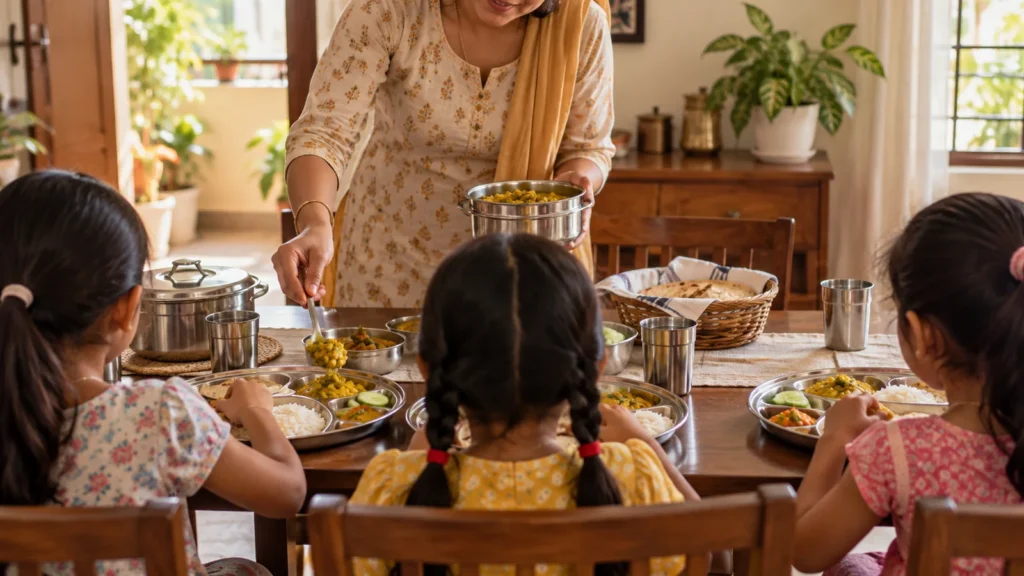
Kanya Bhojan is the practice of inviting young girls for a meal and welcoming them with respect. Many families see it as an expression of devotion to the Divine Mother and of respect for daughters. Although it is widely associated with Navratri, you do not need to wait for that festival to share a meal on an ordinary day.
Quick answer: You can host Kanya Bhojan on any day—for a birthday, a family occasion, after a prayer, or simply as an act of care. There is no single compulsory date or auspicious time for an ordinary meal. If it is part of a specific vow or ceremony, follow the customs of that observance.
Why do people arrange it outside Navratri?
Some families choose a birthday or anniversary to share their happiness. Others offer a meal after fulfilling a vow, completing a prayer, or following a family tradition. Many do it without a special occasion, simply to welcome children warmly.
For believers, the gesture expresses reverence for feminine strength. In everyday terms, it is an opportunity to treat children with equal dignity. It should not be presented as a guarantee of wealth, a cure for illness, or a miraculous result.
When should you hold Kanya Bhojan?
For an ordinary day, choose a morning or lunchtime that suits the girls and their parents or guardians. Invite them with permission in advance. Avoid disrupting school, rest, or family plans. Their comfort matters more than a clock time.
If your family has a puja, serving the meal afterward may be convenient. If you have made a vow for a particular tithi, check a local panchang and your family custom. Our separate guide covers Kanya Pujan on Navratri’s Ashtami or Navami; this article is about meals on other days.
How many girls should you invite, and what should you serve?
Some families invite nine girls as a symbol of the nine forms of Durga. There is no fixed number for an ordinary act of hospitality. Invite one, two, or as many children as you can host comfortably and respectfully.
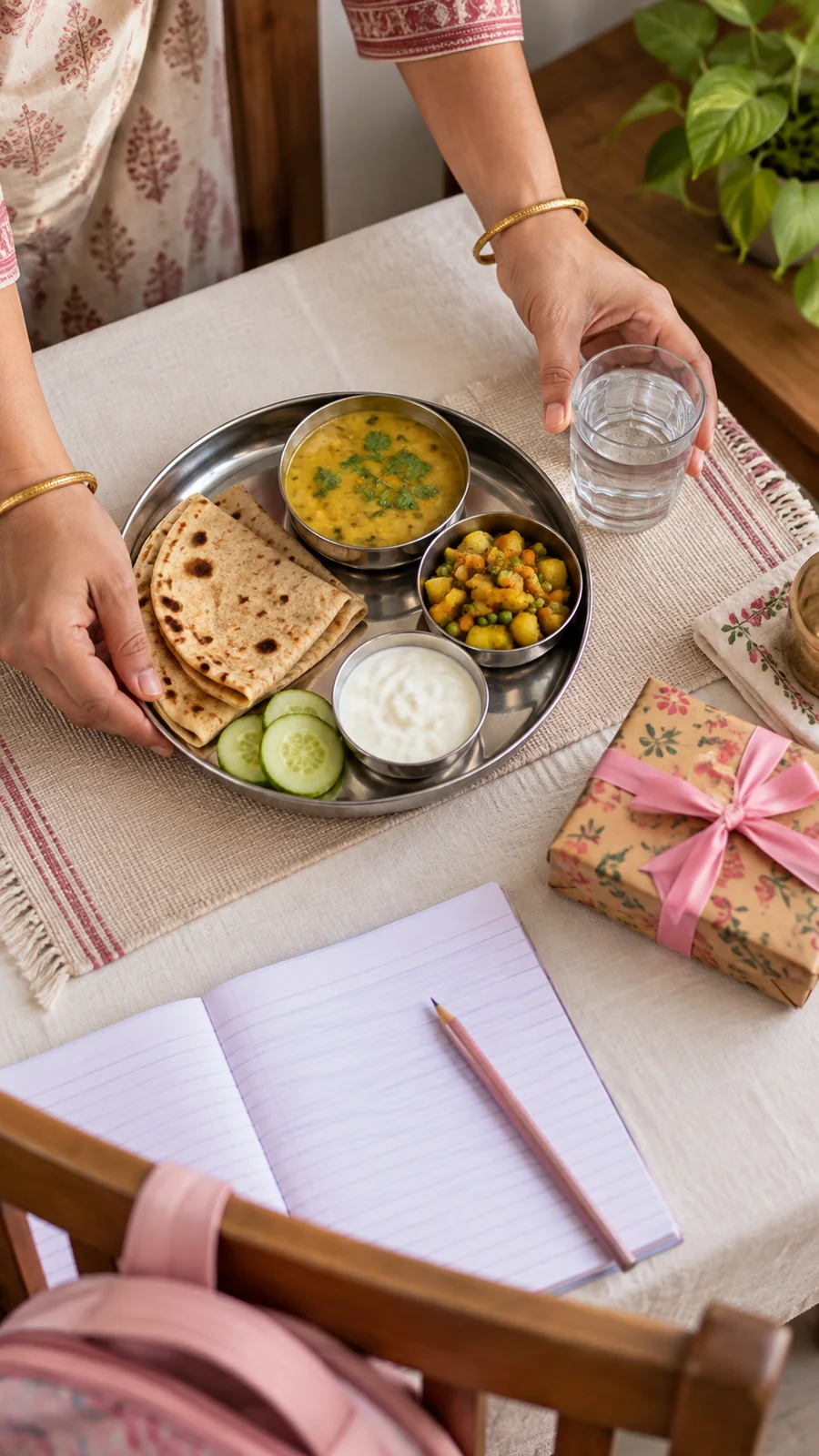
Puri, black chickpeas, and halwa are familiar traditional foods. You can also offer kheer, fruit, or another fresh homemade vegetarian meal. Ask about age, preferences, and allergies. Provide clean water, keep the food gentle, and never pressure a child to finish a plate.
Is Kanya Pujan the same as an ordinary meal?
Kanya Pujan may include tilak, aarti, offerings, and dakshina as religious customs. An ordinary Kanya Bhojan can simply be a respectful meal. No child should have to take part in a ritual that makes her uncomfortable.
A small gift or dakshina is optional. Treat every child equally, and ask a parent or guardian before taking or sharing photographs.
What matters most
Respect for girls should continue beyond a single meal. It also means taking their health, education, safety, and choices seriously in daily life. You can host Kanya Bhojan with sincerity on an ordinary day; there is no mandatory muhurat to wait for.