In March 1936 Dorothea Lange was on a California road for the Farm Security Administration, sent to show Depression farmers and pickers. A sign said Pea-Pickers Camp. She drove twenty miles past it, then turned around. In the Nipomo camp she found a mother. Migrant Mother 1936 comes from that stop.
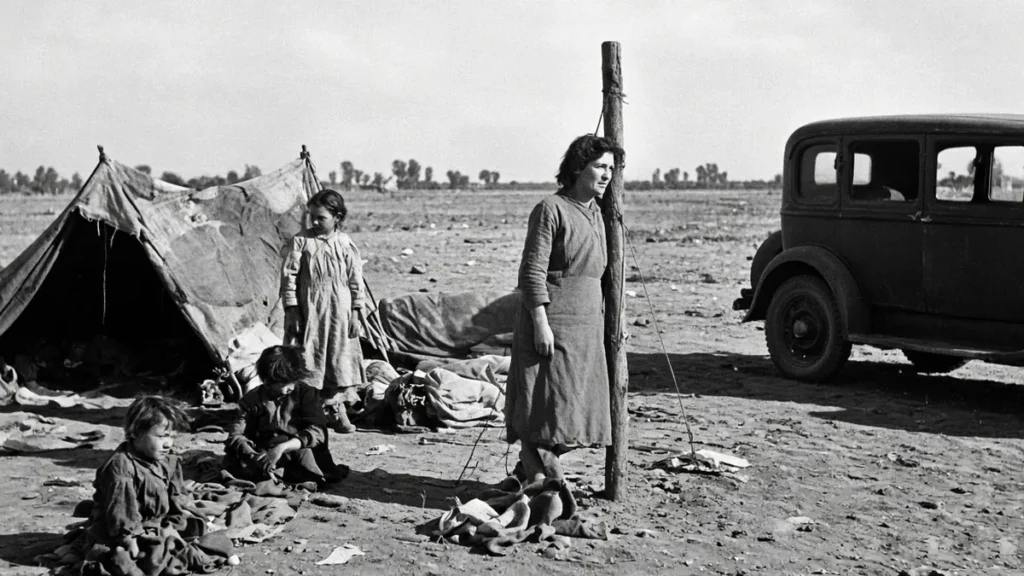
Lange later wrote that the hungry woman pulled her like a magnet. The woman asked no questions. Lange made five to seven exposures, stepping closer each time. The frame the world kept puts the face in the center and two children turned into her shoulders. The pictures here do not copy that pose. They stay with the dust, the tents, the car.
Where Migrant Mother was made
Place: Nipomo, California. The pea crop had frozen. There was no work. Lange’s caption said the mother was 32, with seven children, living on frozen vegetables and birds the children caught. Tires sold for food — that is Lange’s note.
Decades later the woman had a name: Florence Owens Thompson, an Oklahoma-born worker of Cherokee descent. In the 1970s she disputed parts of Lange’s story. She said they did not talk. She said the tire sentence was not hers. The photograph made her a symbol. The symbol did not ask for a name or a yes.
On 10 March 1936 the San Francisco News printed camp pictures. On 11 March an editorial ran with the face: what does the New Deal mean to this mother and her children? Aid moved. The picture worked. The family’s face became public property.
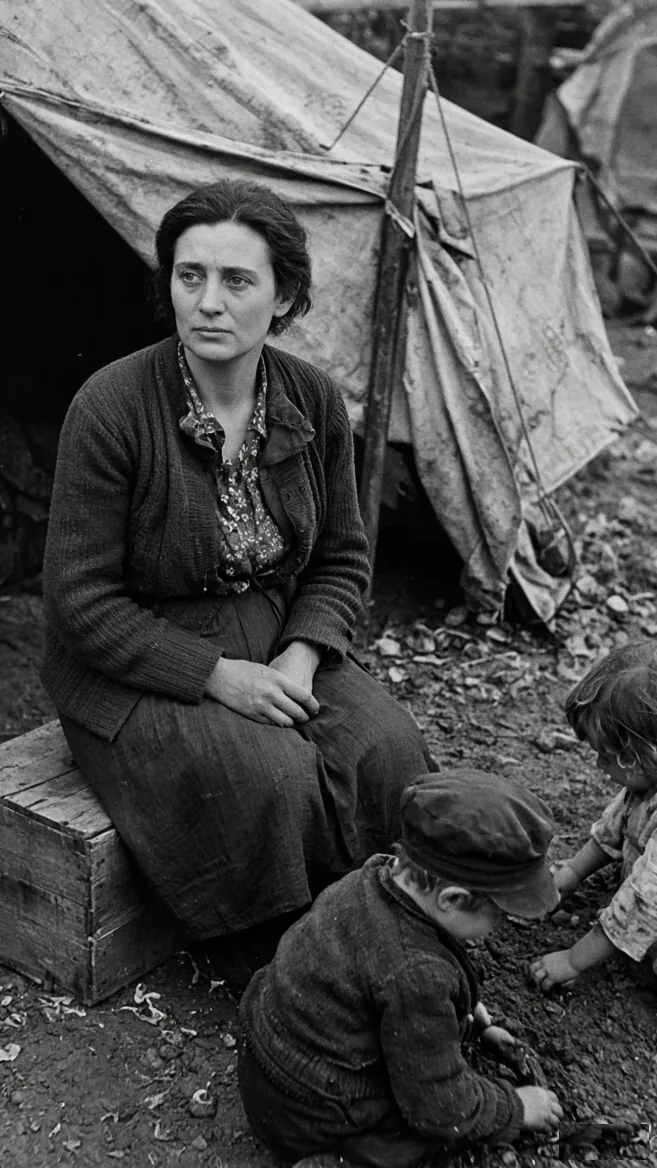
Florence Owens Thompson was 32, a mother of seven.
An FSA camera and a private life
The Resettlement Administration became the FSA. Lange worked those roads from 1935 to 1939 across California, the Southwest and the South. Dust Bowl and Depression pushed families west. Washington wanted pictures that could move Congress and a breakfast table. Dorothea Lange’s frame became the fastest wheel on that machine.
MoMA showed it in 1940 as “Pea Picker Family, California.” By the 1966 retrospective the title was Migrant Mother, Nipomo, California. The name changed. The face did not. Thompson stayed anonymous for years. When the name arrived, so did anger: we were a family, not a hunger poster.
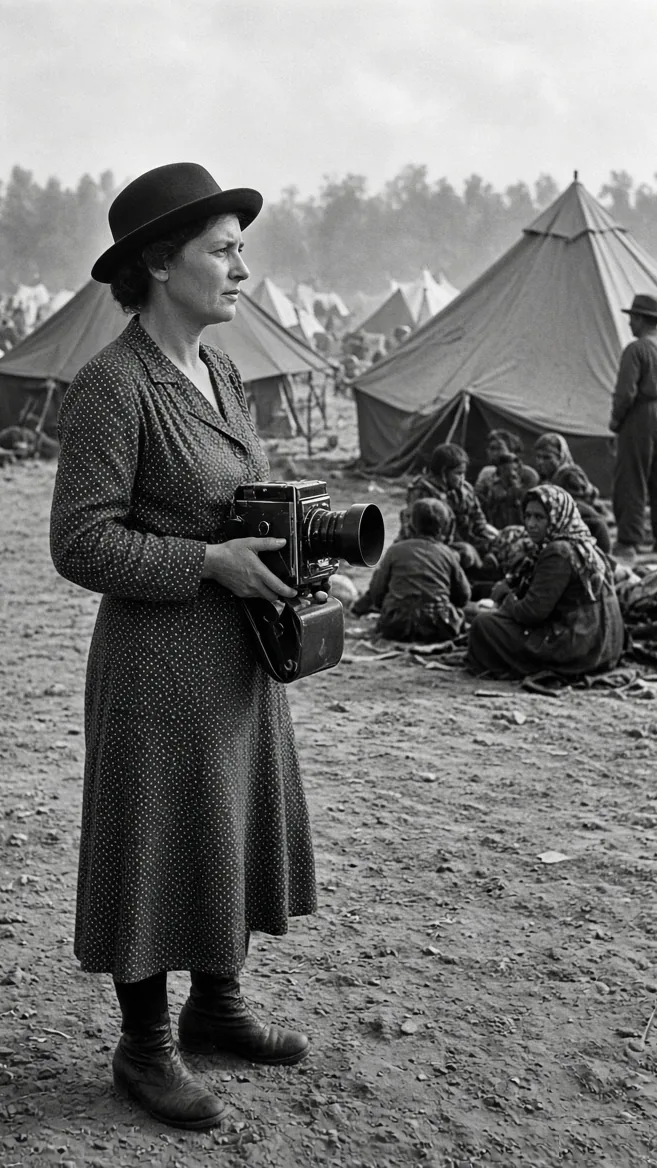
Lange made five to seven exposures. The famous one is the closest face.
What the picture saved and what it took
Food reached the camp. That is the save. The mother’s consent is not clean in the file. That is the taking. Documentary pictures often do both. Lange was a serious camera. A camera can still walk into a home without knocking.
FSA photographs are U.S. government work, so the original files sit in public archives. A viral crop is another object. These images do not claim to be Lange’s negative. The story is still March 1936.
Searches now say Migrant Mother 1936, or Florence Thompson, or Dorothea Lange. All three open one camp. The Depression ended. The tents came down. The hand-on-cheek frame did not. It lasts because a face of hunger still outruns a policy paragraph.