 Vista
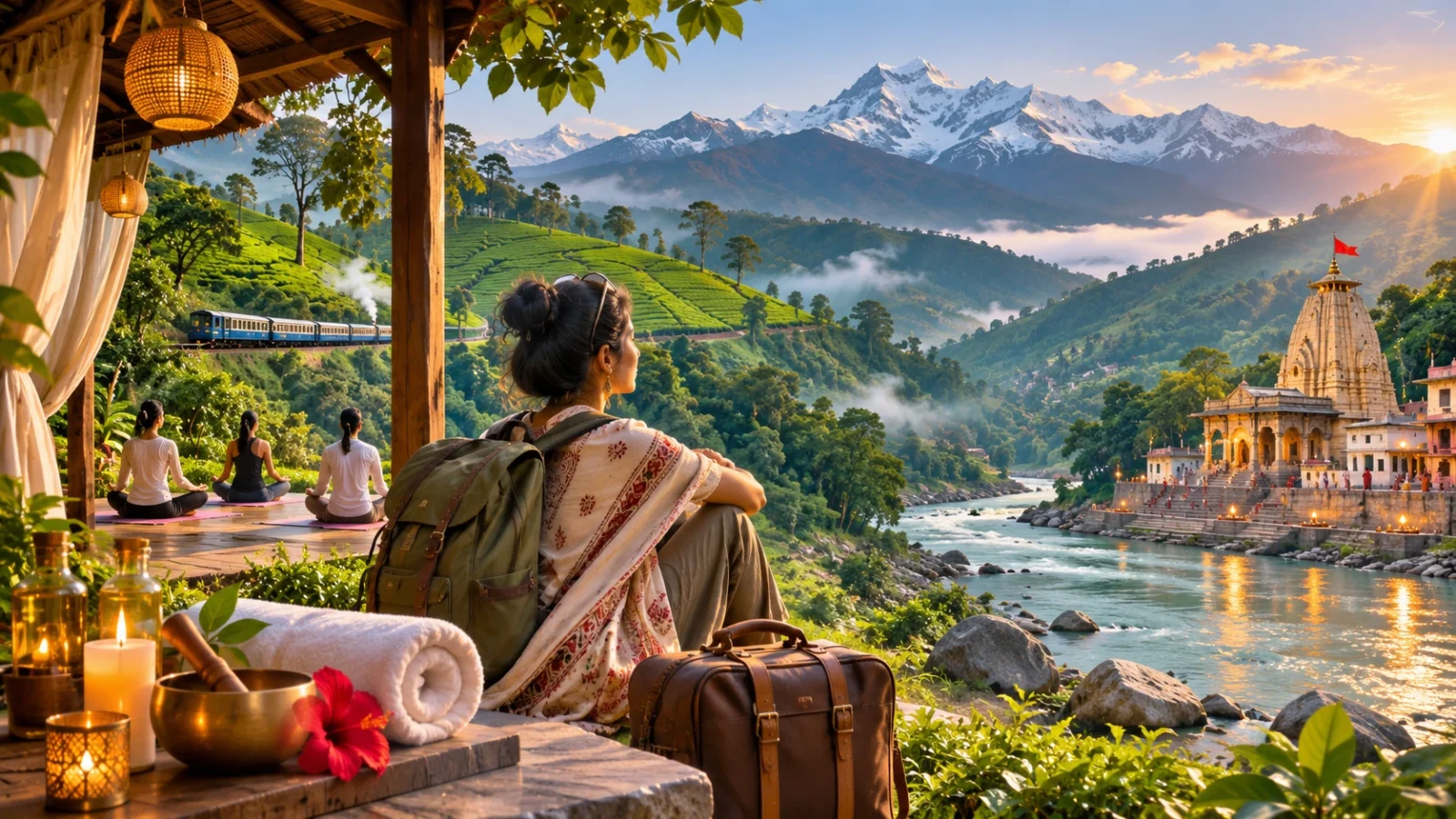
Google’s India travel-trends report published on 23 November 2026 reveals a pronounced shift in what people search for when planning a trip. Queries for ‘wellness travel india’ rose 1,600%, ‘fitness trip’ rose 950%, ‘hidden gems india’ increased 400%, and ‘1 day trip near me’ grew 130% over the past year. Searches connected to independent travel and AI-assisted planning also surged. These are changes in Google search interest for specific queries, not proof that hotel bookings, actual tourist arrivals or spending increased by the same percentages. The interesting story is what people want from a holiday: rest, shorter journeys, meaningful experiences and more control over the plan.
Updated: 23 November 2026 | Source: Google India Travel Trends
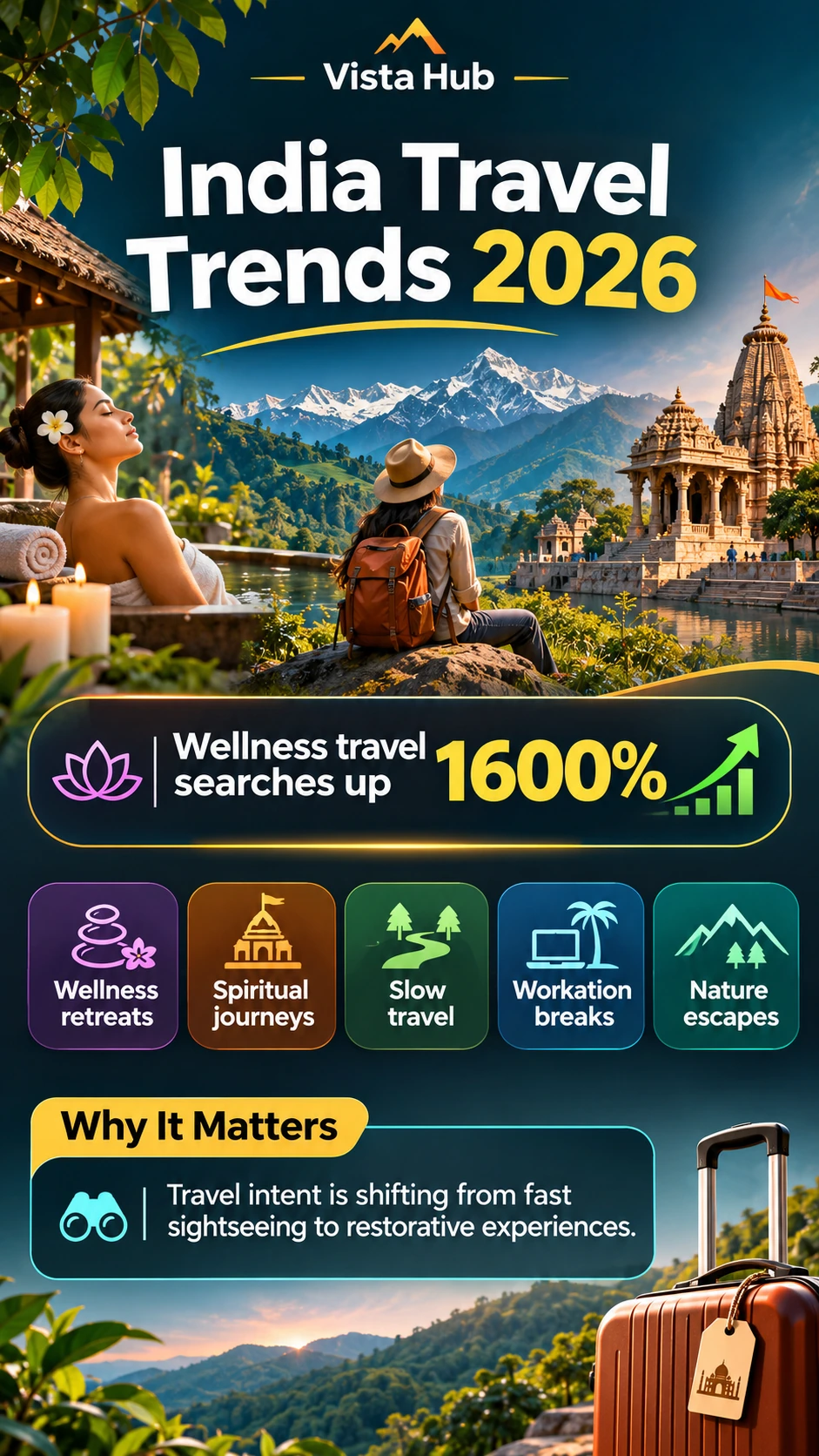
Google India Travel Trends 2026: reported search growth
| Google Search Phrase | Reported Change |
|---|---|
| wellness travel india | +1,600% |
| fitness trip | +950% |
| hidden gems india | +400% |
| silent retreat | +150% |
| 1 day trip near me | +130% |
| travel community | +400% |
| AI for Travel | +600% |
Percentages describe specific search interest changes reported by Google, not booking or arrival counts.
Google’s India Travel Trends 2026: the most useful search signals
Google India’s official blog grouped the trends into experiences, micro-trips and solo exploration. Its reported increases include ‘wellness travel india’ +1,600%, ‘fitness trip’ +950%, ‘silent retreat’ +150%, ‘hidden gems india’ +400%, ‘1 day trip near me’ +130%, ‘travel community’ +400% and ‘AI for Travel’ +600%. ‘What is slow travel’, ‘solo travel guide’, ‘best places to travel solo’ and ‘solo travel cost india’ are described as breakout search queries rather than given exact percentage values. A breakout label does not establish the number of searches. Any article ranking destinations from these figures alone would be making a leap unsupported by the report. The practical takeaway is that the *language of travel planning* is changing, giving guides an opportunity to answer more precise questions.
Wellness travel +1600%: what do people mean by it?
Wellness-focused travel is different from simply choosing a comfortable hotel. A person may want a few days with better sleep, outdoor walks, quiet surroundings, meditation, yoga, a balanced routine or time away from screens. Google’s 1,600% search increase refers specifically to the phrase ‘wellness travel india’. It does not mean 1,600% more travellers checked into retreats, nor that any spa treatment produces a medically verified benefit. Useful destination research should consider accessibility, accommodation hygiene, realistic programme descriptions, weather and the qualifications of any instructor offering health-related services. A retreat with a pleasant atmosphere can be restorative without promising to cure medical conditions. For readers with an illness, dietary restriction or mobility issue, consulting the appropriate professional before strenuous activities is sensible.
Fitness trips +950% and silent retreats +150%
A fitness trip can centre around hiking, walking, cycling, a supervised yoga programme or a schedule that makes it easier to stay active. Google recorded a 950% rise in searches for the phrase ‘fitness trip’. That search alone does not say whether travellers are looking for a weekend boot camp, a mountain walk or an organised sports event; each is a potential sub-intent to research. Searches for ‘silent retreat’ increased 150%, suggesting interest in holidays with fewer distractions and quieter routines. Before booking a silent retreat, check the actual daily schedule, communication restrictions, medical access and cancellation rules. Some retreats are simply quiet stays, while others demand strict participation. Avoid ads offering miraculous mental-health cures or medical detoxification without evidence. Travel planning should give readers choices, not unrealistic promises.
Micro-trips: why ‘1 day trip near me’ rose 130%
A micro-trip fits into an ordinary work or family calendar. It might be a day trip, a nearby overnight stay or a short weekend rather than a week-long holiday. Google says ‘1 day trip near me’ searches grew 130% over the past year and Maharashtra led national interest in that query. The report also identifies high interest in weekend getaways and long-weekend travel. A useful micro-trip guide starts with travel time and transport reliability, not just a list of scenic photos. Consider whether a destination allows enough time for the main activity after the round trip. A three-hour drive each way leaves a very different experience from a one-hour railway journey. Include rest breaks, accessibility, water, weather and verified opening information before recommending an itinerary.
Hidden gems +400%: how to research lesser-known places responsibly
The phrase ‘hidden gems india’ attracted a 400% rise in searches in Google’s report. Yet a place being less familiar online does not mean it lacks residents, ecological sensitivity or visitor restrictions. A useful guide should identify where the place actually is, how it is reached, who manages it, which seasons make sense and whether permits are required. For national parks, protected areas or wildlife tours, check the relevant forest department’s rules rather than repeating an influencer’s route. Popular photographs can create unrealistic expectations because lighting, monsoon changes and crowds vary. Explain if a picture is illustrative and do not present a collage combining different Indian places as one real destination. Search demand for ‘hidden’ spots creates an opportunity for better fact-checking, not a reason to send people to unsafe or unapproved locations.
Solo travel and travel communities: independence without isolation
Google calls ‘solo travel guide’, ‘best places to travel solo’ and ‘solo travel cost india’ breakout queries. It also reports a 400% rise in searches for ‘travel community’, showing that independence and social connection can coexist. An excellent solo-travel article should make first-time decisions easier: selecting convenient transport, choosing accommodation with reliable reviews, budgeting for return travel, sharing an itinerary with a trusted person and knowing local emergency contacts. Prices should be researched for the travel date instead of inventing an average ‘solo trip cost’ for the entire country. A community group can offer useful company but should not be trusted automatically with identity documents, deposits or unverified private transfers. Safety depends on destination, timing and individual circumstances, rather than one universal ranking of cities.
How AI for Travel +600% fits into real trip planning
Searches for ‘AI for Travel’ rose 600% over the past year, according to Google. Its blog describes ways to use AI-assisted search, image-based destination queries and personal planning tools. The best role of AI is assembling options and questions: a user can ask for a day-trip plan within a chosen driving radius, kid-friendly activities, alternative routes or a packing checklist. But a generated itinerary can confidently include a closed road, imaginary local event or outdated entry fee. Verify hours, transport schedules, permits, weather alerts and real booking sites from authoritative sources. Do not upload passports, complete tickets or private financial information merely to identify a scenic picture. A sensible workflow is AI for ideas, verified sources for decisions and local authorities for safety-critical restrictions.
A practical India travel checklist for 2026
Start with the reason for the trip: rest, outdoor activity, family time, a cultural event or independent exploration. Then set a realistic travel radius and choose the length of the break. Check seasonal conditions, travel advisories and public holiday crowds. Compare accommodation based on accessibility and actual reviews, not only promotional photographs. Budget for transport, meals, entry fees and a contingency rather than relying on an unverified cheap-travel claim. If travelling with a child, senior or pet, ask properties directly about restrictions. For a wellness retreat, investigate credentials and avoid medical claims. For a solo trip, share enough information with trusted contacts without publicising your movements. This checklist converts trend vocabulary into genuinely useful reader advice.
Which image-search articles could logically follow these trends?
Visual searches may be valuable when the image answers an identification or comparison question. Examples include a map explaining a short travel circuit, a checklist of the items to carry on a one-day hike, a wellness-retreat daily schedule comparison, or an illustrated guide to reading permit information. Those would require verified places and facts before publication. The current travel-trends report is a data-led overview, not evidence that one particular resort is trending. Future searches such as ‘silent retreat near me with price’, ‘one day trip itinerary Maharashtra’, ‘solo travel safety checklist India’ and ‘how to plan travel with AI’ represent potential follow-up intents; they are suggestions, not measured search volume. The best strategy is to answer specific questions accurately without manufacturing rankings.
FAQs about India Travel Trends 2026
What is Google’s biggest India travel search increase in this report?
‘Wellness travel india’ increased 1,600% in the November 2026 Google Trends report.
Does +1,600% mean actual wellness-tourism bookings rose that much?
No. The percentage refers to change in search interest for a specific query.
What does Google report about one-day trips?
The query ‘1 day trip near me’ increased 130% over the past year, with Maharashtra leading national interest.
Are solo travel searches increasing?
Google identified solo travel guides, destination ideas and India cost queries as breakout search phrases.
What is a silent retreat?
A trip centred on quiet routines, often with reduced digital distraction; conditions vary by provider.
Can AI be used to book a safe itinerary without verification?
Use AI to generate ideas, but verify schedules, permits, prices and safety information independently.
Conclusion
The report points to demand for meaningful, short and independent travel. It does not prove that any one destination or hotel is the top booking choice; verify specifics before planning.
Source and further reading
Featured image is an AI composite, not a photograph of one specific place.




















Share Your Opinion
Comments are closed on this post.