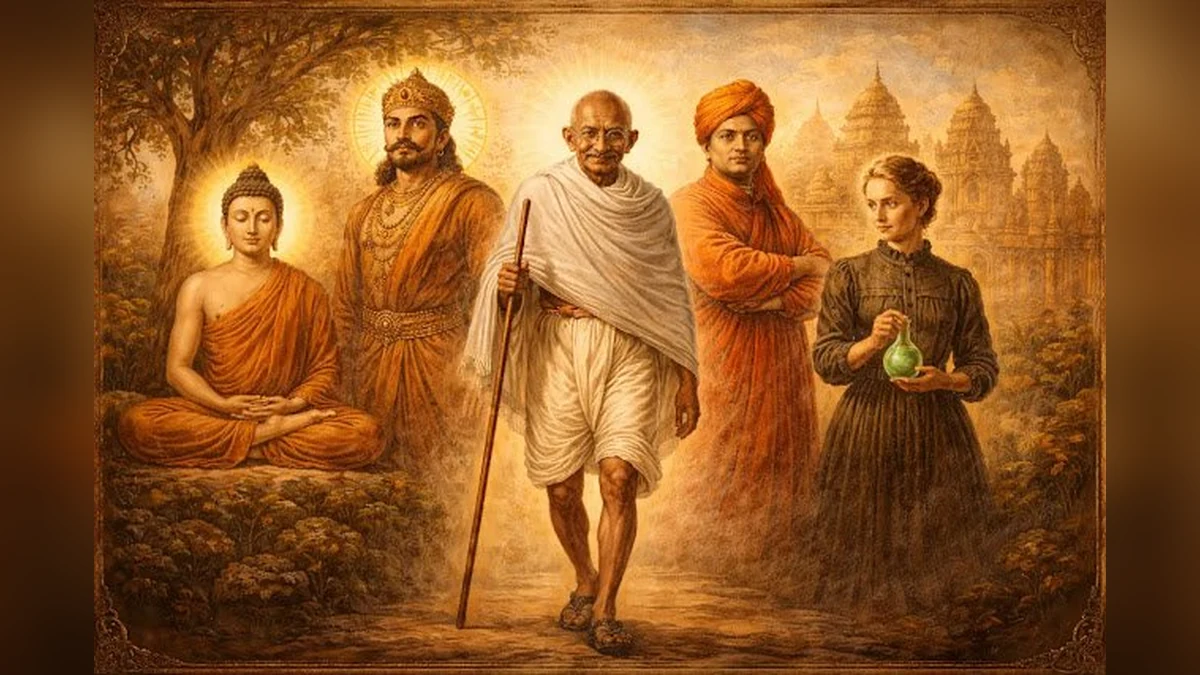
Who are the greatest humans in history?
While the world has seen many successful and powerful individuals, truly great humans are rare. When we search for the ‘best human in the world,’ we’re not looking for wealth or power, but for those with a profound sense of empathy and a commitment to others. History is filled with stories of people who dedicated their lives to alleviating suffering and improving the lives of those around them. This article highlights five such remarkable individuals who, though they departed this world before 1950, continue to guide humanity with their exemplary lives and teachings.
The Pillars of Humanity: Inspiring Lives
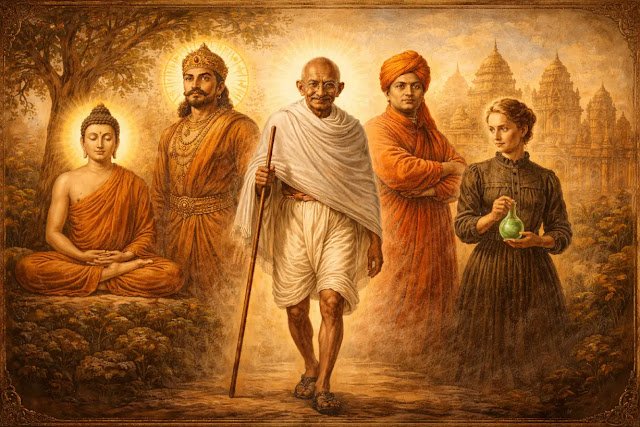
These five figures represent the pinnacle of human virtue, demonstrating extraordinary compassion, sacrifice, and dedication to the greater good:
- Mahatma Gandhi: The apostle of non-violence.
- Gautam Buddha: The embodiment of compassion.
- Emperor Ashoka: The king who renounced war.
- Swami Vivekananda: Who saw service to humanity as service to God.
- Marie Curie: Who sacrificed her life to save others.
1. Mahatma Gandhi: The Power of Non-Violence (1869 – 1948)
In an era where conflict was often resolved through force, Mahatma Gandhi stood as a beacon of peace, championing the principle of ‘Ahimsa’ (non-violence). His approach to achieving independence for India was revolutionary, teaching the world that true strength lies not in aggression, but in moral courage and unwavering adherence to truth. Gandhi’s philosophy extended beyond political struggle; he advocated for treating even adversaries with respect, emphasizing the importance of hating the sin, not the sinner. His life is a testament to the idea that one person, armed with conviction and non-violence, can challenge empires.
“My religion is based on truth and non-violence. Truth is my God, and non-violence is the way to attain Him.” — Mahatma Gandhi
2. Gautam Buddha: The Path of Compassion (Ancient India)
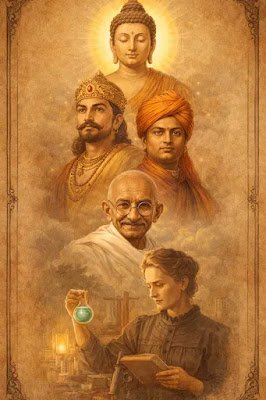
Prince Siddhartha, later known as Gautam Buddha, renounced a life of luxury, a loving family, and immense wealth upon witnessing the realities of suffering – old age, sickness, and death. His journey from prince to Buddha was not merely a quest for enlightenment, but a profound awakening to the universal nature of suffering and the importance of compassion. He taught that understanding and alleviating the pain of others is a fundamental human duty. His teachings on mindfulness, detachment, and the cessation of suffering continue to offer solace and guidance to millions globally.
“It is better to conquer yourself than to win a thousand battles.” — Gautam Buddha
3. Emperor Ashoka: The Transformation of a King (Ancient India)
Emperor Ashoka is remembered not for the vastness of his empire or the battles he won, but for a profound transformation that occurred after the brutal Kalinga War. Witnessing the immense bloodshed and suffering, Ashoka renounced warfare, dedicating the remainder of his reign to the welfare of his people and all sentient beings. He championed the spread of Dhamma (righteous conduct), establishing hospitals, building roads, and promoting the ethical treatment of animals. His conversion from a warrior king to a benevolent ruler is a powerful historical example of moral evolution and commitment to peace.
4. Swami Vivekananda: Humanity as Divinity (1863 – 1902)
Though his life was tragically short, Swami Vivekananda’s impact was immense. He famously stated that if one wishes to find God, one should feed the hungry and serve the sick. Vivekananda sought to bring religion out of temples and into the streets, emphasizing that true spirituality lies in selfless service to humanity. He believed that any educated person who remained indifferent to the suffering of their fellow countrymen was a traitor to the nation. His powerful oratory and philosophy of ‘Man-making’ and ‘Nation-building’ continue to inspire generations to work for the upliftment of society.
“Arise, awake, and stop not till the goal is reached.” — Swami Vivekananda
5. Marie Curie: Sacrifice for Science and Humanity (1867 – 1934)
Often perceived solely as a brilliant scientist, Marie Curie was also a woman of immense heart. Her pioneering research on radioactivity led to the discovery of radium and polonium, paving the way for cancer treatments. Despite the potential for immense personal wealth through patents, she famously declared that radium belonged to the world, making her discoveries freely available. Tragically, her lifelong exposure to radiation led to her death, but her sacrifice continues to save countless lives through medical advancements. Her dedication to science and her selfless sharing of knowledge exemplify true humanitarianism.
FAQs
What qualities define a great human being?
Great humans are typically defined by qualities such as compassion, empathy, selflessness, integrity, courage, and a deep commitment to serving others and improving the world, often at personal cost.
Why is Mahatma Gandhi considered one of the greatest humans?
Mahatma Gandhi is revered for his philosophy of non-violent resistance (Satyagraha), his leadership in India’s independence movement, and his unwavering commitment to truth and justice, which inspired movements for civil rights and freedom across the globe.
What was Gautam Buddha’s main contribution to humanity?
Gautam Buddha’s main contribution was teaching the path to end suffering through the Four Noble Truths and the Eightfold Path, emphasizing mindfulness, compassion, and ethical living. His teachings form the basis of Buddhism.
How did Emperor Ashoka contribute to peace and welfare?
After the Kalinga War, Emperor Ashoka renounced violence and promoted peace, public welfare, and the spread of Buddhist principles. He established hospitals, built roads, and encouraged ethical governance.
What is Marie Curie’s legacy in science and humanity?
Marie Curie’s legacy includes her groundbreaking research on radioactivity, the discovery of radium and polonium, and her selfless decision to share her findings freely, which led to significant medical advancements, particularly in cancer treatment.
In conclusion, being a ‘good person’ is not an achievement but a continuous responsibility. These five luminaries proved that sacrifice and service are far more valuable than wealth or power. Their lives serve as enduring inspirations, reminding us of the profound impact one individual can have on the world through dedication to humanity’s highest ideals.




















Share Your Opinion
Comments are closed on this post.