Millipede vs centipede: look beyond the local name
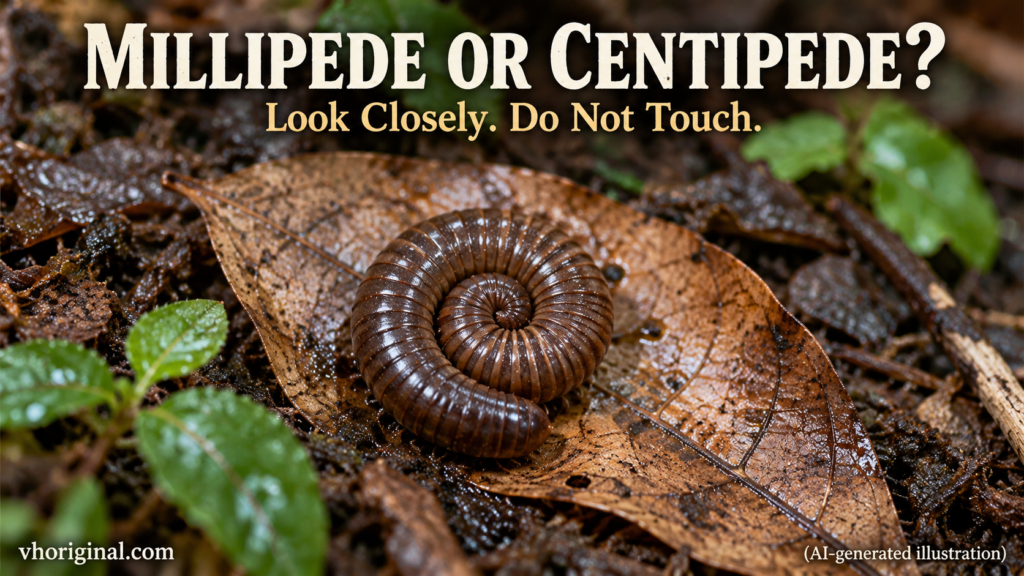
A long brown animal beside a doorway or fallen leaf may curl into a spiral, prompting a familiar question: is it a millipede or a centipede? A useful millipede vs centipede comparison begins with body shape, leg arrangement and movement. A single blurred photograph is rarely enough for a confident final identification.
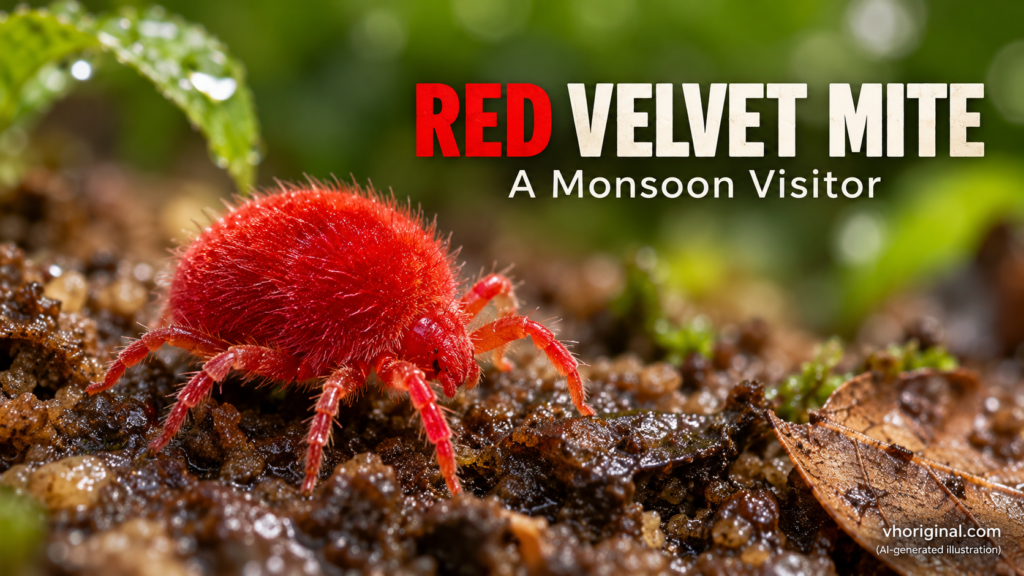
A local name such as “Ghongal” should not automatically become a scientific species label. This guide has not established a reliable one-to-one match for that term. It is not presented as a verified synonym for a red mite, hairy caterpillar or millipede.
This article covers preliminary millipede and centipede differences. Its three images are conceptual AI scenes, not authentic specimens or locality records. Institutional sources below supply real reference photographs.
What is a millipede and why does it curl?
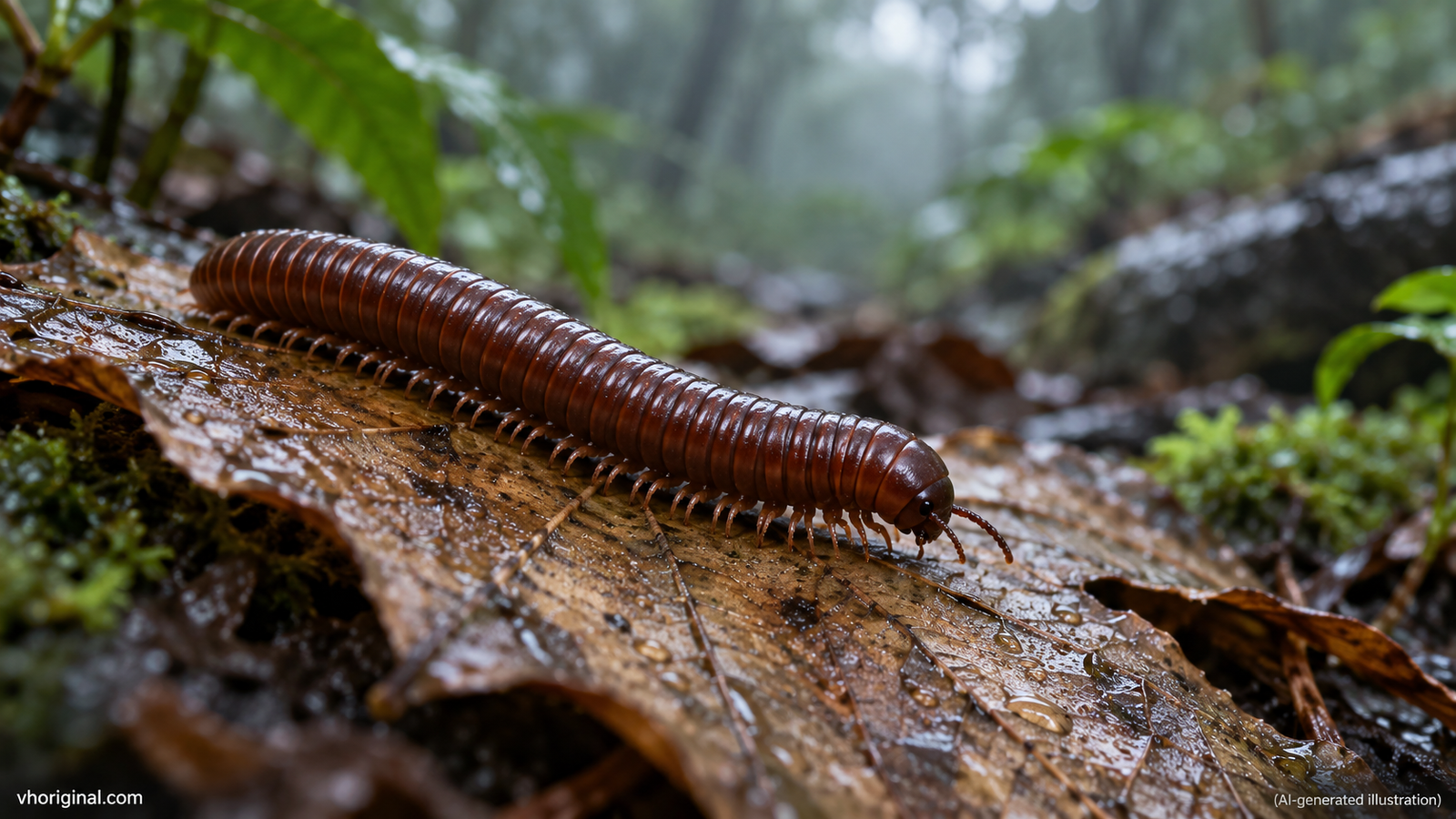
Millipedes are many-legged arthropods in the class Diplopoda, rather than six-legged insects. Many familiar forms have a long cylindrical body with short legs, but other forms exist. One familiar silhouette is not a universal description.
Many curl into a spiral when disturbed, protecting the softer underside. Do not prod an animal to demonstrate this behaviour. A photograph of an animal already resting in a coil can provide a clue without interference.
Millipedes generally help recycle decaying plant material. Their presence beside a damaged plant does not establish that they caused the damage. Investigate plant symptoms and the animal’s identification separately.
Body shape and movement offer clues
Centipedes generally look flatter, with legs extending to the sides. Many move quickly and prey on other small animals. Millipede legs often look shorter and sit below the body, and movement can be slower.
Centipedes have one pair of legs on most segments; millipedes have two pairs on most double body units. Front segments, developmental stage and hidden legs can complicate counting. A fuzzy crop is not a reliable anatomical record.
Coiling and speed are clues rather than species tests. Other small animals can also curl. Do not force this comparison onto a hairy caterpillar or a photograph showing a different body plan.
FACT: A local name, colour, estimated length and “many legs” do not establish one identity. Unknown animals should not be declared harmless on that basis. AI-invented legs or enhanced detail are not original evidence.
Why do they appear near homes after rain?
Moist leaf litter, decaying wood and organic material can provide millipede habitat. University of Minnesota Extension describes accidental building entry during excessive rain or very wet soil conditions. One sighting alone does not prove indoor breeding or an infestation.
A foreign guide’s autumn or spring reference is not a fixed Indian calendar. Habitat and conditions vary. Record your actual observation date, indoors or outdoors, and recent moisture conditions.
If many appear, document numbers, places and recurrence. Investigate moisture and access before adopting a dramatic caption or spraying indiscriminately. Local specialist advice is more useful than guessing a regional species.
Advice: record identification clues without touching
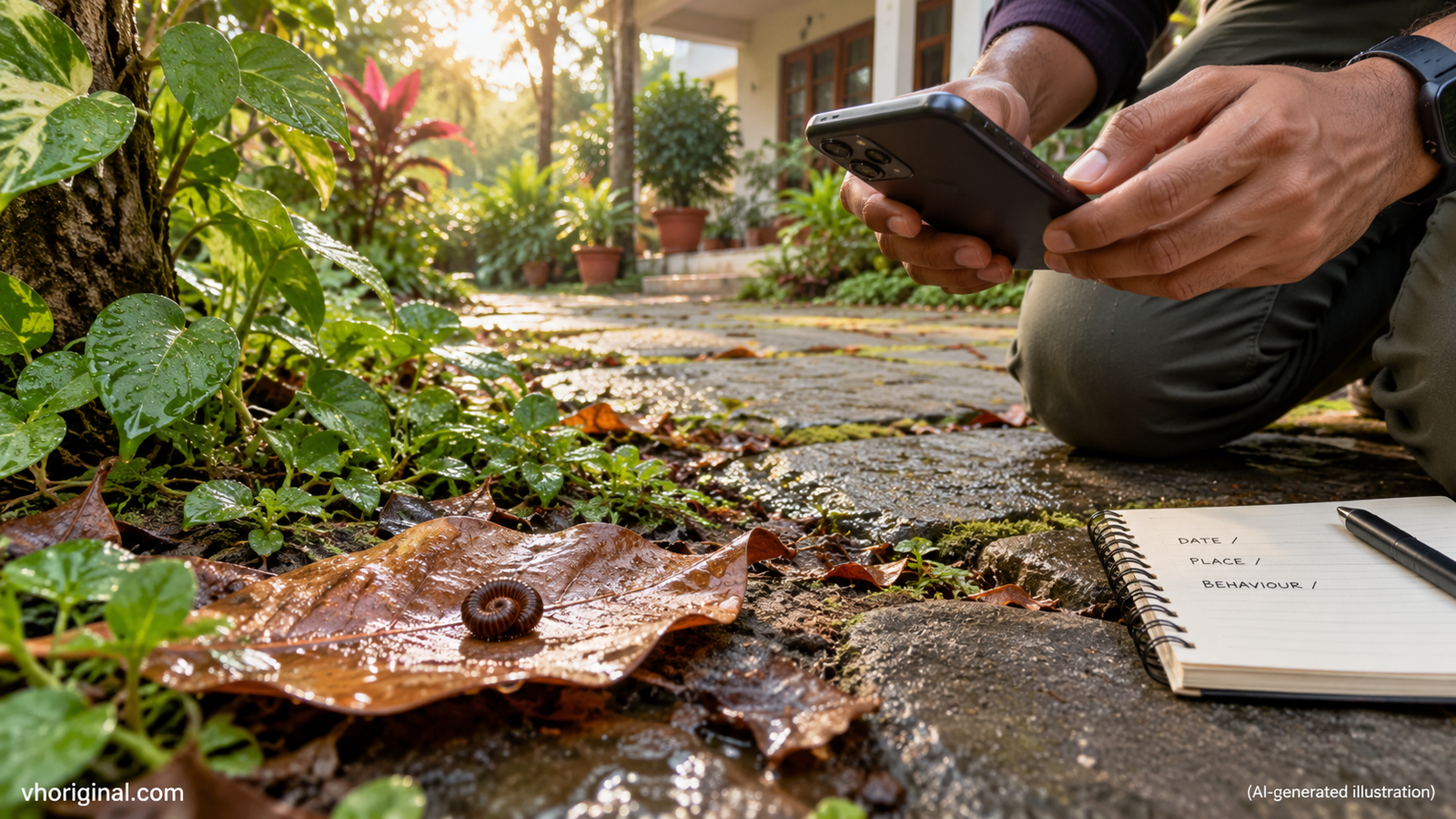
Photograph the surroundings first, including the leaf, ground or wall. Then obtain a side view and an overhead view with zoom if safe without touching. Do not turn, straighten or hold the animal simply to see its legs.
Record date, district or region, the basis of a size estimate, movement and whether it was already curled. Do not test the response by poking it. A short video may preserve movement context.
Keep original files alongside crops or lighting adjustments. Asking AI to fill missing legs and counting the result can manufacture evidence. The generated images in this article must not be used as leg-count references either.
A local agricultural extension centre, university zoology or entomology department, or biodiversity specialist may help with actual photographs. A public post need not reveal your exact home address. Label an uncertain finding “millipede-like; species unconfirmed.”
Household precautions and secretion exposure
Do not pick up unknown animals bare-handed or let children and pets play with them. Millipedes do not bite, but many release defensive secretions. That makes an unconditional invitation to handle them inappropriate. Centipedes can bite.
MedlinePlus advises washing skin exposure with plenty of soap and water, without alcohol. For secretion in an eye, rinse with water for at least 20 minutes and obtain immediate medical attention. Do not rub the eye.
Seek medical advice for persistent pain, irritation or other symptoms. A photograph cannot determine whether a skin problem was a bite, secretion exposure or something unrelated. This guide provides no home medicine or species-specific treatment.
For repeated indoor appearances, investigate dampness or leaks, entry gaps and wet organic material immediately beside the building. The aim is not to remove all leaf litter from nature or poison a whole garden. Seek local pest-management advice after identification if the problem continues.
Do not choose a pesticide solely from a frightening local name. Foreign product or seasonal instructions should not be transferred directly to India. Any proposed use needs locally appropriate label and professional guidance.
Five frequently asked questions
Does Ghongal always mean millipede? This guide has not established that match; context and actual photographs matter.
Are millipedes and centipedes the same? They belong to different classes.
Should I touch it to test curling? No.
Are millipedes safe to handle without qualification? Secretions can irritate even though they do not bite.
Are these real macro photographs? No; they are AI illustrations, not identification evidence.
Sources and AI illustration disclosure
General nature education and household precautions, not definitive specimen identification or a substitute for medical or pesticide advice. All three AI scenes are conceptual; anatomy, scale and leg counts are not reliable specimen measurements. Sources checked: 24 October 2026.
- University of California IPM: centipedes and millipedes — identification and management
- University of Minnesota Extension: moisture, household entry and prevention
- Library of Congress: millipedes and centipedes — biological differences
- MedlinePlus / US National Library of Medicine: millipede toxin exposure
Red velvet mite: photo identification limits and non-contact observation