 Vista
World Diabetes Day 2026: Symptoms, Tests and Blood Sugar Results
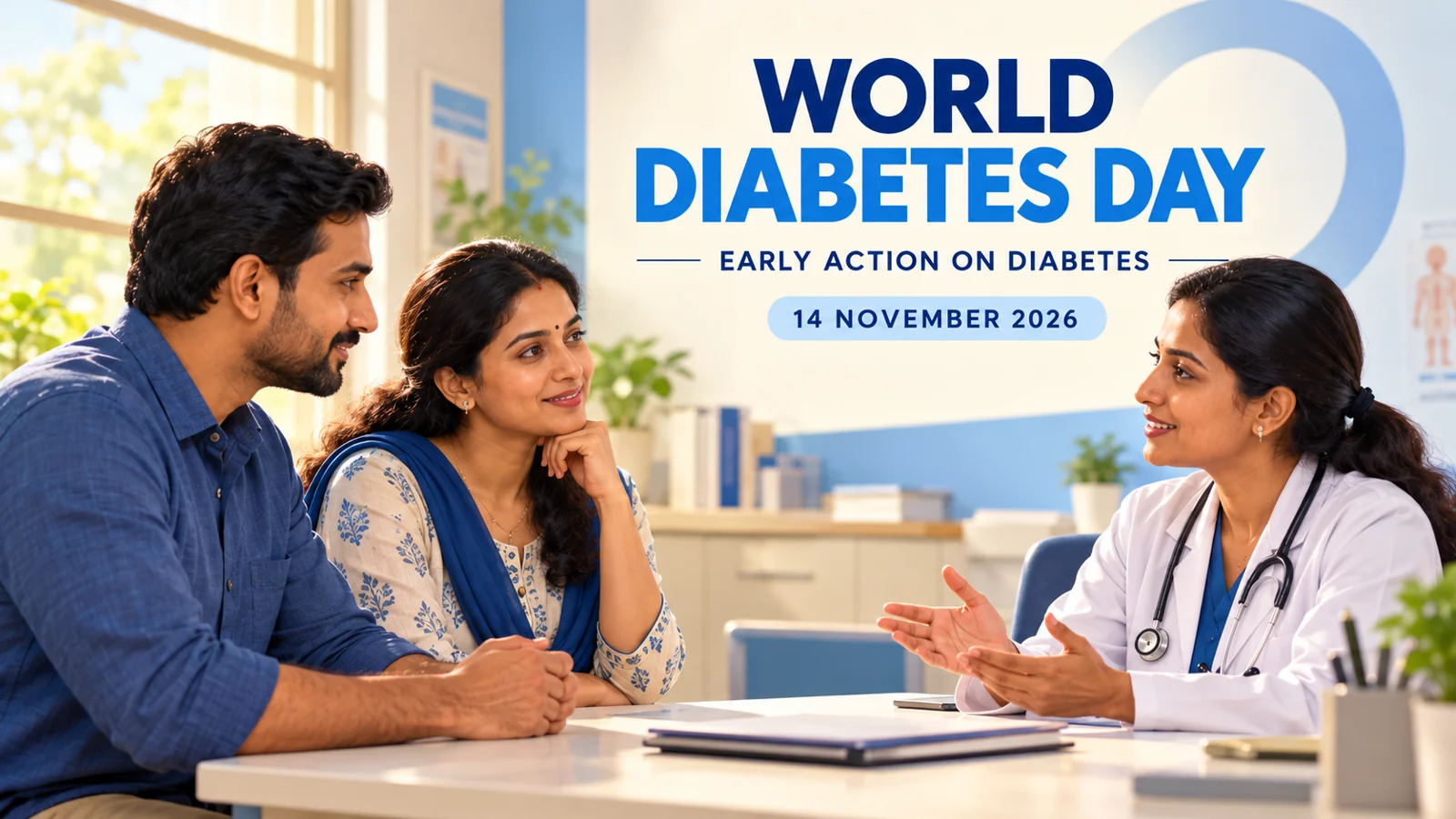
World Diabetes Day is observed on 14 November. The 2026 theme is “Early action on diabetes”. The message is about timely recognition, care and support. Increased thirst or frequent urination can be reasons to seek testing, but type 2 diabetes may cause few noticeable symptoms. Feeling well does not establish that blood glucose is normal.
This guide explains common warning signs, laboratory categories and questions to take to a clinician. It distinguishes diagnostic thresholds from personal treatment targets and does not provide instructions for changing medication or insulin doses.
What Does the 2026 Theme Mean?
The WHO campaign and International Diabetes Federation emphasise early action. A single reading at an awareness camp is only one possible starting point. When needed, confirmation, access to treatment and continuing support must follow. Shaming people for diabetes makes that task harder.
Diabetes involves problems with insulin production or the body’s ability to use insulin effectively, allowing blood glucose to rise. Type 1, type 2 and diabetes in pregnancy have different causes and care needs. Describing every case simply as the result of eating sweets is inaccurate.
In type 1 diabetes, an immune process damages insulin-producing cells. Type 2 involves difficulties with insulin action and production. Understanding the type is therefore part of care, rather than an optional label. A general awareness poster cannot determine an individual’s diagnosis.
What Are the Early Symptoms of Diabetes?
- Unusual thirst and urinating more often.
- Blurred vision, tiredness or unexplained weight loss.
- Slow-healing sores or repeated infections.
Other conditions can also cause these symptoms, so do not diagnose yourself from a checklist. A child who develops marked thirst, frequent urination and weight loss needs prompt medical assessment. Do not automatically explain the change as hot weather or school tiredness.
Urgent warning signs: vomiting, abdominal pain, deep or rapid breathing, severe drowsiness, confusion or fainting with suspected diabetes need emergency medical attention. These can occur with a serious condition such as diabetic ketoacidosis. Do not wait for an awareness camp, the next morning or a home remedy.
Which Tests Are Used?
Fasting plasma glucose usually requires at least eight hours without food or caloric drinks; water is allowed. Ask the clinic or laboratory how to handle your medicines beforehand. Stopping an essential medicine without instructions is not appropriate test preparation.
HbA1c reflects average glucose over roughly two to three months and generally does not require fasting. Some forms of anaemia, haemoglobin-related conditions and other circumstances can affect its interpretation. A clinician may choose another test when A1c is unsuitable or does not fit the clinical picture.
A 75-g oral glucose tolerance test, or OGTT, uses a specified glucose drink and timed laboratory measurements. It is not equivalent to checking glucose two hours after an ordinary meal. Random plasma glucose can also be useful, but the result must be interpreted alongside symptoms and clinical circumstances.
What Is a Normal Blood Sugar Level? A Laboratory Chart
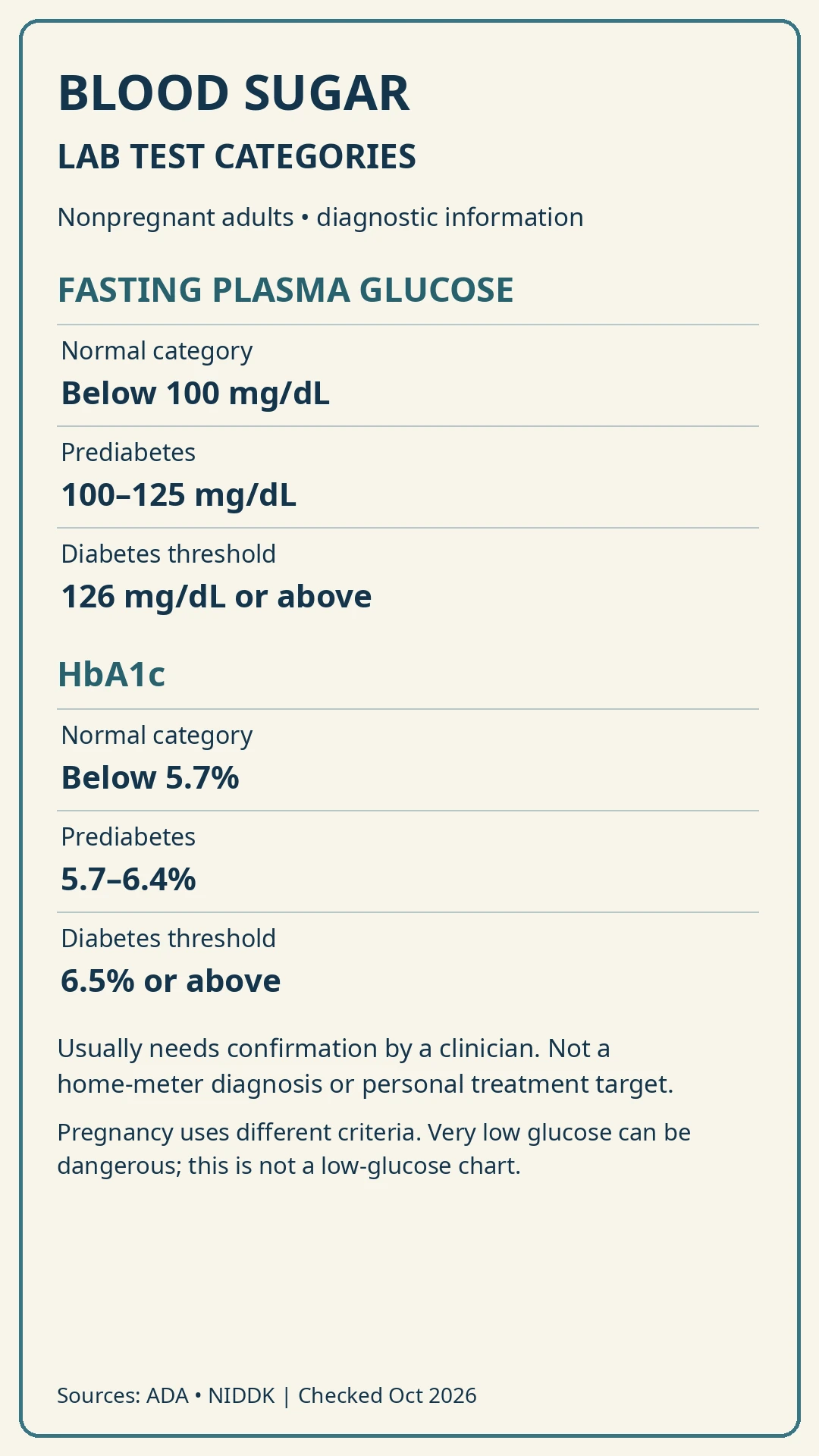
This summary follows the general categories published by the ADA and NIDDK. It is for understanding diagnostic laboratory results in nonpregnant adults. It is not a personal treatment target or an age-based home-meter chart. Different criteria can apply during pregnancy.
| Laboratory test | Normal category | Prediabetes | Diabetes threshold |
|---|---|---|---|
| Fasting plasma glucose | Below 100 mg/dL | 100–125 mg/dL | 126 mg/dL or above |
| HbA1c | Below 5.7% | 5.7–6.4% | 6.5% or above |
| 75-g OGTT, 2-hour value | Below 140 mg/dL | 140–199 mg/dL | 200 mg/dL or above |
The normal category does not mean that very low glucose is safe; this table does not classify low-glucose emergencies. Unless clear severe symptoms or a hyperglycaemic crisis establish the situation, diagnosis generally requires a second abnormal result. A clinician considers the test conditions, symptoms and results together.
Searches for a “normal blood sugar chart by age” can mix up two different things. A diagnostic threshold and a treatment goal are not interchangeable. Age, pregnancy, medication, other illnesses and the risk of low glucose can affect individual management goals. Do not select a target simply by finding your age in an online image.
Home Meters, Reports and Four Common Myths
A home glucose meter helps with monitoring. A single home reading should not be used to make a new diagnosis yourself. Record the time, relationship to food, symptoms and current medicines when a reading is unusual, then seek medical advice. Serious symptoms need urgent care rather than a wait for confirmatory paperwork.
- “I stopped sweets, so I can stop medicine”: a good result may reflect effective treatment. Discuss changes with your clinician.
- “Thin people cannot have diabetes”: body size alone cannot establish or exclude it.
- “Children cannot have diabetes”: they can, and identifying the type matters.
- “A bitter food or supplement is a guaranteed cure”: do not replace prescribed care with such claims.
Bring earlier reports and a complete medicine list to an appointment. Ask whether confirmation is needed, what type of diabetes is suspected or diagnosed, and when follow-up should occur. Avoid putting identifiable medical reports into public messaging groups when seeking general information.
Practical Awareness for MP Schools and Families
For a school or community programme in Madhya Pradesh, contact a local health facility to understand testing and counselling arrangements. This article does not promise a free test, a particular government scheme or an available camp. Confirm the venue and timing with the actual organiser.
A child’s diabetes should not be treated as laziness, wrongdoing or poor discipline. Work with the family and health team’s plan for meals, monitoring and necessary support. Keep personal medical details private rather than turning them into a classroom discussion about the child.
Families can make practical changes together: a workable meal plan, suitable activity, avoiding tobacco and attending agreed follow-up visits. Tell the health team if medicine costs or access to testing are difficult. Quietly rationing medicine is not a substitute for discussing those barriers. No single food, product or exercise plan fits everyone.
For an awareness display, a short action message is often clearer than a crowded list of numbers: notice changes, ask about testing and follow through with care. Keep laboratory charts beside their explanation so the limits are not lost when the image is shared.
Frequently Asked Questions
What is the World Diabetes Day 2026 theme?
“Early action on diabetes”, focusing on timely recognition, care and support. The observance is on 14 November.
Can someone have diabetes without symptoms?
Yes, particularly with type 2 diabetes. Discuss screening with a clinician when risk factors apply.
Does fasting glucose of 126 mean I should start medicine myself?
No. It meets a laboratory diagnostic threshold, but confirmation and treatment decisions require clinical context.
Is an after-meal reading the same as an OGTT?
No. A 75-g OGTT is a standardised test; an ordinary meal reading is not its direct replacement.
Can I stop treatment if my home readings improve?
Do not stop it on your own. Medicines, food and activity are considered together when care is adjusted.
Advice: What to Do Next
Seek assessment for symptoms, bring previous results and medicines, and ask for an individual plan. Do not use diagnostic thresholds as daily treatment goals. Severe warning signs require emergency care.
General health education, not a substitute for individual diagnosis or treatment. No clinician review is claimed. Sources checked: 22 October 2026.
Related reading
Sources
- WHO: World Diabetes Day 2026
- IDF: 2026–27 campaign theme
- WHO: diabetes overview
- NIDDK: symptoms, causes and urgent warning signs
- ADA: diagnostic categories and confirmation
- NIDDK: laboratory tests and pregnancy distinctions
- CDC: screening and testing
- NIDDK: A1c test limitations
- NIDDK: monitoring and individual care plans
- CDC: risk factors
- NIDDK: food, activity and living with diabetes



















Share Your Opinion
Comments are closed on this post.