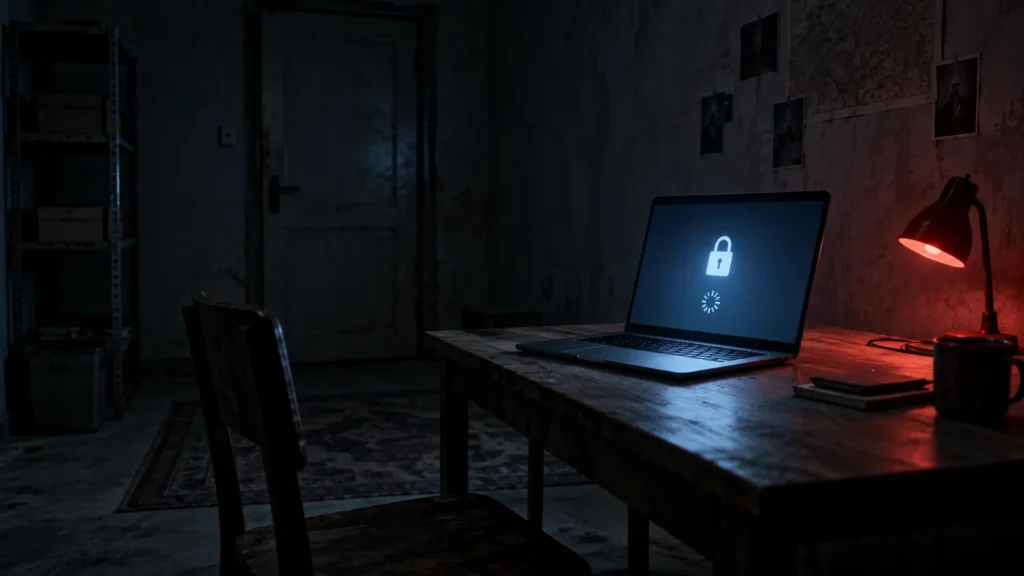
The story is always the same: a hidden page, a crypto ticket, and a live room where strangers issue orders. The fear is vivid. The engineering question is smaller. Can that broadcast actually travel on the network the legend names?
This is not a sermon about evil. It is a piece about pipes. Recorded crime is real. A pay-per-view interactive chamber on an anonymity overlay is a different machine — and that machine is what the myth keeps selling.
What the legend is promising
A folklore red room is not “a nasty video exists somewhere.” It bundles three claims at once. The picture is live, not a file uploaded later. The picture is clear enough that viewers can give orders. The whole show hides behind anonymous hosting and anonymous payment.
Together those claims describe a real-time broadcast platform: cameras, a server, many viewers, a command channel, and money. Live video is already heavy on the ordinary internet. It gets heavier on an overlay that deliberately lengthens the path so no single relay sees the whole route.
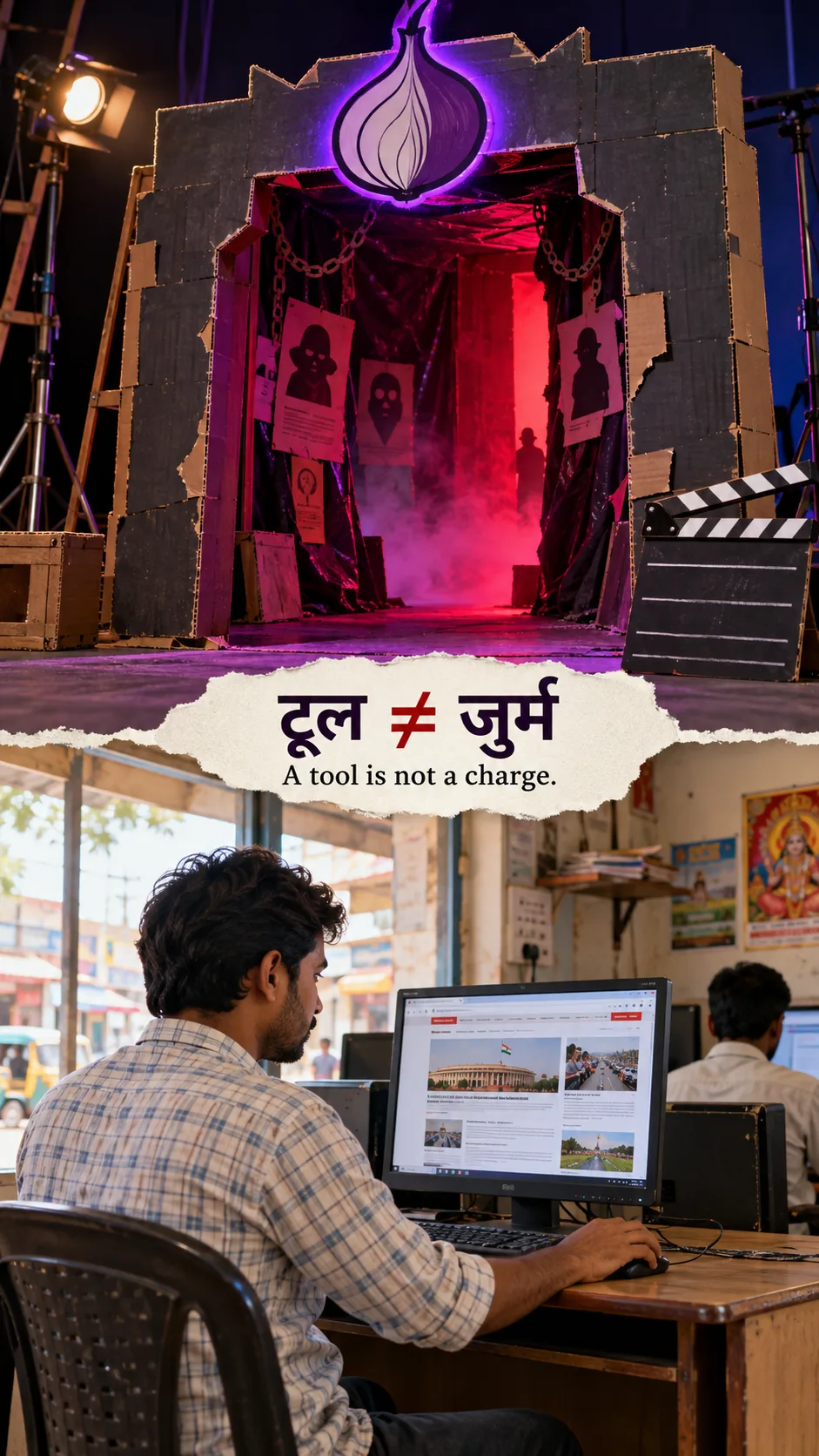
Two lookalikes muddy the word. The Japanese “Akai Heya” tale is a curse story. Movies turned “red room” into a horror set. The dark-web legend stitches both into a third claim: ticketed live violence on a hidden host. Same label, different machine. This article stays with the machine.
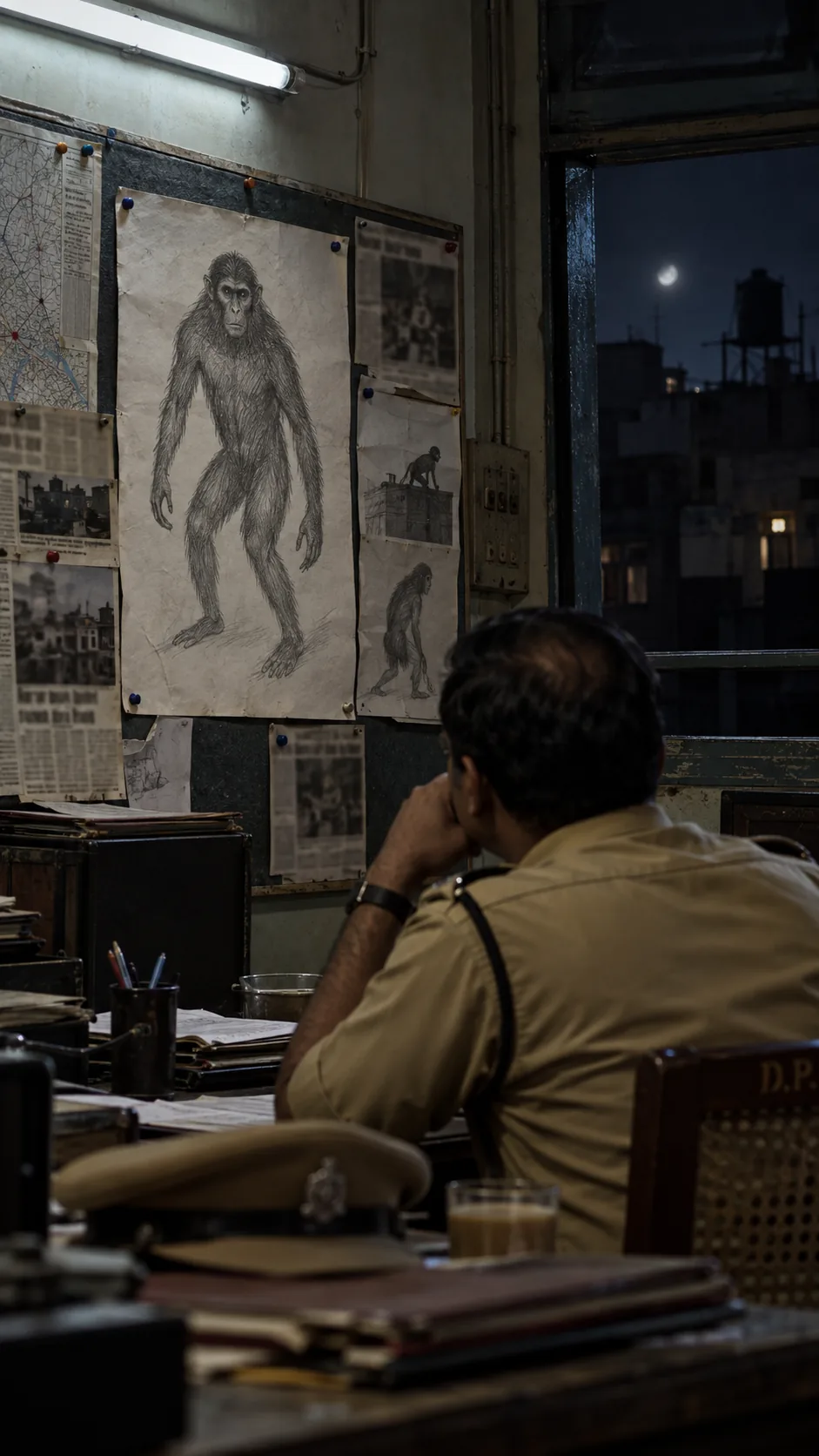
Journalists who spent years on the claim keep repeating a blunt result. Pages exist. A working show does not turn up. Eileen Ormsby has said she has not seen a functioning red room. Jamie Bartlett has said the same — sites appear; the working hypothesis is that they harvest crypto from people who will not report the theft. The technical question sits under that reporting: if the show were the cinematic live event people describe, why does the pipe refuse the load?
The short answer

The myth asks for three things that fight each other: fat video, low delay, and strong anonymity. The overlay named in the story was built to hide a path, not to run a cinema.
Traffic does not ride a straight line to a host. It is wrapped in layers and handed across volunteer relays. A typical client path already uses several hops. A hidden service hides the host as well, so the path grows longer. Each extra stop adds encryption work and waiting time.
Live video needs a steady pour of packets. Lose a burst and the player freezes or tears the picture. Interactivity makes delay worse: an order that arrives seconds late is not a show, it is lag. Reporting and forensics keep returning to the same contrast. Text and static pages can limp across that design. A film-grade live room does not arrive the way fiction draws it.
None of this says violent video never exists. It says “hidden live theatre with tickets” and “a crime recorded, then sent as a file” are different engineering jobs. The legend sells the first. Documented cases lean toward the second.
Hops, layers, and the speed bargain
Picture a parcel that must change hands several times so no courier knows both sender and destination. That is the point of the overlay. On a hidden service, both sides play the same game. The route gets longer. Delay stacks. Capacity becomes whoever is weakest on that circuit.
Relays are volunteer machines. Some donate a wide pipe. Some do not. A circuit is only as fast as its slowest hop. Circuits drop and rebuild. For a live player that is a buffering loop, not a theatre. Design notes and performance papers treat this as expected: interactive traffic shows the latency; the longer hidden-service path squeezes throughput further.
Sarah Morris, professor of digital forensics at the University of Southampton, put the same idea in public language during coverage of a criminal case: more encryption gates, less speed, live video that can feel worse than old dial-up. She did not chant “impossible.” She said technically hard, and not something she meets in investigations as the folklore object. The ad copy needs a monster room. The engineering sentence is colder: the product as advertised does not sit on the pipe.
That bargain is the design, not a glitch. A network meant to carry private text past surveillance is not trying to be a streaming CDN. “Stay hidden, deliver 4K, and let a crowd vote in real time” is two opposite jobs taped together.
FACT
A circuit to a hidden service is longer than a circuit to an ordinary site because the host is hiding too. Classic Tor carries TCP streams. Everyday live-call apps lean on UDP so a lost packet does not stall the whole conversation. That transport mismatch matters for live pictures. There is no public, documented “anonymous cinema backbone” underneath the legend.
Live video wants UDP; this overlay historically runs TCP
On a normal video call the picture sometimes blocks and the voice keeps going. The app would rather drop a packet than freeze the room. That is a UDP habit: keep the moment moving.
A file download does the opposite. Every bit must arrive. TCP asks for receipts and resends what went missing. The classic overlay design sits on those TCP streams. Academic measurements have blamed a slice of extra delay on that choice.
The red-room pitch wants both worlds: a heavy picture, instant commands, and no torn frames so the “proof” looks clean. A real network then either shreds the picture, grows the lag, or pushes the host onto a fat, stable, easier-to-spot pipe — which collides with the anonymity claim.
A delayed, muddy, CCTV-like feed can be argued in theory. That is not what the legend sells. The legend sells a clean live theatre. Ormsby’s long-standing public answer was about that gap: a live stream on this overlay is not a casual feature, and it would not be the quality an audience thinks it paid for.
One viewer is not a crowd with a chat and a till
Sending one slow file to one person is not the same load as spraying one live moment to many circuits at once. Each extra viewer is another path, another buffer, another chance to drop packets. The myth then adds votes or chat — a second real-time channel beside the video.
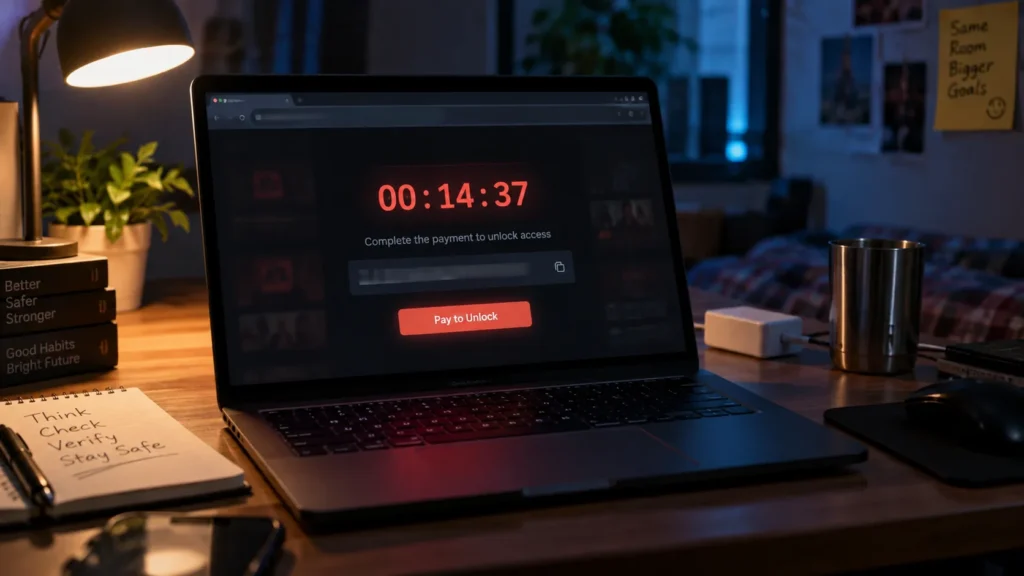
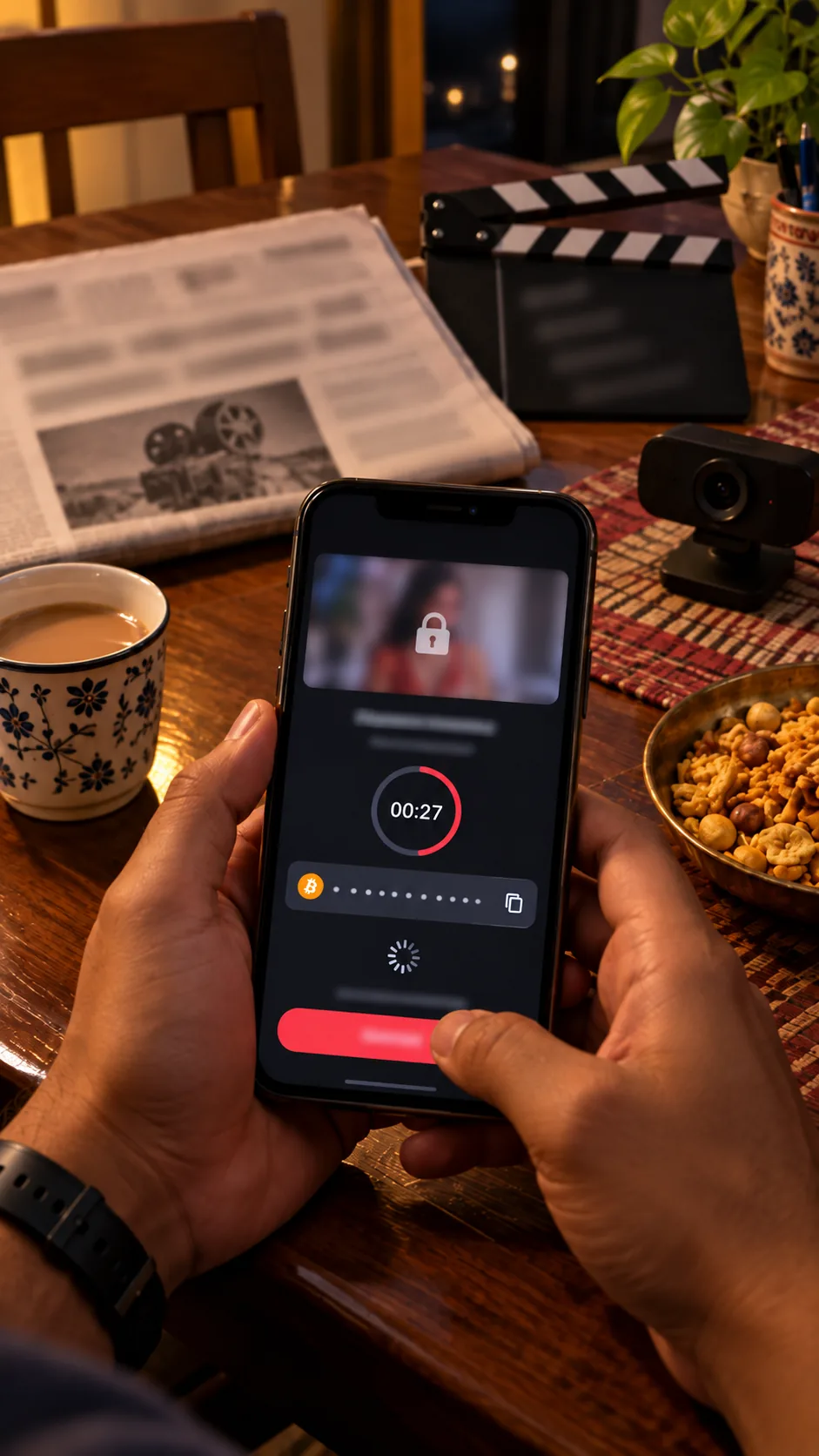
A payment page is cheap. It can be static: a clock, a wallet address, a promise. The expensive part is pushing camera output through those long paths. Scams live in that gap. The promise is cheap. Delivery is not. The buyer rarely reports the theft, because reporting means admitting they tried to buy a crime.
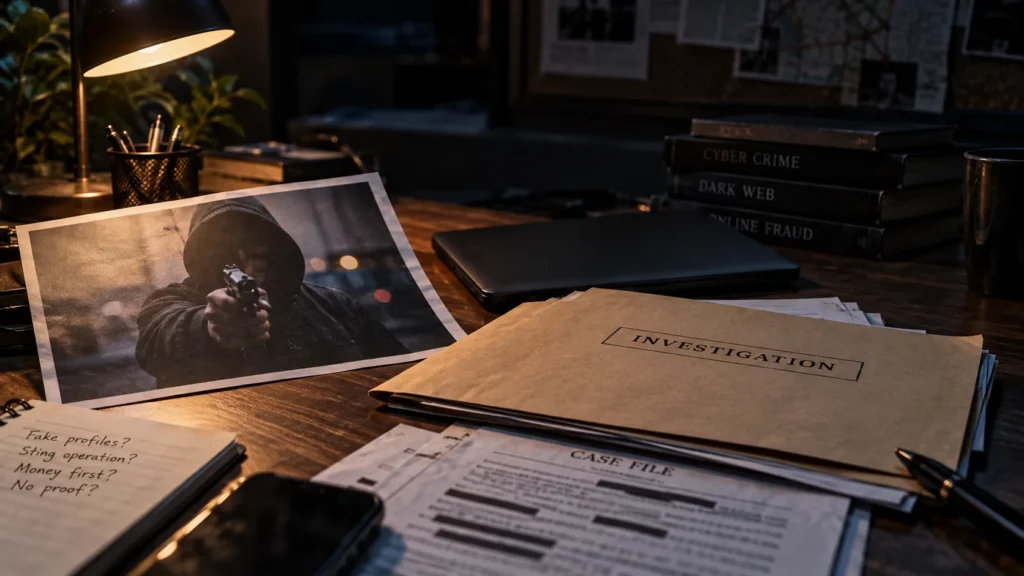
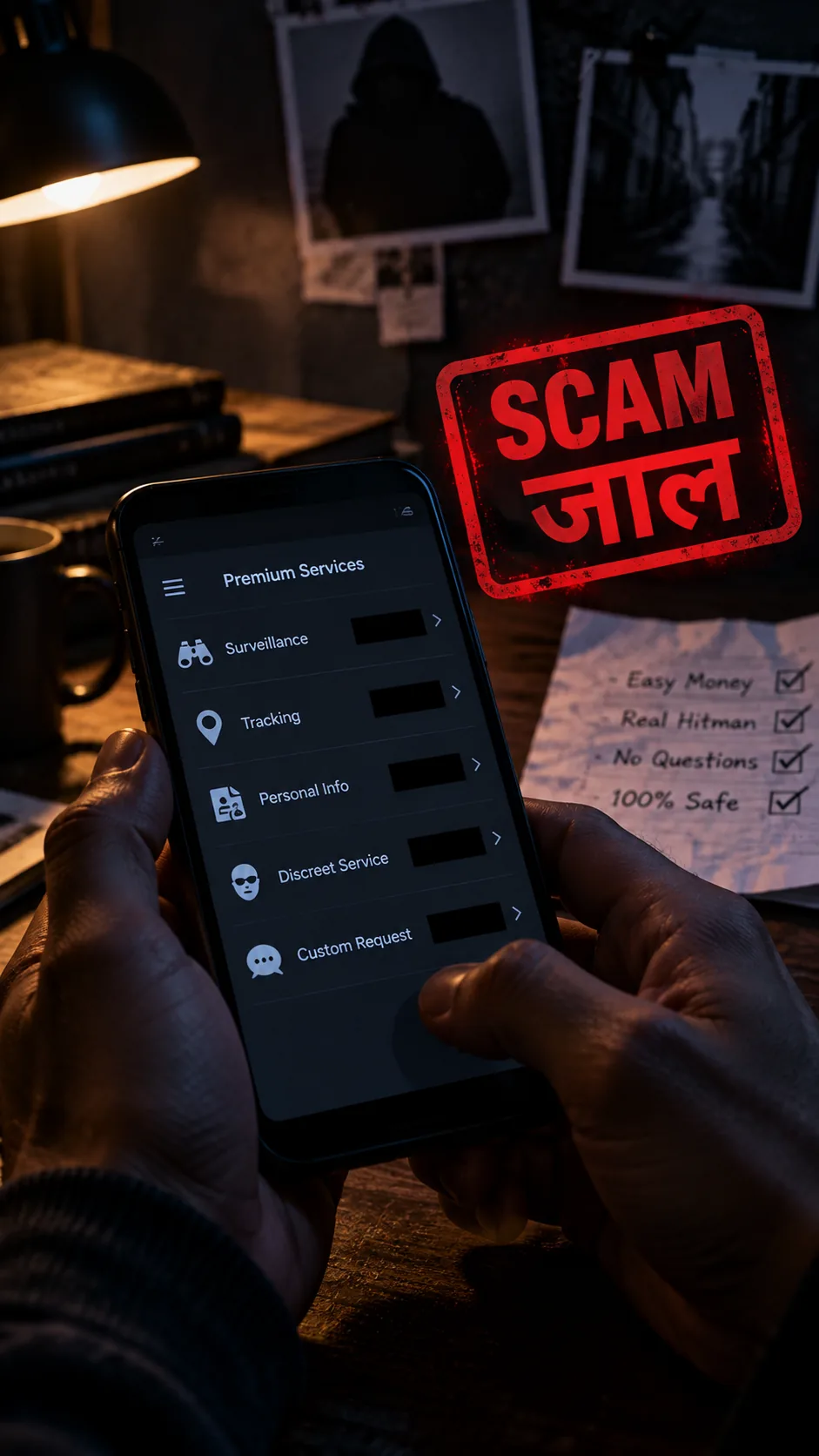
That is why investigators keep seeing the same costume: dark page, countdown, crypto address, then nothing. Bartlett’s public line is that he has not seen a working room or working links to one. Ormsby’s summary is that paying yields no show, and a “special tool” pitch is often just another way to empty a wallet or infect a PC. This article will not describe those tools. The useful fact is smaller: a countdown page is evidence of a template, not of a theatre.
A crowd also makes the host easier to stress. Hours online, bandwidth, a schedule — that is not a one-night basement tale. Even people committing other crimes have tended, in public cases, toward record-then-distribute. Film needs a theatre. Operators need fewer live failure points.
A stored file is not a live room
Readers flatten two sentences into one. A cruel video appeared online, therefore a red room is real. No. Uploading a file later, leaking it on the open web, or passing it in private is already terrible. The folklore definition still requires live plus interactive plus a ticket.
Public prosecutions that get named in this debate — Peter Scully in reporting about recorded abuse and paid distribution, Luka Magnotta’s murder video spreading on the open web, South Korea’s Nth Room case around chat apps and extortion — are court stories about real harm. They are not a hidden pay-per-view chamber on an overlay. Mixing the labels inflates fear and blurs what police actually charged.
Engineering is just as plain. A file can pause, retry, and arrive in pieces. A live interactive show cannot. “There is a video” and “there is a running red room” are not the same claim. The first has appeared in too many ugly forms. The second is the claim journalists have not been able to table as a working sample.
The pages people describe are usually countdown scams
After the pipe, look at the till. A scary story pulls the curious. Asking those people for crypto is cheap. Running a show is expensive and loud. So the market fills with pages titled like the myth, not with working streams.
Bartlett’s line again: no functioning room in his work; Ormsby’s line: the pages do not work and look like scams. The customer will not file a neat complaint. That is why the con repeats.
Some pages loop an old clip and stamp “LIVE.” Some reset the clock. Some ask for a second payment to “verify.” It is the same family as fake hitman ads: sell dread, empty a wallet. There is no directory here, no test method, no address. On purpose.
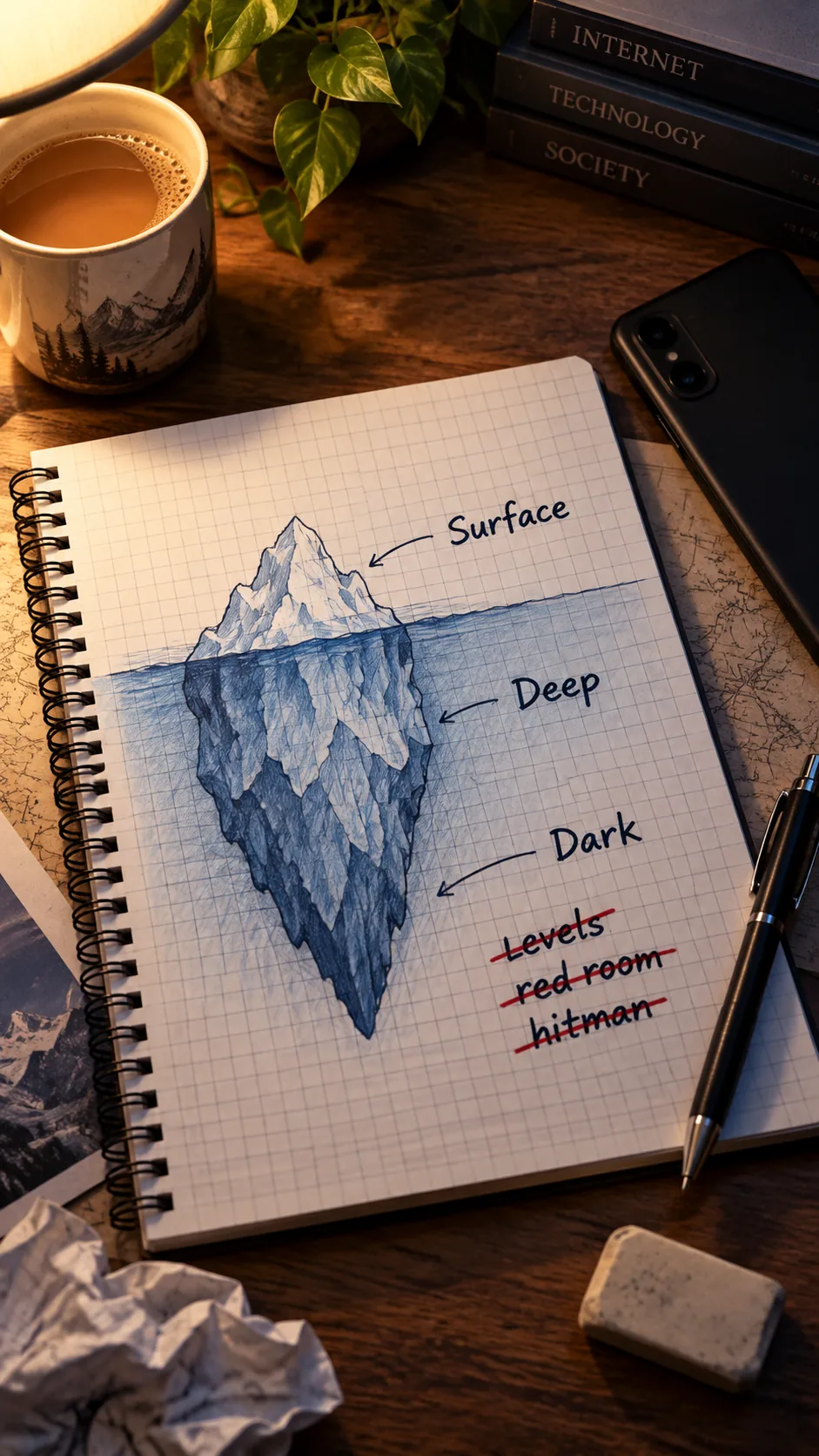
The Japanese curse story, the Hollywood set, and these checkout pages are three layers. Glue them together and you get the same error as treating an iceberg meme as a network map.
Clear-web violence is not the folklore room
If the hidden cinema does not run, why do live atrocities still appear? Because a phone on an ordinary platform uses a fat pipe and a normal app. That is not a ticketed anonymous theatre. It is abuse of the public network — and that is where court files more often sit.
Livestreamed attacks on mainstream apps are real harm. Calling them red rooms does two bad jobs. It hides the platform that actually carried the stream. And it sends readers hunting a basement while the documented risks are ordinary-app crime and crypto pages that charge for a show that never starts.
Fiction prefers the basement. Unfriended: Dark Web, Pascal Plante’s Red Rooms, detective-show torture streams — they need a set. They do not show a buffer wheel. A movie UI is not a circuit.
The technical close is not “the internet is safe.” It is this: the product in the legend — hidden, clear, interactive, paid, live — is at war with the pipe named in the same legend. What remains, over and over, is a poster and a static page asking for coins.
FAQ
Impossible, or only impractical?
Nobody can prove a single frame can never move. The advertised product — clean live video, a crowd, commands, a hidden host — collides with the pipe. Journalists have not produced a working sample. Impractical and unevidenced travel together.
Why do video-looking pages exist then?
A static countdown is cheap. A wallet address is cheap. Labelling an old file “live” is cheap. That is a scam layout, not a proof of theatre.
If a crime is streamed on a normal app, is that a red room?
No. That is a different offence on a public platform. The legend’s claim is a hidden ticketed theatre. Keep the labels apart.
Why cite Ormsby and Bartlett?
Because they hunted the claim for years and said in public they did not find a working room, and that the pages behave like advance-fee traps. That is repeated reporting, not a forum rumour.
Could better code change this tomorrow?
Pipes improve. The anonymity bargain still lengthens the path. “Maybe later” is not evidence that today’s ticket pages are real shows. Weigh present claims against present proof.
Disclaimer: This article is not a guide to visiting hidden networks, opening hidden addresses, paying for a “show,” or seeking illegal material. Pages that demand crypto or fees for live violence are often scams. Seeking or sharing illegal content is a crime. The documented harms sit in clear-web offences, prosecuted exploitation cases, and wallets emptied by fear — not in a working cinematic red room.