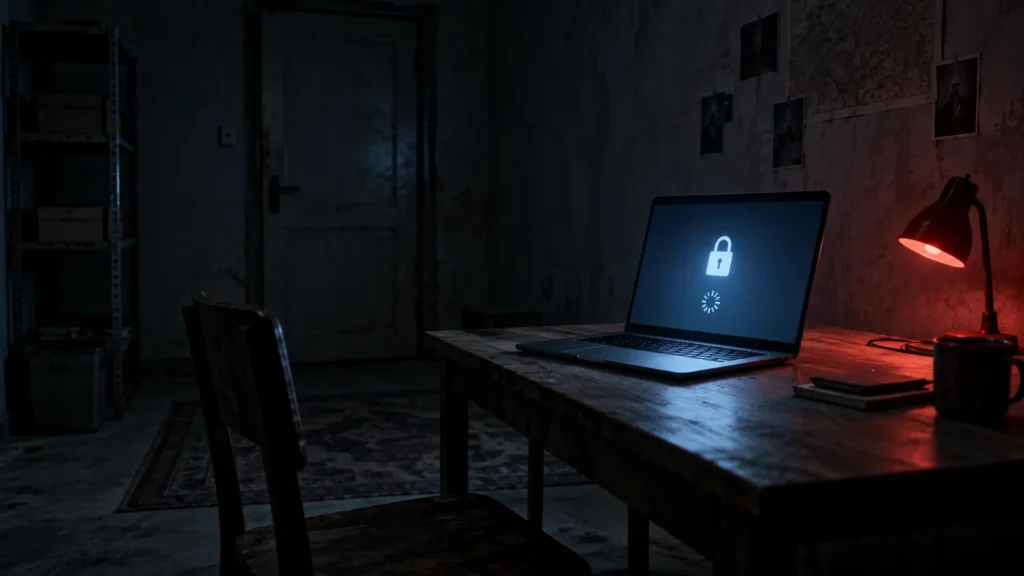
The credits roll and one image sticks: a black terminal, falling green code, one link, and suddenly a “second internet” opens. Is the dark web that place? No. Cinema sells a set. The technology is a layer. This article is not a tour.
The short answer: it is not a movie city
On screen the dark web behaves like a district — a gate, descending levels, a red room, a hitman counter, a crime mall one click away. In ordinary speech, “dark web” usually means hidden services that search engines do not index and that run on overlay networks built for anonymity. That is a method, not a city. There is no ticket booth and no underground high street.
Three words get mashed together. The surface web is what a search engine can list. The deep web is ordinary internet behind logins, queries and paywalls — mail, banking, office portals, a streaming library. The dark web is a small, deliberately hidden slice of that unindexed space. Films pour all three into one black ocean because fear needs scale.
Law is flatter than the script. In many democracies, using a privacy tool is not itself a crime; buying, selling or producing illegal goods is. Scripts skip the distinction because “the door was the sin” is easier drama. Keep the frame: no map, no directory, no how-to follows from a definition.
What films sell: neon, accidents, endless basements
Thrillers recycle a kit. The terminal glows. Glyphs fall like rain. The hero opens the wrong folder and falls in. Unfriended: Dark Web turns a laptop into a trap. The 2021 film Silk Road borrows a real prosecution and then, by its own sly caption, invents around it. Pascal Plante’s Red Rooms is about a trial and an obsession, not a verified live-torture service. Luther: The Fallen Sun uses the same folklore as fuel. Games such as Welcome to the Game add the hunt.
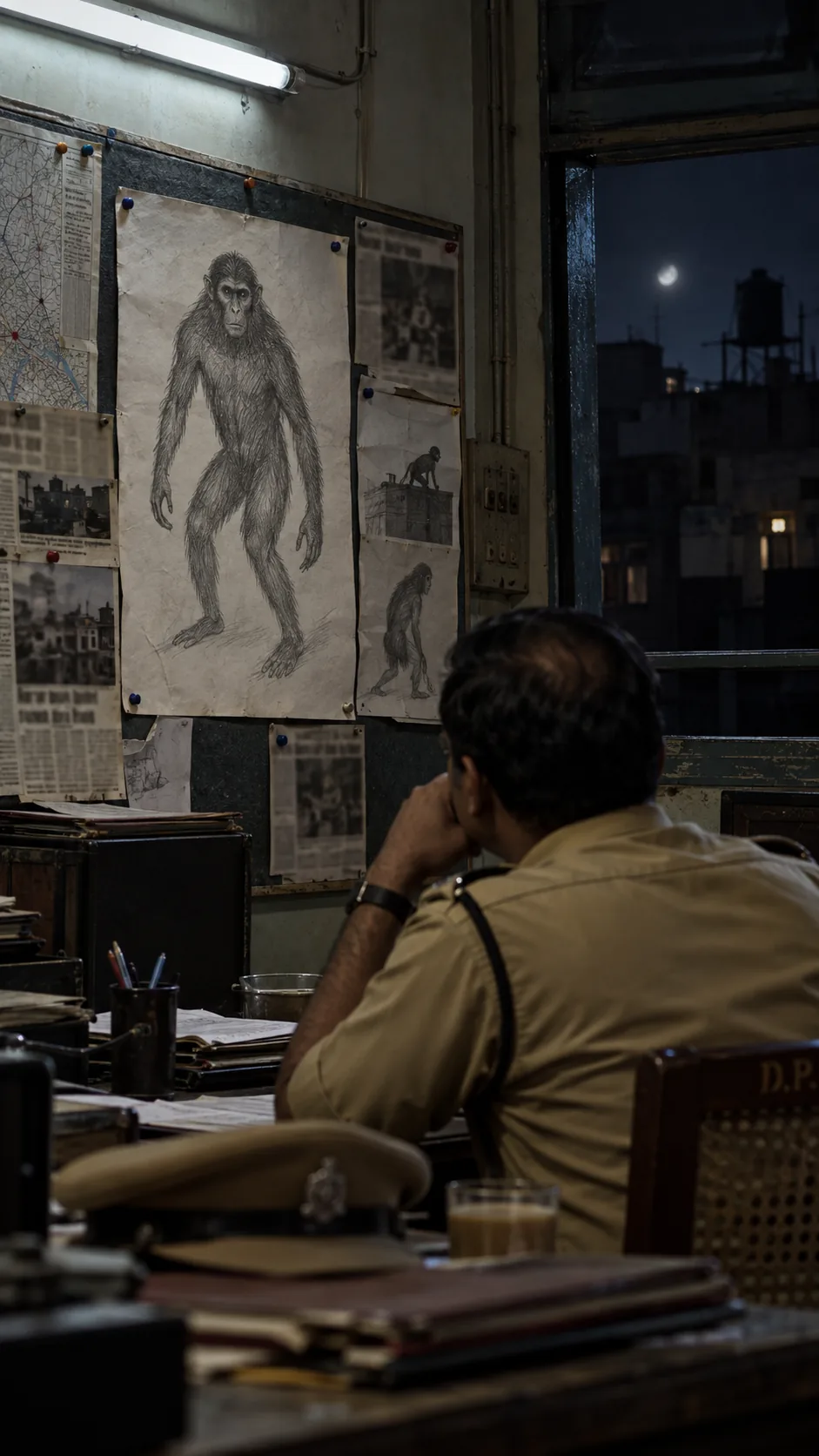
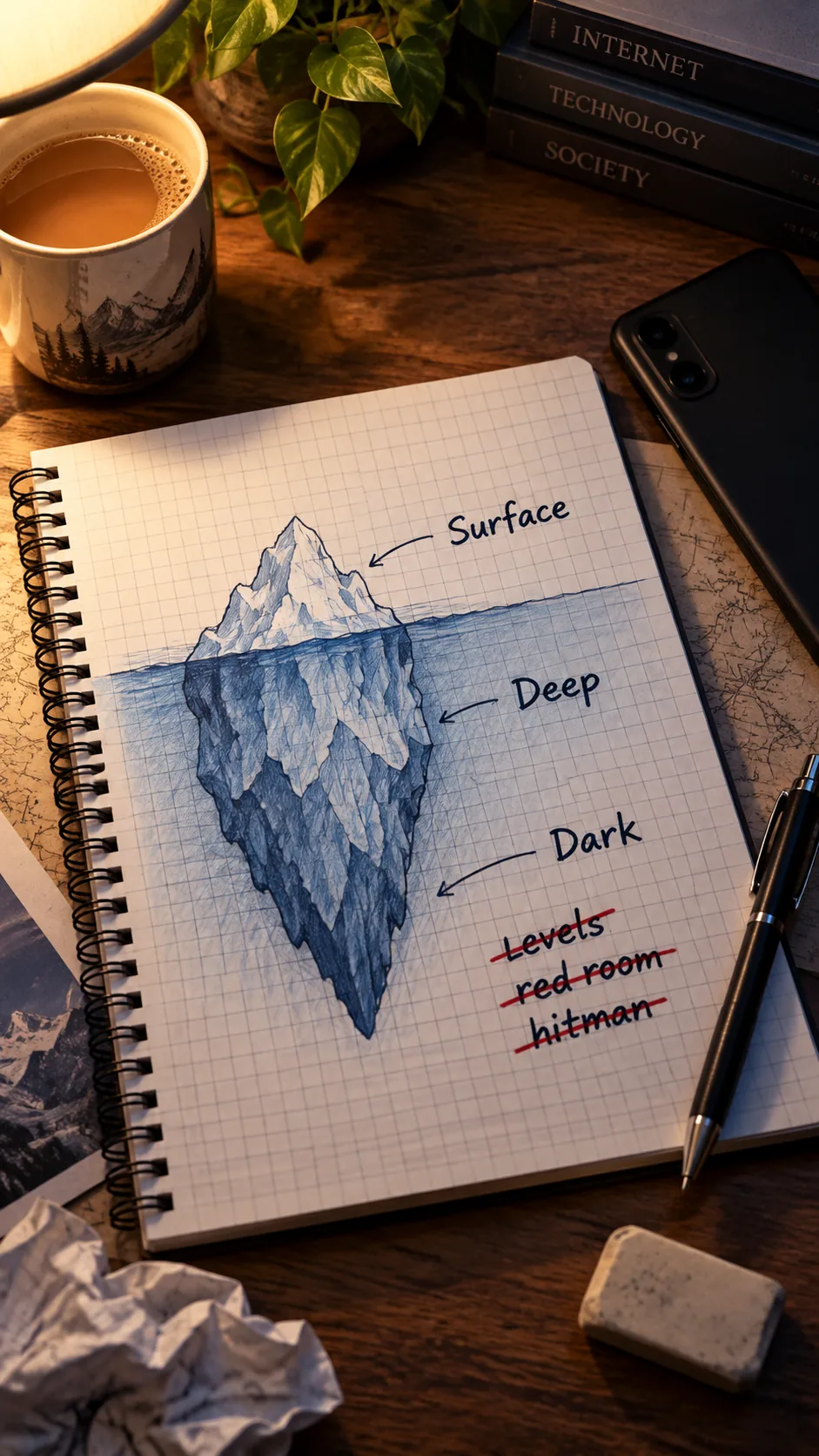
The iceberg meme did the rest. Around 2011 an infographic stacked “clear web,” “deep web,” and cartoon depths that later sprouted extra “levels” and a Marianas punchline. It was a joke graphic, not a protocol diagram. Researcher Robert W. Gehl later treated the extra-level gag as a joke that escaped its folder. Cinema needs pictures, pace and threat. Slow, ugly, text-heavy pages do not photograph. So the set stays neon, and viewers assume the network does too.
The iceberg error: deep is not dark
Think of a search engine as the menu on the wall. The order book, staff logins and locker keys are deep — still the same cafe, just not on the board. Your inbox is deep web. It is not a dungeon. Movies relabel that inbox as an underworld because the metaphor is cheap.
Michael K. Bergman’s 2001 paper The Deep Web: Surfacing Hidden Value popularised the phrase. His size claim — often repeated as 400 to 550 times the surface web — described databases and pages crawlers miss, not hidden markets. Later videos stamped “90 percent dark web” on the same number. That stamp is wrong. Most of the bulk is mundane: accounts, records, query results.
The dark slice is a small overlay. Addresses look like long random strings. Pages often look like early-2000s sites that load late and break. If a poster draws red rooms and hitman stalls at the bottom of an iceberg, you are looking at marketing, not a network map.
FACT: Bergman’s 2001 “400–550×” estimate was for the deep web (databases, login pages), not the dark web. The original Silk Road is a public case from 2011 to October 2013; Ross Ulbricht was arrested on 1 October 2013.
Red rooms, hitman shops, secret levels — screen inventory
The red-room legend promises a hidden page, a crypto fee, live violence, and a chat box that issues orders. Journalists including Eileen Ormsby have described the repeating pattern: countdown pages, a payment demand, a dead link, no broadcast that survives scrutiny. A working commercial “audience-directed” room, in the form films repeat, has not been established as a public, verified case. Japan’s older “Akai Heya” curse is a separate creepypasta, not proof of a hidden-service theatre.
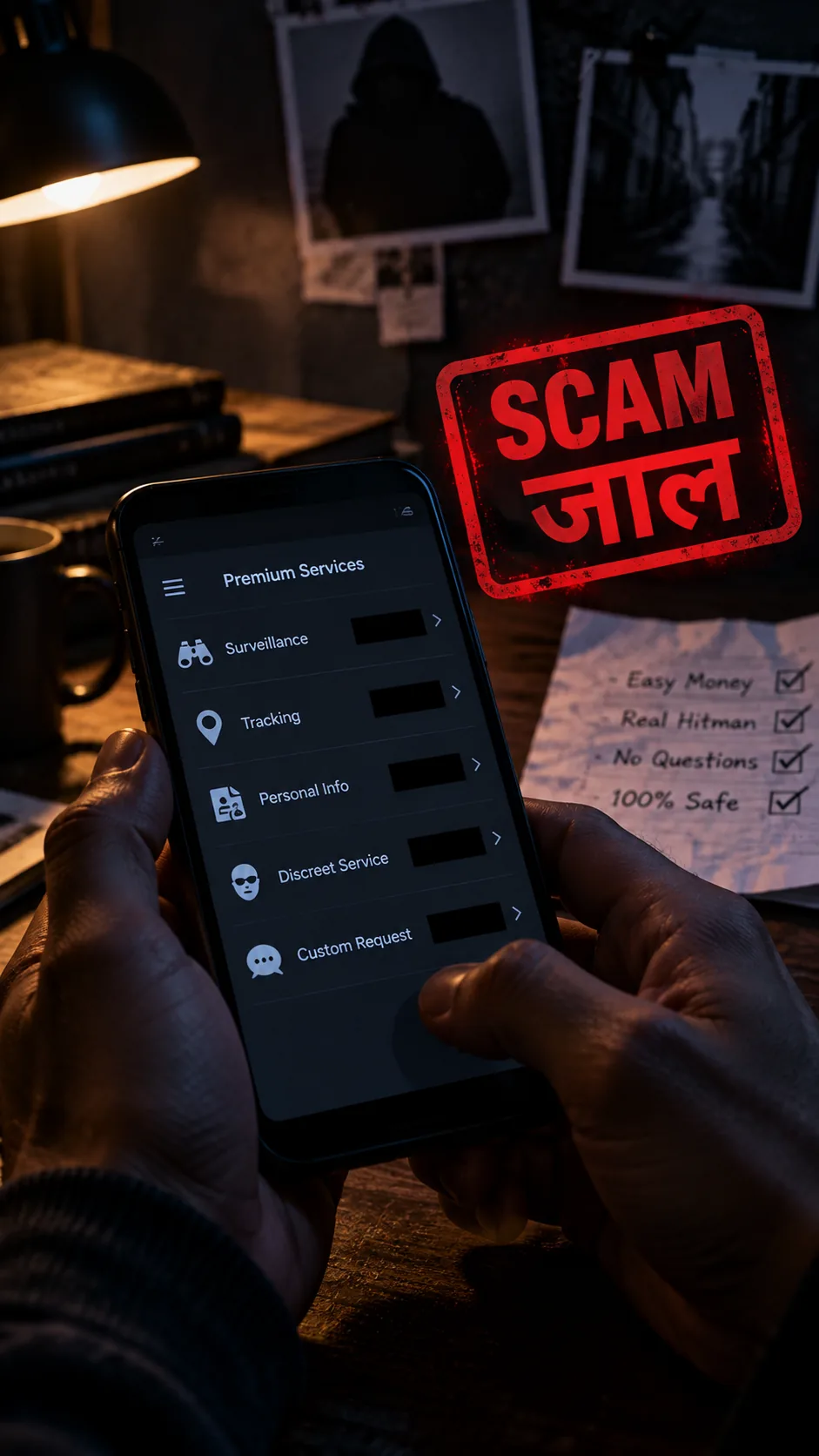
Hitman adverts are the other prop. The Besa Mafia saga read as fraud: take the coins, skip the job. Stings and scams both appear in the record. Real-world violence exists; a filmic menu of assassins does not make it a shopfront. Pages that sell a “show” for a fee are, on the documented pattern, usually scams. This piece will not tell anyone how to look for them.
Level-four, level-five, Marianas Web — those floors are not an official stack. The 2011 Imgur iceberg and later add-ons were troll art. The Hidden Wiki was a directory-style page, not a state catalogue; hacks around 2014 and the public Operation Onymous wave knocked that ecosystem. “It gets darker below” survives because the story can always move one alleged link further when proof is asked. That is literature, not a spec.
What the technology actually looks like
It is boring. Hidden addresses are long and ugly on purpose. Pages are plain, slow, full of rot. There is no glowing gateway that opens because a character hovered a cursor. The “I wandered in by accident” beat does not match how overlay services work. Casual browsing does not drop a person through a trapdoor the way crime drama likes.
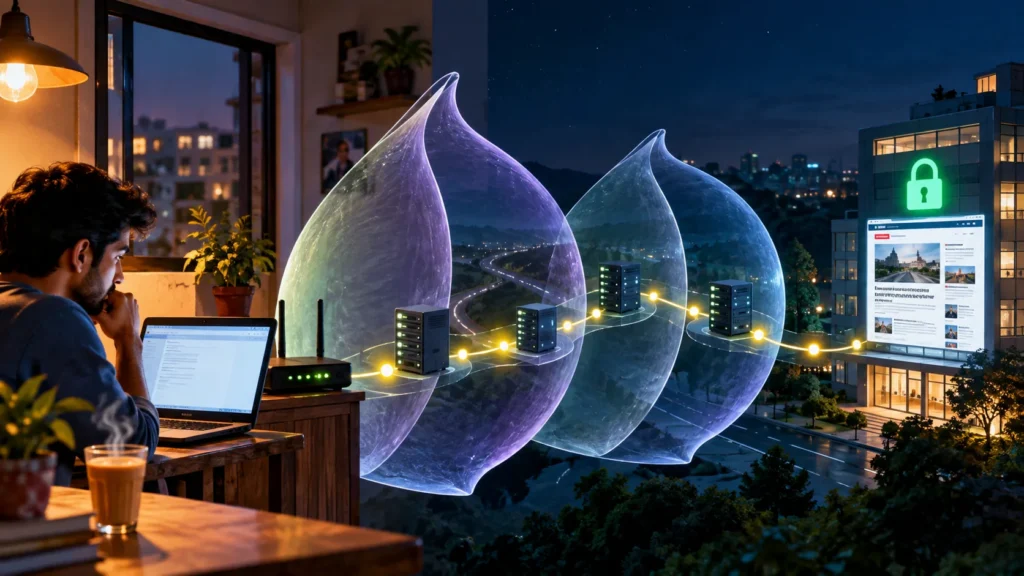
Anonymity software is not a cloak of invisibility. People deanonymise themselves — reused handles, personal logins, files opened on an ordinary machine. Agencies have dropped markets because code broke, money left a trail, or a person slipped. The line “police cannot reach that layer” collides with court history.
The same tools are used by journalists, sources and readers under censorship. That sentence rarely fits a poster. A protocol does not carry a moral badge. Crime is in the use, not in the mere existence of a privacy layer.
What the camera cuts: scams, courts, real harm
Scripts need untouchable villains. The public record is messier. Silk Road ran from 2011 and fell in October 2013. Ulbricht was convicted on 4 February 2015 on seven counts and, on 29 May 2015, received a life sentence plus a large forfeiture — court facts, not forum lore. Later markets are separate stories; do not collapse them into the original site. Actions such as Operation Onymous (November 2014) were public. Cinema compresses an empire into a night. History is years of work.
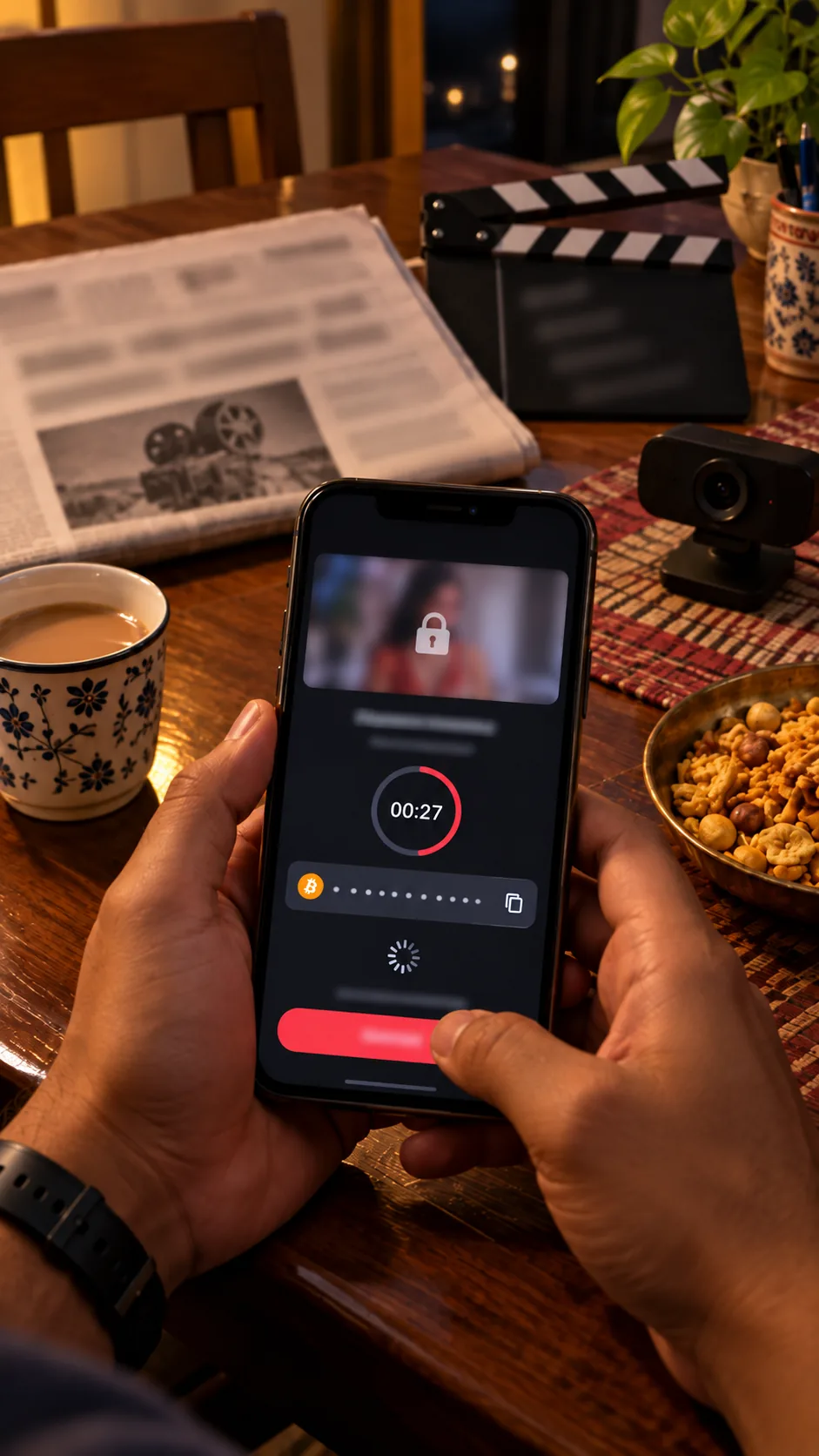
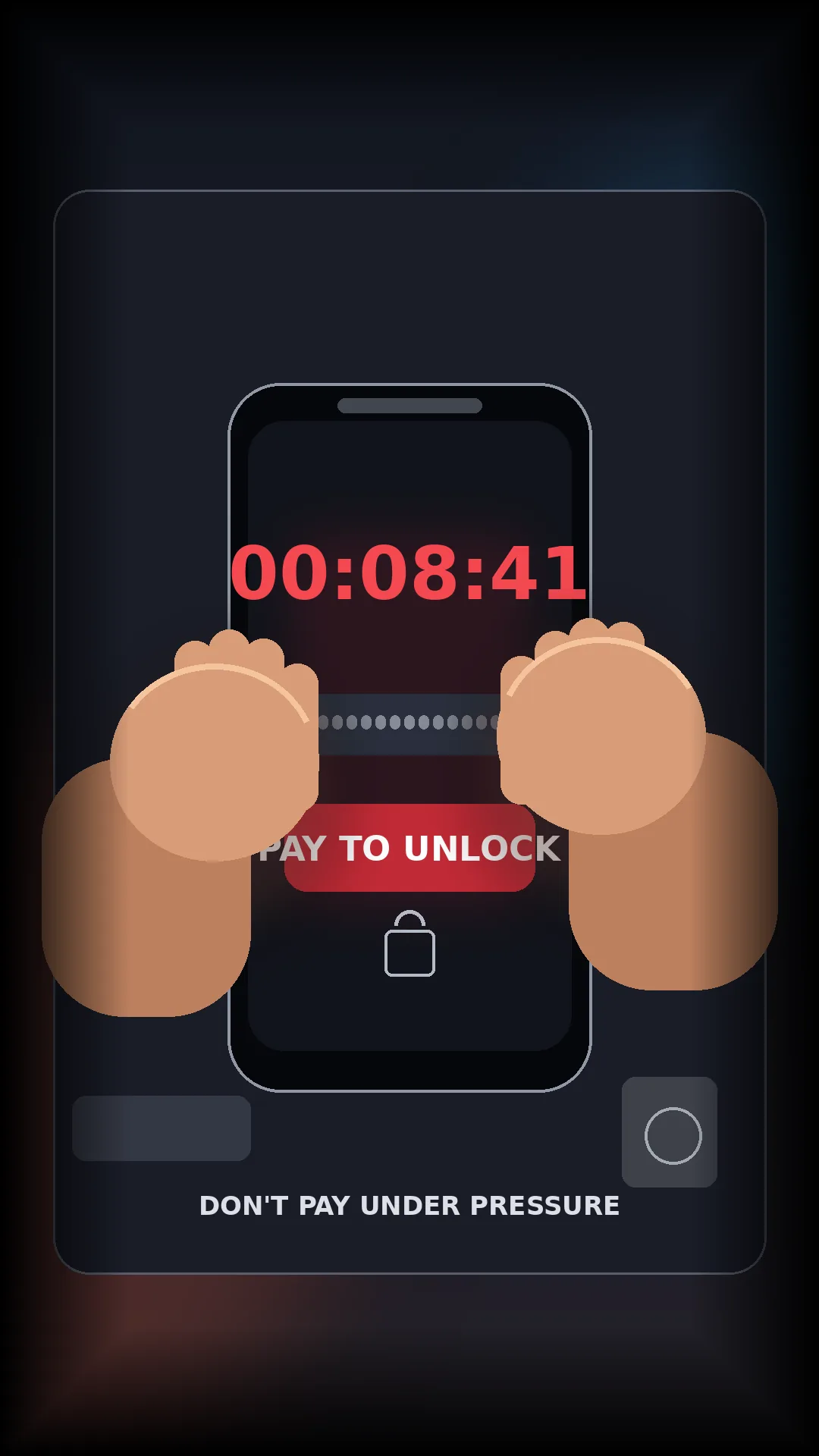
Scams outrun films. A grim thumbnail, a timer, a last-seat pitch, a wallet address: that is set design. Payment is not proof of a show. Proof would be a verified broadcast and a case file. Older surface-web crimes — Luka Magnotta’s 2012 Montreal murder among them — were later pasted onto the red-room template. A court case and a folklore layout are not the same object.
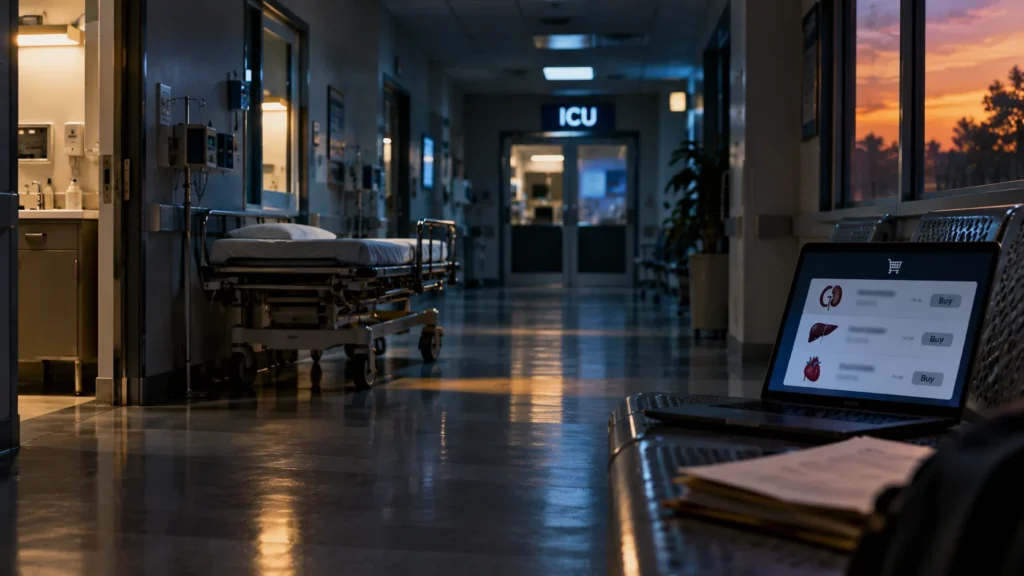
Real harm sits elsewhere: fraud, stolen data, exploitation networks, drug-market prosecutions. Denying those would be another fiction. They are not “level seven of neon hell.” They are crimes written in the language of investigations. Myths persist because hiddenness lets a story stand where evidence should.
FAQ
Can you fall into the dark web by accident?
Thrillers say yes. Everyday search and social scrolling do not open a “second internet” the way a movie beat requires. This article is not a method.
Are cinematic red rooms real?
Folklore and scam pages are common. A functioning pay-per-view interactive room of the kind films repeat has not been established as a public verified case. Bolting on unrelated surface-web violence does not complete the legend.
Are the deep web and dark web the same?
No. Deep = ordinary internet behind logins and databases. Dark = a small, intentionally hidden overlay. Bergman’s 2001 bulk figure belongs to the first.
Is law enforcement locked out?
Silk Road and later public operations say no. Anonymity is not magic. Error, money trails and software flaws have been paths for investigators.
Why no links or tools here?
The job is literacy, not travel. Asking for links is how many scams start. Seeking illegal goods can itself be a crime.
Disclaimer
This is not a guide to visit the dark web. There are no setup steps, hidden addresses, markets or buying methods here. Pages that demand crypto or fees for a “red room,” a hitman or a secret show are often scams. Seeking illegal goods or services is a crime. A film is entertainment. A court file is evidence. Do not treat a horror plot as a network diagram.