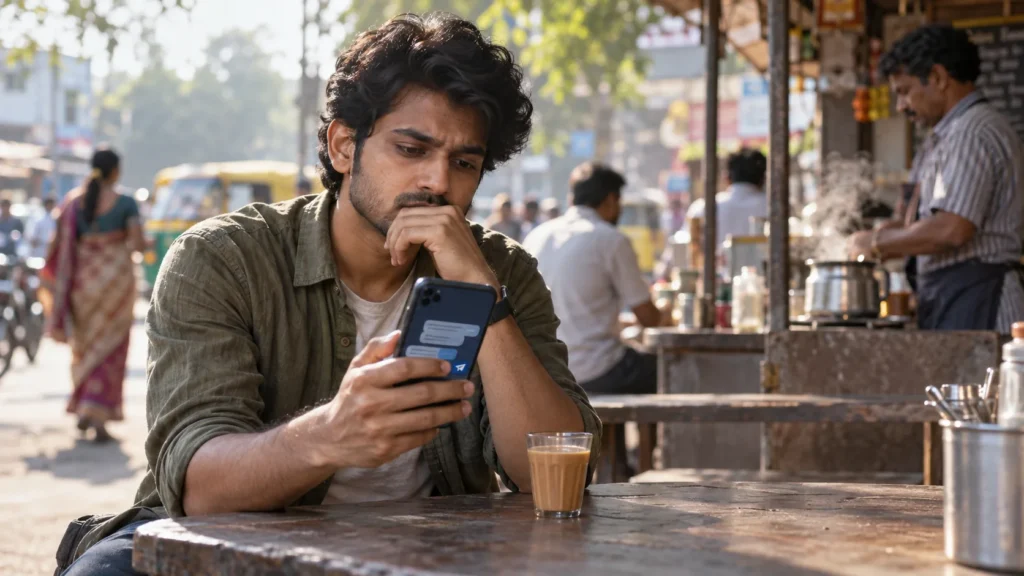
In June 2026 an official sentence travelled from a Delhi High Court affidavit into headlines: Telegram had become “the new dark web.” The same blue-icon app that carries family groups and news channels was suddenly spoken of as if it were a hidden network. The honest question is narrower than the fear. Is that a technical description, or a government metaphor for scale, anonymity features and crime that now advertises in plain sight?
This piece is not a tour of hidden services and not a verdict on every Telegram user. It separates three layers that headlines flatten: what the dark web is, what Telegram actually is, and what Indian agencies put on record when they borrowed the darker phrase.
The dark web is the slice of the internet that does not sit on a normal app store or a normal browser session. It is associated with anonymising networks and hidden services. Telegram is none of that. It is a mass-market messenger on the public internet. You install it like any other app. Public channels have links. Usernames are searchable. That is surface-web behaviour with a large group feature set, not a hidden layer.
People who repeat “new dark web” are usually bundling three complaints: it is hard to attribute an account, channels can reach huge audiences, and bots can republish content after a takedown. Those traits can help criminals. They do not rewrite the network map. Fraud also runs on email and on other messengers. Nobody calls an inbox the dark web because a mule account was recruited there.
A second mix-up sits under the fear. Many users assume every Telegram chat is end-to-end encrypted by default. Cloud chats are stored on Telegram’s servers. Secret Chats are an opt-in, one-to-one mode. Groups and channels do not run on that default. So the folklore of a fully invisible pocket internet is already sloppy. Calling the sloppy folklore “dark web” makes it sloppier.
Why the Indian government used the phrase
In its June 2026 counter-affidavit the Centre told the Delhi High Court that “Telegram has become the new dark web, linking threat actors.” Criminals, it said, post links on channels that point onward toward hidden forums, which makes tracking and attribution harder. Read that sentence carefully. The state was not classifying the app as Tor. It was calling the app a waiting room and a switchboard.
Solicitor General Tushar Mehta cited periodic reports from the Indian Cyber Crime Coordination Centre (I4C), including a 10 June 2026 note reported in the press as
Report on Abuse of Telegram for Cybercrime
. The architectural grievances were specific: one account can spawn many bots; blocked bots reappear as mirrors under new names; usernames can hide phone numbers. Mehta told the court the scale of that multiplication is what other chat apps do not offer in the same way. That is an enforcement argument about product design, not a lesson in hidden-network routing.
The alleged menu was broad — cyber fraud, exam-leak channels, drug advertising, extremist propaganda, child sexual exploitation material. Treat that list as the government’s pleading, not as a completed criminal ledger. The metaphor was chosen because “dark web” already scares a general reader. Scare is not a definition.
The real difference in one table of ideas
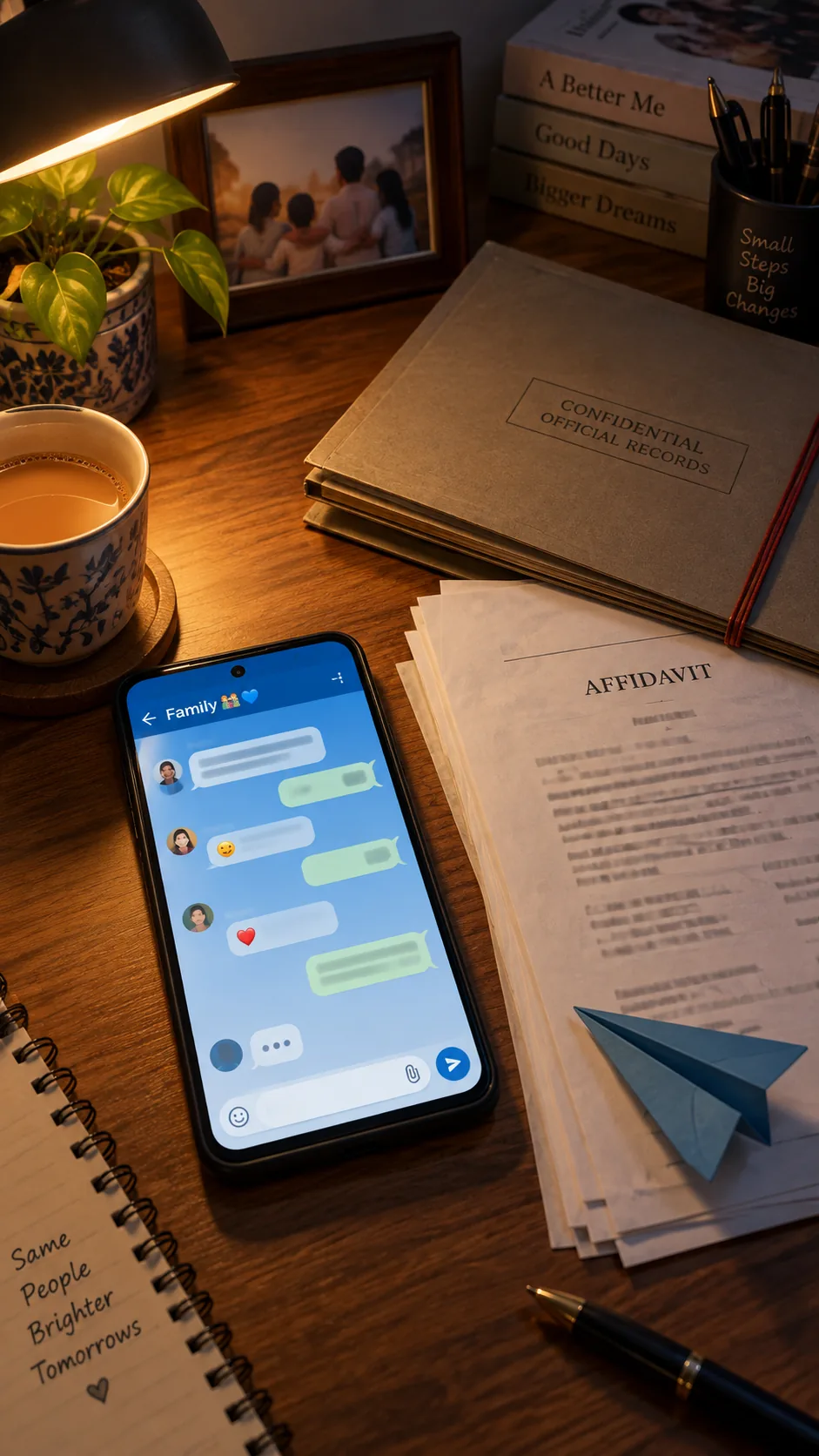
Access is the first split. Hidden marketplaces sit behind tools most people never install. Telegram sits on a home screen. The Narcotics Control Bureau’s Annual Report 2025, released in June 2026, made that contrast explicit. Encrypted apps including Telegram, WhatsApp and Signal show up in trafficking investigations; Telegram was singled out as a prominent storefront for drug advertising because public channels carry listings to large subscriber bases. “Unlike darknet markets, which require specialised access, these platforms are widely accessible via smartphones,” the report said, as quoted in the Indian press. The barrier that dropped is convenience, not a new underground protocol.
Visibility is the second split. A public channel is public. Scam crews want customers. They do not always want a locked basement. That is why investment tips, fake jobs and “paper available” rumours prefer a crowded chat over a hidden stall. Payment style is the third split. A lot of India-facing fraud still ends in UPI, mule accounts and a cloned app that will not let you withdraw. That pattern matches cybercrime complaints more than it matches the folklore of a sealed dark bazaar.
Researchers who study underground markets now talk about a storefront layer and a settlement layer. Messaging apps increasingly look like the shop window. The window is not the cellar. Headlines that fuse them sell panic. They do not teach the map.
FACT
Press accounts of the I4C note listed National Cyber Crime Reporting Portal complaints “involving Telegram” as 75,688 cases and ₹1,359 crore in 2023; 2,48,324 and ₹1,940 crore in 2024; 2,75,840 and ₹3,086 crore in 2025; and 88,713 and ₹748 crore from January to May 2026. These are official claims inside a policy fight. A filed complaint is not a convicted crime.
For most Indian users the Telegram scare is not a movie dungeon. It is a group that promises stock tips, a part-time job, a cheap loan or a crypto return. Screenshots of other “members” winning circulate on cue. Then comes a side app and a deposit. Withdrawal never arrives. City police forces have charged mule-account suppliers who took commission from such rings. That is ordinary cyber fraud wearing a channel admin’s badge.
The bot complaint in court matters here only as a warning label, not as a treasure map. Automated accounts can spray invites and survive a single takedown. For a reader the practical flag is older than any messenger: a stranger hurrying you toward money, a file, or a “secret paper.” Those pitches do not become true because someone stamped them with the words dark web.
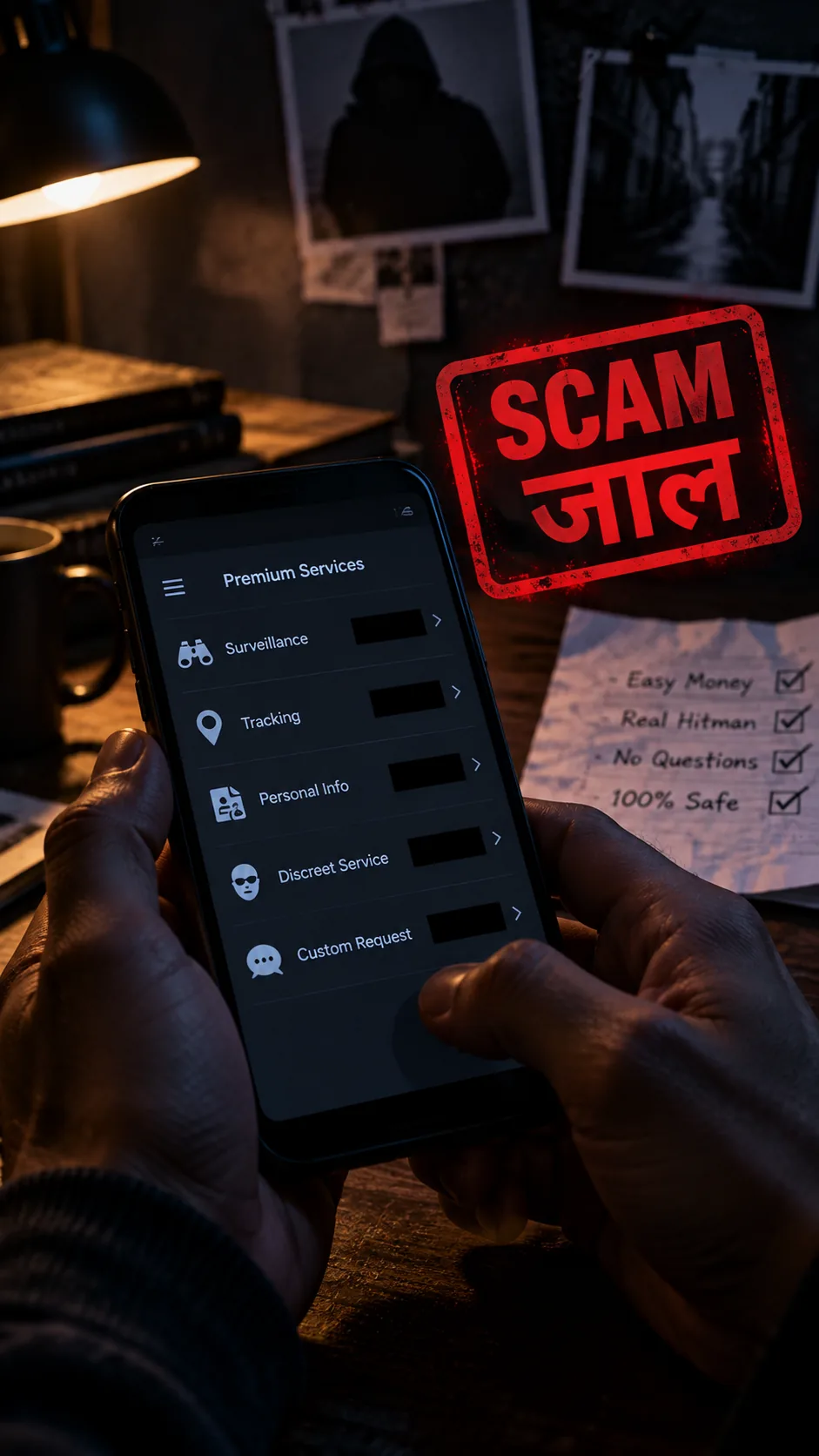
A related con sells the dungeon itself — paywalls that claim to open rooms, hit-man stalls or live crime streams. Public reporting on those genres keeps landing on the same punchline: the page takes money and vanishes. Treating a forwarded link as proof that a hidden world has opened on your phone is how the next scam starts.
The NEET block and what the court actually held
The Indian phrase did not appear in a vacuum. After alleged leaks, NEET-UG 2026 was cancelled and a re-test was set for 21 June. The Centre said organised cheating networks used Telegram channels to tout papers, bookings and payments. One channel named in coverage, “Neet Mafia,” was described as having about 18,617 subscribers. Those are allegations inside an investigation, not a finished trial narrative.
On 16 June 2026, MeitY issued an interim direction under Section 69A of the Information Technology Act: block Telegram and associated URLs in India until 22 June, and disable message-editing until 30 June. The editing ban had a specific theory — a message could be altered after the exam to look as if a paper had leaked earlier, feeding a public-order scare. Telegram sued, arguing the sweep hit some 150 million Indian users. On 19 June, Justice Tejas Karia dismissed the writ. The court called the temporary measure well-founded and, in the emergency before the re-test, the least restrictive option the government could justify.
That judgment does not convert a messenger into a hidden network. It is a time-boxed access restriction tied to an exam and to public order. The bench accepted the state’s record and the statute. It did not write a new definition of the dark web.
France 2024 sits on a different docket
Pavel Durov, Telegram’s founder, was detained at Paris-Le Bourget in August 2024. French prosecutors described an investigation into alleged criminal use of the app — including child sexual abuse material, drug trafficking and fraud — and into a failure to answer legal requests. He was later placed under formal investigation, released on bail reported at €5 million, and restricted from leaving France for a period. That is a French criminal process. It is not an Indian conviction sheet and not a user-by-user moral score.
The episode still explains why the metaphor travels. Governments in more than one country now argue that giant, lightly moderated channels plus weak legal cooperation create a policing problem at consumer scale. Telegram’s public line has been that it is not an anarchic haven and that moderation sits within industry norms. Readers can hold both facts: a popular app is not a crime, and a popular app can still be a cheap hall for people who commit crimes.
What the claim is really saying
Split the sentence and it becomes usable. Technically, Telegram is not the dark web. Administratively, India used the phrase in 2026 to describe a gateway, a bot-heavy architecture and a spike in complaints it tied to the app. Socially, the wound most readers will meet is a scam group, not a hidden forum.
Useful caution is dull on purpose. Do not send money to a stranger’s tip group. Treat “secret paper” and “guaranteed return” as fraud hooks. If money has already moved, call 1930 and file on cybercrime.gov.in. Do not go hunting for hidden markets. Seeking illegal goods is a crime, and pages that promise a tour are often the next con. This article is not a visit guide.
Keep the map simple. The dark web is a layer. Telegram is an app. Crime can use either, and it can use ordinary email too. Mixing the words is easy. Separating them is the only part that helps.
FAQ
Is Telegram the dark web?
No. The dark web is a hidden network layer. Telegram is a public-internet messenger. The Indian government’s phrase was a metaphor for misuse and onward links, not a technical reclassification.
Why say “new dark web” then?
The June 2026 affidavit argued that threat actors use channels as a switchboard toward hidden forums and that attribution is hard. That is enforcement language. It is not network science.
Are ordinary groups unsafe?
No. Family, class and news channels are normal use. The danger sits in money pitches, bot funnels and anyone selling certainty.
What did the Delhi High Court decide?
On 19 June 2026 it refused to strike down a temporary Section 69A block timed around the NEET-UG re-test. That was not a permanent ban and not a finding that the app equals the dark web.
What should a victim of a Telegram scam do?
Stop payments, keep records, report at 1930 and cybercrime.gov.in. Do not try to “enter” any hidden market named in a forwarded post.
Disclaimer: This is not a guide to visiting the dark web. It contains no Tor setup, onion addresses, market names-as-directions, or buying instructions. Pages that claim red rooms or hit-man shops are commonly scams. Seeking illegal goods or services is a crime. Complaint totals cited above are government figures, not independently audited proof of every alleged loss.