There is a well-known adage regarding human history and communication: "If a falsehood is repeated often enough, it eventually becomes accepted as historical fact." In today’s digital landscape—fueled by social media algorithms, online conspiracy forums, and sensationalist video essays—few ancient figures have suffered this fate as dramatically as Baal. A quick search online often yields results branding Baal as a sinister "lord of dark magic," a primary demon in occult hierarchies, or a shadowy entity invoked by global elites. Yet, thousands of years ago, this name did not evoke dread; it represented life, rain, and divine authority across ancient Near Eastern civilizations.
To answer the fundamental search intent—who is Baal?—one must strip away centuries of religious rivalries, medieval folklore, and modern clickbait. In antiquity, Baal was not a horned monster dwelling in darkness. He was a supreme storm and fertility deity worshipped by ancient Canaanites, Phoenicians, and Ugaritic farmers who depended on seasonal rainfall for survival. Kings built grand temples in his honor, and entire cities celebrated his triumphs over chaotic cosmic forces.
How did a revered ancient protector transform into one of the most infamous demons in internet lore? As a mythic and historical analysis, this investigation examines the archaeological facts, theological polemics, medieval grimoire writings, and contemporary digital rumors that altered Baal’s image over three millennia.
Ancient Origins: Baal in Canaanite Archaeology and History
Label: (a) Documented History & Archaeology
To understand the origins of Baal, historians turn back the clock between 3,000 and 4,000 years to the ancient Levant—a region encompassing modern-day Syria, Lebanon, Israel, Jordan, and Palestine. Archaeological excavations at ancient cities such as Ugarit (modern Ras Shamra, Syria) have unearthed thousands of cuneiform tablets that offer direct insights into Canaanite religion and society.
Etymologically, the word Ba’al in Semitic languages is not originally a proper name; it is an honorific title meaning "Owner," "Master," or "Lord." While various local deities bore this title, it became most closely associated with Baal-Hadad, the deity presiding over weather, lightning, rain, and agricultural fertility.
- Symbol of Life and Abundance: In the arid climate of the Near East, seasonal rain determined whether a community thrived or starved. Canaanites viewed Baal as the benevolent provider who rode the clouds, brought winter rains, and caused crops and livestock to flourish.
- Ruler of the Storms: In Ugaritic poetry, Baal is depicted holding a thunderbolt spear, driving back the terrifying forces of chaos—most notably Yamm (the ocean/sea god of chaos) and Mot (the god of death and drought). His roar was believed to echo through thunder.
- Relationships in the Canaanite Pantheon: Baal was part of a rich divine family, frequently associated with his sister Anat (a fierce warrior goddess) and Asherah, alongside the high god El. Temple complexes dedicated to Baal featured prominent stone pillars (masseboth) and altars where offerings were presented to secure agricultural prosperity.
Archaeological evidence clearly demonstrates that for centuries, Baal represented the lifeblood of Canaanite society. He was viewed not as an evil force, but as an essential guardian of order against starvation and natural disaster.
The Polemic Shift: Biblical Debates and Cultural Demonization
Label: (b) Folklore, Scripture & Demonology Texts
The turn in Baal’s historical narrative began with the emergence and consolidation of monotheism in ancient Israel. As the worship of Yahweh became the central unifying faith of the Israelite people, Canaanite polytheistic practices were increasingly viewed as a direct theological threat.
In the Hebrew Bible (Old Testament), the title "Baal" appears frequently, but exclusively in a polemical context. Biblical writers condemned syncretism—the blending of Yahwist devotion with local Canaanite rain rituals—as spiritual infidelity.
- Monotheism vs. Polytheism: Israelite prophets warned that worshipping Baal alongside or instead of Yahweh would lead to famine, political downfall, and exile. Baal worship was framed as idol worship and apostasy.
- The Confrontation on Mount Carmel: One of the most famous narratives occurs in 1 Kings 18, where the prophet Elijah challenges 450 prophets of Baal to a divine test on Mount Carmel to determine which deity could ignite a sacrificial altar with fire. When Baal does not answer, Elijah calls upon Yahweh, who answers with fire, leading to the dramatic defeat of Baal’s priests.
- Linguistic Repudiation: Over time, Jewish writers used derogatory wordplay to discredit Baal worship. For instance, the local deity Baal-Zebul ("Lord of the High House") was intentionally mocked as Beelzebub ("Lord of the Flies"), a title later absorbed into Christian demonology as a major demon or synonym for Satan.
This period marks the transition of Baal from a local rival god into a theological symbol of error, paganism, and spiritual opposition.
Medieval Grimoires: Constructing the ‘Baal Demon’ Persona
Label: (b) Folklore & Demonology Texts
During the Middle Ages and the Early Modern period, European occultists, translators, and Christian theologians began categorizing foreign deities and traditional spirits into elaborate demonic hierarchies. This genre of literature, known as grimoires (books of magic), systematically reinterpreted ancient gods through an inquisitorial lens.
In famous 16th and 17th-century grimoires such as Johann Weyer’s Pseudomonarchia Daemonum and the anonymous compilation The Lesser Key of Solomon (Goetia), Baal was refashioned into "Bael"—the first ruling king of the infernal court.
- Chimerical Depictions: Medieval grimoires described Bael as a terrifying entity capable of appearing with three heads: a toad, a man, and a cat, often depicted walking on spider-like legs.
- Attributed Powers: Magicians and grimoire writers claimed Bael could grant human invokers the power of invisibility, cunning wisdom, or wealth in exchange for spiritual pacts.
- Mythological Distortions: These medieval depictions had zero connection to ancient Ugaritic or Canaanite religion. Instead, they were artistic and theological inventions produced by European authors fascinated by demonology, ritual magic, and the exoticism of ancient names.
Modern Internet Claims, Pop Culture, and Urban Legends
Label: (c) Pop Culture & (d) Modern Internet Claims
In the 21st century, digital platforms have amplified the grimoire version of Baal far beyond its original medieval audience. Algorithmic recommendations, horror entertainment, and sensationalist conspiracy theories have combined to create modern urban legends about the ancient storm god.
- Pop Culture Interpretations: Film, television, and video games frequently utilize the name "Baal" or "Bael" as a convenient shorthand for ancient evil. Major gaming franchises feature Baal as a dark lord or boss entity, reinforcing his pop-culture image as a destructive monster.
- Conspiracy Theories: Modern online subcultures frequently link Baal to secretive global elites, ritualistic cabals, and dark magic networks. These claims rely heavily on sensationalism rather than verified historical or archaeological evidence.
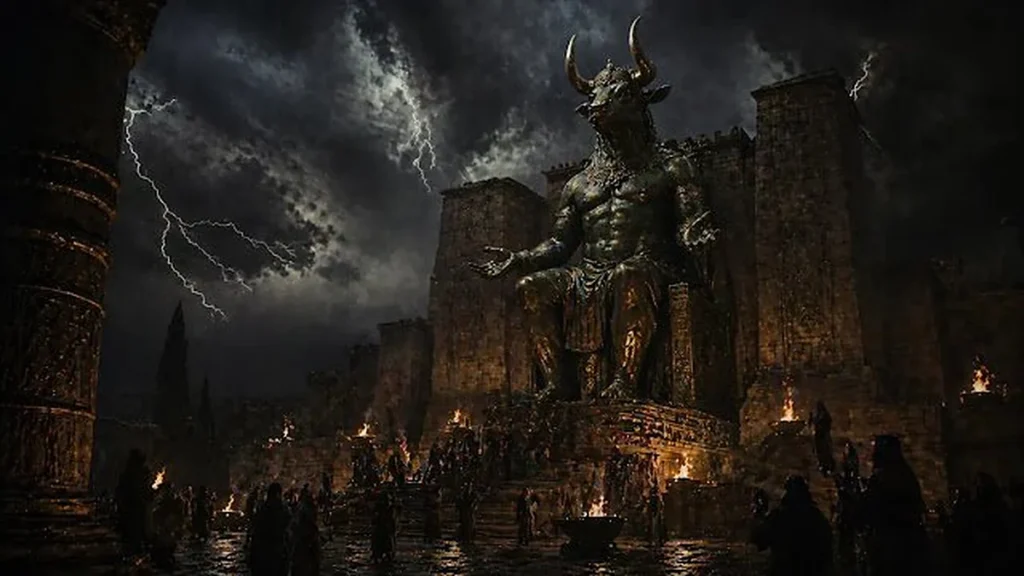
- Misconceptions Regarding Sacrifice: Internet narratives often conflate Baal with other ancient Levantine figures like Moloch or Roman depictions of Carthaginian rituals, generating generalized horror stories that collapse thousands of years of distinct historical cultures into a single online myth.
Science, Skepticism, and Historical Literacy
When analyzing figures like Baal, modern scholars, historians, and sociologists emphasize the importance of historical context. Religious polemics, language shifts, and political conflicts naturally reshape how cultures view neighboring faiths.
Psychologically, human beings are drawn to dramatic narratives of ancient curses, hidden demons, and dark rituals. Sensationalized internet stories capitalized on this impulse by replacing nuanced historical research with clickbait titles. Understanding the reality of Baal requires separating genuine bronze-age archaeology from medieval European occult folklore and modern digital rumor mills.
FACT BOX: Myth vs. History vs. Pop Culture
- Documented Archaeology: Baal was a Bronze Age Semitic title for "Lord," primarily designating Baal-Hadad, the Canaanite storm and rain god.
- Historical Function: Canaanites prayed to Baal for seasonal rain, agricultural fertility, and protection against severe droughts.
- Theological Evolution: Ancient biblical texts opposed Baal worship to establish monotheism, framing him as a major theological rival to Yahweh.
- Medieval Grimoires: 16th-century books on magic reimagined Baal as "Bael," a three-headed infernal king with spider legs—an invention of European occult writers.
- Modern Internet Claims: Online rumors linking Baal to shadowy modern occult cabals are speculative internet urban legends lacking academic support.
- Pop Culture Role: Movies and video games treat Baal as an iconic fictional demon, keeping the grimoire version alive in public imagination.
FAQ
Who is Baal in ancient mythology?
In ancient Canaanite mythology, Baal (specifically Baal-Hadad) was the storm, rain, and fertility god. He was worshipped across the Levant as the provider of water and life, responsible for driving away drought and keeping land fertile.
Is Baal a demon in the Bible?
In the Hebrew Bible, Baal is portrayed not as a literal red demon, but as a false pagan god and a theological rival to Yahweh. Biblical prophets condemned Israelite syncretism and idol worship dedicated to Baal.
Why is Baal depicted as a three-headed demon in grimoires?
European writers during the Renaissance created elaborate demonological hierarchies in grimoires like The Lesser Key of Solomon. They transformed the names of ancient non-Christian gods into demon ranks, inventing dramatic visual descriptions—such as a figure with cat, man, and toad heads—that had no basis in ancient Canaanite art.
Did ancient Canaanites worship Baal with dark magic?
No. Bronze Age Canaanites practiced standard Near Eastern temple civic rituals, offering grain, wine, and animal sacrifices to secure rain and harvest success. Modern claims connecting Baal to medieval "black magic" reflect early modern folklore rather than ancient history.
How did Baal become popular in modern pop culture?
The translation of medieval magic texts into popular English during the 19th and 20th centuries introduced "Bael" to fantasy writers, horror filmmakers, and game developers. Pop culture adopted the grimoire version as a dramatic villain archetype.
Disclaimer
This article is intended strictly for educational, historical, and mythic analysis. It does not offer occult advice, spiritual instruction, or medical guidance. Readers are encouraged to evaluate historical claims through peer-reviewed academic and archaeological sources. This content respects all living faith traditions and aims to provide neutral historical literacy regarding ancient Near Eastern cultures.