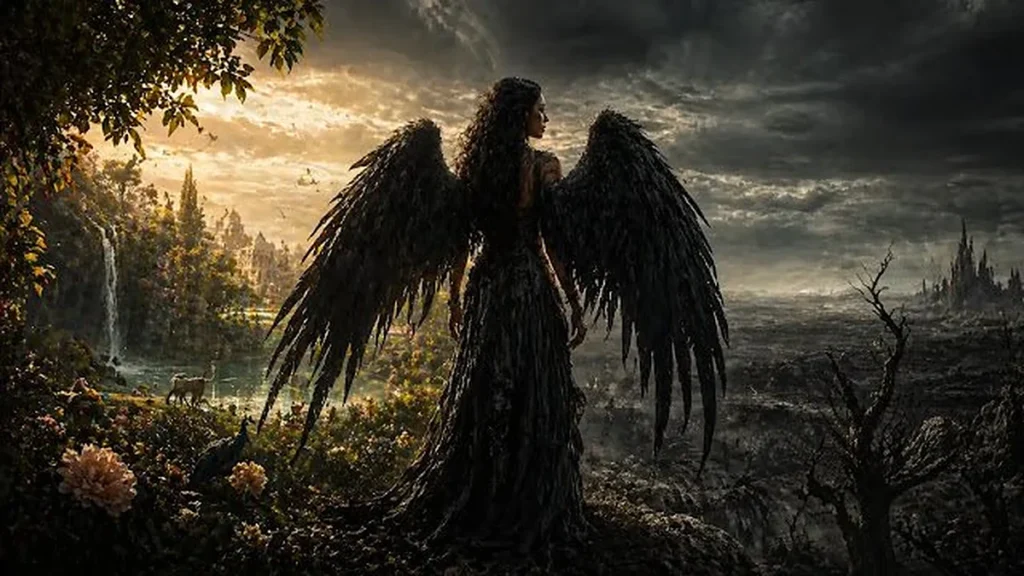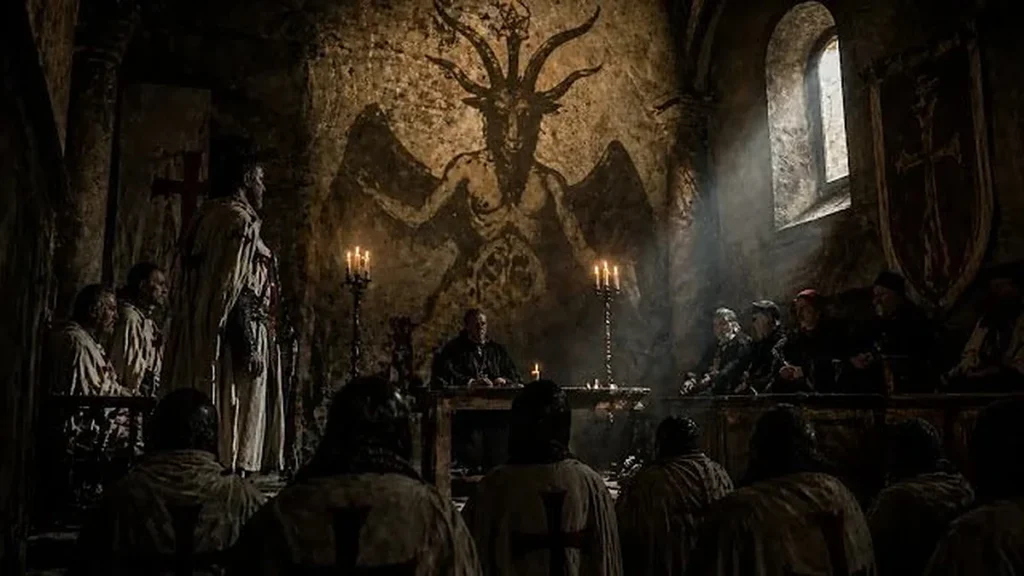
If you have ever ventured into the darker, more mysterious corners of the internet, you have likely encountered a striking and unsettling image: a winged creature with the body of a human, the head of a goat, and hands pointing in opposite directions—one upward, one downward. This enigmatic figure is known as Baphomet.
In modern pop culture, social media, and online conspiracy circles, this image is frequently labeled as the ultimate symbol of the Illuminati, the New World Order, and secret occult elites. Viral videos and online forums often claim that global leaders, Hollywood celebrities, and wealthy elites worship this goat-headed figure in secret, closed-door rituals to secure wealth, fame, and power.
But when we peel back the layers of sensationalism and internet rumors, we do not find a gateway to ancient demonic realms. Instead, we uncover a fascinating history of medieval political corruption, 19th-century artistic symbolism, and 20th-century marketing. To understand what is Baphomet, we must separate documented history from artistic philosophy and modern conspiracy claims.
1. The Real Origin: Knights Templar and French Royal Greed
The story of Baphomet does not begin in Hollywood or on the dark web. It begins in the early 14th century with a powerful medieval Catholic military order known as the Knights Templar. Founded during the Crusades, the Templars grew incredibly wealthy and influential, eventually acting as an early international banking system. They loaned vast sums of money to European monarchs, including King Philip IV of France.
By 1307, King Philip IV was deeply in debt to the Templars and desperate for a way out. To avoid repayment and seize the Templars’ immense wealth, the king orchestrated one of the most ruthless political smear campaigns in history. On Friday, October 13, 1307—a date that many believe inspired the superstition of “Friday the 13th”—the king ordered the mass arrest of hundreds of Templars across France.
To justify their arrest and subsequent execution, the French crown accused the Templars of heresy, spitting on the cross, obscene rituals, and worshipping a mysterious idol or severed head. During the trials, this alleged idol was referred to by various names in the trial records, most notably “Baphomet.”
2. Born in the Torture Chamber: Why Baphomet Was a Political Invention
Modern historians widely agree that the Knights Templar never actually worshipped an entity named Baphomet. The confessions obtained from the Templars were the result of extreme, brutal torture. Undergoing agonizing pain—including being burned at the stake, starved, and stretched on the rack—the prisoners confessed to whatever charges the king’s inquisitors put before them.
Scholars believe that the word “Baphomet” was not a demon’s name, but rather a French corruption and mispronunciation of “Mahomet,” the Old French name for the Prophet Muhammad. Since the Templars had spent decades in the Middle East, the French crown used this corrupted term to falsely claim that the knights had converted to a foreign religion or heretical belief system.
Thus, Baphomet was not an ancient deity of darkness; it was a fabricated tool of political greed, born in the torture chambers of medieval France to justify a royal land grab.
3. Where Did the Goat Head Come From? Éliphas Lévi’s Artistic Symbolism
If Baphomet was merely a name used in 14th-century trial transcripts, how did it become the iconic goat-headed figure we see today? For over five centuries, there was no visual depiction of Baphomet. That changed in 1856 when a French occultist and author named Éliphas Lévi published his influential book, Dogme et Rituel de la Haute Magie (Dogma and Ritual of High Magic). Inside, Lévi included a drawing he called “The Sabbatic Goat” or “Baphomet of Mendes.”
Contrary to modern conspiracy claims, Lévi did not design this figure to represent the Christian Devil or evil. Instead, he created it as a complex symbol of the “Equilibrium of Opposites”—a visual representation of harmony and balance in the universe. Let us break down the symbolism Lévi intended:
- The Hands: One hand points up toward the light (labeled Solve – to dissolve) and the other points down toward the dark (labeled Coagula – to bind). This represents the Hermetic maxim, “As above, so below,” suggesting that the micro-cosmos and macro-cosmos reflect each other.
- The Androgynous Body: The figure possesses both male and female physical traits, representing the union of genders and the dual nature of humanity.
- Human and Animal Traits: The combination of a human torso and a goat’s head symbolizes the balance between spiritual intellect and physical, animalistic instincts.
- The Pentagram: A right-side-up pentagram is drawn on the forehead, pointing upward to represent spiritual light, intellect, and divine order.
Lévi’s Baphomet was meant to be a philosophical diagram of universal balance, not an object of worship or a symbol of malevolence.
FACT BOX: History vs. Myth
- History: The name “Baphomet” first appeared in 1307 during the trials of the Knights Templar.
- Myth: Baphomet is an ancient pagan god worshipped since the dawn of civilization.
- History: The goat-headed drawing was created in 1856 by French occultist Éliphas Lévi as a symbol of universal balance.
- Myth: The goat-headed image is a medieval drawing of the Christian Devil.
- History: The Church of Satan adopted and inverted the symbol in 1966 as a metaphor for rebellion.
- Myth: The Illuminati was founded to worship Baphomet and control the global financial system.
4. The 1966 Twist: How the Church of Satan Rebranded Baphomet
The transition of Lévi’s symbol of balance into the ultimate emblem of modern Satanism occurred in 1966. Anton LaVey founded the Church of Satan in San Francisco, California. Seeking a powerful, provocative logo that would directly challenge traditional Christian norms, LaVey adopted Lévi’s drawing.
However, LaVey modified the symbol. He took the pentagram, inverted it (pointing downward to represent carnality and earthliness), placed the goat’s head inside the inverted star, and surrounded it with Hebrew letters spelling “Leviathan” (a biblical sea monster). This modified design became known as the Sigil of Baphomet.
Through this deliberate rebranding, a 19th-century artistic symbol of universal equilibrium was transformed into a 20th-century trademark for modern Satanism. It is important to note that the Church of Satan does not actually believe in or worship a literal devil or Baphomet; they are an atheistic organization that uses these symbols metaphorically to represent individualism, rebellion, and free thought.
5. The “Fear Economy”: Illuminati, Bollywood, and Pop Culture Speculation
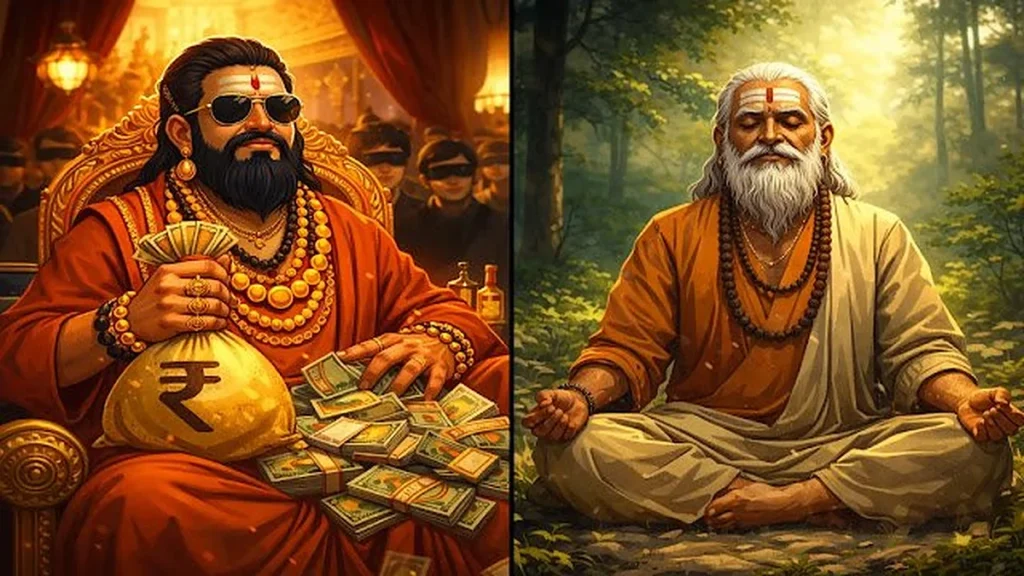
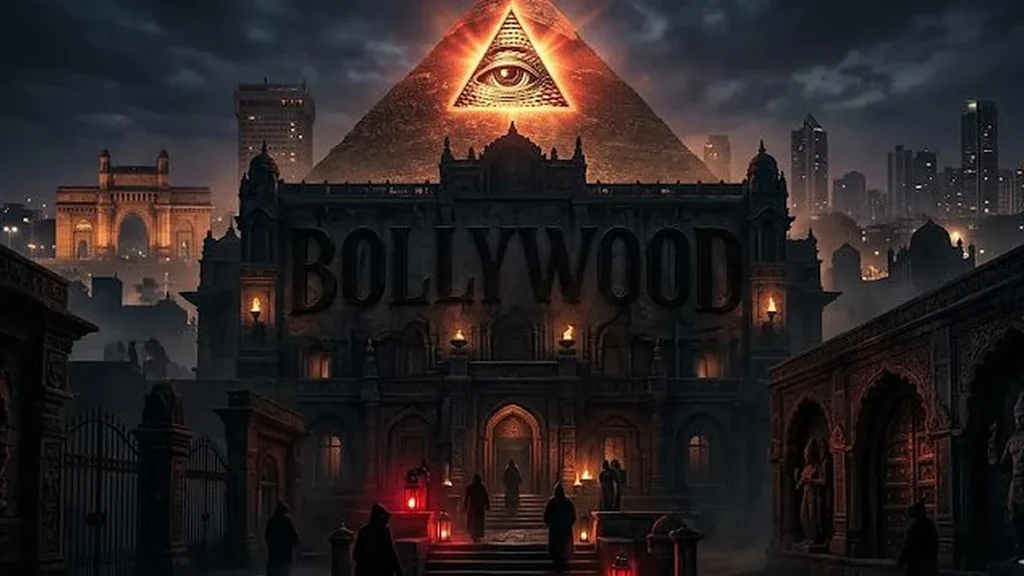
In the digital age, Baphomet has become a staple of online conspiracy theories. Viral videos and social media posts frequently claim that global elites, Hollywood celebrities, and even prominent Bollywood figures are members of a secret Illuminati society that worships Baphomet in hidden rituals to secure wealth and power.
When pop stars incorporate goat imagery, inverted pentagrams, or Baphomet-like poses into their music videos and live performances, conspiracy theorists point to it as “proof” of occult allegiance. However, a logical analysis reveals a much simpler reality: Shock Value Marketing.
The entertainment industry operates on attention. Artists and their marketing teams are fully aware that occult symbols provoke strong reactions, particularly among religious or highly superstitious audiences. By utilizing controversial imagery like Baphomet, celebrities generate massive online outrage, viral discussions, and free publicity. It is not a secret confession of devil worship; it is a highly effective commercial strategy designed to drive views, clicks, and revenue.
6. The Distraction Game: A Critical Thinking Perspective
Consider a metaphorical scenario: a clever thief breaks into a home, steals the contents of a safe, and deliberately leaves a lemon and some red vermilion (traditional superstitious items) on the doorstep before fleeing.
What happens next? The homeowners and investigators often become so consumed by fear of a spiritual curse or black magic that they neglect to look for practical clues, check security cameras, or trace the stolen goods. The superstition acts as a perfect smoke screen, allowing the thief to escape unnoticed.
In many ways, the obsession with Baphomet and secret societies functions similarly in modern society. While the public is distracted by analyzing the hand gestures of pop stars or searching for hidden symbols in music videos, real-world issues—such as economic inequality, data privacy violations, political corruption, and corporate greed—go unscrutinized. The fear of an imaginary, goat-headed shadow organization distracts from the very real, tangible forces shaping our world. Cultivating critical thinking and media literacy is the most effective way to overcome these manufactured fears.
FAQ
Q1. What is Baphomet?
Baphomet is a term that first appeared in 1307 during the trials of the Knights Templar. In 1856, French occultist Éliphas Lévi depicted it as a winged, goat-headed figure representing the “equilibrium of opposites.” Today, it is widely used as a symbol of modern Satanism and is frequently featured in pop culture and conspiracy theories.
Q2. Is Baphomet the god of the Illuminati?
No. The historical Bavarian Illuminati, founded in 1776, was a rationalist group aimed at promoting secularism, science, and reason while opposing religious influence. They did not worship Baphomet or any other deity. The connection between Baphomet and the Illuminati is a modern conspiracy theory popularized by internet culture.
Q3. Did the Knights Templar actually worship Baphomet?
No. Historians agree that the accusations against the Knights Templar were entirely fabricated by King Philip IV of France to justify arresting the knights, seizing their wealth, and avoiding his massive debts to them. The confessions were extracted under extreme torture.
Q4. What does the “Sigil of Baphomet” represent?
The Sigil of Baphomet is the official logo of the Church of Satan, created in 1966. It features an inverted pentagram containing a goat’s head, surrounded by Hebrew letters spelling “Leviathan.” It is used as a symbol of atheistic rebellion, individualism, and opposition to traditional religious dogma.
Q5. Why do celebrities use Baphomet symbols?
Celebrities and artists often use controversial symbols like Baphomet for shock value, artistic expression, and marketing. Occult imagery generates public curiosity, online outrage, and viral discussions, which translate into free publicity and increased media engagement.
⚠️ Disclaimer
This article is intended solely for educational, historical, and analytical purposes. It does not endorse, promote, or validate occult practices, black magic, or secret society conspiracies. The claims regarding celebrity involvement in secret societies are framed as unverified online speculation. Readers are encouraged to approach these topics with critical thinking and rely on verified historical documentation.