Your reflection was familiar, then suddenly seemed like someone else
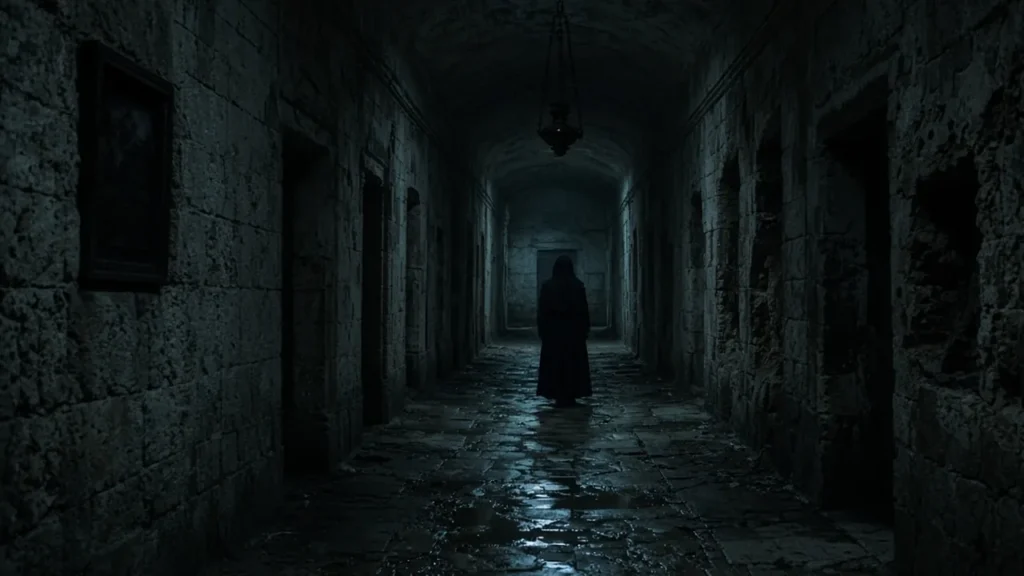
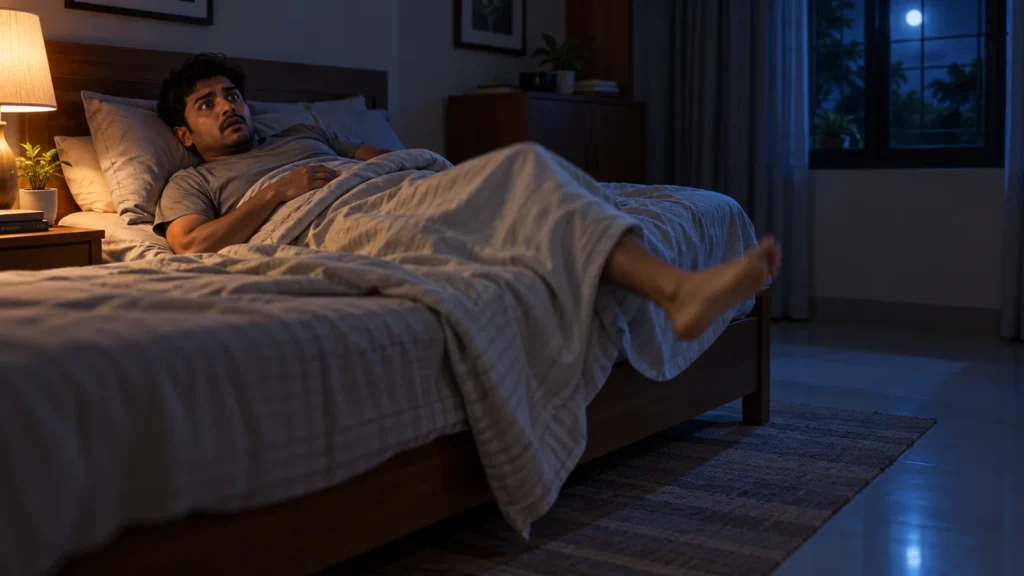
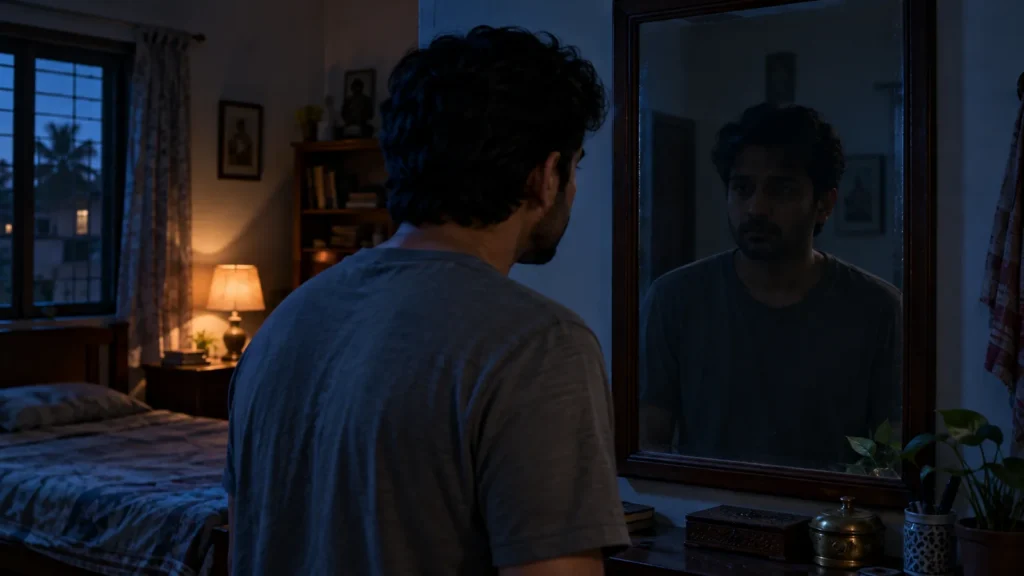
The room is dim at night. You look at your eyes in the mirror for a while. Suddenly your nose seems different, your face seems older, or the reflection feels unfamiliar. You turn around and the room is empty. This is an illustrative scene, but a similar experience can feel frightening enough to make ordinary explanations difficult to consider.
A strange face in a mirror at night does not establish that something has entered your body. Researchers have studied a perceptual illusion associated with sustained face gazing in dim conditions. However, that does not mean every unusual visual experience is this illusion. The circumstances and any other symptoms are important distinctions.
Respecting the fear does not require treating an apparent monster as an external creature. Seeing involves both available visual information and its interpretation. That distinction offers a way to understand why a reflection might seem unfamiliar while keeping an appropriate degree of uncertainty about what happened to a particular person.
Why dim light and sustained looking matter
Low illumination makes some facial details less clear. Keeping attention fixed for a prolonged period can change the visual experience. Reduced lighting, a face stimulus and prolonged fixation are relevant conditions in research on strange-face illusions. They are features of study settings, not a guarantee of what everyone will perceive.
A poorly lit photograph provides a limited analogy: incomplete detail can make recognition less stable. Human perception is not identical to a phone blurring an image, however. The analogy helps introduce the idea that appearance depends on viewing conditions. It cannot identify the complete mechanism behind someone’s particular experience or diagnose its cause.
Instead of treating nighttime as a supernatural switch, consider how bright the room was, whether you were staring, and what happened when you looked away. A repeated problem in ordinary daylight is a different context from a brief change during dim mirror gazing. It can merit assessment rather than reassurance based solely on this article.
Strange-face illusion and Troxler fading are related discussions, not synonyms
Giovanni Caputo published a report on the strange-face-in-the-mirror illusion in 2010. It described unfamiliar or distorted-looking faces during mirror gazing in dim conditions. Calling something the Caputo effect does not make it a medical diagnosis. Using the original research term makes the subject clearer without turning an author’s name into a clinical label.
Troxler fading concerns parts of a visual scene becoming less distinct during sustained fixation. It is discussed in explanations of perceptual fading and face changes. It should not be presented as a complete, settled explanation of the mirror illusion. Research is still needed to establish the mechanisms underlying strange-face experiences.
Avoid the confident story that neurons become tired at precisely sixty seconds and then the brain inserts a monster from memory. There is no universal timer or guaranteed outcome. Describing what participants reported, proposing an explanation, and establishing a mechanism are different tasks. A clear article should preserve that distinction rather than hide uncertainty behind scientific vocabulary.
FACT: a mirror experiment is not a ghost detector
A 2023 systematic review examined twenty-one studies of strange-face illusions. The studies reported such experiences, but methods and quality varied. The authors highlighted the need for better research, particularly into mechanisms. The evidence supports discussing an observable perceptual phenomenon; it does not justify claiming that every part of its explanation is settled.
Laboratory findings are not a prevalence estimate for everyone who looks in a mirror at night. An apparent face in an experiment does not establish an external creature. Equally, a brief perceptual illusion is not sufficient to diagnose psychiatric illness. Research can provide useful context and relief without replacing an individual assessment.
Source: Mash and colleagues, 2023: Systematic review and quality analysis
Simple steps when the experience frightens you
Look away, increase the ordinary lighting and take a break from the mirror. Sit somewhere safe and orient yourself to familiar surroundings. Ask a trusted person to stay with you if that helps. You do not need to prove your courage by continuing to stare at a reflection that is making you distressed.
Repeating a mirror challenge or a supposed spirit-summoning test is unnecessary. This article does not provide a timed protocol for inducing the experience, and children should not be encouraged to try one. Understanding a scientific observation does not require deliberately recreating it when you are already frightened or feeling vulnerable.
If changing the lighting helps, record that as an observation rather than a complete health clearance. If the experience persists, avoid immediately selecting a supernatural explanation. Seek professional advice for a continuing problem. Describe changes in vision, physical discomfort and anxiety separately so a clinician can understand the actual sequence.
A helpful family response and a brief factual record
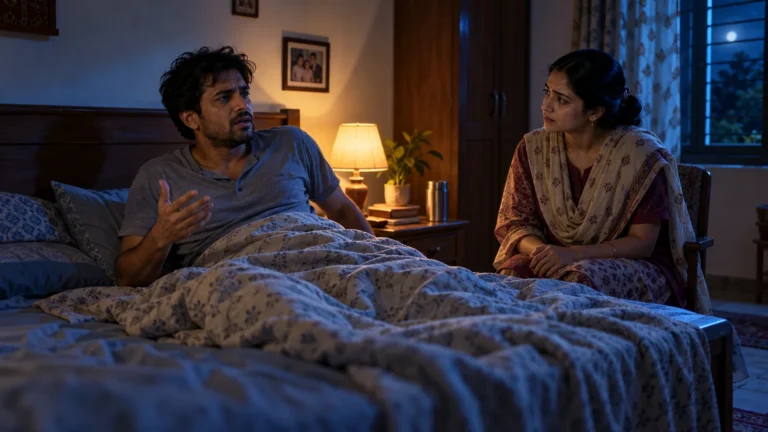
A supportive response is: “The reflection looked strange and you felt frightened; let us improve the light and sit down.” Declaring the person possessed or mentally ill does not help identify a cause. Avoid sending a child to a mirror after telling frightening stories, or making a sensory experience into a test of character.
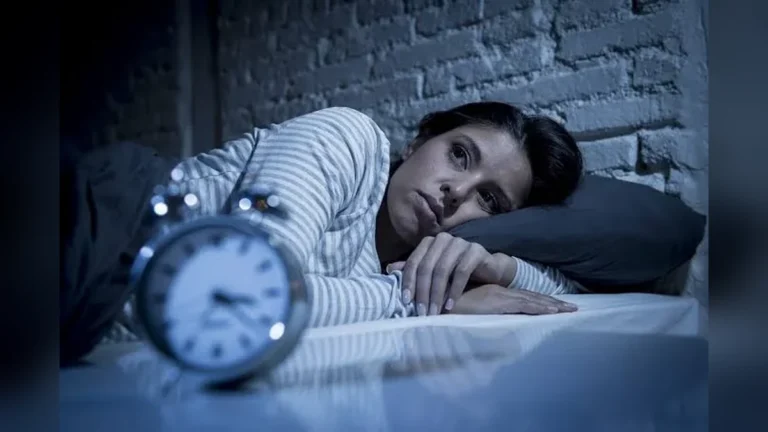
A short note can include the time, lighting, whether you were staring, how long the change seemed to last and what happened afterwards. Mention medicine changes, poor sleep or other unusual sensory experiences to a professional when relevant. These are contextual observations, not proof that any one of them explains the episode.
A phone photograph is not a diagnostic comparison for human vision. Lighting, camera settings and filters can alter the appearance of a face themselves. You do not need repeated recordings to make your complaint legitimate. If personal images are shared, respect the person’s consent and privacy instead of presenting them as sensational evidence of an entity.
Advice: when a visual change needs assessment
Seek medical advice if visual changes recur in normal light, occur away from mirrors, persist or disrupt sleep and everyday activities. A general clinician or eye professional can help guide the next step. The appropriate specialist depends on the symptoms and findings, rather than on a frightening description selected from an internet checklist.
Sudden reduction or loss of vision, or severe eye pain, needs urgent medical help. Do not dismiss it as a mirror illusion. Sudden confusion, rapidly worsening hallucinations or a risk of harm also warrants urgent assistance. In India, 112 provides emergency support. Explain your location and symptoms instead of spending time trying to establish a supernatural cause.
Describe the experience plainly: “My reflection looked unfamiliar in dim light, and this is what happened after I looked away.” Do not stop prescribed medicine or borrow someone else’s treatment. The aim is to make the setting safe, respect the person and obtain appropriate professional help when needed. Acknowledging uncertainty is part of a useful scientific explanation.
Frequently asked questions
Is looking in a mirror at night inherently harmful?
The time of day does not establish a supernatural danger. Dim conditions and sustained looking can be relevant to a perceptual illusion. If distressed, improve the lighting and take a break.
Does an unfamiliar reflection mean I am possessed?
No such conclusion follows from the visual experience. It also does not by itself diagnose a medical condition. Consider the setting and associated symptoms.
Does everyone experience the illusion after sixty seconds?
No. There is no universal timer or guaranteed result. Research conditions differ, and you do not need to reproduce an experiment to understand the information.
Should I test it by staring into a dark mirror?
There is no need to repeat a frightening challenge. Look away, restore normal lighting and rest. Do not encourage children to try an experiment that distresses them.
What if it also happens in daylight?
Recurring or persistent visual changes deserve professional assessment. Sudden vision loss or severe eye pain needs urgent help, rather than an assumption that this is only an illusion.
Related reading
Smelling Incense or Perfume With No Clear Source: Phantom Smell or Something Nearby?
A dark shadow in the room at night
Fear of a supernatural presence: main guide
Sources and review
Information reviewed: 18 October 2026. The opening scene is illustrative, not a reported case.
Caputo, 2010: Strange-face-in-the-mirror illusion
Mash and colleagues, 2023: Systematic review and quality analysis
NHS: Hallucinations and hearing voices
MHA: Emergency response support system — 112
This is general information, not an individual diagnosis or treatment. Seek professional help for severe or persistent symptoms.