Understanding Trading Addiction and Its Dangers
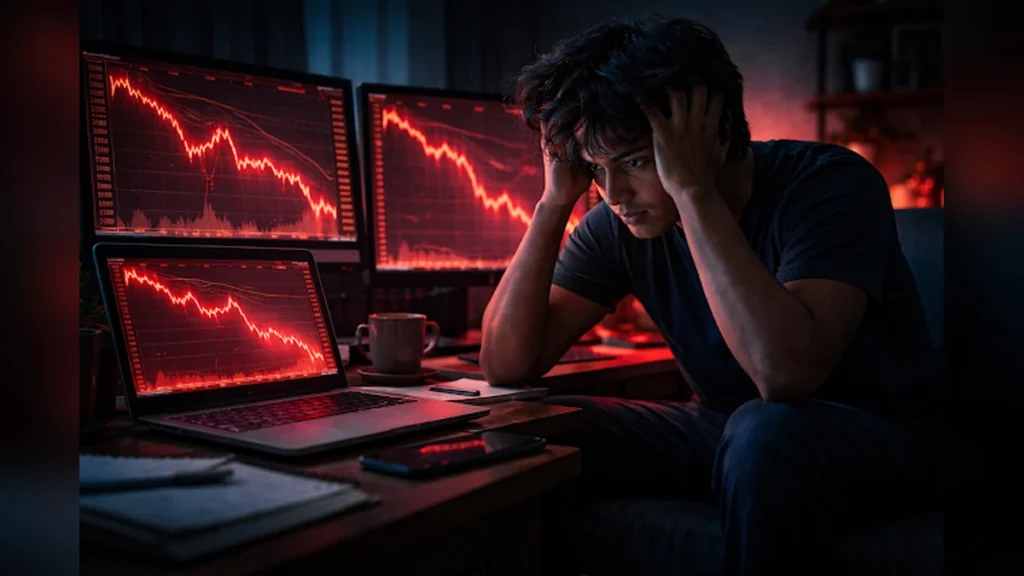
Trading addiction is a behavioral addiction, similar to gambling. It involves compulsive trading despite negative consequences like financial loss, stress, and strained relationships. Options trading (F&O) amplifies this danger due to:
- Illusion of quick gains: F&O offers the potential for rapid profits or losses, creating a ‘get rich quick’ illusion. This triggers a dopamine rush, reinforcing the urge to trade.
- Leverage temptation: The ability to trade large volumes with small capital (leverage) can magnify losses, but beginners often see it as an opportunity.
- Constant availability: Easy access via smartphone apps and the internet allows trading anytime, anywhere, increasing addiction risk.
- Social influence: Online ‘gurus’ and ‘tips’ can lead to impulsive trading and greater losses.
Are You a Victim of Trading Addiction? Recognize the Signs

Identifying trading addiction is the first step. Watch for these signs:
- Constant chart-watching: You prioritize checking trading apps over work, studies, or family time.
- Hiding losses: You lie to family or friends about financial losses or trading habits.
- Taking loans: You borrow money or deplete savings to fund trading.
- Emotional rollercoasters: Extreme euphoria during wins and deep despair, anxiety, or depression during losses.
- Loss of interest: Old hobbies fade as trading becomes your sole focus.
- Failed attempts to quit: You repeatedly vow to stop but fall back into the cycle.
- Impact on work/relationships: Trading causes problems in your professional or personal life.
Revenge Trading: The Vicious Cycle of Worsening Losses
Revenge trading is a dangerous aspect of trading addiction. After a loss, anger and frustration can lead to a desire for immediate ‘revenge’ to recover what was lost.
How Revenge Trading Works:
- Initial Loss: You incur a loss on a trade.
- Emotional Reaction: You feel anger, frustration, and humiliation.
- Urge to Recover Quickly: You decide to immediately recoup your losses.
- Larger or More Frequent Trades: You trade impulsively, in larger volumes, or beyond your risk tolerance without proper analysis.
- Further Losses: Emotional decisions often lead to greater losses, deepening the cycle.
This cycle makes you irrational and disregards risk management principles, pushing you into a deeper financial and mental quagmire.
7 Effective Steps to Overcome Trading Addiction
Breaking free from trading addiction is challenging but achievable with patience and determination.
1. Accept You Need Help
The most crucial step is acknowledging your problem. Until you admit you have an addiction, escaping it is impossible. This acceptance is a sign of strength.
2. Control or Temporarily Halt Demat Account Access
If the addiction is severe, consider temporarily blocking your demat account or withdrawing all capital. You can request ‘self-exclusion’ from your broker for a set period. Have a trusted family member monitor your account.
3. Understand and Control Your Emotions
Trading is often emotion-driven. Keep a trade log detailing not just the trade but also your emotions at the time. Identify when you traded out of greed, fear, anger, or revenge. Meditation and mindfulness can help manage emotions.
4. Reduce Screen Time and Engage in Other Activities
Distance yourself from trading apps and charts. Uninstall trading apps or disable notifications. Redirect your energy into healthy, productive activities like exercise, hobbies, reading, or spending time with loved ones.
5. Financial Discipline and Budgeting
Create and stick to a strict budget. Decide on an investable capital limit (for long-term investments only) and do not exceed it. Learn to accept losses and focus on stabilizing your finances rather than chasing ‘recoveries’.
6. Seek Professional Help and Support System
If you struggle to overcome this addiction alone, seek professional help. A therapist or counselor can assist in understanding and changing behavioral patterns. Talk to family and friends; a strong support system is vital.
7. Focus on Long-Term Investing
Instead of trading, embrace long-term investing principles. Investing in mutual funds via SIP (Systematic Investment Plan) or holding shares of good companies for extended periods is a safer, sustainable wealth-building method. It doesn’t promise overnight riches but fosters gradual, stable wealth growth.
Long-Term Wealth Creation: A Secure and Sustainable Path
The stock market is not just for trading; it’s a powerful tool for long-term wealth creation. Trading is often a zero-sum game where most people lose. Long-term investing, however, allows you to profit from company growth. Focus your energy on skill development, building a business, or learning sustainable investment strategies. This provides not only financial security but also peace of mind, often lost in the trading frenzy. Remember, your health, relationships, and mental well-being are far more valuable than any short-term gain.