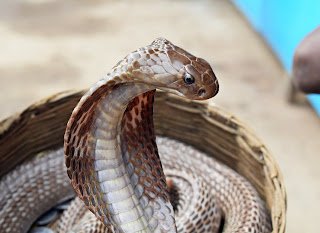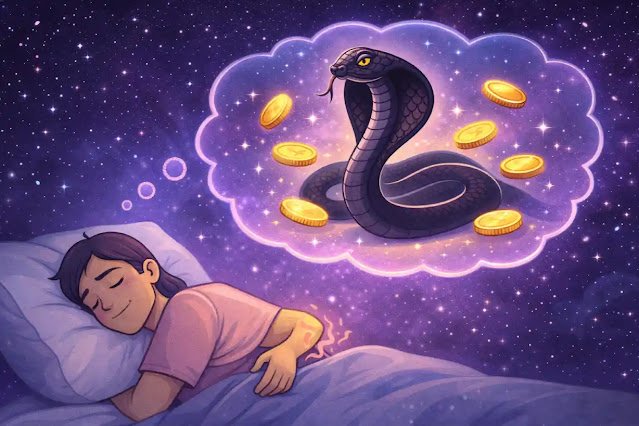
You wake up and the first image still sitting in the room is a snake. Not a news clip. Not a temple carving. A dream. The question that follows is old in Indian homes: was that a blessing, a warning, or just the mind emptying itself? The phrase snake in dream meaning hindu families reach for is not one fixed verdict. In Indian culture a snake is treated as more than an animal. It is also read as a sign of power, change, fear, and spirituality. That is why the same night vision can feel holy to one person and threatening to another.
Swapna shastra, the traditional Indian reading of dreams as life-signals, treats a snake dream as one of the most common and most closely watched images. Ancestors and learned readers did not treat every dream as entertainment. They treated dream-fruit as a possible hint about what might be gathering in waking life. The catch, which the older reading itself keeps repeating, is that the meaning is not automatic. Color, what the snake was doing, and how you responded inside the dream are what tradition uses to sort a good omen from an uneasy one.
What Seeing a Snake in a Dream Usually Symbolizes
Snakes have long been wrapped in mystery and symbol. In the general layer of this folklore, a snake appearing in sleep is often taken as a pointer toward a large life shift, a fear that has not been named, healing, knowledge, or a spiritual stirring. None of those readings is a laboratory result. They are cultural interpretations that Indian dream-lore has kept in circulation because the snake already carries those meanings in story, temple art, and everyday speech.
Change is the first cluster. A snake sheds its skin. That visible renewal is why a dream-snake is frequently mapped onto a new phase: a job turning, a relationship ending or beginning, a habit that can no longer continue in the same form. The dream is not said to schedule the date. It is said to mark that the old skin of a situation may be ready to come off.
Hidden fear is the second cluster. Many readers treat the snake as a picture of something the waking mind has pushed down: worry, an unresolved quarrel, a decision postponed until it starts to hiss. In that frame the animal is less a visitor from the future and more a costume the subconscious puts on an old problem.
Power and energy form a third cluster that is specifically Indian. In Hindu spiritual language the coiled serpent is a familiar image for kundalini, the dormant inner energy described as sleeping at the base of the spine. A snake dream, in that vocabulary, can be read as a hint that inner force is stirring. Again, this is a belief-language, not a medical claim. Knowledge and wisdom form a fourth cluster that appears in more than one culture: the snake as a keeper of knowing, not only as a threat.
The fifth cluster is the one people fear most: danger or a warning. Traditional lists do allow that a snake dream can be an alert to stay awake around a person, a deal, or a health neglect. The source reading is careful on this point. A warning is not the same thing as a guaranteed disaster. It is a prompt to look again at what you were already avoiding.
Snake in Dream Meaning Hindu Color Readings
Color is one of the main sorting tools in this folklore. The same crawl across the floor of a dream is not given the same fruit if the snake is black, white, gold, or green. These color notes are traditional associations. They are not proven predictions, and two readers can still disagree when the dream mixes colors or when the feeling of the dream contradicts the color chart.
A black snake
On the auspicious side of the ledger, a black snake is often linked with money coming in, a rise in honor, and a stretch of stability. Some readings place that change especially on the professional side of life: a shift at work that looks heavy at first and then settles into a firmer position. On the inauspicious side, the same black form can be treated as buried fear, anxiety, or an unknown threat. That second reading is a caution about feelings and about the people standing close to you, not a license to accuse anyone by name on the strength of a night image.
A white snake
A white snake is described in this tradition as highly auspicious. The usual list is spiritual awakening, the arrival of knowledge, a long life, and an increase in fortune. The dream is also said to hint that an important insight or a solution is near. A quieter pair of meanings sits beside that: mental peace, and the sense that an old illness may be loosening. Those last two points remain omen-language. They are not a diagnosis and they do not replace a doctor.
A golden or yellow snake
Gold and yellow are tied to wealth, prosperity, and financial gain. The folklore reading says effort is more likely to bear fruit and that a season of plenty may be approaching. The same colors are also attached to the growth of knowledge and intelligence. In other words, the traditional chart does not force you to choose only money or only wisdom. It allows both as possible fruits of the same bright snake.
A green snake
Green is read through nature: renewal, fresh opportunity, a beginning, growth, and a constructive turn. Health and a general sense of well-being are listed with it. If the rest of the dream felt cramped or violent, a thoughtful reader would not ignore that mood just because the color chart is friendly. Color is one clue. It is not the whole case.
FACT BOX
What the source actually supports, without extra numbers or extra cases:
- In Indian culture, snakes are treated as symbols of power, change, fear, and spirituality, not only as animals.
- Swapna shastra treats dreams as possible signs; a snake dream is listed among the common and closely watched ones.
- Meaning is said to depend on color, action, and your reaction inside the dream, not on a single yes-or-no label.
- Skin-shedding is the traditional picture of renewal; kundalini is the Hindu spiritual picture of coiled inner energy.
- Psychology in the same source offers a different lens: Freud on libido and repressed desire, Jung on an archetype of healing, renewal, knowledge, and death-rebirth.
- The source also notes ordinary causes: daily stress, an unresolved problem, an upset stomach, tension, or lack of sleep.
- Dreams are described as signals, not certain prophecies.
Bite, Chase, a Dead Snake, and Other Actions
After color, movement is the next sorting tool. A snake that only appears is not read the same way as a snake that bites, follows, or lies still.
A snake bite
A bite is most often filed as a warning. Traditional lists say trouble may be near, or that someone may be trying to deceive you. Health difficulty and a sudden snag in plans are also named. A second, less panicked reading treats the bite as a demand to face a bitter truth or to drop an old habit. In that version the pain in the dream is a wake-up, not a curse: the time for change has already arrived, and delay is part of the sting.
A dead snake
Seeing a dead snake is generally called auspicious in this folklore. The usual fruit is the ending of a large problem, a fear, or a long worry. The image is also used for coming out of a hard stretch, for victory over opponents, and for getting past an obstacle. “Enemy” here is the language of omen lists. It can mean a rival, a habit, or a situation that has been working against you. It does not identify a real person.
Being chased
If the snake is chasing you, the common reading is that waking life contains a situation you are already running from. The chase is treated as a picture of buried stress or fear. Sometimes the same scene is mapped onto an unfinished desire or a duty you keep postponing. The folklore interest is not in the species of the snake so much as in the running. What you refuse to turn and look at in daylight may put on scales at night.
Many Snakes, Killing a Snake, or a Snake Entering the House
Quantity and setting change the tone again. A single calm snake on open ground is not the same file as a floor covered with snakes, a fight that ends with the snake dead by your hand, or a snake crossing the threshold of the house.
Many snakes at once are usually not considered a good sign in this tradition. The list attached to that image is crowded: several problems arriving together, a run of challenges, a feeling of being surrounded by opponents. A second line of meaning stays inside the mind: confusion, tangled thinking, or stress that has grown too loud. The source does not turn that into a body count of enemies. It treats the swarm as a picture of pressure.
Killing the snake is listed as auspicious. The fruit named is victory over problems, the defeat of what stands against you, and the clearing of obstacles. It is also read as a sign that you are taking hold of your own life and that you are ready to meet a challenge instead of circling it. In omen language, the kill is not a call to harm an animal in the waking world. It is a symbol of finishing a struggle that had been wearing your name.
A snake entering the house sits on two tracks. One track is arrival and change: a new member in the home, or a large shift in the pattern of household life. The other track appears when the snake looks dangerous. Then the same crossing of the doorway can be read as an unwanted problem or as discord inside the family. The difference, in the traditional method, is the feeling of threat in the dream itself, not a rule that every household snake is either a guest or a quarrel.
A Snake on a Shivling: The Distinctly Sacred Reading
One scene is marked off from the rest because it belongs so clearly to Hindu sacred imagery. Seeing a snake on a Shivling is called a highly auspicious and religious dream. The fruit listed is the grace of Shiva, spiritual progress, and a constructive turn in life. The same image is also read as a sign of divine protection.
That reading makes sense inside the religion’s own picture-language. The coiled serpent around Shiva’s iconography is already a familiar temple sight. When the dream repeats a shrine image, folklore treats it as a blessing scene rather than as a wildlife accident. It is still a belief-reading. It does not prove that a particular prayer has been answered, and it does not replace living ethics with a night vision. It simply places this one composition—snake plus lingam—on the sacred side of the chart.
In this tradition the Shivling dream is not filed with ordinary fear-dreams. It is filed with grace, protection, and a turn toward the spiritual.
Psychology and Science Versus Swapna Shastra
Swapna shastra gives snake dreams a spiritual and sometimes future-facing meaning. Psychology, as the same source notes, looks at the image from another angle. Dreams are treated as products of the subconscious. They may recycle the day’s leftover heat rather than deliver a letter from destiny.
A Freudian line, named in the source, links the snake to sexual energy, or libido, and to desires that have been pushed out of daylight speech. That is one school’s symbol-map, not a proof that every snake dream is about sex. A Jungian line, also named in the source, treats the snake as an archetype rising from the collective unconscious. In that map the snake can stand for healing, renewal, knowledge, and the old pair of death and rebirth. Jung’s snake and the kundalini snake are not the same doctrine, but they rhyme: both treat the serpent as older than one person’s private scare.
A plainer psychological reading needs no famous name. If you are already tense, the brain can dress that tension as a snake. An unsolved problem can grow fangs because fangs are a fast way for the mind to say “this still bites.” The source also allows ordinary body causes. An upset stomach, a stretch of stress, or too little sleep can feed bad dreams, and those bad dreams can include snakes. That physical note matters because it keeps the conversation honest. Not every night image is an omen. Some are indigestion wearing a myth.
Holding both lenses at once is the adult way to read the source. Folklore says the snake may be a sign. Psychology says the snake may be a costume for fear, desire, change, or a rough night’s sleep. Neither lens is served by pretending the other does not exist.
What Tradition Says to Do After the Dream
The source’s own after-care is simple, and it is not a command from a clinic. First, do not panic. A snake in a dream is common enough that fear alone should not be allowed to write the next week’s script.
Self-inspection comes next. Look at the life you actually have this month. Is a large change already in motion? Is there a fear you have refused to name? Is a decision sitting on the table going cold? The dream is used here as a mirror, not as a court order. If the dream felt inauspicious, the traditional counsel is to treat it as a warning and to adjust conduct or circumstance where that is already wise. If you are a person of faith, the same source notes that worship of Shiva, or the recitation of a mantra, is a path some people take. That is a description of a religious response, not a medical prescription and not a guarantee.
The last note is the one that keeps the whole chart from turning into superstition: dreams are signs, not certain predictions. Excessive worry is itself a problem the source tells you to avoid. A useful reading leaves you more awake in your real relationships and duties. A poor reading leaves you hunting for snakes in every corner of the office and the family.
Put in one line, the tradition’s close is this. Whether you look through swapna shastra or through psychology, a snake dream is treated as a message with weight. It may speak of change, fear, knowledge, or healing. The work is to read the dream in its own context—color, action, feeling, and the week you are already living—and to use whatever signal is genuinely there to live more cleanly. That is interpretation. It is not fate carved in stone.
Frequently Asked Questions
Is every snake dream a bad omen in Hindu belief?
No. The traditional chart is mixed on purpose. White, gold, and green snakes, a dead snake, killing a snake, and a snake on a Shivling are often filed as auspicious. A bite, a chase, a crowd of snakes, or a threatening snake in the house are more often filed as warnings. Color, action, and your reaction decide the reading more than the mere presence of a snake.
What is the snake in dream meaning hindu readers give to kundalini?
In Hindu spiritual language the coiled serpent is a picture of kundalini, described as dormant inner energy. Some dream-readings treat a snake at night as a hint that this inner force is stirring. That is a religious-symbolic claim. It is not a lab measurement of energy in the body.
Does a snake bite in a dream mean someone will betray me?
Betrayal is one of the warning-meanings listed for a bite. So are trouble, a health snag, and an unexpected difficulty. Another listed meaning is the need to face a hard truth or leave an old habit. Folklore offers a menu of possibilities. It does not identify a culprit.
How do Freud and Jung read a snake dream compared with swapna shastra?
Swapna shastra often reads the snake as a life-sign: change, warning, wealth, grace, and the like. The source’s psychological notes say Freud linked the snake to libido and repressed desire, while Jung treated it as an archetype of healing, renewal, knowledge, and death-rebirth. Stress, an unsolved problem, poor sleep, or an upset stomach are also named as ordinary sources of the same image.
Should a snake on a Shivling be read like any other snake dream?
The source marks that scene as distinctly sacred: Shiva’s grace, spiritual progress, positive change, and divine protection. It is still an omen-reading, not proof. It should not be mixed carelessly with the fear-chart used for bites, chases, or a house full of snakes.
Disclaimer: This article explains Hindu dream-omen tradition and the psychological notes present in the source. It is cultural and educational, not a prophecy, not a medical opinion, and not a claim that any dream will come true. Interpretations vary by region, family, and reader. Do not treat a night image as a substitute for professional care, legal caution, or ordinary common sense.