 Vista
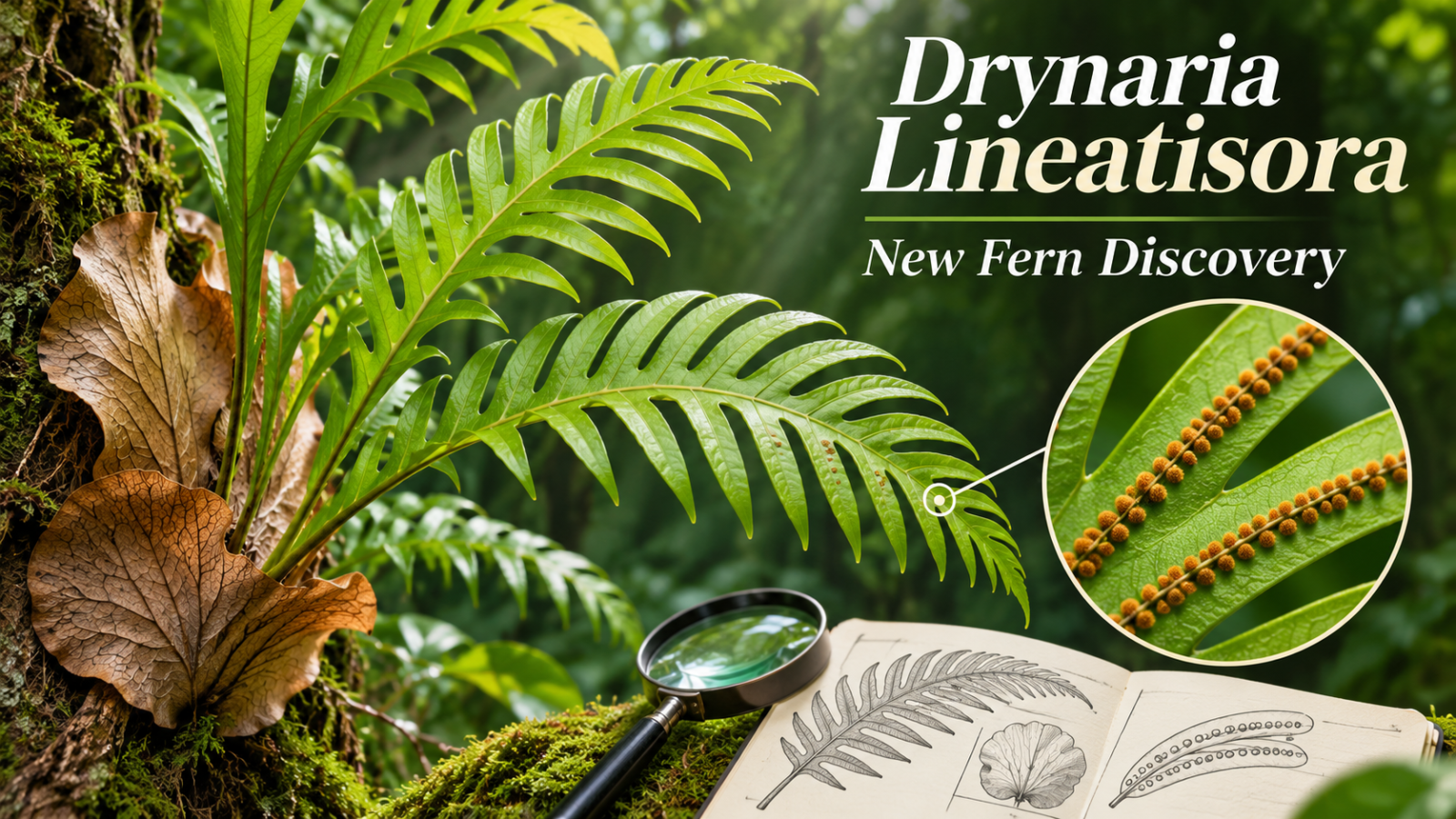
Quick answer: Drynaria lineatisora is a newly named fern species described by Li-Ju Jiang and colleagues at Xishuangbanna Tropical Botanical Garden (Chinese Academy of Sciences) in the journal Phytotaxa (volume 782, issue 2, pages 176-186, published 29 October 2026; DOI 10.11646/phytotaxa.782.2.6). For close to 200 years, plants of this kind were treated as Drynaria coronans. Detailed study of spore-bearing structures, scales and spores, backed by molecular data, showed it is a separate species. It is a taxonomic discovery, not a new medicine or a new use.
What Was Discovered
Botanists call a species “new to science” when a formal description, a type specimen and a published name make it official. That is what happened here. Specimens of this fern were collected in the 19th century in Myanmar and Vietnam and filed under the name Drynaria coronans, a widespread species that ranges from Nepal to Malaysia. The new study argues that a distinct species had been hiding inside that name, which is why it is described as long overlooked.
| Fact | Detail |
|---|---|
| Name | Drynaria lineatisora |
| Status | Newly described species |
| Lead author | Li-Ju Jiang (Xishuangbanna Tropical Botanical Garden, CAS) |
| Journal | Phytotaxa 782(2): 176-186 |
| Published | 29 October 2026 |
| Previously confused with | Drynaria coronans (Wall. ex Mett.) J.Sm. |
| Range | Mountainous areas of China, Myanmar and Vietnam (disjunct) |
What Is Drynaria?
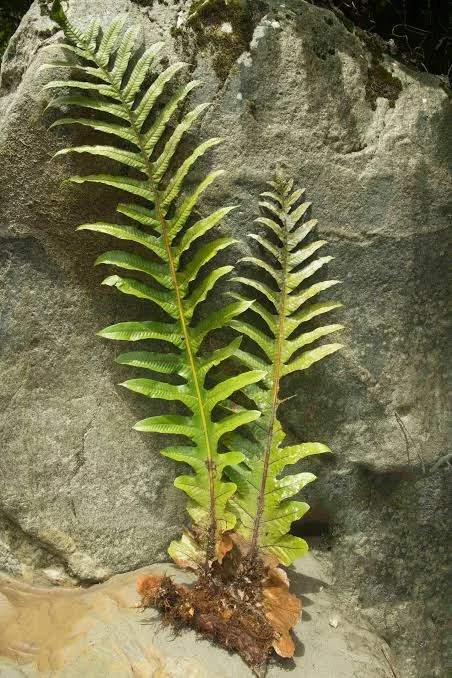
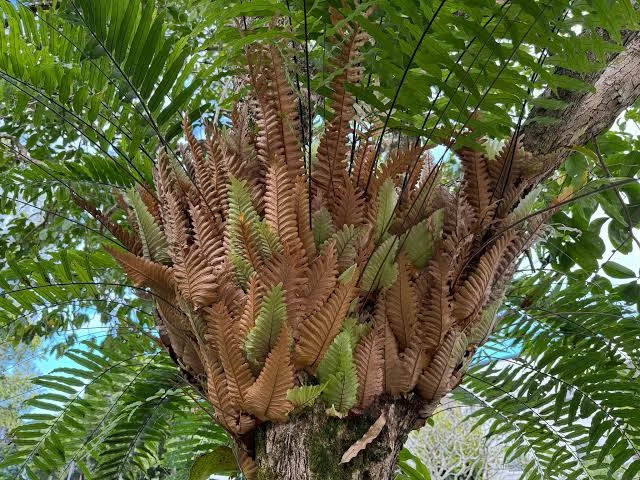
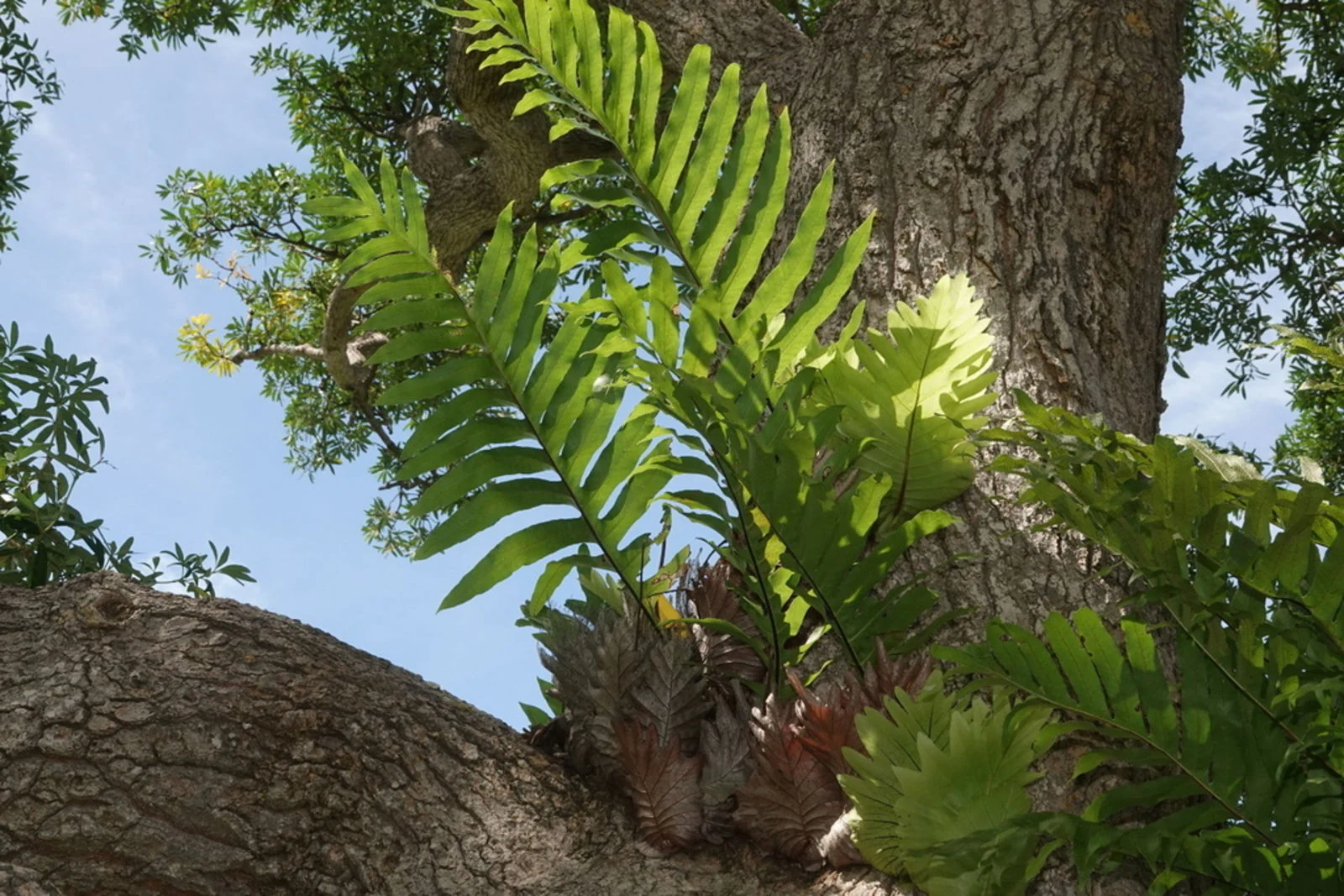
Drynaria is a genus of ferns in the polypod family, often called basket ferns or oak-leaf ferns. Many species are epiphytes, growing on tree trunks or rocks, and they typically have two kinds of fronds: shorter, leaf-like fronds that catch fallen debris and longer fronds that carry spores. These ferns are widespread across tropical and subtropical Asia.
Fern Anatomy in Plain Words
The new species is separated by features most people never look at, so a short glossary helps. Ferns do not flower or make seeds. They reproduce by spores, which are tiny single cells released from structures on the frond.
| Term | Plain meaning | Why botanists check it |
|---|---|---|
| Frond | The leaf-like part of a fern | Shape and division help narrow down a genus |
| Rhizome | The creeping stem, often on a tree or rock | Carries scales that differ between species |
| Scales | Small flat flakes on the rhizome | Colour, shape and edge teeth are diagnostic |
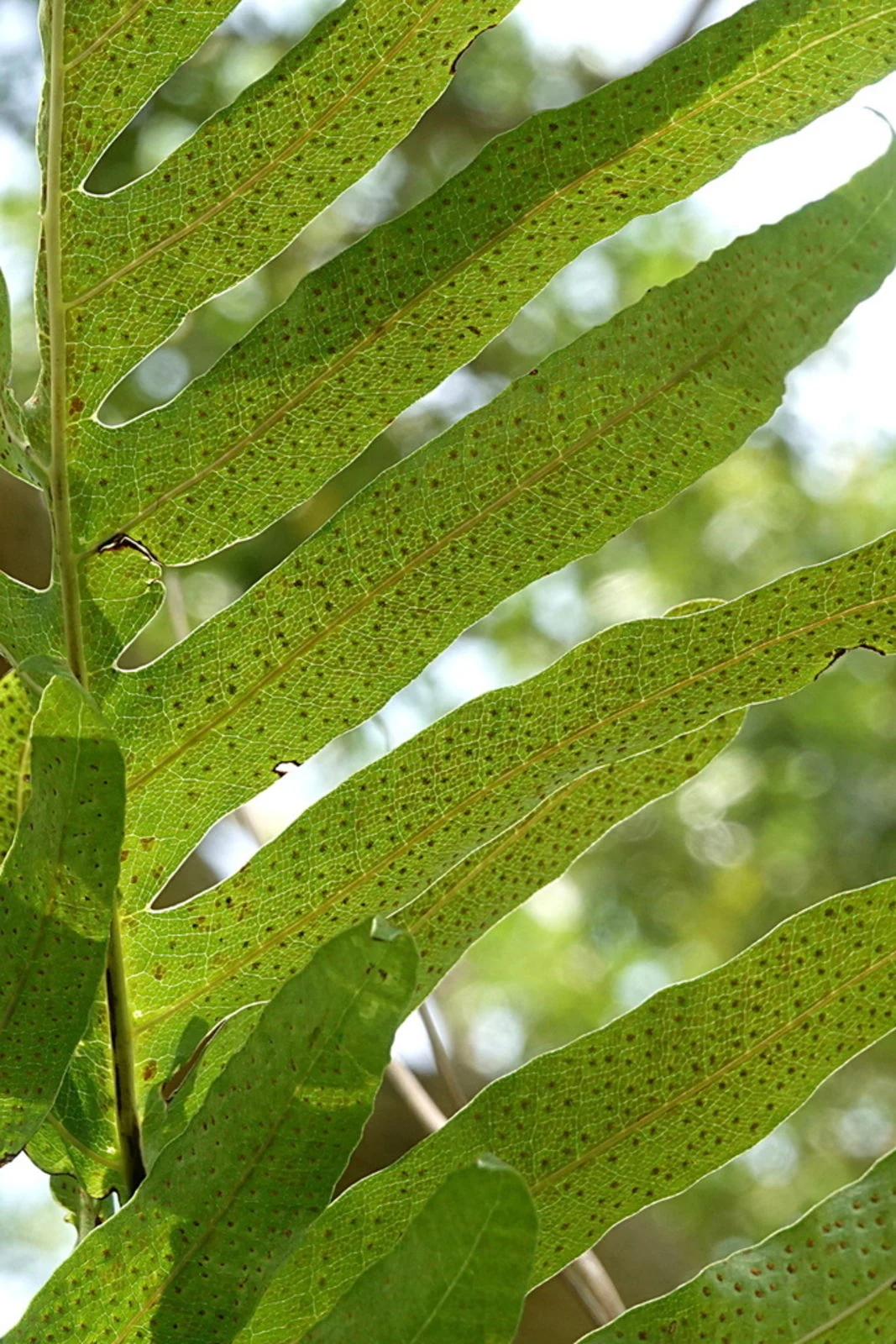
| Sorus (plural: sori) | A cluster of spore sacs on the frond underside | Shape and arrangement are key identification traits |
| Spore | The reproductive cell released by the fern | Surface texture is visible only under a microscope |
| Type specimen | The preserved plant that anchors a species name | Lets later scientists check what the name refers to |
Why It Was Mistaken for Drynaria coronans
Ferns are notoriously hard to separate on gross appearance. Related species share frond shape and growth habit, and herbarium specimens are flattened, dried and sometimes incomplete. In this group there is an added complication: some D. coronans specimens have fused sori that create intermediate-looking forms, so a quick look can blur the boundary between species. Only a combined study of fine structure and DNA could show that a consistent, separate lineage existed.
How Scientists Told Them Apart
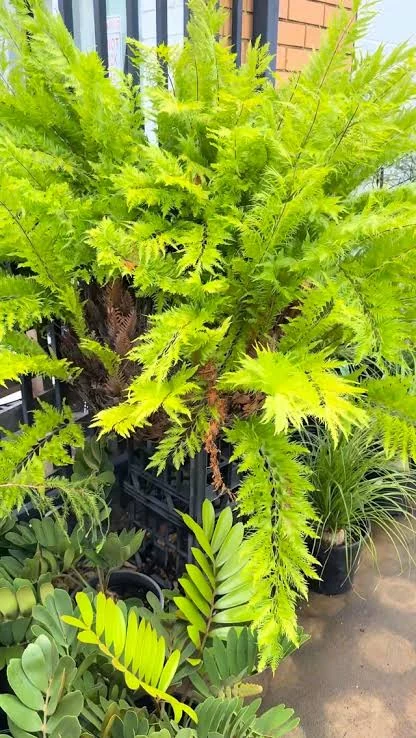
The distinguishing evidence is described in the paper in three main places, supported by molecular phylogeny (DNA-based family tree reconstruction):
- Sori: the clusters of spore-producing structures on the underside of the frond are elongate-linear in the new species.
- Scales: the rhizome scales are dark brown and lanceolate, with short, spiny-toothed edges (spinulose-denticulate margins).
- Spores: spore surfaces are densely covered with fine spines about 1 micrometre long.
Morphology alone would leave doubt because of the intermediate forms. The DNA analysis is what helps show that these plants form their own branch rather than a variation of D. coronans.
How a New Plant Species Gets Its Name
Naming follows international rules so that every scientist uses the same label. In general terms, the process has these steps. This is a description of normal botanical practice, not a record of every detail of this paper.
- Researchers study specimens and decide they differ consistently from known species.
- They compare the plants with the type specimens of similar names to be sure the name is not already taken.
- They write a formal description in a recognised scientific language and designate a type specimen.
- The paper is published in a journal that meets the naming rules, which makes the name valid.
- Other botanists can then test, accept or challenge the decision with new evidence.
This is why the date of publication, 29 October 2026, matters: it marks the moment the name became official.
Why a Disjunct Range Is Interesting
“Disjunct” means the populations are separated by gaps rather than spread continuously. The species is reported from mountain areas in China, Myanmar and Vietnam. That pattern can reflect real biogeography, but it can also reflect incomplete surveys. Until more field and herbarium work is done, the true distribution and population size remain open questions. The study does not give a conservation status, and none should be assumed.
What We Know and What We Don’t
| Question | Answer |
|---|---|
| Is it a new species? | Yes, formally described in a peer-reviewed taxonomic journal. |
| Is it a newly arrived plant? | No. It is old collections, newly understood. |
| Does it have medicinal uses? | No such claim is made. Other Drynaria are used in traditional medicine, but that does not transfer to this species. |
| Is it endangered? | Not assessed in the sources reviewed. |
| Can I identify it from a photo? | Not reliably. The key traits are microscopic or need specimens. |
Why Naming New Species Matters
A name is the starting point for conservation, ecology and any later research. Without a correct name, a rare plant can hide inside the records of a common one, which means its decline could go unnoticed. Discoveries like this also show that museum and herbarium collections still hold surprises when re-examined with new methods such as DNA sequencing.
The Role of Herbaria in Discoveries Like This
A herbarium is a library of pressed, dried plants, each labelled with where and when it was collected. Some specimens have been stored for well over a century. When scientists later revisit them with better microscopes and DNA methods, they can notice differences that earlier botanists could not. That is why a plant collected in the 1800s can be “discovered” today. The plant did not change. The tools for reading it did.
The value of a specimen depends on its label. If the place and date are missing, it is far harder to use. Careful collecting and record keeping, often by people long forgotten, is what makes modern taxonomy possible.
Common Misunderstandings About “New Species” Headlines
- “New” does not always mean recently evolved. It usually means newly recognised by science.
- It does not mean the plant is rare or endangered. That requires a separate assessment.
- It does not mean it has special properties. Naming a species is not a claim about usefulness.
- It does not mean you can spot it on a hike. Fern species often look alike.
How to Learn Plant Identification Basics
Real species-level identification of ferns needs a key, a hand lens or microscope and often expert verification. If you are learning the basics of leaf shape, margins and veins, our Botanical Leaf Identification Chart is a good start. Remember that appearance alone cannot confirm a species or whether a plant is safe to eat.
Frequently Asked Questions
Is Drynaria lineatisora really new?
Yes. It was formally described in Phytotaxa, published 29 October 2026, although the plants were collected much earlier.
Who described it?
A team led by Li-Ju Jiang at Xishuangbanna Tropical Botanical Garden, Chinese Academy of Sciences.
What makes it different from Drynaria coronans?
Elongate-linear sori, dark brown lanceolate scales with fine spiny-toothed margins, and spores covered in tiny spines, supported by DNA evidence.
Where does it grow?
Mountainous areas of China, Myanmar and Vietnam, in a disjunct pattern.
Is it used in medicine?
No medicinal use has been reported for this species. Do not infer uses from related ferns.
Can I grow it at home?
Nothing in the sources discusses cultivation or trade. Wild-collecting plants is not advised.
Why did it take nearly 200 years?
Similar appearance, intermediate forms and the limits of old methods kept it hidden until combined morphology and molecular work.
Conclusion
Drynaria lineatisora is a good example of modern taxonomy at work: old specimens, fine anatomical detail and DNA together revealing a species that earlier botanists could not separate. The story is about careful classification, not a dramatic new use or discovery in the wild.
Sources
- Jiang L.-J. et al., Phytotaxa 782(2): 176-186, 2026, DOI 10.11646/phytotaxa.782.2.6
- Science news coverage of the Xishuangbanna Tropical Botanical Garden study, November 2026
Original taxonomic description



























Share Your Opinion
Comments are closed on this post.