 Vista
Updated: 24 November 2026
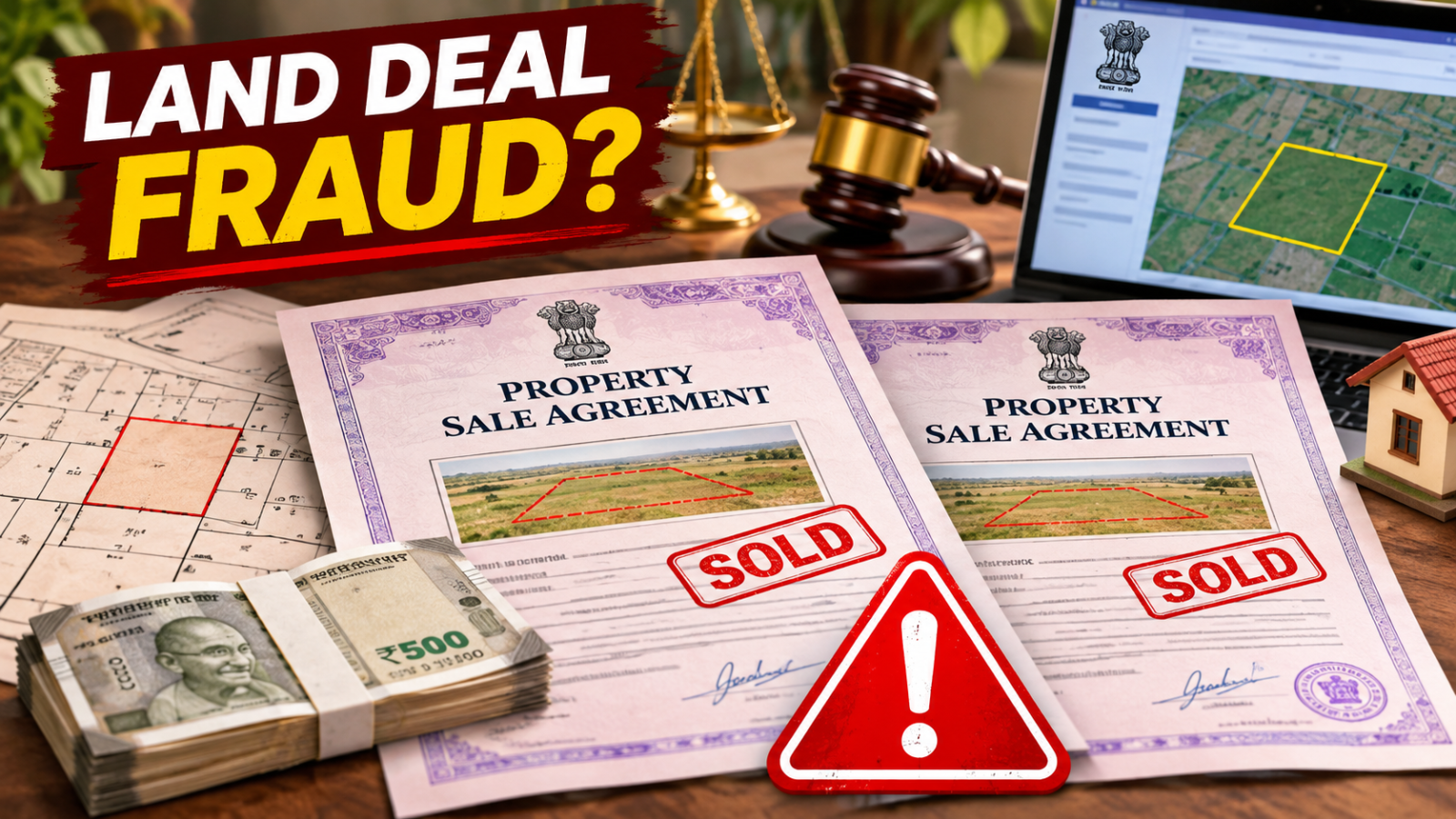
If a landowner refuses to return your token money, fails to execute the promised sale deed or apparently sells the same property to two buyers, stop making further payments until the facts are verified. Preserve the agreement and payment records, obtain certified copies of relevant registered documents and consult a property lawyer. Depending on the circumstances, you may seek a refund, compensation, enforcement of the sale agreement, an injunction or a declaration concerning a disputed deed. Report genuine suspected criminal conduct to the police.
Not every unsuccessful property transaction is fraud. A disagreement over contractual obligations differs from a dishonest scheme in which someone obtains money by misrepresenting ownership or using forged documents. Civil and criminal proceedings may coexist where the facts support both.
What to do when land token money is not returned
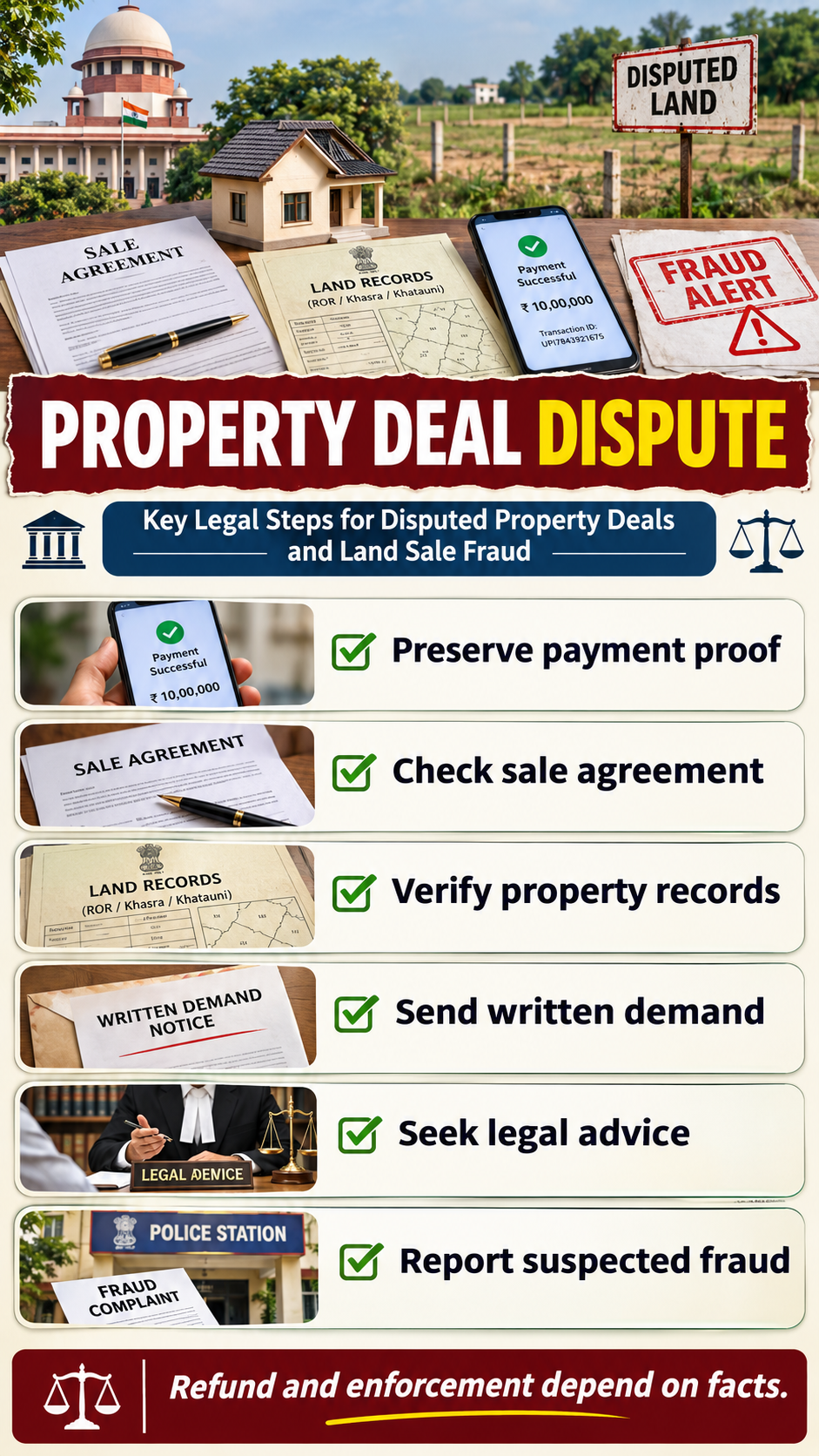
Collect the token receipt, agreement to sell, bank statement, payment references, messages, property description and the seller’s available identification details. Prepare a timeline showing when the amount was paid, when registration was promised, what each party was required to do and when the dispute arose. For cash payments, contemporaneous receipts, messages and independent witnesses may be useful. A bank withdrawal alone does not necessarily prove that money was delivered to the seller.
Preserve original electronic records rather than relying solely on cropped screenshots. Sections 61–63 of the Bharatiya Sakshya Adhiniyam, 2023 concern electronic evidence, including the applicable requirements for producing electronic records and certificates. Ask your lawyer how to present the material correctly.
Read the agreement carefully. Identify the agreed price, the outstanding balance, refund or forfeiture provisions, the deadline for registration and any conditions relating to title clearance. Do not sign an unconditional cancellation or settlement receipt before understanding whether it affects your right to demand performance or repayment.
Can a seller legally forfeit the entire token amount?
Sections 73 and 74 of the Indian Contract Act, 1872 address compensation for breach of contract and stipulated sums or penalties. The legal treatment of an advance, part payment or genuine earnest deposit depends on its actual purpose, the agreement, the party responsible for breach and applicable judicial principles. A clause labelled non-refundable does not settle every dispute, but a buyer is not automatically entitled to a full or double refund either.
For example, a purchaser who paid an advance and discovered that the seller lacked the promised ownership documents may have a different claim from a purchaser who voluntarily abandoned a transaction despite the seller being able and willing to complete it. The facts and terms determine which remedies are available. This guide addresses general land sale disputes, not the separate question of refund conditions following home-loan rejection.
Sample written demand for token money or contractual performance
Dear ______, on ______ I paid ₹______ towards the proposed purchase of property at ______, Survey/Plot No. ______. Under our agreement, ______ was to be completed by ______. The present position is ______. Please provide a written response and complete the required contractual steps / refund the amount due by ______. If the matter remains unresolved, I will seek advice regarding remedies available under law. Name, date and contact details: ______.
Adapt the request to the remedy you actually seek. Choosing to terminate an agreement instead of enforcing it can have legal consequences. Keep proof of delivery and obtain advice before sending a formal legal notice. A demand letter alone does not extend the statutory limitation period.
What happens if the same land has been sold twice?
Apply to the appropriate registration office for certified copies of the relevant sale deeds. Compare the property identifiers, area, parties, execution and registration dates and earlier chain of title. Check available encumbrance records, revenue entries and pending disputes. These sources are useful together; an online mutation entry or encumbrance search alone cannot guarantee a valid title.
Section 54 of the Transfer of Property Act, 1882 distinguishes a sale from an agreement for sale. An agreement alone does not transfer ownership or create a property interest by itself. Section 48 contains a priority principle for incompatible rights created at different times. The validity of each transfer, the seller’s rights and the relevant facts must be examined before determining priority. Do not assume that the person holding the latest registration document is necessarily the lawful owner.
If another sale, construction or disposal of the disputed land is imminent, ask a lawyer about a temporary injunction under Order XXXIX of the Code of Civil Procedure. Filing an administrative complaint does not automatically prevent a further transaction. An appropriate court order may be necessary to protect the property while the dispute is examined.
How to challenge a forged sale deed or recover possession
Section 31 of the Specific Relief Act, 1963 provides a judicial cancellation remedy where a void or voidable written instrument may cause serious injury if left outstanding. Section 34 provides for declarations of legal rights. A person who did not execute the challenged document may need a declaration and consequential relief rather than the same cancellation claim as an executant. A property lawyer should assess the appropriate parties, court fees and remedies.
A registered deed is not ordinarily cancelled merely because someone submits a complaint to the Sub-Registrar or requests unilateral cancellation. Specific statutory powers and state procedures may differ. Notify the relevant registration authority of suspected irregularities and obtain the available records, but do not treat the complaint as a substitute for necessary judicial relief.
If a valid sale has been completed but the seller refuses to deliver possession, examine the terms of the deed and the seller’s obligations under section 55 of the Transfer of Property Act. A possession claim under section 5 of the Specific Relief Act may be appropriate. Avoid forcible entry, demolition or threats. Pursue possession through lawful proceedings.
Specific performance of a sale agreement versus criminal cheating
Where an enforceable sale agreement exists but the seller refuses to execute the deed, specific performance may be considered under the Specific Relief Act, including sections 10 and 16. The purchaser’s compliance with their own obligations and readiness and willingness to perform are important. Section 19 also addresses enforcement against certain subsequent claimants, subject to protections including a qualifying good-faith purchaser for value without notice. Sections 21 and 22 deal with associated relief, including compensation, possession and refund of earnest money where appropriate and properly claimed.
On the criminal side, section 318 of the Bharatiya Nyaya Sanhita, 2023 concerns cheating. Sections 335, 336, 338 and 340 may be relevant to false documents, forgery and use of forged documents, depending on their precise ingredients. Dishonest inducement at the time money was obtained is particularly important when assessing cheating. Subsequent contractual failure alone does not establish criminal intent.
If evidence points to impersonation, dishonest representations or forged signatures, give the police the factual chronology and supporting records. Where information disclosing a cognizable offence is refused registration, section 173(4) of the Bharatiya Nagarik Suraksha Sanhita provides an escalation route through the Superintendent of Police and, where appropriate, a Magistrate. A criminal complaint does not automatically cancel a sale deed or secure a refund.
RERA complaints and limitation periods for land disputes
If the transaction concerns a project covered by the Real Estate (Regulation and Development) Act, 2016, section 13 restricts a promoter from taking more than ten percent of the property cost as an advance or application fee without first entering into and registering the required agreement for sale. Section 18 provides refund, interest or compensation remedies in specified circumstances. Check the relevant state RERA portal and project details. These provisions do not automatically apply to every private resale of agricultural land.
Article 54 of the Limitation Act, 1963 generally provides three years for specific performance, beginning on the fixed performance date or, if none is fixed, when refusal becomes known. Article 59 generally provides three years for cancellation or rescission from knowledge of the relevant facts. Refund claims may have different applicable articles and starting points. Obtain advice promptly instead of assuming that all deadlines start on the date of the latest notice.
Frequently asked questions
Can I recover token money paid under an informal agreement?
Possibly. Proof of payment, contractual terms, stamp and registration requirements and admissible evidence must be assessed.
Must the seller pay double the token amount?
No universal rule requires this. The agreement and applicable compensation principles determine the available relief.
Does mutation validate a forged property deed?
No. A revenue entry does not independently establish valid ownership.
Can the police force the seller to register the property?
Criminal investigation and civil enforcement of a sale agreement are different remedies. Seek the proper legal forum.
Where can I obtain free legal assistance?
Contact the District Legal Services Authority or NALSA’s helpline 15100. Free legal aid is subject to eligibility.
Conclusion: Preserve evidence, verify certified records and identify the correct remedy before making further payments. Seek timely advice when a competing sale or suspected forgery threatens your rights.
Official references: Indian Contract Act; Transfer of Property Act; Specific Relief Act; BNS; Limitation Act; RERA. General Indian legal information, not individual legal advice.






















Share Your Opinion
Comments are closed on this post.