 Vista
Updated: 24 November 2026
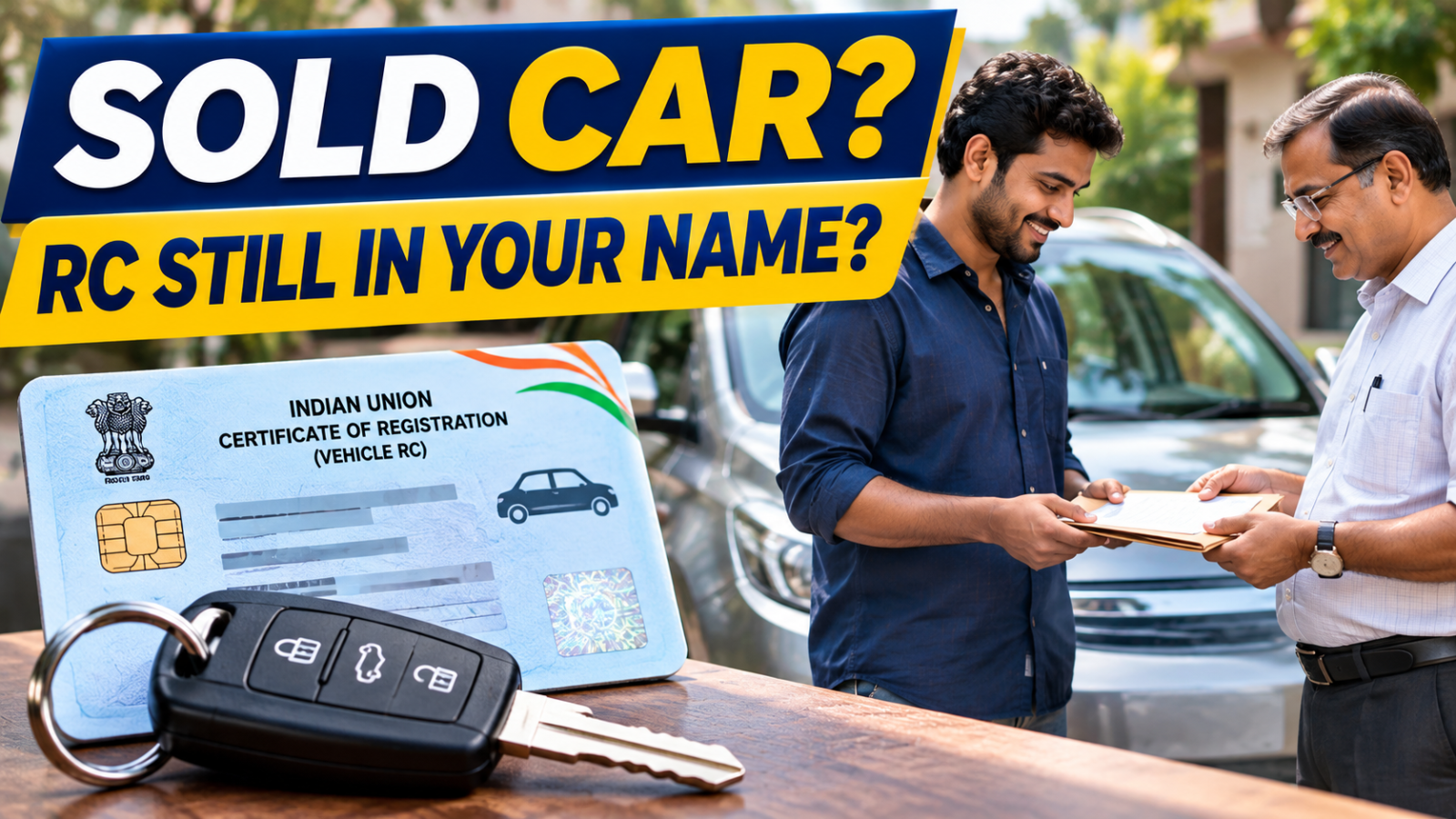
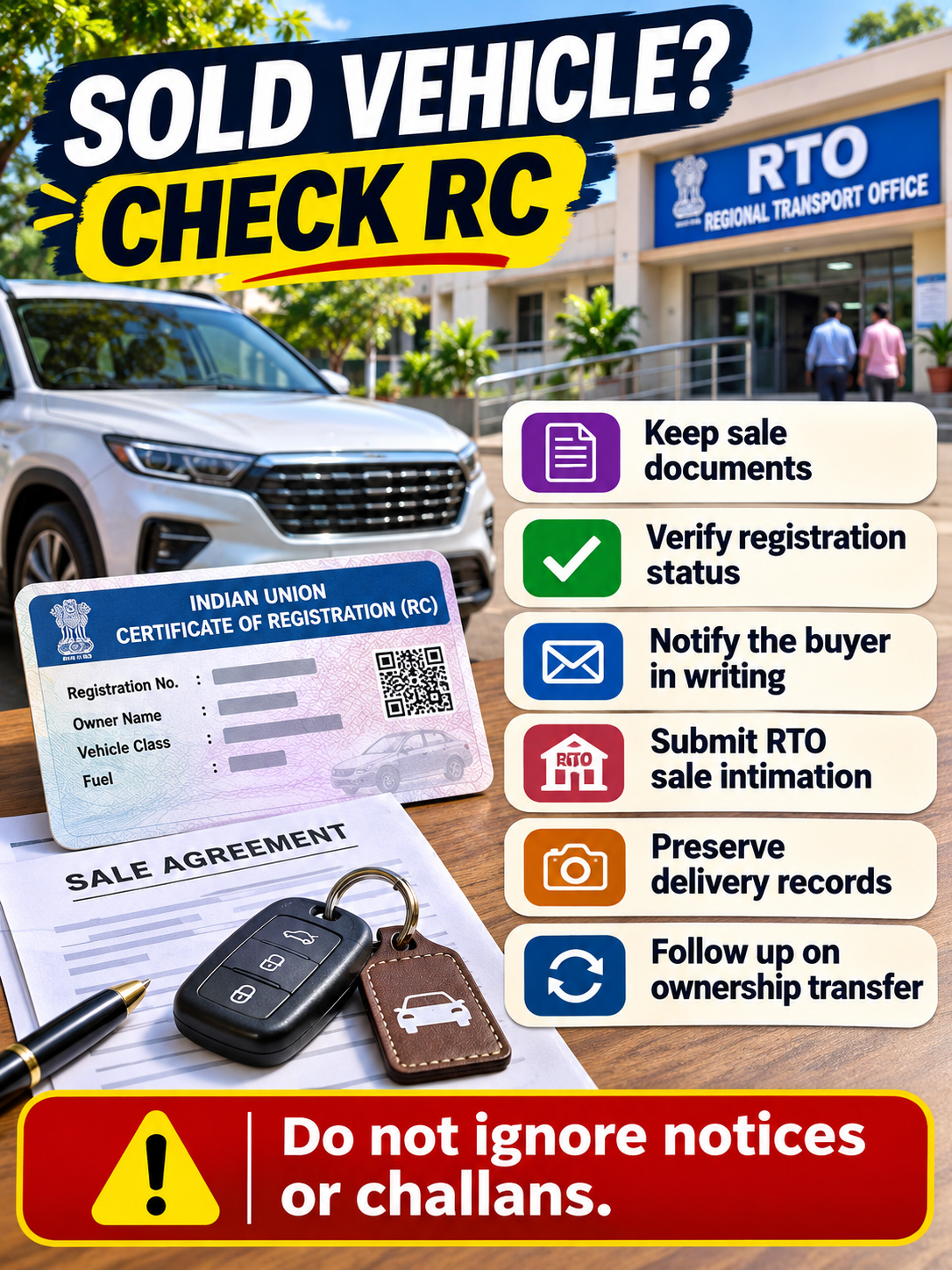
If you have sold a car or motorcycle in India but its registration certificate (RC) remains in your name, do not wait indefinitely for the buyer to complete the paperwork. Check the registration status, preserve evidence of the sale and delivery, notify the buyer in writing, and report the transfer to the competent registration authority using Form 29. The ownership transfer application involving Form 30 and supporting documents must also be completed. Keep the RTO acknowledgement and verify the final registration update.
Being listed as the registered owner can expose you to accident compensation claims and vehicle-related notices even after you have handed over the vehicle. A private sale agreement is important evidence, but it does not automatically remove all responsibilities under the Motor Vehicles Act. This guide explains the practical steps available to a seller whose buyer is delaying the RC transfer.
What to do if a buyer has not transferred the RC
- Record the vehicle registration number, actual sale and delivery dates, and the buyer’s available contact information.
- Collect your sale agreement, payment evidence, signed transfer forms and delivery receipt.
- Check the registration and application status using official VAHAN or mParivahan services.
- Send a written request to the buyer to complete the ownership transfer and retain the correspondence.
- Submit the sale intimation to the competent RTO and retain proof of receipt.
- Notify your motor insurer about the sale and ask your FASTag issuer how to close or delink your personal account.
For example, suppose you sold your motorcycle two months ago and received the entire price. The buyer promised to change the RC but has stopped answering your calls. You should preserve the original evidence and approach the RTO now, explaining the lack of cooperation. Do not prepare false or backdated documents to make an overdue application look timely.
Motor Vehicles Act section 50: Form 29, Form 30 and transfer deadlines
Section 50 of the Motor Vehicles Act, 1988 imposes responsibilities on both the seller and the buyer. For an ordinary transfer involving a vehicle registered within the same state, the seller must report the transfer within 14 days and provide the buyer with a copy. For a vehicle registered outside the state, section 50(1)(a)(ii) provides a 45-day period for the seller to forward the required no-objection certificate (NOC) or the specified alternative documents.
Section 50(1)(b) sets a 30-day reporting obligation for the buyer, who must provide the RC, prescribed fee and the seller’s report to the relevant registering authority. The Parivahan guidance for normal sales also describes Form 30 application timelines of 14 days for a same-state vehicle and 45 days for an out-of-state vehicle. Rather than relying on the longest period, submit the paperwork promptly and confirm the applicable procedure with the RTO.
| Form | Purpose |
|---|---|
| Form 29 | Seller’s notice of ownership transfer |
| Form 30 | Application for recording the ownership transfer |
| Form 28 | Application for an NOC where required |
| Form 35 | Termination of hypothecation where applicable |
Late reporting may attract prescribed charges or other consequences. Fees and additional documentation vary by state, vehicle category and financing status. Check the official requirements instead of assuming a single national late fee.
How to check RC transfer status on Parivahan
Visit the official VAHAN Vehicle Related Services portal. Enter the vehicle registration details or select the state and registering office as required. Look for the ownership transfer service or application status option. Follow the displayed instructions for authentication, buyer information, document submission and fees.
Depending on the state, the seller may need to initiate the application and the buyer may need to authenticate or complete subsequent steps. Some processes require an appointment, original documents or in-person verification. Common supporting documents include the registration certificate, insurance details, pollution certificate and buyer’s address proof. Financed vehicles, interstate transfers and commercial vehicles may require additional clearance or documentation.
Keep the application number and payment receipt. An application marked submitted is not necessarily an approved transfer. Verify that the ownership change has actually been recorded. If the online service is unavailable or the buyer cannot be contacted, approach the competent RTO. Never impersonate the buyer, use their OTP without permission or give unverified agents access to your credentials.
Sample RTO sale intimation application for a vehicle already sold
To: The Regional Transport Officer / competent Registering Authority, ______ District, ______ State.
Subject: Intimation of vehicle sale and pending ownership transfer.
Sir/Madam, I, ______, residing at ______, was the registered owner of vehicle number ______, vehicle type ______, chassis number ______. I sold and delivered the vehicle to Mr/Ms ______, residing at ______, on ______ at ______. The available sale and delivery records are enclosed. The registration continues to appear in my name. I request that the sale intimation and enclosed Form 29 be received, the matter processed in accordance with applicable law, and the necessary further steps communicated to me.
Attachments: sale agreement or receipt, delivery proof, RC copy, available buyer details, Form 29 and other applicable documents. Name: ______. Contact: ______. Date: ______. Signature: ______.
This sample covering letter does not replace the prescribed statutory forms. Adapt it truthfully to your circumstances. Obtain a dated acknowledgement from the office, or retain the official electronic or postal delivery confirmation where that method is accepted. Send a copy of the transfer report to the buyer. Ask for written guidance if documents are missing or the buyer refuses to cooperate.
Who is liable if a sold vehicle is involved in an accident?
Section 2(30) of the Motor Vehicles Act generally treats the person recorded as the registered owner as the owner for statutory purposes, subject to specified exceptions. In Naveen Kumar v. Vijay Kumar (2018), the Supreme Court considered an accident compensation dispute involving an earlier private sale. It held that a person who continued to be recorded as the registered owner could not avoid liability merely by showing that the vehicle had been sold. Accident victims should not have to trace successive unregistered transfers to identify the responsible owner.
This does not mean that the seller automatically becomes criminally guilty whenever the buyer causes an accident. Criminal responsibility for driving, civil compensation, the insurer’s obligation to satisfy an award, and contractual claims between buyer and seller are separate matters. If you receive a police notice or summons from a Motor Accident Claims Tribunal, respond promptly, inform the insurer and obtain legal advice. Preserve evidence showing who had possession at the relevant time.
Section 157 also addresses deemed transfer of motor insurance under the Act and requires the buyer to apply for the necessary insurance changes within 14 days. Do not assume that every own-damage benefit or policy condition automatically transfers. Ask the insurer to confirm the applicable coverage and endorsement requirements.
Traffic challans after selling a car or motorcycle
Check the official eChallan portal or the relevant state traffic authority’s website. Verify the vehicle number, violation date, location and issuing authority. If the violation occurred after delivery, submit a factual grievance with your sale and delivery records. Where the challan has been referred to a court, follow the applicable judicial procedure. A sale agreement does not automatically cancel every challan; responsibility depends on the violation and applicable law.
If the buyer has disappeared or repeatedly refuses to complete the transfer, send a written request to the available address and consider a lawyer’s notice. Follow up with the RTO using your acknowledgement. A lawyer can assess suitable administrative or civil remedies if the matter remains unresolved. Report genuine fraud, forgery or other criminal conduct to the police, but do not make a false theft complaint about a vehicle you voluntarily sold.
Frequently asked questions
Does submitting Form 29 remove my name from the RC immediately?
No. It records or evidences the seller’s report. Confirm the completed ownership change in the official registration records.
What if I lost the sale receipt?
Collect available payment records, correspondence, earlier forms and delivery evidence. Ask the RTO what additional documents are required. Do not fabricate a receipt.
Can I complete the transfer without the buyer?
The usual process requires buyer details and applicable cooperation or authentication. Report the sale yourself and ask the competent authority how to handle the buyer’s non-cooperation.
Can the buyer be made to pay all traffic challans?
Liability depends on the violation, its timing, the applicable law and any valid contractual obligations. Use the official grievance or court process rather than assuming automatic cancellation.
Are the rules different for cars and motorcycles?
The basic statutory ownership transfer framework applies to both. Specific requirements depend on vehicle class, state, financing and the type of transfer.
Conclusion: Completing the RC transfer is a critical part of selling a vehicle. Report the sale promptly, retain evidence and follow up until the registration record changes. Never ignore a notice merely because the vehicle is no longer in your possession.
Official references: Motor Vehicles Act, 1988 (sections 2(30), 50 and 157); Parivahan transfer of ownership guidance; Supreme Court judgment discussing registered-owner liability. This is general legal information, not individual legal advice.



















Share Your Opinion
Comments are closed on this post.