 Vista

Looking for easy EVS school project charts with pictures for Classes 1–5? This page combines three connected but distinct topics: a Family Tree, Community Helpers, and Traffic Signs. The family tree introduces relationships and care networks, the helpers chart shows how different jobs support communities, and the road signs poster encourages basic traffic awareness. Each picture has a full-size link so students can see its details before making an A4 project. The explanations below focus on clear labels, respectful examples, simple drawing steps and short classroom presentations rather than decorative designs that children cannot explain.
Why these three EVS project topics belong together
All three charts help children understand the world immediately around them. Family Tree begins with relationships and the people who care for a child. Community Helpers moves outward to neighbourhood work and services. Traffic Signs introduces shared rules in public spaces. Young pupils may simply identify two or three familiar examples. Older primary students can discuss why households are different, how people depend on one another, and why road rules matter. A good teaching poster leaves room for these conversations. It does not require pupils to memorise long definitions or disclose personal facts about their households.
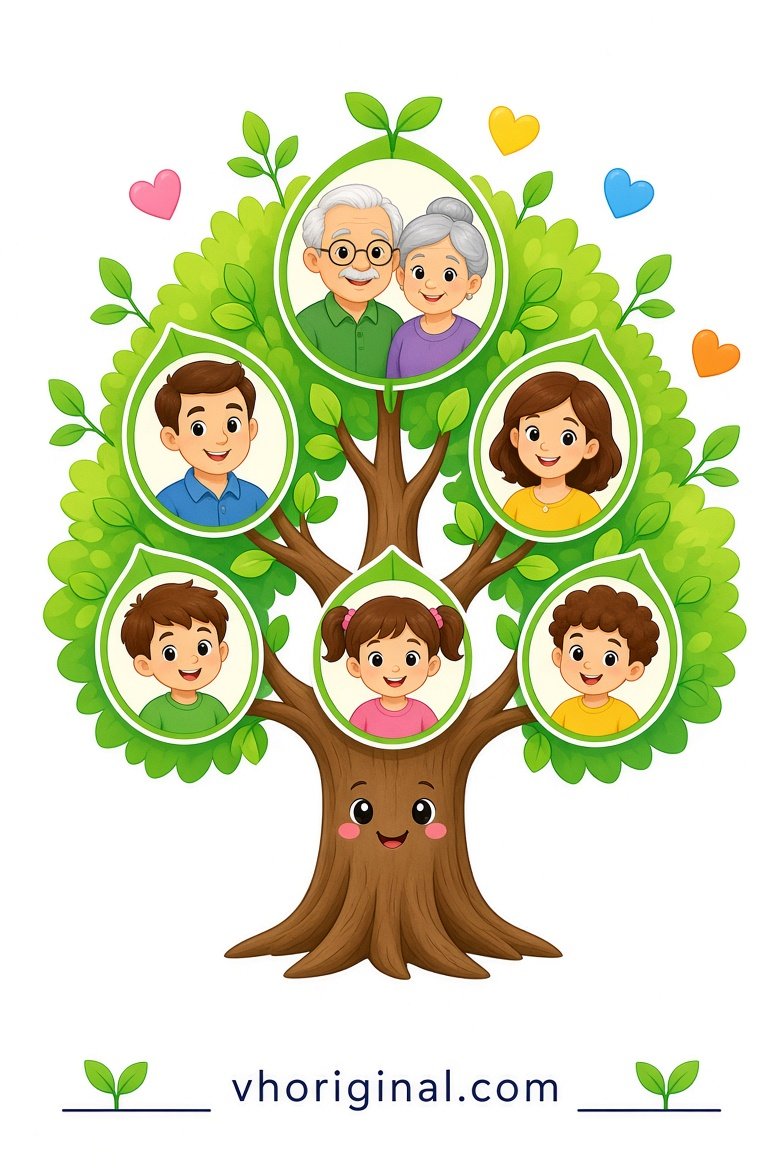
Picture 1: Family Tree School Project
A family tree is a diagram that represents relationships using names or role labels connected by lines. Some classroom examples show parents, grandparents and siblings, but real families do not all follow the same arrangement. Children may live with one parent, grandparents, guardians or other people who care for them. An inclusive project should allow suitable role labels or a fictional example when private information is not required. A child should not be pressured to reveal names or explain missing family members to a class. Keep connections clear so the picture communicates relationships rather than a stereotype.
Picture 2: Community Helpers Chart
Many different workers support daily life. Teachers, doctors, nurses, postal workers, farmers, firefighters, sanitation workers and numerous other people all provide useful services. Link each role with a practical example: a farmer grows food, a nurse supports patient care, and sanitation workers help maintain public cleanliness. Avoid teaching that a particular job belongs to only one gender or social group. A young pupil can name the worker and one task; an older pupil can explain why communities rely on different kinds of work. Giving every occupation respectful treatment is part of the project’s educational value.

Picture 3: Traffic Signs and Road Safety
Traffic signs communicate warnings, restrictions and guidance. A school poster may show familiar examples such as Stop, School Ahead and Pedestrian Crossing signs. Students can discuss what each means and why it matters for pedestrians and drivers. Signs vary by jurisdiction, and automatically generated graphics are not substitutes for official sign charts. For children, safe behaviour is more important than memorising every shape: use appropriate crossings, look for traffic and follow the guidance of a responsible adult when needed. Do not encourage children to test road-safety lessons independently in live traffic.
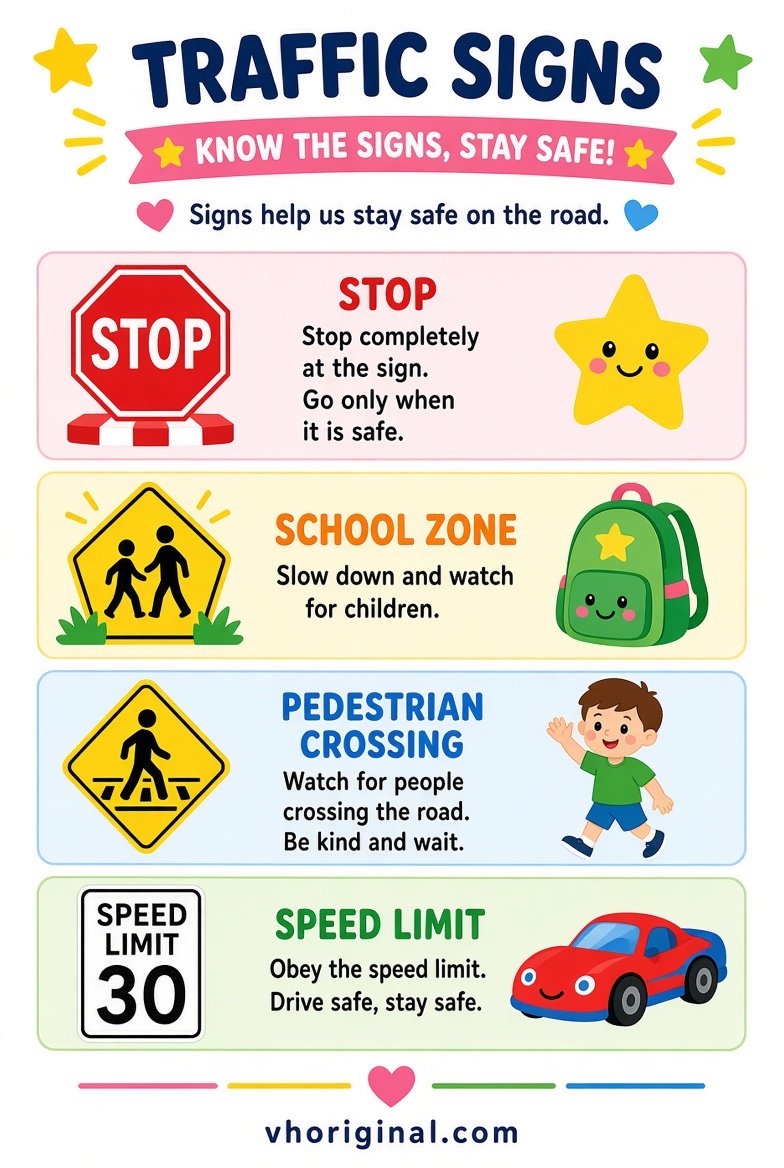
Chart note: The poster uses generic symbols. In India, School Ahead and pedestrian-crossing warnings normally use red-bordered triangles, and speed limits use red-bordered circles. Refer to the official examples when copying signs.
Materials and A4 chart layout
You need a pencil, eraser, ruler, coloured pencils and a clean sheet of paper. A printed reference is optional when the teacher permits it. Create a clear title at the top and leave enough space for readable labels. For a family tree, arrange role boxes and connecting lines neatly. For community helpers, draw each worker with a simple action or item representing the job. For road signs, keep the shape visible and the meaning legible. If only one A4 page is allowed, select one topic rather than making three images too small to understand.
Step-by-step: make the school project
Start by reading your teacher’s topic and format instructions. Next, view the relevant full-size image and choose a few examples that you can explain correctly. Lightly sketch the page layout in pencil before adding colour. Write short labels near each object and check the spelling. Verify traffic sign images against a reliable official chart. For a family tree, use only information that is appropriate to share. Then colour the drawings, add a sentence about the subject and include class details if required. Practise describing the chart aloud to check whether its message is clear.
How children can present each chart
For the family tree, explain what connecting lines mean and acknowledge that families come in different forms. For community helpers, select one worker and describe how the job benefits people nearby. For traffic signs, explain two signs and relate them to careful road behaviour. A teacher might ask whether only men can be firefighters or whether every child must show the same family structure. The best responses are simple, respectful and based on observation. This makes the chart an opportunity to learn about communities, not merely a colourful classroom assignment.
Mistakes, privacy and road-safety reminders
Avoid collecting unnecessary personal information for a family tree. Do not present stereotyped images as if women and men must perform different jobs. Check that all traffic sign shapes and meanings are accurate before printing the chart. Remember that crossing a real road requires attention and suitable supervision, not simply recognising a sign from a poster. Leave out doubtful labels from illustrations and use a school lesson or official traffic authority as the reference. Readability and correctness matter far more than filling every inch of the page.
Frequently asked questions
Which class can use these EVS charts?
Classes 1–5 can use simple versions with clear pictures and explanations matched to their learning level.
Does a family tree require real names?
Not always. Role labels or a fictional example may be appropriate, depending on the teacher’s instructions.
Can children learn all road rules from one poster?
No. The chart introduces familiar signs; real traffic safety requires further learning and adult guidance.
How can I download these project images?
Open the full-size link beneath a chart and use the browser’s image-saving option.
Conclusion and reference
These three picture projects introduce family relationships, community work and public safety. Use them to encourage observation, inclusion and practical understanding rather than memorising isolated labels.
Reference: NCERT, Environmental Studies Learning Outcomes — https://ncert.nic.in/pdf/publication/otherpublications/tilops101.pdf ; Hyderabad Traffic Police road rules — https://htp.gov.in/road_rules.html
Official reference for this project
Related project: five senses chart





















Share Your Opinion
Comments are closed on this post.