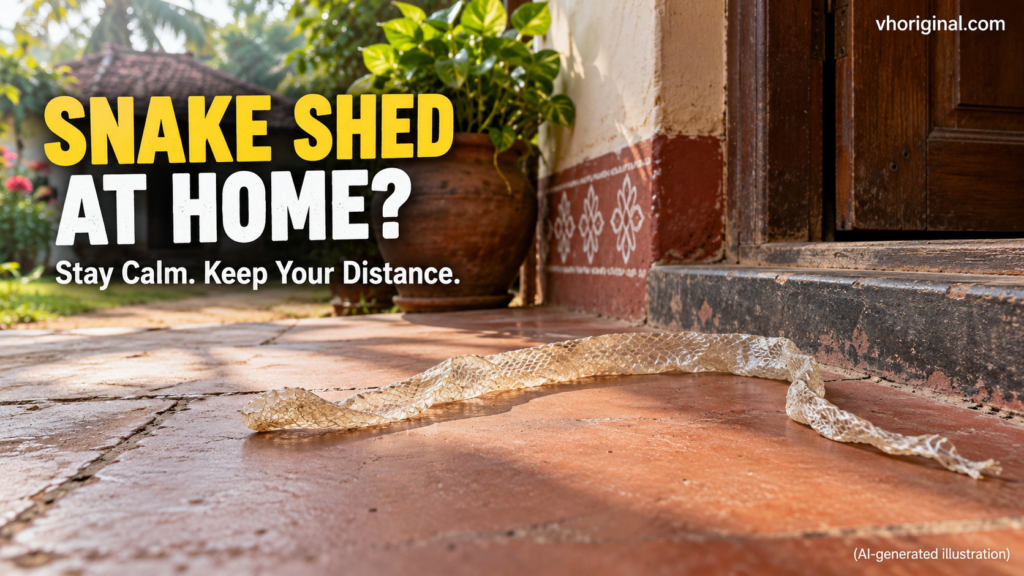
Snake shed skin in the house: first steps
Finding snake shed skin in the house can be unsettling. A thin, empty membrane near a doorway may initially resemble fabric or plastic. The useful first response is to keep your distance, tell the household and avoid reaching into surrounding spaces. One object cannot establish the safety of an entire property.
Keep children and pets away from the area. If a live snake appears, do not touch, chase, corner or try to catch it. From a safe place, contact your local forest or wildlife authority or a trained snake rescuer.
Even if you have only seen a shed, do not search dark corners, boxes, wood piles or holes with your hands. Photograph only when it is safe. A suspected bite requires immediate medical help rather than waiting for identification.
Why does a snake leave a shed?
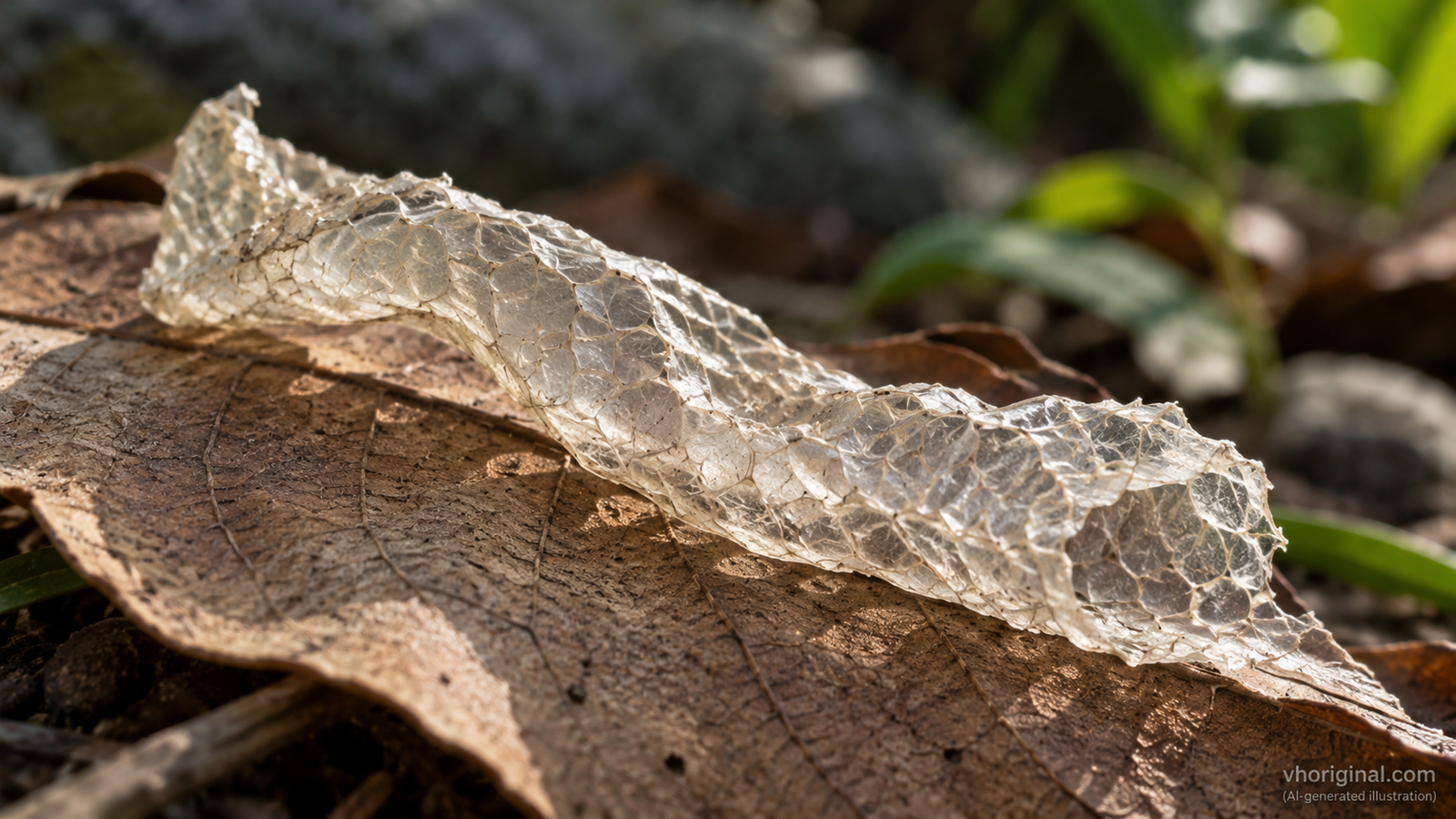
A shed is the outer skin a snake leaves during moulting. NSW Government explains that this layer can turn inside out and become almost transparent when shed. Its appearance need not preserve the clear colours of the living animal.
Finding an empty membrane is not evidence that a snake has died. Shedding is a normal biological process. A loose piece may also have been moved; a photograph alone should not be turned into an elaborate account of how it arrived.
The find does not establish whether a snake is currently in the room, when it left, its direction of travel or the number of snakes. Discovery time and shedding time are different facts. Other evidence is needed for those questions.
Can a shed identify the snake?
Scale patterns and counts on a sufficiently preserved shed can help specialists. Queensland Government’s snake FAQ describes this possibility. It does not mean everyone can determine species or venom risk from an incomplete piece or a blurred phone image.
Colour, an estimated overall length or one head-like section is not enough for a confident lay decision. Let a specialist assess what is present and visible. A social caption calling it “cobra skin” is not supporting evidence.
FACT: Finding a shed, establishing a live snake’s current presence, identifying its species and assessing risk are separate questions. One clue cannot settle them all. An uncertain identification is no basis for approaching a snake as harmless.
All three images here are AI-generated conceptual scenes. Do not match their scales, proportions or textures to a specimen for identification. They are not real household incidents, locality records or authenticated species photographs.
Is finding a snake shed good or bad?
Some communities attach beliefs about luck, money or misfortune to a snake shed. The biological and safety sources linked here explain shedding and encounters; they do not provide evidence that a shed predicts future events. A personal belief is not a safety assessment.
This guide does not advise picking a shed up as a lucky object, pocketing it, giving it to a child or collecting it to sell. Ask practical questions: was a live snake seen, which area is involved and is trained assistance needed?
Avoid blaming a household member or describing an unsupported omen. Record what actually happened. A single unconfirmed find also does not justify a dramatic claim that a house is infested.
Advice: record the find safely
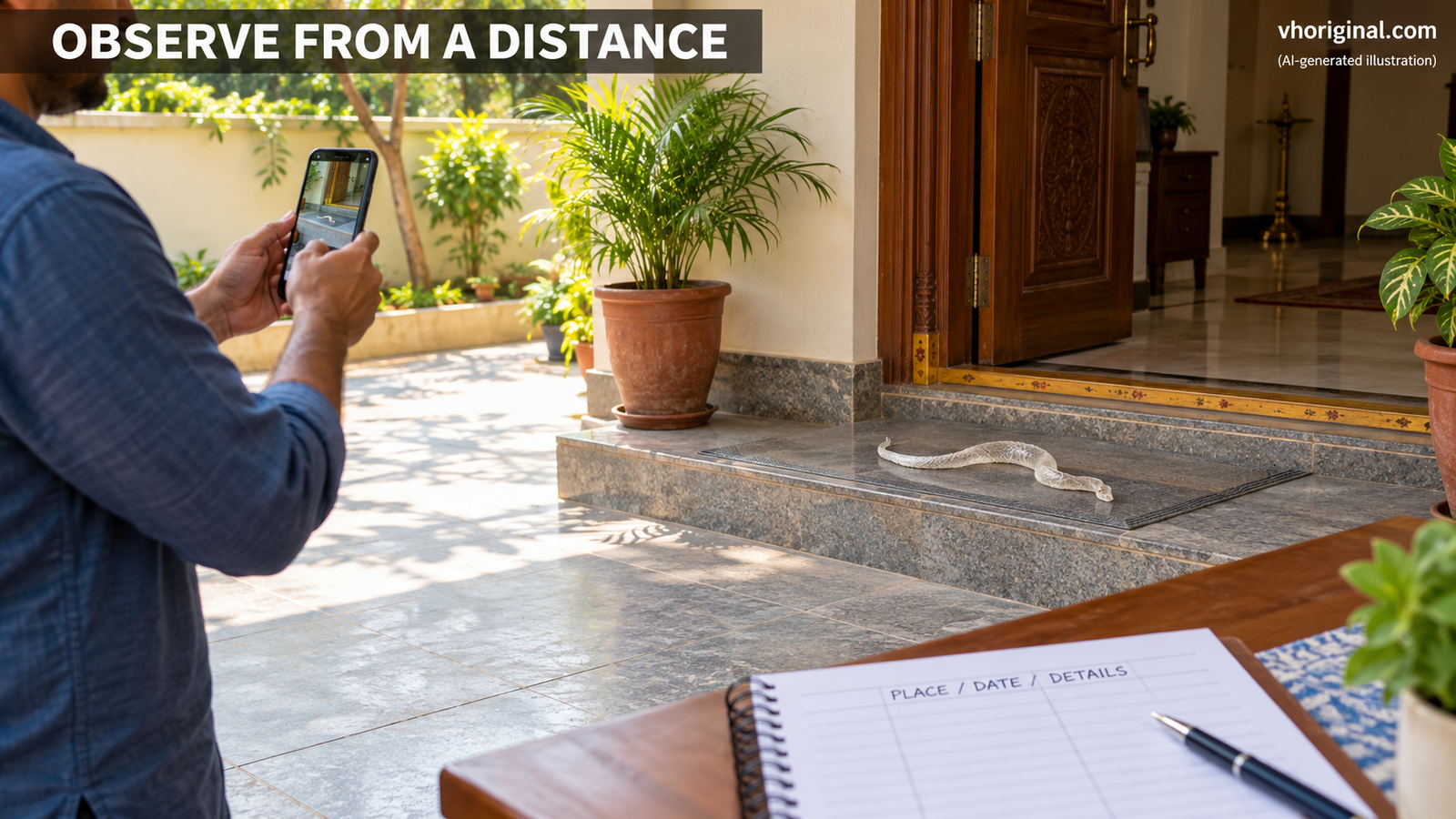
Take a contextual photograph from your existing safe position, showing the doorway, floor or surrounding area. Use zoom instead of moving closer. Do not shift boxes, overturn objects or unfold the membrane for a more attractive shot.
Record date found, location within the property, indoors or outdoors, and whether a live snake was observed. “Found this morning” does not mean “shed this morning.” Separate observations from guesses.
Provide those details and the original image to trained assistance. A public post need not reveal your exact home address. Species identification and emergency medical care serve different purposes; a slow reply about one must not delay the other.
An honest caption can say: “Shed-like membrane near doorway; species and shedding time unconfirmed.” Update it if expert evidence improves. AI-enhanced scale patterns are not original detail.
Ask local trained assistance whether removal or retaining the material is appropriate for the situation. Reaching into unseen spaces or assuming an area is clear without assessment is not a sound approach.
Prevention and a suspected snakebite
Managing food waste and rodent attractants, reducing unnecessary clutter and inspecting potential entry gaps are preventive measures. AVS/NParks guidance discusses these environmental factors. Its service contacts apply to Singapore, not India.
Do not suddenly start sealing gaps or dismantling clutter in an area where a snake may be present. Obtain trained assessment first, then plan safe maintenance. A photograph cannot guarantee a snake-proof home.
For a suspected bite, keep the person calm and still and arrange immediate transport to a health facility. WHO advises against cutting, suction, tight tourniquets and unproven remedies. Do not delay treatment for photographs or capture.
Finding only an empty shed without a bite incident is not itself a snakebite. Equally, do not ignore a suspected bite while waiting for symptoms. Describe the actual circumstances clearly to medical professionals.
Five frequently asked questions
Does a shed mean the snake is still indoors? It does not establish current presence by itself.
Can it prove a venomous species? Specialist assessment may use details; do not decide from an incomplete image yourself.
Does shedding mean the snake died? No, moulting is normal.
Is it a good-or-bad omen test? Biological evidence does not provide that prediction.
Are these real shed photographs? No; they are conceptual AI illustrations.
Sources and AI image disclosure
General nature and household safety information, not definitive specimen identification, property inspection or medical treatment. All three images are AI-generated scenes, not real incidents or scientific identification plates. Sources checked: 24 October 2026.
- NSW Government: snakes and shedding
- Queensland Government: snake identification and shed scale patterns
- AVS / NParks: safe snake encounters and prevention; Singapore contacts are location-specific
- WHO: suspected snakebite and first aid
Red velvet mite: identification limits and non-contact observation