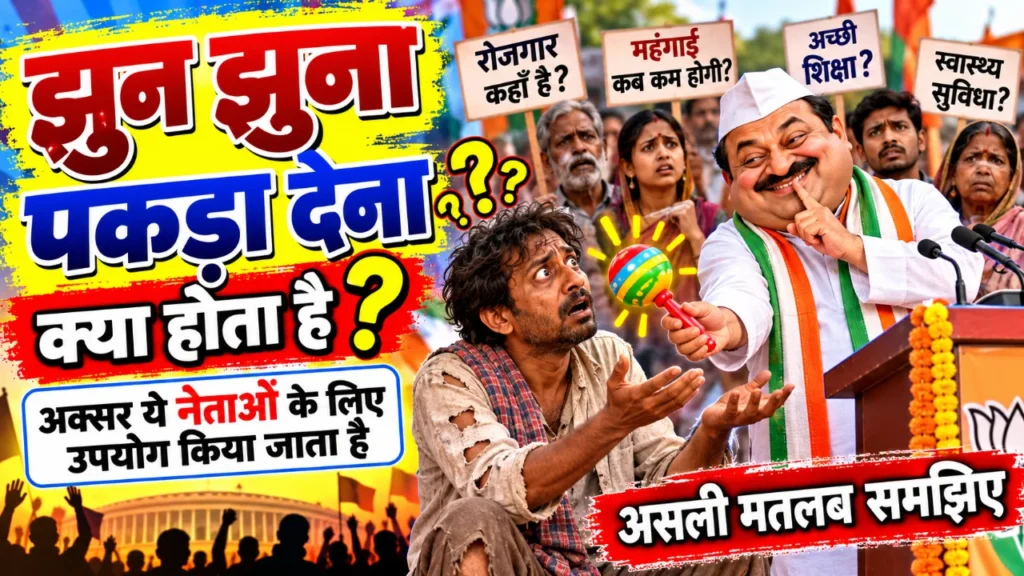
You marched for real jobs, affordable groceries, and functional hospitals, yet the podium politician smiled warmly and announced an exploratory study committee. In everyday street parlance, that is called handing you a jhunjhuna—a loud baby rattle meant solely to distract you from the hunger in your stomach.
What ‘Jhunjhuna Pakdana’ Truly Means Beyond the Metaphor
At its core, the idiom Jhunjhuna Pakdana describes handing someone a noisy, useless trinket in exchange for a genuine, substantive demand. Think of an infant crying from genuine hunger or teething pain. An exhausted parent might shake a colorful plastic rattle in front of the child, hoping the jingling sound causes momentary fascination and stops the tears without actually fixing the hunger.
Transfer that domestic scene into the real world. When citizens or workers organize to demand rights, systemic reform, or fair compensation, decision-makers often retaliate not with solutions, but with symbolic distraction. It creates an illusion of progress while keeping the status quo entirely untouched.
Colloquially, it shares cultural space with offering a pacifier, giving someone a lollipop, or throwing dust in their eyes. The intention behind the gesture is never structural resolution—it is buying quiet time at zero genuine cost.
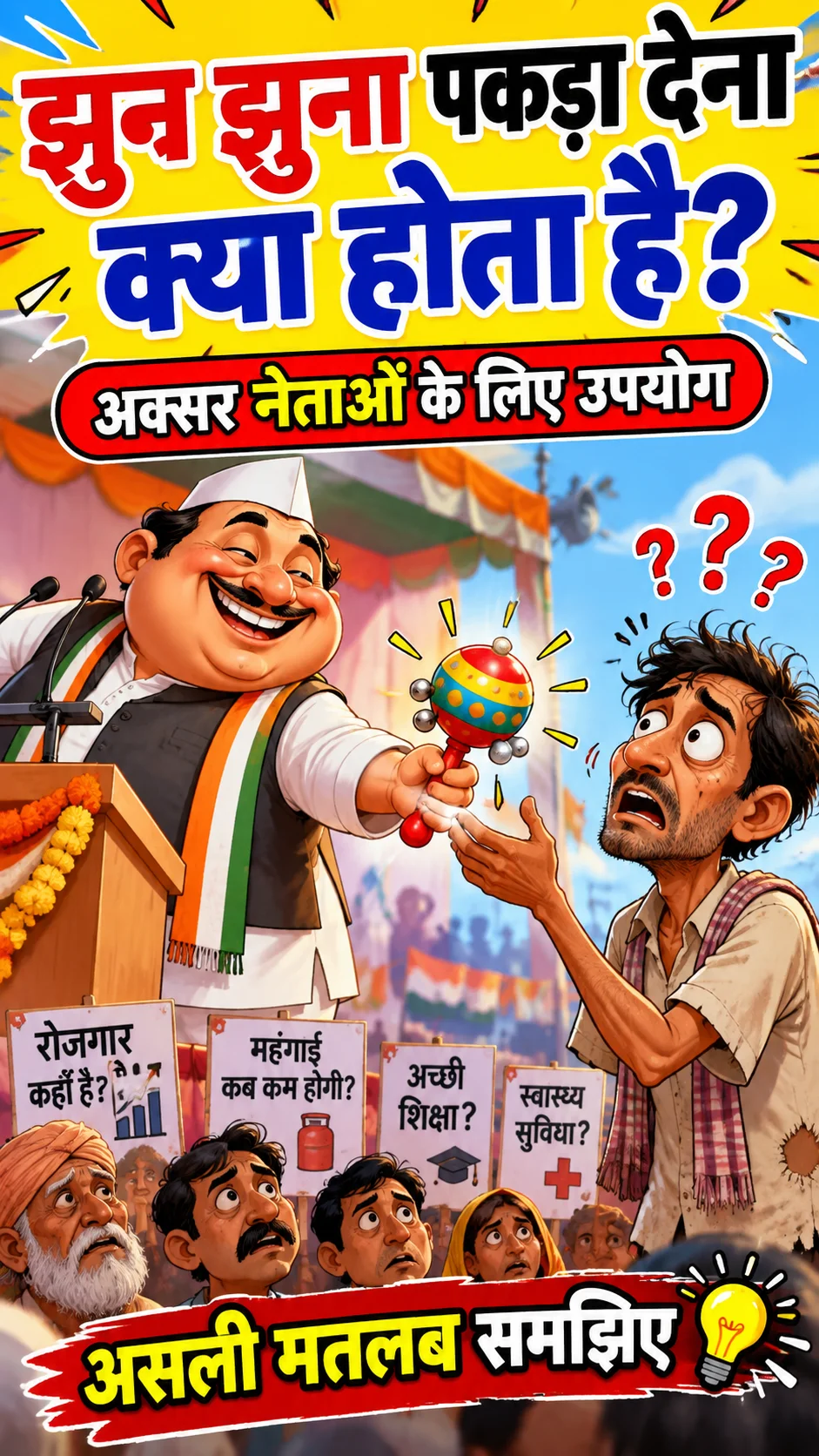
Why This Idiom Fits Politicians Better Than Anyone Else
Politics and hollow rattles have enjoyed an inseparable marriage for generations. Real governance is messy. Laying thousands of miles of durable sewage networks, staffing rural primary clinics with qualified doctors, and reforming bloated administrative machinery requires sustained capital, discipline, and years of hard work.
Politicians operate on a five-year election horizon. Why invest in complex reforms when a superficial substitute can calm the crowd before polling day? Renaming an old highway, inaugurating a foundation stone with festive coconuts, or creating a fact-finding panel are all classic political rattles.
By the time voters realize that the newly inaugurated scheme has zero budgetary backing, the term has quietly ended, and a brand-new toy is already being packaged for the next election campaign.
Real Demands vs. Hollow Tokens: A Quick Comparison
People frequently mistake administrative noise for real delivery. The difference between structural resolution and a decorative stall tactic is stark when viewed side by side:
| Citizen’s Real Demand | The Political Rattle | Actual Outcome |
|---|---|---|
| Permanent job recruitment | Formation of an advisory committee | Years of endless litigation |
| Functional bridges and roads | Ceremonial foundation stone laying | Plaques erected, zero asphalt |
| Inflation control and relief | Temporary festive discount coupons | Unchanged economic distress |
As this breakdown reveals, procedural theater is routinely dressed up as governance, keeping citizens busy celebrating paperwork while core grievances remain unresolved.
Not Just Politics: How the Rattle Echoes in Corporate Corridors
Do not assume this game belongs solely to people wearing crisp political outfits. Modern corporate boardrooms and appraisal rooms have turned the handing out of rattles into an exact science. When an overworked executive demands an overdue raise or better work hours, management rarely addresses compensation directly.
Instead, the employee receives a printed certificate, a cheap coffee mug, and a puffed-up title change—perhaps ‘Lead Strategy Associate.’ The bank account receives the exact same number, but the employee walks around with an inflated sense of importance. That is the classic corporate rattle.
Even inside households, parents give teenagers budget gadgets to delay funding essential higher education investments. Wherever serious investment is replaced by shiny superficiality, the rattle is actively making noise.
The Psychology: Why We Fall for Shiny Empty Gestures
Human minds are wired with cognitive blind spots, and the appetite for immediate gratification sits near the top. After fighting an exhausting, uphill battle for years against bureaucracy or a stubborn employer, psychological fatigue sets in. The brain desperately wants relief.
When an authority figure suddenly presents a polite concession—even an empty one—we experience relief framing. We subconsciously think, ‘At least they acknowledged us.’ Manipulators rely entirely on this cognitive surrender.
The temporary novelty distracts us from the permanent shortfall. By the time the emotional high wears off and reality sets in, the window for negotiation has closed, and the rattle has done its job.
Breaking the Cycle: How to Reject the Rattle and Demand Value
Refusing to be duped starts with looking past performative announcements and measuring tangible output. When an authority figure offers a swift administrative gesture instead of addressing your core demand, immediately ask for timelines, allocated budgets, and measurable accountability.
Stop cheering for foundation stones. A foundation stone is concrete on mud; it is not a working hospital until doctors write prescriptions inside it. In professional spaces, decline cosmetic designations if they come without corresponding monetary adjustments.
The moment a community or workforce stops celebrating token gestures, those distributing the toys will find themselves forced to deliver real substance.
Personal advice
One of the quietest indicators of maturity is noticing the precise difference between someone respecting your worth and someone casually placating you. Whether sitting in an appraisal meeting, evaluating an election manifesto, or handling difficult family negotiations, do not get seduced by warm phrasing.
It is comfortable to accept a symbolic gift because confrontation takes courage. But if you spend your energy shaking a toy handed to you by someone in power, you guarantee that your legitimate claims will sit forever in cold storage. Learn to insist on tangible delivery.
Next time someone tries to smooth over a systemic issue with a decorative gesture, keep your composure, thank them for the conversation, and calmly redirect the spotlight right back to the original demand.
Frequently asked questions
How do you use ‘Jhunjhuna Pakdana’ in a practical sentence?
You can say: ‘When the staff demanded their long-pending salary revisions, management simply handed them an honorary title—a classic case of jhunjhuna pakdana.’
What is the key difference between giving a lollipop and handing a jhunjhuna?
While both represent shallow pacification, a lollipop signifies temporary sweetness or a small bribe, whereas a jhunjhuna specifically implies a noisy, worthless distraction meant to divert attention.
What are the most common political rattles deployed during elections?
Setting up indefinite inquiry commissions, renaming public infrastructure, laying foundation stones without budgetary allocations, and announcing short-term festival giveaways are standard political rattles.
How can an employee avoid falling for corporate tokenism during appraisals?
Politely decline hollow certificates or title promotions if they lack financial compensation, and insist on clear, written milestones tied directly to salary appraisals and promotions.
Disclaimer: The information in this article is for general awareness only.