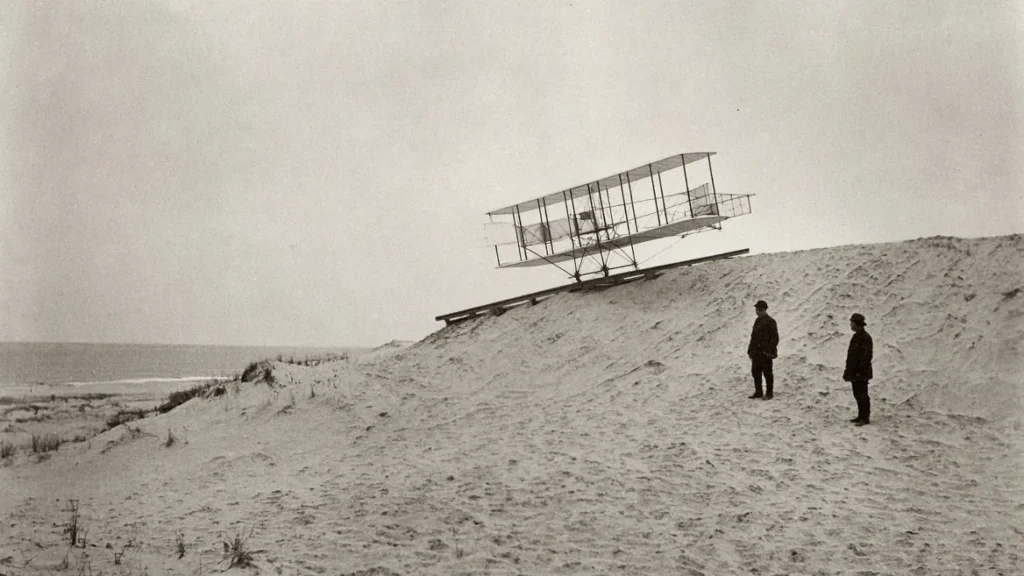
17 December 1903, 10:35 a.m. The sand at Kill Devil Hills was cold and the wind near 27 miles an hour. The wood-and-muslin Wright Flyer sat on a rail. Orville lay on the wing. Wilbur ran the side. A camera already waited on a tripod. Wright Brothers first flight 1903 is that second.
The flight lasted 12 seconds and covered 120 feet on the ground — farther through the air against the headwind. Powered, controlled, landed as high as it started: the definition the brothers had set. These pictures are not a pixel copy of Daniels’s exact still. The dune, the rail, the camera belong to the same morning.
How the first-flight photograph was made
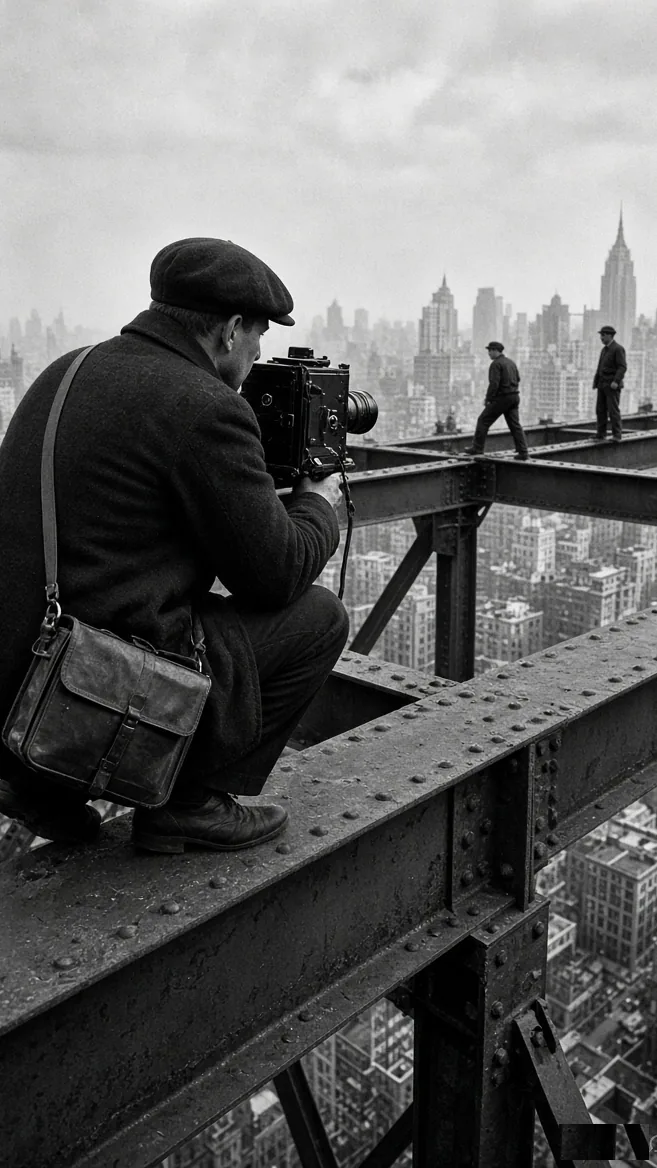
The camera was the Wrights’ own — a Gundlach Korona V with 5×7 glass plates. Orville planted the tripod where he thought the machine would be in the air. The shutter bulb went to John T. Daniels of the Kill Devil Hills Life-Saving Station. Daniels later said he was so startled when the Flyer rose he was not sure he had squeezed. The plate was developed after they returned to Ohio. It held the second.
They flew four times that day, each pass longer. Wilbur’s last ran 59 seconds and 852 feet. A gust wrecked the Flyer as they hauled it back. Daniels was caught between the wings and walked away. The machine did not. A telegram went home: success, four flights, machine damaged.
Newspapers did not all believe it. Two bicycle men from Dayton, no college degree. Europe stayed doubtful until the public flights of 1908. The photograph was evidence, and a patent file. That is why the brothers brought a camera — for history and for court.
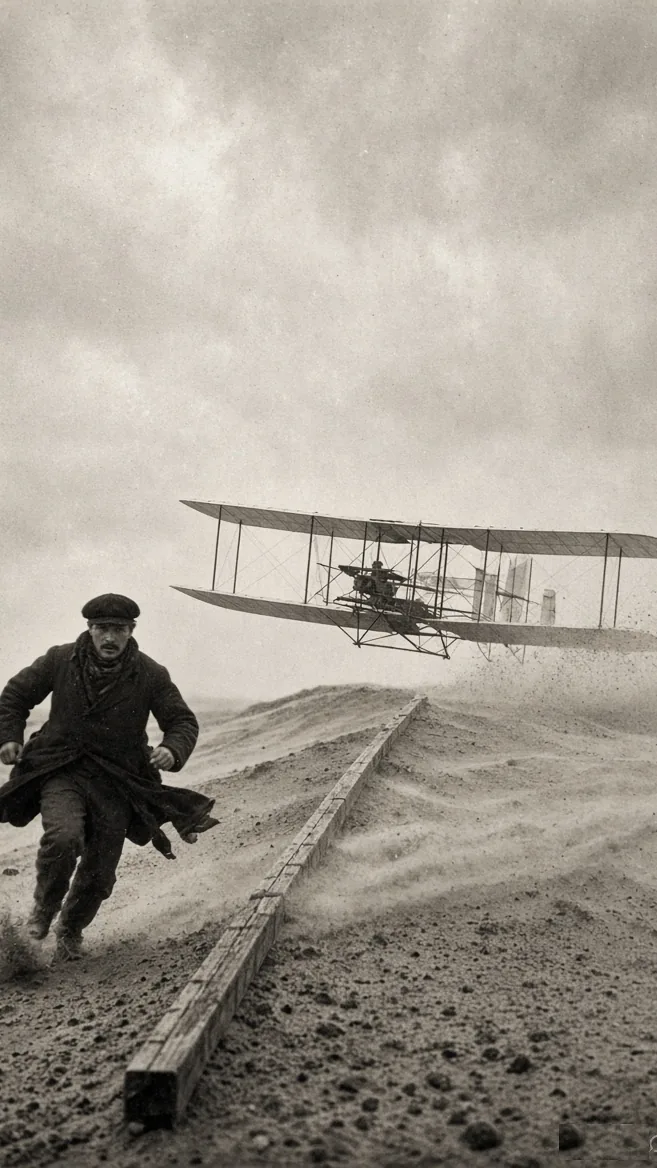
The first flight lasted 12 seconds and 120 feet. Orville was on the wing. Wilbur ran beside it.
Kitty Hawk and Kill Devil Hills
The village is Kitty Hawk. The dunes are Kill Devil Hills. Steady wind, soft sand, few witnesses. Men from the life-saving station walked up to help. No crowd. No parade. A rail, a wind, two brothers, and a man who had never held a camera.
The glass negatives later reached the Library of Congress. The picture reached a state quarter. The morning stays small: 12 seconds, one man running, one man prone, the ocean behind.
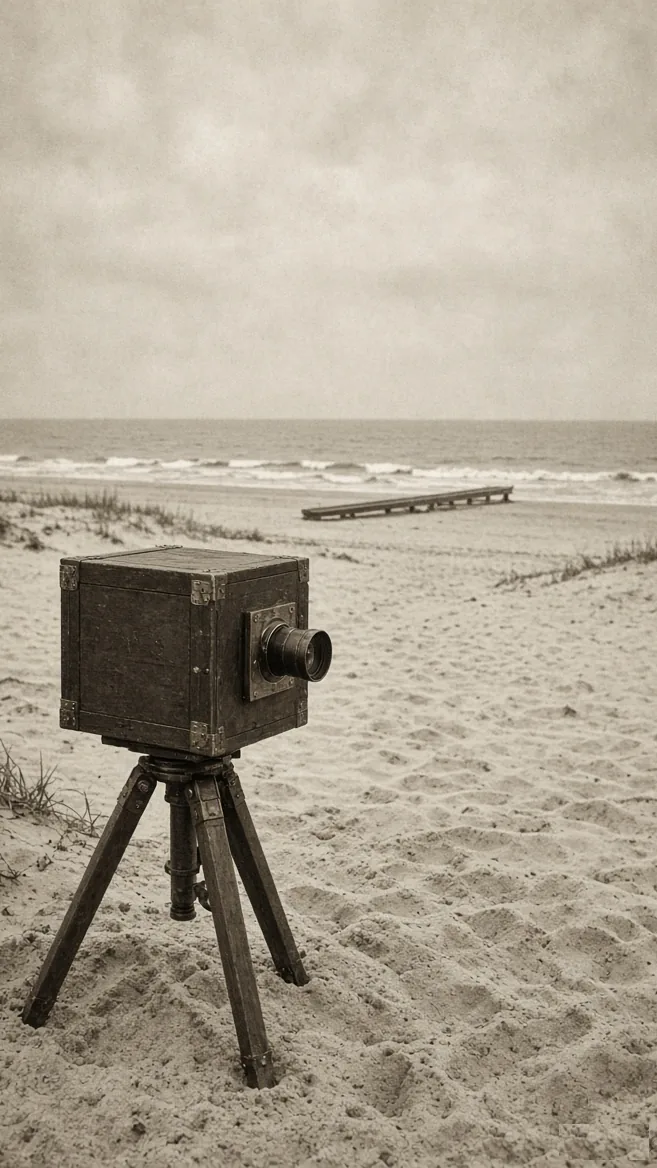
John T. Daniels squeezed the bulb. He was from the life-saving station and had never used a camera.
What people type now
Some search Wright Brothers first flight 1903. Some search Kitty Hawk. Some search John T. Daniels. All three open one cold morning. Airliners now hide the sky. The frame still shows sand — flight began where there was no floor.