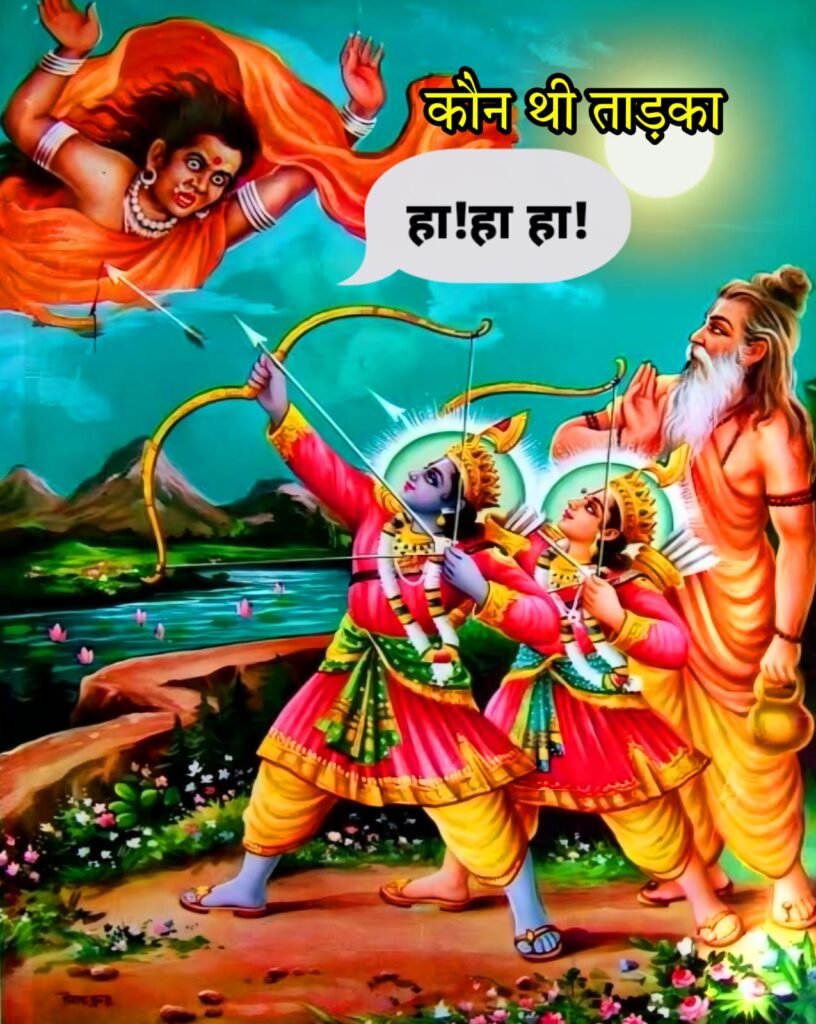
When people first hear the name Tadaka in the Ramayana, they usually picture a fierce rakshasi whom young Rama had to face. That image is only the last chapter. The tadaka yakshini ramayana story begins much earlier: with a yaksha princess, a father’s boon, a marriage, a sage’s curse, and a forest that became a place of fear. This article follows that arc as it is told in the Valmiki Ramayana tradition — as sacred narrative, not as a modern crime file or a “proven history” report.
The point is not to decorate violence. The point is to see why the epic places this meeting so early in Rama’s life, and what later readers have taken from it: duty, karma, and the hard line between protecting the innocent and refusing to strike.
Who Was Tadaka? A Yakshini Before the Demoness
According to the Valmiki Ramayana, Tadaka (also spelled Tataka or Tadaka) was not born a rakshasi. She was born a yakshini — a being of the yaksha order — and the daughter of Yaksharaj Suketu. The text presents her first as powerful and beautiful, not as a monster from the cradle. That distinction matters, because the later terror of Tadaka Van is framed as a fall, not as her original nature.
Suketu, the story says, obtained a boon from Brahma for his daughter: great strength, described as the force of a thousand elephants. Because of that boon, Tadaka grew up with unusual physical power. In the epic’s language, this is a divine gift, not a laboratory fact and not a statistic anyone can measure today. It is how the poem explains why she could later dominate a whole forest stretch when her nature turned cruel.
Yakshas in this tradition sit between the worlds of gods, humans, and more dangerous beings. They can protect or they can threaten. Tadaka’s early identity belongs to that in-between space. Readers who jump straight to “demoness” miss the epic’s own sequence: birth as a yakshini, marriage, grief, rage, curse, then the terrible form. The Ramayana uses that sequence to talk about how power plus wounded pride can become adharma — not to say that every strong woman is a threat.
It also helps to keep genre clear. This is itihasa-kavya as received in Hindu tradition: a sacred story about dharma, not an archaeological field report. Place-names and family trees inside the poem are part of that story-world. They should be read with shraddha and with honesty about what kind of text we are holding.
Marriage to Sunda and the Family of Maricha and Subahu
Tadaka was married to Sunda, described in this telling as a mighty daitya of a harsh, rakshasa temperament. The match joins two kinds of strength: her yaksha-born force and his aggressive nature. From that marriage came two sons, Maricha and Subahu. Both names will return later in Rama’s life. Maricha especially becomes important far beyond this forest chapter, because the same being who is driven away here later appears in the golden-deer episode connected with Sita’s abduction.
The family lived in a dense forest near Ayodhya. Only after terror filled that woodland did people come to call it Tadaka Van. In other words, the name is a memory of fear, not a tourist label from the start. The household is presented as powerful and already inclined toward harming sages once Sunda’s nature is given free play. The epic does not spend pages on domestic detail. It gives just enough: a wife of great force, a husband who troubles rishis, two sons who inherit maya and strength.
Maricha is called mayavi — skilled in illusion — and strong like his parents. That single trait is the thread that later stories pull when he takes another form to deceive. Subahu stands with him as a partner in disrupting yajnas. For a reader, the family is a unit of obstruction: wherever tapasya and sacrifice try to stand, this household learns to break them. That is why Vishwamitra will eventually walk into Dasharatha’s court. The problem is not one stray attack. It is a pattern that makes sacred work impossible in that region.
Again, this is the poem’s claim, not a census of an ancient district. We do not have “survey numbers” of travelers harmed. The Ramayana speaks in the language of dharma under siege: rishis cannot complete rites; the forest path is no longer safe. That is the moral weather of the chapter, and it is enough for the story that follows.
Sage Agastya’s Curse and Tadaka’s Change of Form
The turning point is the death of Sunda. The source narrative says Sunda kept harassing rishis and munis. He angered Maharshi Agastya, and Agastya’s curse reduced him to ashes. The cause given is Sunda’s own conduct, not a random accident. In the epic’s moral grammar, a being who makes a sage’s tapasya impossible draws a consequence that is both spiritual and physical.
Grief and rage then drive the next act. Tadaka, with Maricha and Subahu, went to attack Agastya after Sunda’s death. The poem does not praise that attack as loyalty. It treats it as a further crossing of the line: the widow and sons turn their power against the sage himself. Agastya, angered, cursed all three — Tadaka, Maricha, and Subahu — to take birth in rakshasa yoni and to bear a dreadful form.
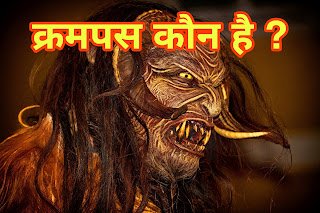
After the curse, the beautiful yakshini form is gone. Tadaka becomes a fierce, terrifying rakshasi. The same immense strength remains, now joined to cruelty and adharma in the heart. That pairing is the epic’s warning. Strength was already there by Brahma’s boon. What changes is direction. A gift that could have stood near dharma now stands against it. The curse is not written here as a magic trick for spectacle. It is written as the visible seal of a path already chosen in anger.
Traditional readers often pause on this moment because it is easy to flatten. Tadaka is not “evil from page one,” and Agastya is not introduced as a man who curses for sport. Sunda harms sages; he is destroyed. The family answers with assault; the curse follows. Whether a modern reader finds that harsh or just, the Valmiki frame is consistent: action brings fruit. The later forest terror grows out of this scene, not out of nowhere.
Tadaka Van: Fear on the Forest Path
After the curse, Tadaka lived in that dense forest with her sons. Because of her terror, the place became infamous as Tadaka Van. In the telling used here, the woodland is remembered along the Ganga, in the border region of present-day Bihar and Uttar Pradesh. That location is a traditional belief attached to the story. It is not a surveyed pin on a modern map, and it should not be sold as excavated “proof.”
What the narrative does insist on is the effect of her presence. Travelers, especially rishis and munis, were harassed. Yajnas were interrupted. Sages were killed. Tapasya was broken. The forest stopped being a place where a quiet rite could finish. Tadaka’s force and her sons’ attacks created a climate of fear across the region. No rishi or tapasvi could perform anushthana in peace. The situation became so grave that Maharshi Vishwamitra himself could not complete his yajna without obstruction.
That last detail moves the story from a local nightmare to the main line of the Ramayana. Vishwamitra is not a passing traveler. He is a sage whose sacrifice matters to the poem’s idea of loka-kalyan — the welfare of the world through protected dharma. If even he cannot hold the fire steady, the epic says the disorder has gone past a private feud. It has become a public wound.
Read without cheap gore, Tadaka Van is a picture of sacred space made unlivable. Trees and riverbanks are not the enemy. The enemy is the will that uses strength to stop prayer, travel, and offering. That is why the next scene is not a hunting trip. It is a request at a king’s door.
FACT BOX
In the Valmiki Ramayana tradition, Tadaka is first a yakshini, daughter of Yaksharaj Suketu — not a rakshasi by birth. Suketu obtained a boon from Brahma that she would have great power, spoken of as the strength of a thousand elephants. She married Sunda; their sons were Maricha and Subahu. After Sunda was destroyed by Agastya’s curse, Tadaka and her sons attacked the sage and were cursed into rakshasa form. Tadaka Van is remembered as a feared forest near Ayodhya, traditionally placed along the Ganga in the Bihar–Uttar Pradesh border region — a belief in the story-world, not a modern survey claim. Rama later killed Tadaka and Subahu; Maricha was struck and flung far into the sea, and he returns later in the golden-deer episode tied to Sita’s abduction. Vishwamitra in Ayodhya: Why Rama and Lakshmana Were Called
To protect his yajna and to re-establish dharma on that path, Vishwamitra went to King Dasharatha in Ayodhya. He asked that Rama and Lakshmana be sent with him to guard the sacrifice against Tadaka and her sons. The request is specific. He does not ask for an army first. He asks for the two princes.
Dasharatha hesitated. The king’s love for his sons and the thought of sending them against a rakshasi made him pause. The hesitation is human and the poem allows it. Maharshi Vashistha then reasoned with Dasharatha, and the king agreed. In the epic’s court logic, the kulaguru’s word helps the king see that this is not a reckless outing. It is a duty the princes are being asked to take up under a sage’s care.
This scene also sets Rama’s public life in motion. Before later wars and later griefs, the first commissioned task is protection of a yajna. The Ramayana is saying something quiet here: kingship and kshatriya training are tested first on whether sacred work can continue. Tadaka is the obstacle named in that test. Vishwamitra is the teacher who will not let the rite die for lack of courage in Ayodhya.
Nothing in this account requires invented crowd sizes or fake “records” of how many ashrams fell. The poem’s measure is simpler. A sage cannot finish his offering. A king must decide whether his sons are only to be treasured in the palace or also sent where dharma is under pressure. Dasharatha’s yes, after Vashistha speaks, is the hinge that brings Rama to Tadaka Van.
Rama’s Hesitation and the Teaching of Dharma
When Rama and Lakshmana reached Tadaka Van with Vishwamitra, they saw the dread of her form and the cruelty attached to her name. Rama hesitated to kill her because he saw a woman. His kshatriya dharma, as he understood it in that moment, did not easily permit raising a weapon against a stri. The epic keeps that pause. It does not rush past it as weakness. It treats it as a real moral instinct.
Vishwamitra then taught him a harder reading of the same dharma. Tadaka, he said, was no longer to be seen only as a woman. She had become a standing sign of adharma and cruelty. She had already destroyed countless innocent people and sadhus. For the protection of dharma, such a destructive force had to be stopped. For loka-kalyan — the good of the world — slaying this rakshasi was proper, even though the form was female. He also reminded Rama that Agastya’s curse already marked her end as certain.
The teaching is easy to misuse if someone tears it out of the story. The epic is not writing a general license to harm women. It is writing a specific case: a being of huge strength who kills sages, breaks yajnas, and fills a forest with terror. Vishwamitra’s point is that duty to the many can outweigh a personal rule when that rule would leave the helpless unprotected. Rama must learn the difference between softness that saves and softness that abandons.
This is also why the tadaka yakshini ramayana story sits so early in Bala Kanda. Before Rama is husband, exile, or king, he is a student who must decide what protection means. The hesitation shows he is not eager for blood. The act that follows, in the poem’s own terms, is not sport. It is a reluctant duty after a guru has named the cost of refusing.
The Encounter, the Arrow, and What Followed
Hearing Vishwamitra, Rama accepted the fight. Tadaka attacked with full force and with maya. The telling speaks of a rain of stones, terrible roars, and attempts to confuse the brothers through illusion. Rama, described here as Narayana’s avatara, broke those attacks with divine arrows. At last he killed Tadaka with a sharp shaft. As life left the body, the monstrous rakshasi form grew still, and the story says she was freed from the curse.
After her death, Tadaka Van was no longer a kingdom of fear. Peace returned to that stretch of forest in the poem’s telling. Among the sons, Subahu was also slain by Rama. Maricha was struck with a special arrow and flung hundreds of yojanas away into the sea. He lived. That survival is not a small footnote. The same Maricha later helped Ravana by becoming the golden deer, the lure that led toward Sita’s abduction.
The epic is almost severe in that continuity. One chapter ends a terror in the forest; another chapter lets a leftover of that terror return in a prettier shape. Readers who want a clean “villain deleted” ending do not get it. Subahu’s line stops. Maricha’s line bends and comes back. The poem can be read as saying that some harms are ended in one stroke, and some harms wait for another hour.
What should not be added is extra battlefield color the source does not give — no invented body counts, no cinematic gore, no modern “eyewitness” claims. The received scene is already complete: maya, arrows, the death of Tadaka, the death of Subahu, the casting away of Maricha, and a forest that can breathe again.
What the Tadaka Episode Means in the Ramayana
In the Ramayana, Tadaka is not only an opponent to be crossed off a list. The episode is treated as Rama’s first major step toward sthapana of dharma and the checking of adharma. When harm has passed every limit, the poem says, ending that harm becomes the remaining duty. That is the first teaching people draw from the chapter: protection is not an essay. Sometimes it is a decision a warrior did not want to make.
The second teaching is karmaphala. Tadaka’s path from yakshini to rakshasi, and then to death, is tied to her own acts and to Sunda’s acts, sealed by a sage’s curse. The story insists that deeds return. Power without restraint does not stay neutral. A boon that gave her the strength of a thousand elephants did not decide her end. Conduct did.
The third teaching sits in Rama’s pause. He did not want to raise a weapon against a woman. After Vishwamitra’s upadesha, he acted. Justice and duty, the poem says, can stand above private feeling when the world’s welfare is at stake. That line is meant to be read with care, inside this story, not as a slogan for any quarrel a later age wants to win.
The fourth teaching is inward. Traditional reading often takes Tadaka as a figure of ignorance, arrogance, and cruelty that block the spiritual path. Rama’s victory is then also a picture of mastering those inner obstacles. The fifth teaching is Maricha’s escape. Evil, the narrative suggests, is not always finished in one encounter. It can rise again when it finds an opening, as Maricha did in the matter of Sita. That is why the epic keeps asking for vigilance, not for one triumphant moment and then sleep.
So the story is not “a demoness was killed, end of file.” It is a first lesson in what kind of king Rama will be: unwilling to strike lightly, unwilling to let a forest of sages remain a slaughter-ground, and not yet done with the family of harm he meets here. That is the meaning the source itself presses — karma, curse, duty, and the long shadow of what is only half ended.
FAQ
Who was Tadaka in the Ramayana?
In the Valmiki Ramayana tradition, Tadaka was a yakshini, daughter of Yaksharaj Suketu, later cursed into a dreadful rakshasi form. Young Rama faced and killed her while protecting Vishwamitra’s path and yajna. That is narrative from the epic, not a modern biographical record.
Was Tadaka born a rakshasi?
No. The received story says she was born a yakshini, strong through a boon Brahma granted her father. The rakshasi form comes after Agastya’s curse, which followed Sunda’s death and the family’s attack on the sage.
Why did Rama agree to kill a woman?
The poem itself records his hesitation. Vishwamitra argued that Tadaka had become a force of adharma who killed innocents and broke the rites of sages, and that protecting the world required stopping her. The teaching is case-specific inside the epic. It is not a general rule against women.
What happened to Maricha and Subahu?
Rama killed Subahu. He struck Maricha and flung him far into the sea. Maricha survived and later took the form of a golden deer in the episode linked to Sita’s abduction with Ravana’s help.
Where was Tadaka Van?
The telling places the dense forest near Ayodhya and, by later belief, along the Ganga in the Bihar–Uttar Pradesh border region. Treat that as traditional geography attached to the story, not as a proven excavation result.
Disclaimer
This article retells the tadaka yakshini ramayana story as received from the Valmiki Ramayana tradition and the Hindi source narrative it follows. It is sacred epic literature, not a newspaper investigation and not a claim of laboratory proof. Names, boons, curses, and forest locations belong to that story-world. Recensions and later retellings can differ in small details. Read with respect; do not treat this page as a license for harm, and do not confuse mythic-itihasa language with modern statistics.