You remember a funeral that official history says never happened. A logo that “used to” look different. A movie line the clip does not contain. That jolt — many people sharing the same wrong memory — is what people call the Mandela Effect. This article keeps the popular story, marks what is history versus rumor, and separates memory science from parallel-universe claims.
What the Mandela Effect Actually Means
In plain language, the Mandela Effect is a label for a shared mismatch between memory and the public record. One person forgetting a date is ordinary. The phrase gets used when a large group independently insists they remember the same alternate detail — a death that “already” happened, a spelling that “used to” be different, a mascot that “always” wore a monocle — and then feel shocked when photos, archives, or the original tape disagree.
That is different from a private déjà vu moment and different from a proven change in the physical world. A memory can feel cinematic and still be reconstructed. The brain does not store a perfect file; it rebuilds scenes from fragments, habits, and later talk. When those rebuilds line up across strangers, the result feels supernatural. It does not automatically become evidence that history was edited.
Online, the label is stretched in three directions. Some writers treat it as a psychology topic: collective false memory. Some treat it as entertainment: a list of logos and movie quotes. Some treat it as cosmology: a leak between parallel worlds. Those are not the same claim. Mixing them is how a tea-stall story turns into “proof.” This piece uses the phrase the way most readers meet it in 2026 search — a name for the mismatch — then sorts the layers so you can see which part is documented, which part is a common example, and which part is still only a hypothesis.
The original Hindi-language explanation many Indian readers grew up with leans hard on the last layer: other universes that look like ours, and events that “slip” across. That story is part of how the idea traveled. It is not a laboratory result. Keep both facts in view. The feeling is real. The interpretation is optional.
Why the Name Comes From Nelson Mandela
Nelson Rolihlahla Mandela, South Africa’s first Black president, died on 5 December 2013 in Johannesburg. He was 95. That date is not an internet rumor. It is the historical record: long imprisonment under apartheid, release in 1990, presidency from 1994 to 1999, then death as an old statesman, with public mourning and a state funeral that followed.Britannica
The name of the effect comes from a different memory. A large number of people have said they already “knew” Mandela had died earlier — often in prison in the 1980s — and that they had watched funeral coverage on television: a widow’s speech, unrest in cities, the sense that the story was finished. When he was still alive, or when the 2013 death made the older “memory” impossible, the clash felt personal. In popular Hindi tellings, that clash is tied to 2013 itself: he dies, and crowds say they already saw it. That is the version many readers first heard.
Writers who track the phrase usually point a few years earlier. Fiona Broome, a paranormal researcher and author, described remembering Mandela’s death in prison, then learning at a 2009 science-fiction convention that others held the same scene. She used “Mandela Effect” for those shared mismatches and later gathered reports on a website. That origin is a modern claim about a label, not a second death certificate.Archive
Why would so many people invent the same funeral? Memory researchers do not need a second Earth. Mandela spent 27 years in prison. Other anti-apartheid figures, including Steve Biko, died in detention. Global news in the 1980s carried protests, bans, and grim prison stories. The brain can fuse “long time in prison” + “famous and gone from the headlines” + “someone died in custody” into a vivid but false tape. When 2013 finally brought a real funeral, people who already carried that tape felt they were watching a rerun. History and the feeling both exist. Only one of them is the official timeline.
Famous Mandela Effect Explained Examples People Still Debate
Once the Mandela story circulated, people began matching other “wrong” memories. Most of the famous mandela effect explained examples are not world events. They are brands, children’s books, and film quotes — cheap to check, easy to argue about, and perfect for screenshots. Treat the list below as commonly cited claims, not as proof that a logo jumped universes.
Children’s books. Many readers swear the bear family was the Berenstein Bears, with an “e.” Printed copies and the authors’ name are Berenstain, with an “a,” from the early books onward. “-stein” is a more familiar name ending in English, so the mind “corrects” the odd spelling.
Logos and mascots. A huge group pictures the Fruit of the Loom mark sitting in a cornucopia. The company and old marks show fruit without that horn of plenty. Rich Uncle Pennybags, the Monopoly mascot, is remembered with a monocle; classic art gives him a top hat and mustache, not a monocle. People often blend him with Mr. Peanut. KitKat is remembered as Kit-Kat; the familiar wrapper has no hyphen.
Movie lines. Darth Vader is quoted as saying “Luke, I am your father.” The line in The Empire Strikes Back is “No. I am your father.” Parody, playground recap, and later clips taught the shorter version until it felt original.
A film that “should” exist. A 1990s genie comedy called Shazaam, starring the comedian Sinbad, is described in rich detail by people who say they rented it. No such studio film is on the record. Kazaam (1996), with Shaquille O’Neal as a genie, is real. Similar title, similar costume logic, same decade — a ready-made mix-up that still feels like a missing VHS.
None of these examples require a traveler from another cosmos. They do require a brain that likes patterns, a culture that repeats the wrong line, and a comment thread that rewards the most confident version of the story.
FACT BOX
Historical record: Nelson Mandela died on 5 December 2013 in Johannesburg, aged 95 — not in prison in the 1980s. The popular name is tied to that mismatch: many people remembered an earlier funeral they said they had already watched on TV. The phrase itself is widely credited to discussions popularized by Fiona Broome around 2009, before the 2013 death. Commonly cited examples — Berenstain/Berenstein, Fruit of the Loom cornucopia, Monopoly monocle, “Luke, I am your father,” KitKat hyphen, Sinbad’s Shazaam — are shared memory claims, not verified timeline edits. There is no public, testable proof that people move between universes and rewrite logos or obituaries. What Memory Science Says Is Happening
Psychology does not need to mock anyone to explain the effect. Memory is reconstructive. Each time you recall a scene, you assemble it again. Gaps get filled with what usually belongs there. That fill-in is called confabulation when the added piece is wrong but feels native. You are not “lying.” The story arrives pre-believed.
Several well-studied habits stack on top of that. Schema theory says we remember the version that fits the category. A rich board-game uncle “should” wear a monocle. A fruit logo “should” sit in a harvest horn. A Jewish-sounding children’s-book name “should” end in -stein. Suggestibility and the misinformation effect say later wording can rewrite the file. Hear “Luke, I am your father” a thousand times and the real syllable drops out. Source confusion mixes where a fact came from: a parody, a cousin’s story, a thumbnail, a dream. Social contagion is the group layer — a confident speaker plants a detail, and listeners later recall it as their own.Archive
Researchers have also looked at a visual slice of the phenomenon. A 2022 University of Chicago project on the “visual Mandela effect” found that for some famous icons, people independently pick the same incorrect version and feel sure about it. That is useful. It shows the overlap is not only copy-paste from one viral post. It does not show a second universe. The authors discussed schemas and other memory accounts; they did not hand the result to conspiracy forums as a physics paper.CNN
Eyewitness work from earlier decades already warned courts that confident memory is not the same as accurate memory. Stress, time, leading questions, and similar events (two funerals, two genie films, two peanut brands) all bend the tape. If the Mandela Effect “works,” this is the machinery that is actually running: pattern completion plus social echo, not a confirmed portal.
Parallel Universes and Other Unproven Claims
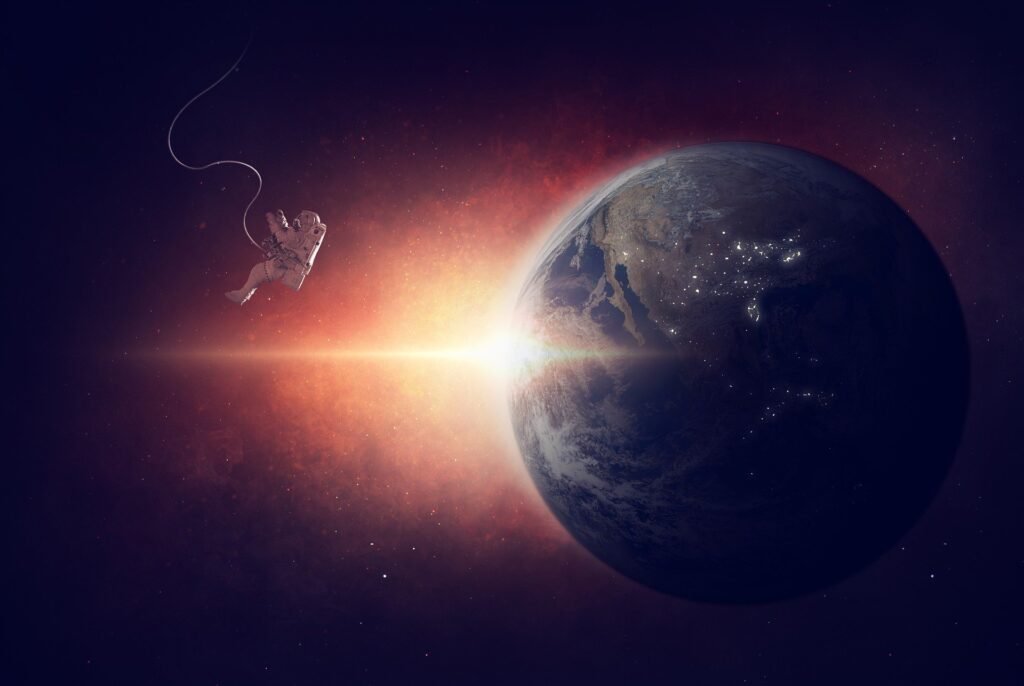
The version that spread in many Hindi explainers is more cinematic. Our universe is vast. Other universes may exist that look almost the same — same galaxies, same kind of sun, same kind of people. Sometimes, the story goes, an event from one of those worlds lands in ours. Hollywood already sold the picture: a machine, a jump, a slightly different Earth. Some tellings add a sharper claim — that people found a way to travel, change a detail, and leave, and that those edits are what we now call the Mandela Effect.
Mark the status of that idea clearly. Cosmology does discuss multiple-universe models in technical contexts. That is not the same as evidence that a visitor rewrote the Fruit of the Loom tag. Science-fiction travel between nearby Earths is a plot device. A hypothesis that “some scientists believe travelers already do this” is a rumor about belief, not a named experiment with a method you can repeat. The original popular write-up also said the quiet part: there is still no solid proof, researchers are still looking, and the whole frame remains a hypothesis. That caution belongs in the same paragraph as the thrill.
Other unproven add-ons travel with the same hashtag: we live in a simulation; CERN “broke” a timeline; a government hid the first funeral. None of those are required by the memory data, and none should be sold as the default meaning of the phrase. Broome and later forums enjoyed the parallel-reality reading. Enjoyment is not a citation. If a second Earth is real, it will not be proven by a misremembered hyphen. It would need independent physical evidence that does not depend on how sure a comment section feels.
Hold the poetic leftover from the old essay if you like it: maybe someone who looks like you is reading a cousin of this page somewhere else. That is a thought experiment. It is not a finding. Curiosity can stay. The footnote cannot pretend to be a footnote from a lab.
Why the Internet Makes Shared Memories Feel Stronger
A false memory in 1987 stayed in one living room. A false memory in 2016 meets a template, a screenshot, and a thousand replies that say “I thought I was the only one.” That chorus is doing real psychological work. Agreement feels like confirmation. The more specific the shared detail — the widow’s speech, the exact riot, the exact cornucopia — the more it resembles a leaked document instead of a common guess.
Search and recommendation systems reward the sharpest version. “The logo changed” outperforms “I may have mixed two pictures.” Forums collect lookalikes: old ads, fan art, knock-off packaging, a different country’s wrapper. A near-miss image gets treated as the missing original. People then remember the near-miss as childhood fact. The loop is tight: the post plants the alternate, the comments rehearse it, the next searcher arrives pre-loaded.
There is also identity in being the person who “noticed the glitch.” That is harmless as a party trick. It gets expensive when the same habit is aimed at elections, vaccines, or a neighbor’s reputation. The Mandela Effect is a training ground for a wider skill: noticing that confidence and consensus can rise together while accuracy stays flat. Hollywood travel stories make the training more fun and less careful. Fun is allowed. Care is still the adult part of the hobby.
None of this means every archive is honest or that institutions never err. It means a viral memory is a weak instrument for catching them. If you want to catch a real change, you need dated primary sources from before the argument started — packages, broadcast logs, first-edition pages — not the intensity of the feeling after the thread.
How to Check a “Changed Reality” Claim
Start with the boring questions. When was the object first made? Who owned the trademark? Is there a first edition, a network tape, a government gazette, a newspaper bound in a library? For Mandela, those answers are public. For a candy wrapper, the brand’s own historic art and trademark filings usually exist. If every independent archive agrees, the “old version” in your head is the thing that needs an explanation, not the wrapper.
Next, look for a cheaper mix-up. Two similar names (Jif and Skippy, Shazaam and Kazaam). Two similar gentlemen in hats (Pennybags and Mr. Peanut). A line that is easier to quote than the real one. A spelling that matches a larger family of names. If the cheaper mix-up exists, it wins until proven otherwise. Parallel travel is the expensive theory. You do not spend it on a hyphen.
Then separate three piles on paper: history (dated record), modern claim (what people on the internet now say they remember), and myth (travelers, timeline engineers, hidden first funerals). Most Mandela threads dump all three into one paragraph. That is why the topic feels bigger than the evidence. You can still enjoy the myth pile. Just do not let it annex the history pile.
If your own life contains a sharp “I saw that broadcast,” write the memory down before you read the comments: date, channel, who was in the room, what you ate. Then go looking. Often the scene belongs to a different death, a documentary, or a later recap. Sometimes you will not find a source. “I cannot find the clip” is not the same sentence as “the clip was erased across every archive on Earth.” Living with that gap is part of being honest about memory.
Advice
Use the Mandela Effect as a workout for judgment, not as a personality. When a detail feels too vivid to be wrong, treat vividness as a warning light, not a medal. Ask what similar story could have merged with this one. Ask who benefits if the mysterious version spreads. Ask whether you checked an original object or only a thread about the object.
Share the fun examples if you want — bears, monocles, genies. Pause before you promote the heavy claims: that unnamed scientists already run a travel desk between worlds, that a logo is classified evidence, that everyone who trusts an archive is asleep. Those leaps are how a memory glitch becomes a worldview.
If a friend is frightened that reality “shifted,” you do not need to win a physics debate. You can say the record of Mandela’s 2013 death is public, the brain is known to fill gaps, and mystery can wait for better proof. That is not rudeness. That is manners toward the dead man whose name got borrowed, and manners toward your friend’s nervous system.
💡 Before you post “the past changed,” open one primary source older than the argument. If you cannot find one, post the memory as a memory — not as a press release from another universe.
FAQ
Is the Mandela Effect real?
The experience is real: groups do share the same incorrect memory and feel sure about it. That is documented enough to study. A physically rewritten past is not established.
Did Nelson Mandela die in prison?
No. He was released in 1990, served as president, and died on 5 December 2013 in Johannesburg. The prison-funeral memory is the namesake mismatch, not the official biography.
Are famous logo and movie examples proof of parallel worlds?
No. They are the most repeated modern claims. They are useful for showing how memory and culture rhyme. They are not physics evidence.
Could I be having a Mandela Effect if a place feels familiar?
Familiarity is common. Déjà vu, old photos, films, and similar streets can create that click. The popular essay asked the same question and left it open. Open is honest. It is not a diagnosis.
Has science closed the case?
No. Memory research explains a lot of the pattern. It does not inventory every report on the internet. Lack of a final inventory is not secret confirmation of travelers.
Disclaimer
This article is an explainer for general reading. It is not a scientific paper, not a claim that parallel universes have been proven or disproven in a lab, and not medical or legal advice. Historical dates follow the public record. Internet examples are described as commonly shared claims. If a detail matters to you — a family fact, a legal memory, a health event — check primary documents instead of a viral list.