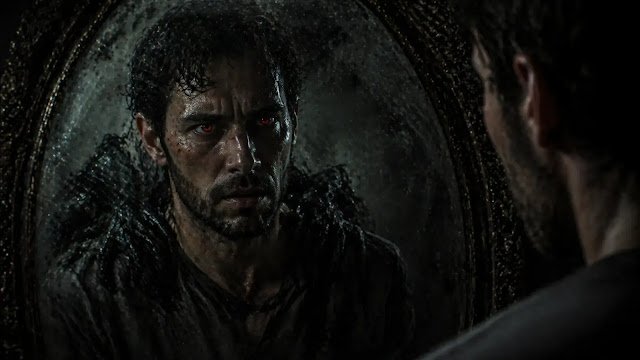
When the seminal horror film The Exorcist hit cinema screens in 1973, it introduced global audiences to a new level of cinematic terror. The movie centered on twelve-year-old Regan MacNeil, who becomes possessed by a sinister malevolent force that causes horrifying physical and psychological transformations. From her head turning 360 degrees to guttural voices challenging priests, the entity depicted in the film shocked the world. Hollywood identified this entity as the pazuzu demon, forever etching its name into modern pop culture as one of the most terrifying archetypes of evil.
For decades following the film’s release, casual searchers and folklore enthusiasts alike have searched online for terms like “pazuzu demon real story,” searching for the truth behind the terrifying screen icon. However, the Hollywood portrayal stands at a dramatic distance from genuine historical and archaeological reality. An examination of ancient Near Eastern artifacts, cuneiform inscriptions, and archaeological discoveries in modern-day Iraq reveals a fascinating historical reversal: the figure Hollywood transformed into a destructive monster was originally regarded by ancient civilizations as a fierce, protective guardian.
To understand the true nature of this ancient figure, one must look beyond twentieth-century cinema and explore the rich religious landscape of ancient Mesopotamia. By carefully separating documented history, folklore texts, film adaptations, and modern internet rumors, we can appreciate the true mythic scale of the pazuzu demon.
Documented History: Archaeological Roots in Ancient Mesopotamia
(Layer Label: Documented History & Archaeology)
The authentic historical origins of Pazuzu extend back nearly three thousand years to ancient Mesopotamia—a region often called the cradle of civilization, encompassing the ancient empires of Assyria and Babylonia in present-day Iraq. During the First Millennium BCE (specifically the Neo-Assyrian and Neo-Babylonian periods), the peoples of Mesopotamia inhabited a world where natural forces, celestial bodies, and unseen spirits were intimately connected to daily human survival.
In Mesopotamian cosmology, the conceptualization of spirits was fundamentally different from modern Western binary views of pure good versus absolute evil. Ancient Mesopotamians recognized various supernatural entities (often referred to in cuneiform texts as udug or utukku) as complex personifications of nature. A spirit could bring destruction through storms or illness, yet the same entity could be invoked for defense if properly respected through ritual offerings and protective imagery.
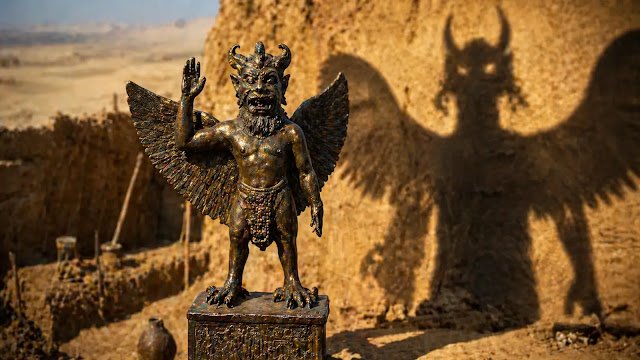
Archaeological digs throughout the 19th and 20th centuries unearthed numerous physical representations of Pazuzu. In ancient iconography, Pazuzu is depicted as a striking chimera combining features of terrifying predators:
- Head and Face: A ferocious canine or lion-like face with bulging eyes and grimacing jaws.
- Body and Wings: A scaly, humanoid body equipped with four large avian wings (resembling those of an eagle or vulture).
- Limbs and Tail: Talons for feet, predatory animal paws for hands, and a long scorpion tail.
- Symbolic Phallus: Frequently rendered with an erect phallus ending in a serpent’s head, representing raw vitality and destructive power.
In cuneiform inscriptions, Pazuzu is explicitly identified as the son of the god Hanbi and the king of the evil spirits of the air. Specifically, he personified the harsh, cold southwestern wind originating from the desert. This wind was feared because it brought destructive dust storms, severe droughts, and devastating swarms of locusts that wiped out crops and threatened populations with famine.
Folklore & Demonology: The Defense Against Lamashtu
(Layer Label: Folklore & Demonology Texts)
While Pazuzu’s connection to destructive winds gave him a terrifying reputation, ancient Mesopotamian folklore assigned him an even more vital role: that of an apotropaic protector—a force used to ward off greater evil. His chief mythological adversary was the terrifying female demon known as Lamashtu.
In Mesopotamian folklore, Lamashtu was regarded as one of the most dreaded entities in existence. Unlike other spirits who acted under the orders of major gods, Lamashtu was believed to commit acts of pure malice. She targeted pregnant mothers, expectant women, and newborn infants. According to ancient texts, she was held responsible for miscarriages, sudden infant death, fevers, and nighttime afflictions. Her terror haunted every household preparing for childbirth.
Because Lamashtu was so feared, ancient people sought a force powerful enough to intimidate her. This is where the pazuzu demon fulfilled his primary societal purpose. Mesopotamians believed that Pazuzu’s overwhelming fierceness and supreme authority among wind spirits made him the only figure capable of driving Lamashtu away.
Apotropaic Amulets and Household Protection
To shield families from Lamashtu, ancient artisans created hundreds of small Pazuzu amulets, bronze statuettes, and stone plaques. Archaeological records show these items were used in daily life across Mesopotamia:
- Maternity Protection: Pregnant women wore small Pazuzu head pendants around their necks to keep Lamashtu at bay throughout pregnancy and labor.
- Home Guardians: Statuettes of Pazuzu were hung on bedroom walls, placed near bedposts, or positioned above nurseries to protect resting infants.
- Plaque Rituals: Stone plaques depicted Pazuzu standing triumphantly over Lamashtu, forcing her back into the underworld or onto a riverboat carrying her away from the family.
In essence, ancient Mesopotamians practiced a philosophy of using “evil to fight evil.” Pazuzu’s terrifying appearance was not intended to frighten human beings; rather, it was designed as a terrifying counter-shield to terrify predatory spirits who sought to harm vulnerable human lives.
Film & Pop Culture Adaptation: The Exorcist (1973)
(Layer Label: Film / Pop Culture Adaptation)
The dramatic shift in Pazuzu’s global reputation occurred in the mid-20th century through popular literature and cinema. Author William Peter Blatty researched ancient Near Eastern mythology while writing his 1971 novel The Exorcist, which director William Friedkin brought to the silver screen in 1973.
The film opens with an iconic prologue set at an archaeological excavation in Hatra, Iraq. Catholic priest and archaeologist Father Lankester Merrin unearths a small stone head of Pazuzu. Later, he stands face-to-face with a large statue of the entity against a dramatic desert backdrop, symbolizing an impending spiritual conflict between ancient darkness and faith.
However, the film took substantial creative liberties with historical demonology:
- Re-imagining as Absolute Evil: The filmmakers stripped Pazuzu of his historical role as a protector against Lamashtu, reframing him exclusively through a Christianized theological framework as a malevolent devil obsessed with destroying innocence.
- Focus on Possession: In genuine Mesopotamian historical records, Pazuzu was never described as an entity that invaded and possessed young children for psychological torture; his mythological role was environmental and apotropaic.
- Enduring Pop Culture Legacy: The massive box-office success of The Exorcist permanently altered public perception. Subsequent films, television series, video games, and comic books adopted this fictionalized version, converting an ancient Mesopotamian guardian deity into a universal archetype of horror.
Modern Internet Rumors & Skeptical Analysis
(Layer Label: Modern Internet Claims & Critical Skepticism)
With the rise of internet forums, urban legend websites, and viral social media posts, modern rumors often confuse cinematic fiction with historical fact. Viral posts sometimes claim that Pazuzu was an ancient “Satanic master” or that possessing a replica amulet invites dangerous curses into a home. These claims represent modern internet sensationalism without any basis in historical archaeology or cuneiform studies.
From a scientific, historical, and psychological perspective, the ancient belief in Pazuzu can be understood through the challenges of his time:
- Explanation of Disease and Natural Disasters: Lacking modern medical science and meteorology, ancient societies attributed infant mortality, sudden viral fevers, and destructive windstorms to supernatural forces.
- Psychological Reassurance: Wearing a Pazuzu amulet provided expectant mothers with a sense of psychological comfort, agency, and spiritual defense in a dangerous, unpredictable world.
- Cultural Translation Gaps: When modern Western culture encountered ancient Near Eastern artifacts, it often misinterpreted fierce protective deities as purely evil demons due to stark differences in religious symbolism.
FACT BOX: Myth vs. History vs. Film
- Ancient Identity: King of the wind spirits; associated with destructive southwestern winds and drought.
- Archaeological Function: Used as a protective guardian deity against Lamashtu, guarding pregnant women and newborn infants.
- Physical Artifacts: Hundreds of authentic bronze heads and stone amulets exist in major museums worldwide (such as the Louvre and the British Museum).
- Hollywood Portrayal: Re-imagined in The Exorcist as a purely evil, child-possessing demon.
- Modern Consensus: Historians and archaeologists confirm Pazuzu was an apotropaic shield against greater harm, not an archetype of pure malice.
Critical Takeaways: Media Literacy and Historical Context
The historical journey of the pazuzu demon offers a compelling lesson in how pop culture can completely reshape ancient historical figures. A terrifying appearance in ancient art did not necessarily signify an entity of pure destruction. For the citizens of ancient Assyria and Babylonia, Pazuzu’s fearsome visage was their ultimate shield against ambient fears, disease, and misfortune.
When analyzing historical myths or watching cinema, maintaining critical skepticism is essential. Sensational film stories often distort complex ancient traditions for dramatic effect. By looking past surface terror and examining genuine archaeological facts, we gain a much deeper appreciation for human history, mythology, and the evolving nature of global storytelling.
FAQ
Frequently Asked Questions
1. Who was the Pazuzu demon in ancient Mesopotamian mythology?
In ancient Mesopotamian mythology (specifically Assyrian and Babylonian culture), Pazuzu was the king of the evil wind spirits who controlled the harsh southwestern desert winds. Despite his terrifying appearance, he was primarily invoked as a protective guardian against the malevolent demoness Lamashtu.
2. Was Pazuzu considered purely evil in real history?
No. Ancient Mesopotamians did not view spirits in terms of absolute binary good versus evil. While Pazuzu controlled destructive winds, he was widely used as an apotropaic figure—an entity whose terrifying power was summoned to defend households, pregnant mothers, and infants against harm.
3. Why did the movie The Exorcist use Pazuzu?
Author William Peter Blatty researched ancient Near Eastern artifacts while crafting his novel. Pazuzu’s striking physical appearance (lion head, wings, talons, scorpion tail) provided an ideal visual archetype for a terrifying horror cinematic villain. However, the film’s portrayal of Pazuzu as an evil spirit possessing a child was a fictional pop culture creation.
4. What is the difference between Pazuzu and Lamashtu?
In Mesopotamian folklore, Lamashtu was a predatory demoness blamed for harming pregnant women, infants, and causing miscarriages. Pazuzu was viewed as her powerful mythic rival whose ferocious image was used on amulets to intimidate and drive Lamashtu away from families.
5. Are Pazuzu amulets authentic archaeological artifacts?
Yes. Archaeologists have excavated numerous genuine bronze statuettes, head pendants, and stone plaques depicting Pazuzu across modern-day Iraq and surrounding regions. These artifacts are displayed in prestigious institutions like the Louvre Museum in Paris and the British Museum in London.
Disclaimer: This article is an objective historical, mythological, and pop culture analysis. It does not provide medical, spiritual, or occult advice, nor does it encourage ritual practices or contain hate speech. Readers are encouraged to evaluate historical and archaeological sources independently.