What is Buddhism?
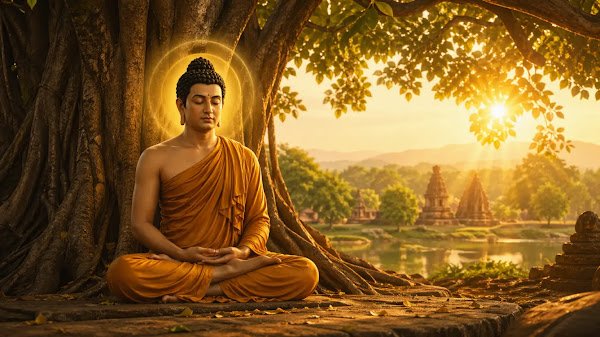
Buddhism originated in India around 2,500 years ago, founded by Siddhartha Gautama, the Buddha. It’s less about worshipping deities and more about self-awareness, meditation, and ethical living. The core idea is that our minds are the source of both suffering and happiness, and by purifying the mind and controlling desires, one can achieve liberation from suffering.
History of Gautam Buddha
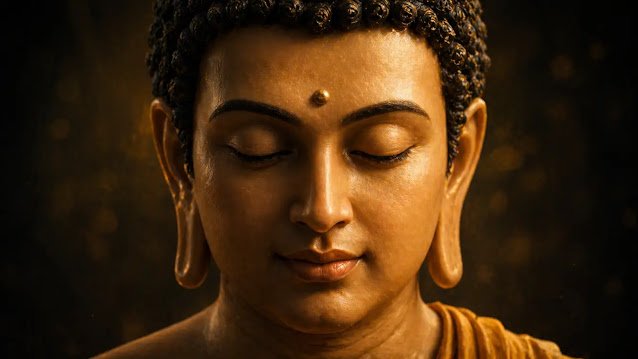
Born Siddhartha Gautama in Lumbini (present-day Nepal) around 563 BCE, he was a prince destined for either great power or spiritual enlightenment. His father shielded him from the harsh realities of life, but a glimpse of an old man, a sick man, a corpse, and a renunciate monk profoundly impacted him. This led him to renounce his princely life at 29 to seek the truth about suffering.
The Great Renunciation and Search for Truth
Leaving his wife and son, Siddhartha embarked on a spiritual quest, practicing severe asceticism. However, he realised that extreme indulgence and extreme austerity were both unhelpful. He adopted the ‘Middle Path’.
Enlightenment at Bodh Gaya
After years of meditation, under a Bodhi tree in Bodh Gaya, Bihar, Siddhartha attained full enlightenment at age 35. He became known as the Buddha, meaning ‘the enlightened one’.
The First Sermon and Passing
The Buddha delivered his first sermon at Sarnath, setting the Wheel of Dharma in motion. For 45 years, he travelled and taught across India. At 80, he attained Mahaparinirvana, complete liberation from suffering.
Core Teachings of Buddhism
The Buddha’s teachings focus on understanding and overcoming suffering. Two cornerstones are:
1. The Four Noble Truths
- Dukkha (Suffering): Life inherently involves suffering – birth, old age, sickness, death, separation from loved ones, and not getting what one wants.
- Samudaya (Origin of Suffering): The cause of suffering is craving or attachment (trishna) – our insatiable desires and aversions.
- Nirodha (Cessation of Suffering): Suffering can cease by eliminating craving and attachment, leading to Nirvana.
- Magga (Path to the Cessation of Suffering): The way to end suffering is the Noble Eightfold Path.
2. The Noble Eightfold Path
This ‘Middle Path’ guides individuals towards wisdom, ethical conduct, and mental discipline:
- Right Understanding: Comprehending the Four Noble Truths.
- Right Thought: Cultivating wholesome thoughts free from ill will and cruelty.
- Right Speech: Speaking truthfully, kindly, and constructively.
- Right Action: Engaging in ethical behaviour, avoiding harm to others.
- Right Livelihood: Earning a living ethically, without causing harm.
- Right Effort: Striving to prevent unwholesome states and cultivate wholesome ones.
- Right Mindfulness: Developing awareness of one’s body, feelings, mind, and mental objects.
- Right Concentration: Cultivating deep focus and meditative absorption.
Key Buddhist Concepts
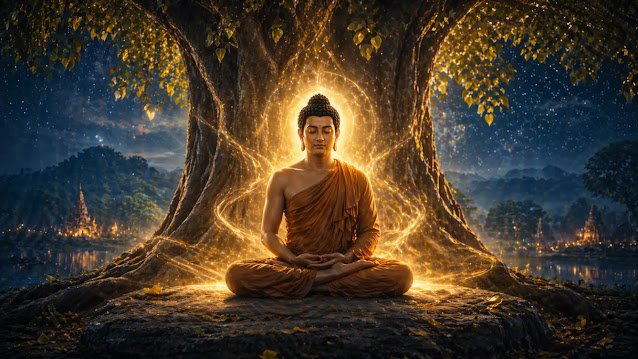
- Nirvana: The ultimate goal, the extinguishing of the fires of greed, hatred, and delusion, leading to profound peace.
- The Three Jewels: Taking refuge in the Buddha (the enlightened one), the Dhamma (his teachings), and the Sangha (the community of followers).
- Law of Karma: Actions have consequences; good deeds lead to positive outcomes, and negative deeds to negative ones, influencing rebirth.
- Anatman (No-Self) and Anicca (Impermanence): The understanding that there is no permanent, unchanging self, and that all phenomena are transient and constantly changing.
Relevance of Buddhism Today
In our fast-paced, stressful world, Buddhist principles offer valuable guidance:
- Mental Peace: Meditation and mindfulness practices help reduce stress and enhance mental clarity.
- Ethical Living: The Eightfold Path encourages a moral and purposeful life.
- Compassion and Coexistence: Principles of non-violence and compassion foster social harmony and environmental awareness.
- Self-Discovery: Buddhism prompts introspection, helping individuals understand their desires and work towards self-improvement.
Conclusion

Understanding Buddhism is more than just learning about a religion; it’s embracing a philosophy of life that guides us towards overcoming suffering and finding true happiness. Gautam Buddha’s teachings empower us to control our minds, understand our desires, and live with compassion and wisdom, offering a path to peace and balance in a complex world.