
You check your weight at night and see a smaller number the next morning. It is tempting to assume that fat disappeared while you slept. Then a video offers a bedtime drink that will supposedly do the work for you. The lower reading may be real. The explanation attached to it may be much less reliable.
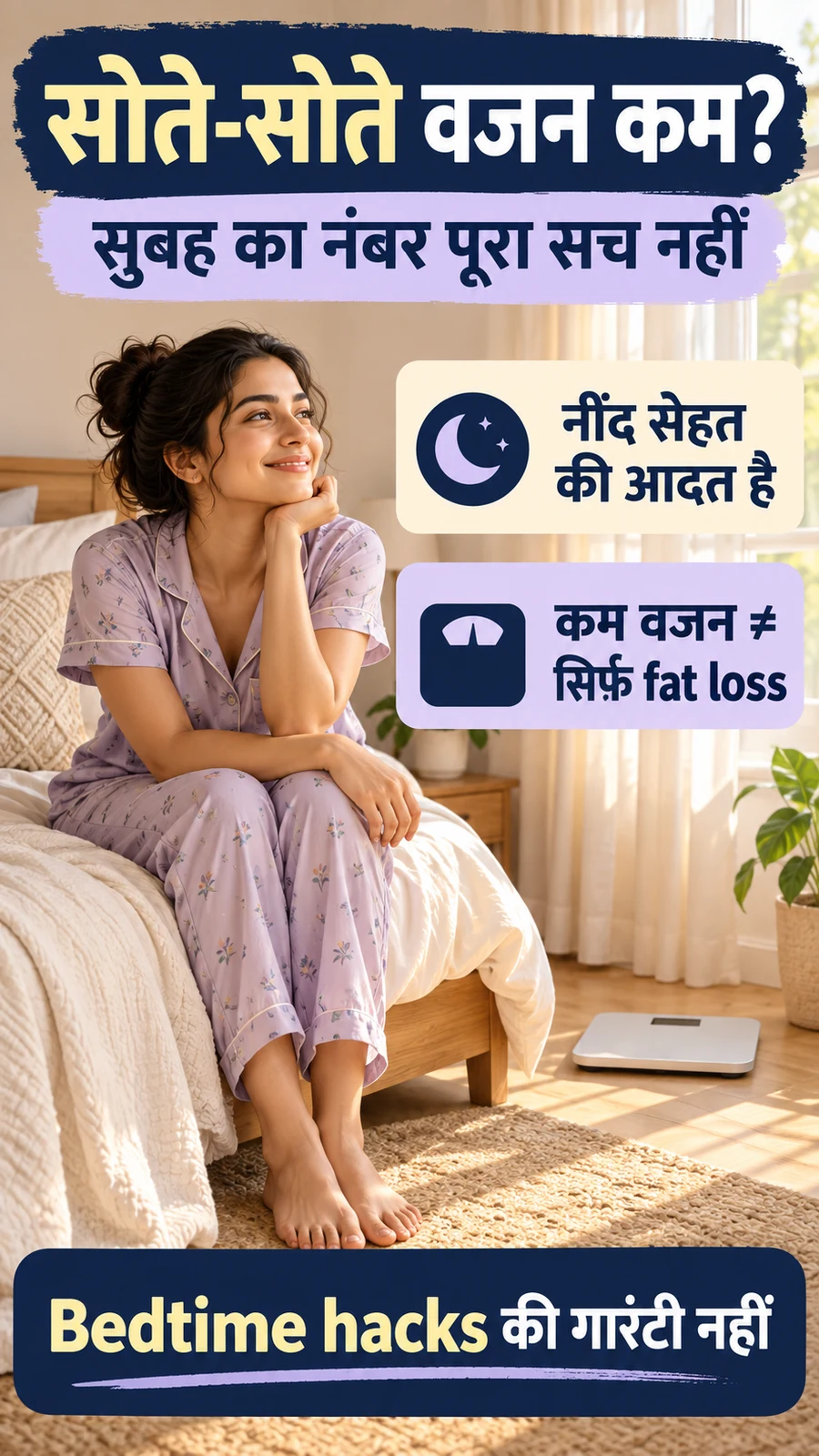
Good sleep can support weight management, but it is not an automatic fat-loss treatment. Your body keeps working overnight. That does not mean a bedtime trick cancels the effects of food, drinks and movement during the day. A change on the scale after one night needs to be separated from lasting changes in body fat.
What does a lower morning weight mean?
A bathroom scale measures total weight, not just body fat. Water and food moving through digestion contribute too. Eating, drinking, using the bathroom and changes in retained water can affect readings. Cleveland Clinic describes water retention and digestion as contributors to ordinary weight fluctuations. [3]
Imagine weighing yourself after dinner and drinks at night, then after using the bathroom and before breakfast in the morning. The conditions differ. Calling the entire difference overnight fat loss is an unsupported conclusion. Likewise, a higher reading one night does not mean that all your efforts have stopped working. The timing matters when interpreting the number.
Where better sleep can help
After too little sleep, everyday decisions may feel harder. Meals can become rushed and movement less appealing. NIH describes links between insufficient sleep and changes in hunger, food intake and physical activity. Sleep can therefore have a place in making the rest of a health routine more manageable. [1]
NIDDK also discusses the relationship between insufficient sleep and weight gain. That relationship does not promise a fixed amount of weight loss for an individual. Food, stress, medicines and health still matter. Changing a pillow or moving bedtime earlier cannot guarantee the same result for every person. Better sleep is a useful habit, not a universal transformation formula. [2]
## How much sleep is enough? NIH generally recommends around seven to nine hours for adults, with needs varying by age and person. That is not an instruction to sleep for as many hours as possible to lose weight. There is no honest equation saying ten hours of sleep produces ten kilos of weight loss. [1]
Time in bed is also not the whole picture. Frequent waking or pronounced daytime sleepiness can matter. Shift work, caregiving and young children can make a regular schedule difficult. Treating those constraints as a lack of willpower is unhelpful. Begin with your actual situation rather than trying to copy somebody else's ideal evening.
Four sleeping hacks to question
“This drink burns belly fat while you sleep.” An ingredient name does not explain the whole day's energy balance. If a drink replaced a sugary snack, something about eating changed. Attributing the outcome entirely to drinking it at bedtime hides that adjustment. Ask what else changed before accepting the story.
“This sleeping position burns more fat.” A position that helps you rest and a treatment for weight loss are different things. Do not spend the night uncomfortable because a video recommends an angle for fat burning. If position is part of a genuine sleep problem, get appropriate advice for that problem.
“The morning reading proves it worked.” Check the timing and weighing conditions first. One or two photographs do not establish a cause. A longer pattern and information about other habits are needed before treating a personal story as evidence for a particular hack.
“Sleeping pills mean more sleep and more weight loss.” Do not use a sleep medicine as a fat-loss shortcut. Do not start, increase or stop medicines or supplements on your own for that purpose. A weight-loss claim is not a sound reason to change a prescription.
Advice: make evenings easier to repeat
Choose one manageable change before trying to build a perfect bedroom routine. You might set a time to finish work on a screen, keep waking time fairly consistent or move one late chore earlier. NHLBI advice includes a regular schedule and a quieter period before bedtime. [5]
Keep the room reasonably quiet, dark and comfortable where possible. Notice late caffeine if it affects your sleep. A very large late meal or a day of restriction followed by disorganised eating may also make evenings difficult. Adjust what fits your circumstances; you do not need to begin by buying a new gadget. [5]
## When habit tips are not enough Loud snoring, pauses in breathing during sleep, gasping and substantial daytime sleepiness are reasons to talk with a clinician. NHLBI lists these among possible symptoms of sleep apnea. Diagnosis cannot be made from body weight or a single recording of snoring. [6]
Persistent sleep trouble deserves appropriate assessment rather than a bedtime weight-loss product. Tell the clinician about your schedule, symptoms and medicines. If you already receive treatment, do not change it yourself. A medical problem may be affecting sleep; the explanation is not always a habit that you should simply try harder to control.
What to monitor instead of overnight promises
A short sleep record can include bedtime, waking time, interruptions and how you feel during the day. Look for a pattern rather than grading every night. If you monitor weight, use broadly similar conditions and look over time. Repeatedly stepping on the scale throughout the day rarely makes the situation easier to understand.
CDC includes food, activity, sleep and stress in weight-management advice. Look at those habits together instead of treating one night's number as a result report. If concerns persist, review the situation with a qualified professional. Sleep is a need, not a nightly competition to remove the most body fat. [4]
FAQ
Does the body use energy while sleeping?
Your body continues its normal work during sleep. That fact does not establish that a particular bedtime hack causes dependable fat loss or guarantees a specific overnight result.
Is a lower morning weight proof of fat loss?
Not necessarily. Water, digestion and weighing conditions can change the reading. One morning's difference is not a complete measure of changes in body fat.
Will sleeping longer automatically make me lose weight?
It may help some habits, but there is no automatic result. Food, activity, health and medicines remain relevant, and sleep needs differ between people.
Can a sleeping position reduce belly fat?
There is no dependable basis for treating a sleeping position as a belly-fat treatment. Choose a comfortable position and get advice for a genuine sleep problem.
Do I need to skip dinner?
There is no rule for everyone to skip dinner. Consider the evening routine and food across the whole day. Staying hungry should not become a sleeping weight-loss plan.
Sources
- [1] NIH: Healthy sleep
- [2] NIDDK: Factors affecting weight and health
- [3] Cleveland Clinic: Weight fluctuations
- [4] CDC: Steps for losing weight
- [5] NHLBI: Healthy sleep habits
- [6] NHLBI: Sleep apnea symptoms