“If I remove two rotis, I am hungry all afternoon. Can I lose weight without eating less?” The worry is understandable. Weight loss advice often sounds like an instruction to leave every meal half satisfied. A useful plan does not have to begin with constant hunger. But the phrase “without eating less” needs a clearer meaning.
If you mean the overall volume of food or how satisfying a meal feels, changing its composition may help. If you mean exactly the same foods, oil, drinks and calories, a new label will not create dependable weight loss. This article looks at that difference through ordinary meals, rather than promising that unlimited eating produces a smaller body.
Food volume and food energy are different
Calories measure the energy in food and drinks. Two bowls of a similar size do not necessarily contain the same amount of energy. A preparation with generous oil can differ from one cooked with less. A full-looking plate alone cannot tell you everything about how that meal fits into your needs. [2]
Replacing part of a calorie-dense food with vegetables can sometimes preserve meal volume while reducing energy. CDC describes substituting fruit and vegetables for calorie-dense foods. The important word is replacing. Eating the entire original meal and then adding a salad and yoghurt on top is a different change. It does not automatically reduce what you consume. [3]
Begin with your usual meal
You do not need a special shopping list to recreate a perfect diet photo. Look at the meal your household already makes. How much is rice or roti? Where is the dal or another protein food? How much vegetable is there? What oil, ghee or extras go into it? Start with what is available and familiar.
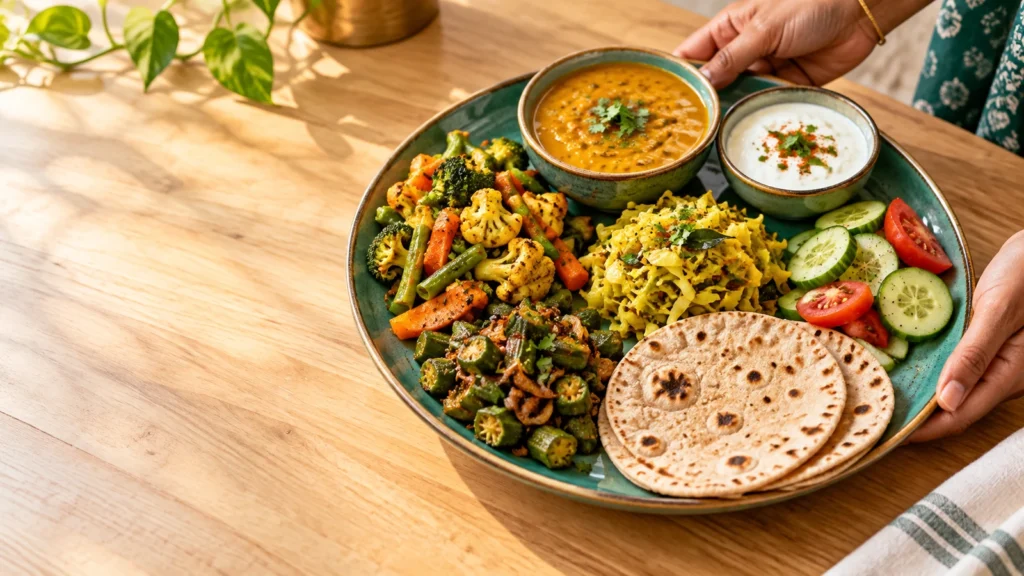
Change one part instead of replacing everything. If grains occupy most of the plate and vegetables are scarce, you might replace some grain with more vegetables while keeping an appropriate protein food. The total food volume need not shrink, although the amount of an individual food changes. That is a real adjustment, not a claim that nothing changed.
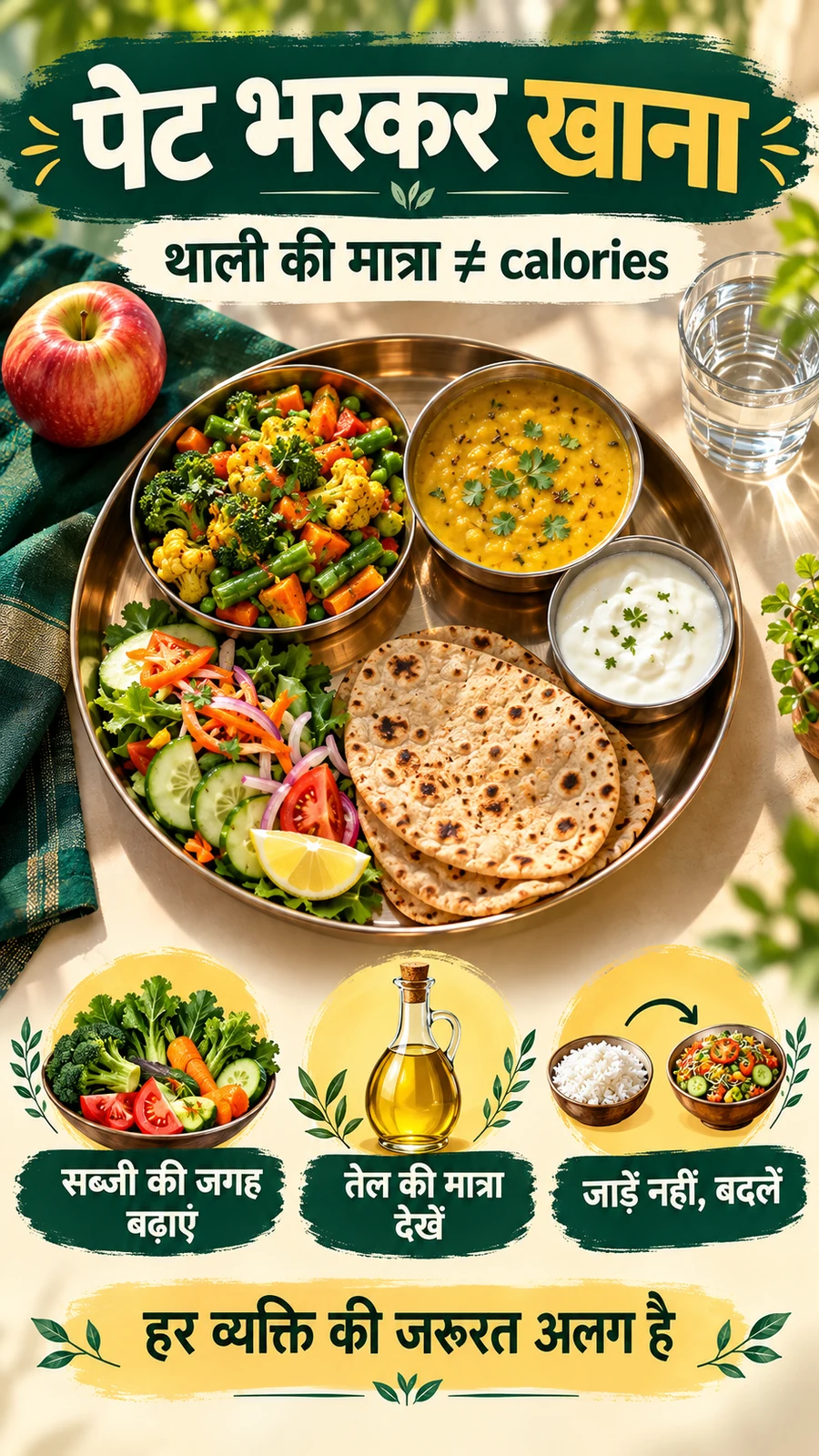
NHS advice includes vegetables, protein and awareness of portions. There is no universal number of rotis or single calorie target that suits every reader. Your activity, age, hunger, health and food across the rest of the day matter too. The examples here are meal ideas, not a personal prescription. [1]
Five changes to consider in an Indian kitchen
1. Notice how much oil goes into cooking
Pouring directly from a bottle makes it easy to overlook the amount used. A spoon makes the amount more visible. You may be able to change the preparation without reducing the volume of vegetables on the plate. Use spices, tomato or lemon for flavour according to your preferences and the recipe.
Oil and ghee do not need to become forbidden ingredients. However, a healthier oil is not calorie-free. If a revised meal leaves you hungry, look at the balance of the whole meal rather than making zero fat the goal. Nutrition involves more than removing one ingredient. [1]
2. Look at what sits beside the rice
A large bowl of rice with very little dal might become a different balance: somewhat less rice, more vegetables and an appropriate amount of dal. The meal can still look full. The difference is that the proportions changed. It is not a miracle where exactly the same meal suddenly provides less energy.
### 3. Check the breakfast recipe, not just its name Poha, upma and porridge are not automatically weight-loss breakfasts. Vegetable content, oil and additions can make the preparation different. Include a suitable protein food if it fits your needs and preferences. Large additions of sev, butter or sugar also remain part of the meal, even when the base sounds nutritious.
### 4. Decide whether a snack is an addition or a replacement Eating fruit after your usual namkeen is different from replacing some namkeen with fruit. Serve the snack in a bowl or on a plate so its amount is visible. Fruit, plain yoghurt or another appropriate option may fit. Choose something you enjoy rather than a replacement you resent every afternoon.
### 5. Remember the drinks outside the plate You may keep meal volume similar while changing your overall intake through drinks. Choosing water instead of a sugary drink is one possible adjustment. Water is not a special fat-melting treatment. Sweet tea, packaged drinks and smoothies still belong in the picture of what you consume across the day.
Juice is also different from whole fruit. NHS advice favours whole fruit and paying attention to juice amounts. Look for a drink you can enjoy regularly without repeatedly adding more sugar than you intended. The aim is an understandable change, not a secret morning recipe. [1]
Read two things on a food label
First check whether energy is listed per serving or per 100 grams. Then check how many servings the packet contains and how much you actually eat. A small number for a small suggested serving is not necessarily the number for the whole packet. Compare similar amounts when comparing products. [4]
## If you stay hungry, reconsider the plan A larger-looking plate does not keep every person satisfied for the same length of time. Persistent hunger, weakness or growing anxiety about food should not be treated as proof that a diet is working well. Review meal composition and your needs. If you have a health condition, get suitable professional advice before adjusting a prescribed eating plan.
If weighing every ingredient does not suit you, begin with repeatable meals and one or two manageable changes. Review the pattern over time. If weight remains a concern, discuss the next steps with a clinician or qualified dietitian rather than making the meal more restrictive without guidance.
FAQ
Can I eat satisfying meals and still lose weight?
Some people find balanced meals with lower energy density helpful. Feeling full and consuming the same calories are different questions. The outcome depends on your overall habits, not a single plate.
Can I add unlimited salad and keep everything else unchanged?
Adding salad on top of the original meal is not the same strategy as replacing part of it. Dressings, oil and the rest of the meal also matter. Advice can differ with individual needs.
Must I reduce the number of rotis?
Not everyone needs to. If they take up a very large share of your meal, changing the proportions may be useful. The amount depends on your needs and overall eating pattern.
Do I have to count every calorie?
No. Understanding labels, noticing cooking oil and choosing repeatable meals are possible starting points. Tracking can be discussed if it would help with a personal plan.
How many days until I lose weight?
No fixed number of days or kilos can be promised. Food is one part of the picture. Health, medicines, movement and a routine you can maintain also influence the result.
Sources
- [1] NHS: Healthy eating when trying to lose weight
- [2] NHS: Understanding calories
- [3] CDC: Vegetables and fruits
- [4] NHS: Food labels