
A wedding, trip or important event is close, and a headline promises ten kilos of weight loss in seven days. It sounds tempting to follow one difficult week and return to normal afterwards. But choosing a target from a viral number is not a sensible way to decide what your body needs.
Here is the clear answer: losing ten kilos of body fat in a week is not a realistic, safe goal for the general public. A dramatic fall on the scale does not prove that all the change was fat. Water, other body tissues or illness may be involved. Selling a recipe or challenge while ignoring that difference is misleading.
Why the number is not the full story
Body weight includes water and other tissues as well as fat. Food moving through digestion, hormones and retained water can change readings. A before-and-after screenshot cannot show how much each component changed. Cleveland Clinic explains several contributors to ordinary fluctuations, including water retention and digestion. [2]
Comparisons become weaker when different scales, times or clothing are involved. You do not need to dismiss every personal story as false. You do need to recognise that the story cannot establish a personal guarantee of ten kilos of actual fat loss in seven days.
If weight is dropping quickly without an intentional change, get medical advice about the cause. Do not automatically treat it as a welcome bonus from a new drink. An unexplained large change deserves attention, particularly when other symptoms are present. [6]
A sensible pace is not an identical weekly result
CDC associates gradual, steady weight loss with a better chance of keeping it off. Its example is around one to two pounds a week, roughly half to one kilo. That is general guidance, not a compulsory pace or a personal prescription for every reader. [1]
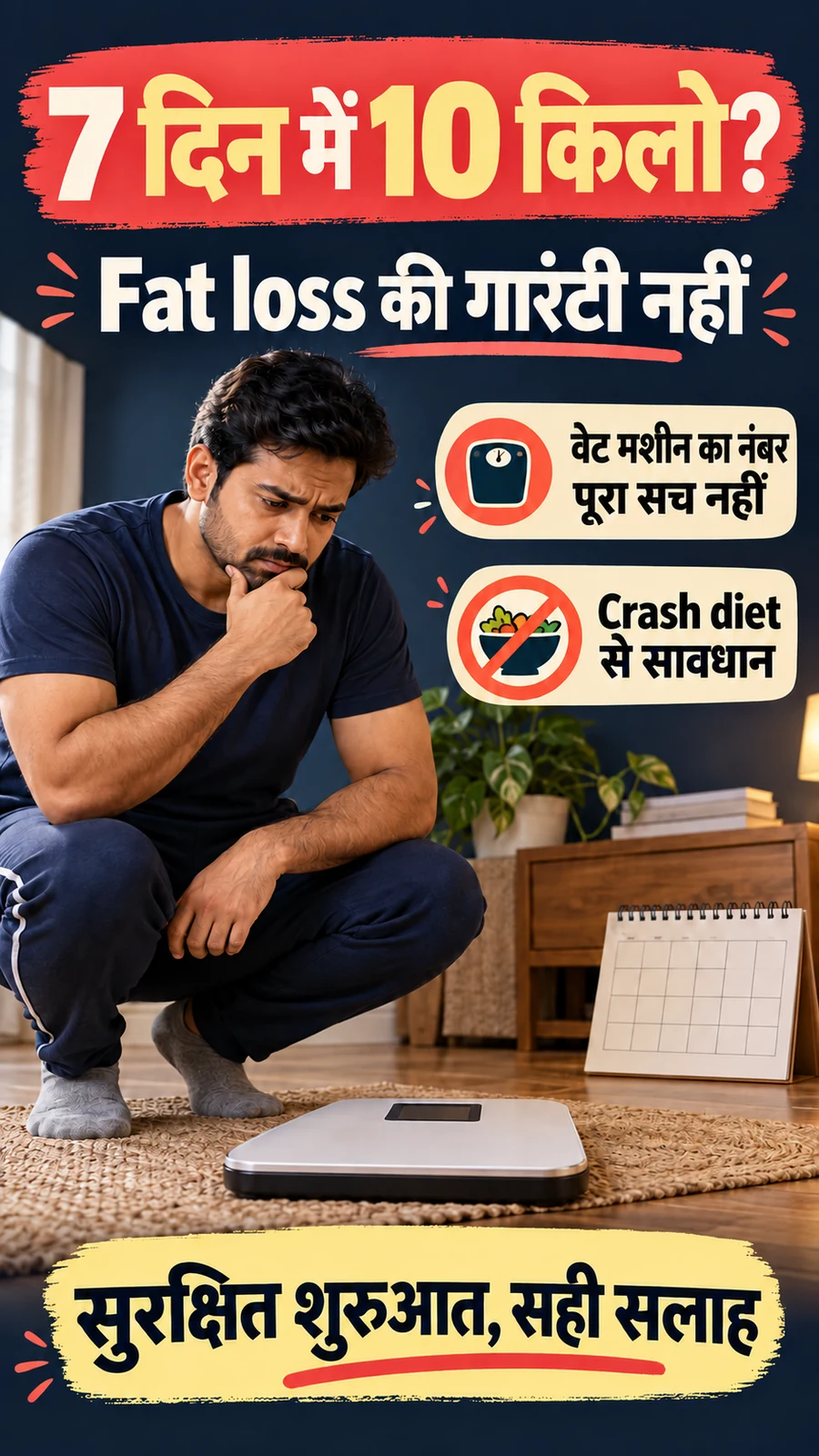
Starting weight, health, medicines and the approach used all differ. A smaller change one week is not proof of failure. A larger change another week is not a reason to intensify restriction to reproduce it. Reviewing the routine and how you feel can be more useful than chasing a fixed weekly number.
Taking a gradual approach does not mean delaying care for a medical problem. If weight is affecting your health, discuss a treatment plan with a clinician. A social media challenge should not be confused with an individually assessed and supervised treatment programme.
Where crash diets can cause problems
Severe restriction can reduce muscle as well as fat and leave nutritional needs unmet. Persistent fatigue or weakness should not simply be rebranded as detox working. Cleveland Clinic discusses muscle loss and inadequate nutrition among the risks of rapid weight-loss approaches. [3]
Rapid weight loss can also increase the risk of gallstones. NIDDK specifically warns about crash diets and fast weight loss. This does not mean everyone following a weight-management plan will develop gallstones. It means the choice of approach should account for risks rather than focusing only on a smaller number. [4]
This article is not recommending near-starvation, reducing water intake or using medicines outside a prescription to change the scale. A useful goal includes keeping the body nourished and functioning. Winning a short challenge while harming your health is not a worthwhile outcome.
Supervised treatment is different from a viral challenge
A specialist may recommend a structured low-calorie programme or another treatment in selected circumstances. Eligibility, nutritional requirements, medicine management and follow-up are considered. NHS guidance explains that very low-calorie diets are not suitable or safe for everyone. They are not a general instruction to copy a restrictive internet menu. [5]
Do not take somebody else's hospital programme and apply its quantities to yourself. Their assessment and monitoring may be very different from your needs. Saying that a doctor prescribed something to another person does not establish that an anonymous diet chart is suitable for you.
## Questions to ask before accepting the claim What changed: total weight or measured body fat? Were the readings taken under similar conditions? Did food, medicines or treatment change? How long did the result last? Without those details, a dramatic photograph provides much less information than its caption suggests.
Look for promises that everybody will get the same result. Are ingredients, risks and limits explained? Does the message focus on a countdown and a purchase while overlooking health conditions? Being discouraged from asking reasonable questions is not a reason to trust a health-related sales pitch.
Words such as natural, ancient and doctor-approved do not establish a seven-day guarantee by themselves. You deserve an explanation of the evidence. An attractive headline is not a reason to make your health part of an uncontrolled experiment.
Advice: use seven days as a starting point
For the first two days, notice ordinary meals, drinks and movement. On the third, choose one adjustment you could still maintain next month. That might be replacing a habitual sugary drink with an unsweetened option or finding a manageable walking slot. The choice should suit your health, preferences and circumstances.
Repeat the routine on days four and five instead of introducing new rules and penalties each evening. On day six, review obstacles involving shopping, work or household responsibilities. On day seven, adjust the routine. This is a week for learning what fits, not a deadline for proving a fat-loss headline.
If you already have a balanced routine and remain concerned, adding more restriction is not automatically the answer. A qualified dietitian or clinician can help review the situation. The point is to find an approach that works for you over time, rather than turning the first week into a contest.
FAQ
Is losing 10 kg in seven days absolutely impossible?
Total weight can change substantially in unusual situations. That does not make the change safe or prove that ten kilos of fat were lost. It is not a dependable general weight-loss goal.
What if I lose more in the first week?
Do not increase restriction simply to reproduce that pace. Review the conditions and routine. A very large, persistent or symptomatic change needs appropriate medical advice.
Is a liquids-only plan suitable?
An unsupervised crash plan is not recommended here. If a medical programme involves specialised nutrition, get its instructions and monitoring from the professional responsible for your care.
Is slower progress a wasted effort?
No. Maintaining a useful routine and improving health matter too. A viral deadline should not be used to dismiss an approach you can continue.
Can before-and-after photos be trusted?
A photograph alone does not establish the cause, safety or lasting result. Information about timing, treatment and other habits matters. Do not interpret it as a personal guarantee.
Sources
- [1] CDC: Steps for losing weight
- [2] Cleveland Clinic: Weight fluctuations
- [3] Cleveland Clinic: Risks of losing weight too fast
- [4] NIDDK: Dieting and gallstones
- [5] NHS: Overweight and obesity in adults
- [6] NHS: Unintentional weight loss