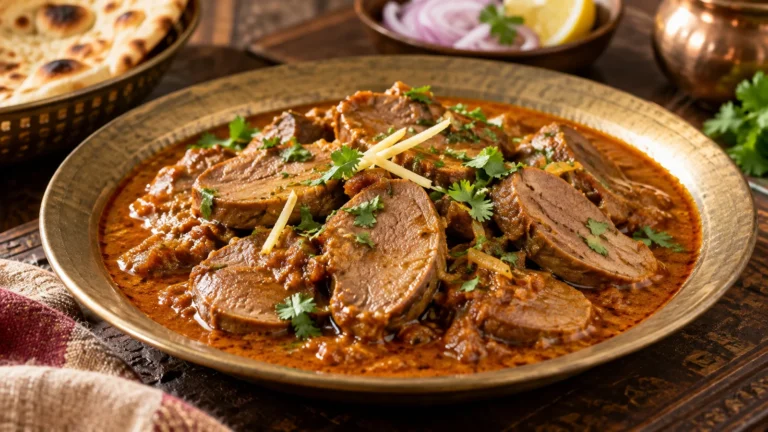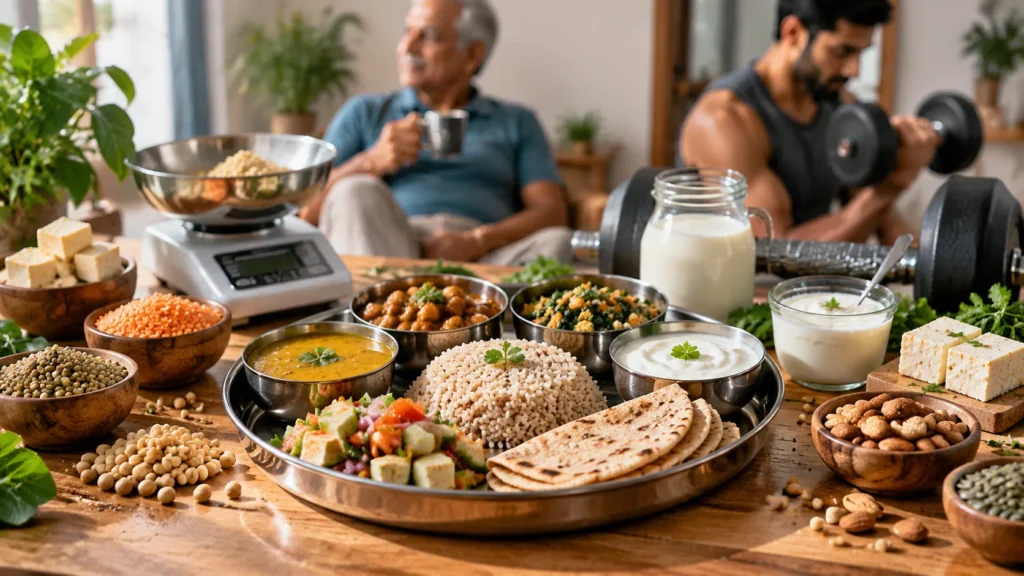
There is dal on the plate every day, sometimes paneer, sometimes a scoop of protein powder. Yet the question remains — how much is enough? Product labels mention 54 grams, gym trainers talk per pound of body weight, while the elderly at home get watery dal. These three voices do not align. Daily protein requirement science does not rely on a single magic number. It originated in old nitrogen balance laboratories, evolved into a safe population-wide standard, and then split into distinct tracks based on age, illness, and physical training.
This article relies on public frameworks such as the ICMR–NIN Nutrient Requirements, FAO/WHO/UNU protein consultations, and sports nutrition position stands. No fabricated percentages from random surveys, no “new viral research proves” drama. Where there is uncertainty, it will be stated clearly. This text does not replace a doctor or a dietitian — kidney disease, pregnancy, and eating disorders are entirely separate clinical cases.
Where Does Grams Per Kilogram Come From, and What Are Its Limitations?
The body does not store protein like stacked bricks. Amino acids break down, and some nitrogen is excreted through urine and stool. For decades, scientists measured “nitrogen balance” — how much protein to supply so that lost nitrogen is replenished. The FAO/WHO/UNU 2007 consultation linked average requirement for healthy adults to body weight. The ICMR–NIN Expert Group 2020 applied the same methodology to Indian adults.
Remember two layers. Estimated Average Requirement (EAR) is the average person’s requirement — 0.66 grams per kg per day for a healthy adult in ICMR–NIN 2020. Recommended Dietary Allowance (RDA) is the safe upper line designed to cover almost the entire healthy population — 0.83 grams per kg per day, assuming high-quality protein as the baseline. Older Indian tables recommended 1 gram per kg; in 2020, after clarifying protein quality baselines, the RDA was set at 0.83 g/kg/day. The document itself includes a footnote: on a cereal-based diet with lower quality protein, the requirement can remain around 1 gram per kg.
RDA is not the “minimum needed to survive,” but rather “adequate for almost all healthy people.” Staying below EAR poses a risk even for an average person. Going slightly above RDA is not automatically toxic. Going far above is not magic either. The upper safe boundary for protein coming from whole food is quite flexible in normal healthy kidneys; stacks of supplements and diseased kidneys are a different matter entirely.
The biggest limitation of grams per kilogram is defining which “kilogram” to count. In obesity, multiplying by total weight inflates requirements, even though muscle mass may be low. Some clinical frameworks use ideal or adjusted body weight. Pregnancy, lactation, burns, infections — the healthy adult from the balance lab does not apply here. ICMR tables also provide grams per day based on reference age-sex-bodyweight; those reference men and women may not match your exact body composition.
| Framework (Public) | What It Says | Applies To |
|---|---|---|
| FAO/WHO/UNU 2007 + ICMR–NIN 2020 EAR | 0.66 g/kg/day | Healthy adult, average |
| ICMR–NIN 2020 RDA | 0.83 g/kg/day (assuming high quality) | Healthy adult, almost whole population |
| ICMR–NIN Footnote | Cereal-dominant low-quality diet ≈ 1 g/kg | Traditional Indian thali with lower dal/milk share |
| Reference Male 65 kg | RDA 54 grams/day | Famous number seen on food labels |
| Reference Female 55 kg | RDA 45.7 grams/day | Same reference document |
FACT: The ICMR–NIN 2020 RDA relies on the assumption of “high-quality protein.” A thali consisting purely of roti and rice cannot assume full coverage with that same number. The document itself points toward the DIAAS protein quality index.
Age and Sarcopenia — Why the Same Grams Fall Short for the Elderly
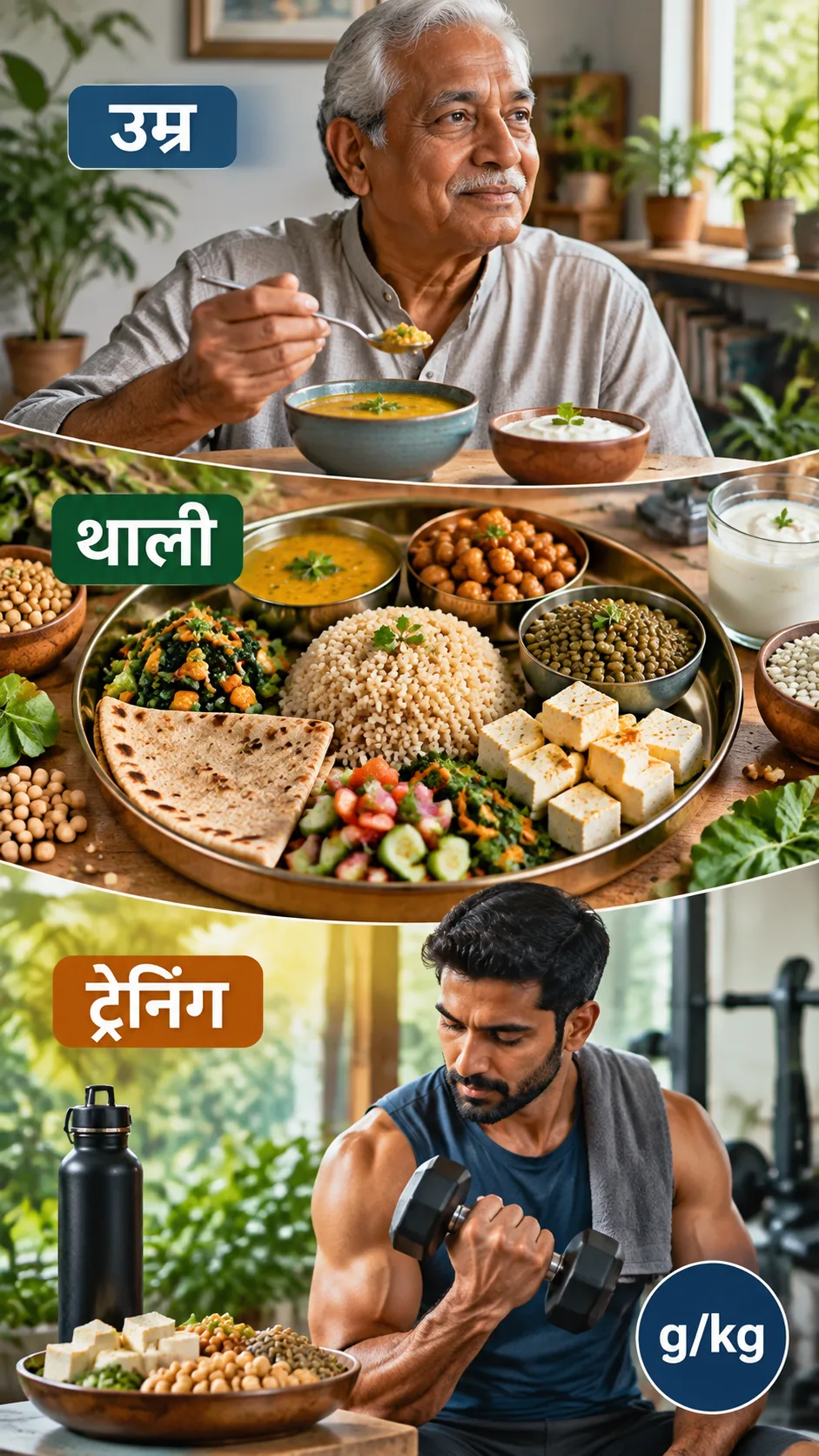
With advancing age, the body’s muscle protein synthesis “switch” becomes sluggish. In literature, this is termed anabolic resistance. Even with unchanged food intake, reduced exercise, inflammation, or illness can cause steady muscle loss at youth-level RDAs. Sarcopenia is not just “eating less protein”; it is a complex combination of physical activity, disease, hormones, vitamin D, and protein quantity, quality, and distribution.
The European Society for Clinical Nutrition and Metabolism (ESPEN) suggests a higher range of 1.0–1.2 grams per kg per day for healthy older adults; in cases of malnutrition or chronic illness, it recommends 1.2–1.5 grams per kg. This is clinical guidance separate from standard adult RDAs. Status papers in Indian journals on elderly nutrition highlight this difference — national general RDA tables are still based heavily on adult formulas, whereas aging bodies present different demands.
Along with quantity, meal distribution matters. Several geriatric studies and position papers highlight delivering sufficient essential amino acids, particularly leucine, in a single sitting. Spreading three teaspoons of dal across the day versus having one solid protein-rich meal may look similar in total grams, but the physiological effect can differ. This is not an endorsement of “30-gram magic” claims; it simply indicates that very small portions may fail to overcome anabolic resistance.
Body weight dynamics also change. Many Indian elderly individuals live with low body weight or low muscle mass. When body weight in kilograms is low, total gram targets look small even though relative demand has increased. Conversely, in elderly obesity, multiplying total weight inflates targets, but abdominal fat is not muscle tissue. Thus, elderly nutrition questions connect to clinical advice and physical strength tests — standing up from a chair, walking speed, fall risk — rather than just a calculator.
| Situation | Frequently Cited Framework | Note |
|---|---|---|
| Healthy Young / Middle-aged Adult | 0.83 g/kg (ICMR RDA) | Assuming good quality protein |
| Healthy Elderly | ESPEN ~1.0–1.2 g/kg | Higher than general ICMR general tables |
| Elderly with Illness / Malnutrition | ESPEN ~1.2–1.5 g/kg | Requires clinical supervision |
| Cereal-only Thali | ICMR Footnote ~1 g/kg baseline | Compensating for quality deficit |
Uncertainties must be stated clearly. Not every elderly person requires the exact same protein target. In kidney disease, protein intake may need to be restricted. Cancer, severe burns, or dialysis push requirements in the opposite direction. “Elderly = always add more scoops” is just as incomplete as “Elderly = drink only watery dal.”
Vegetarian India — Adequate Quantity, Incomplete Amino Acids?
An Indian thali is not devoid of protein. Dal, chana, rajma, milk, curd, paneer, soy — the list is long. The issue usually stems from two factors. First: total grams remain low because rice and roti dominate while the bowl of dal is small. Second: protein quality. Cereals are low in lysine; many pulses are relatively lower in sulfur-containing amino acids. Thus, the traditional combination of “cereals + pulses together” is not chemical opposition, but mutual amino acid complementation.
PDCAAS was an older score based on fecal digestibility and capped at 1.0. FAO introduced DIAAS — measuring true ileal digestibility for each essential amino acid. Milk, egg, and meat scores generally rank high. Soy achieves a better score than many plant sources. Chana, lentil, and wheat individually fall short on specific amino acids, but balanced combination meals bridge the gap. ICMR–NIN 2020 emphasized improving cereal-to-pulse-to-milk ratios to strengthen the baseline quality of diets.
Being vegetarian does not mean your RDA automatically doubles. However, assuming that 0.83 grams per kg on a pure roti-rice diet is “fully sufficient” overlooks official documentary footnotes. A practical approach: increase total protein intake, move dal, milk, curd, and soy from the side of the plate to the center, and ensure at least one substantial protein source per day. For lacto-ovo vegetarians who eat eggs, the gap is easier to close; strict plant-based diets require both variety and adequate portion sizes.
Surveys frequently show that average protein availability and consumption in many Indian households remain modest — especially among lower-income and female groups. This article will not invent percentages to claim “India is starving of protein.” It is enough to state: when grain occupies the center of the plate and dal is merely a garnish, the RDA may look complete on paper but fall short in the body.
Plant protein is not inherently weak. With soy, proper meal combinations, and adequate total energy intake, resistance training studies show muscle gains approaching animal-based diets — provided total protein and training stimulus are matched. The key word here is “provided.” When total calories are low, variety is missing, and wheat is the sole source, differences become apparent.
FACT: Before protein becomes a “plant vs animal” debate, it is a test of “how much + which amino acids + how distributed across the day.” DIAAS scores show quality varies; they do not imply that dal is useless.
The Gym Slogan “1 Gram Per Pound” — How Much Science Is Behind It?
One pound is approximately 0.45 kilograms. A intake of 1 gram per pound of body weight equals roughly 2.2 grams per kilogram. For a 70 kg individual, that amounts to about 154 grams daily. Position stands from the International Society of Sports Nutrition (ISSN) consider 1.4–2.0 grams per kg sufficient for most exercising individuals to maintain and build muscle mass. Joint statements from ACSM and sports nutrition bodies also recommend targets above standard RDAs for athletes without turning the 1 g/lb slogan into absolute law.
The 2.2 g/kg figure may sit near the upper boundary for individuals undergoing intense training, cutting calories (preserving muscle in a caloric deficit), or following strict plant-based athlete diets. For most beginners going to the gym, it is not mandatory. Meta-analyses in literature consistently demonstrate diminishing returns beyond a certain point; if workout intensity, total energy, and sleep are missing, a protein scoop alone will not build muscle.
Another issue with the per-pound formula is body composition. Force-feeding 220 grams of protein to a 100 kg individual with high body fat is neither an accurate reflection of physiological need nor easy to implement on a plate. Many coaches recommend calculating protein requirements based on lean body mass; even that is an estimate, not a laboratory measurement.
Supplements are a convenience, not a necessity. Requirements can be met through whole foods. Whey is a fast-digesting protein rich in leucine — not a magic wand. Chronic kidney disease, unmonitored high intake, or replacing real meals entirely with scoops represents a shortcut, not science.
| Goal (General Discussion) | Frequently Cited Range | Difference from Per-Pound Slogan |
|---|---|---|
| Healthy Sedentary | ~0.8–1.0 g/kg | 1 g/lb is far higher than needed |
| Regular Gym / Sports | ISSN ~1.4–2.0 g/kg | 2.2 g/kg lies near the upper limit |
| Preserving Muscle on Deficit | Higher ranges in literature | Depends on individual and deficit depth |
| Vegetarian Athlete | Upper end of range + variety | Compensates lower quality with quantity |
Gym culture has elevated protein into a religion and villainized carbohydrates. The body runs on both. High protein without resistance training will not open a muscle-building factory. Conversely, very low protein alongside hard training can impair muscle repair. Both statements are true at the same time.
Calculating from the Plate — A Table, Not Stories
The values below serve as general reference points for Indian home cooking, not precise laboratory certificates. Cooking water ratios, paneer milk-solids, and dal consistency vary widely. Always check product labels when available.
| Food (Cooked/Common Serving, Approx) | Approximate Protein Range |
|---|---|
| Cooked Dal (1 bowl / katori) | Usually around the lower end of double digits |
| Milk (1 glass) | Above mid single digits |
| Curd / Dahi (1 bowl / katori) | Similar to milk |
| Paneer (50–80 grams) | Solid contribution |
| Chana / Rajma curry (1 bowl) | Comparable to dal, recipe dependent |
| 2 Eggs | Solid single meal contribution |
| Soy / Tofu serving | Varies by source and raw weight |
| 2 Roti / 1 cup Rice | Lower in protein, higher in energy |
| Peanuts / Mixed nuts (handful) | Protein paired with fats and calories |
For a reference 65 kg adult, meeting the 54 g RDA might get “reasonably close” with two full bowls of dal and a glass of milk — assuming those bowls are truly dense and the rest of the day isn’t empty of nutrients. For a trainee targeting 1.6 g/kg, this exact thali will fall short. Therefore, use food tables as general inspiration, not rigid medical prescriptions.
Distribution: Spreading protein across three main meals is practical for most individuals. Having only rice and vegetables at night and biscuits in the morning means that even if daily grams match on paper, individual meals remain protein-deficient. This applies more strongly to elderly and vegetarian households than to gym bro-science.
Uncertainty and Personalization
Nitrogen balance studies are not absolute truths. They involve small sample sizes, short durations, and healthy volunteers. Sports studies test different populations, varied exercise protocols, and different metrics (some measure fat-free mass, others strength). Cereal-to-pulse ratios in Indian homes vary widely across states. Therefore, 0.83, 1.0, and 1.6 g/kg are reference benchmarks, not rigid rules.
The true questions for personalization are straightforward: Is your body weight stable or dropping? Is physical strength improving or does standing up feel heavy? Is dal on your plate every day or only occasionally? Are kidney function markers normal? Are you pregnant? How strict is your vegetarian diet? Without considering these factors, counting protein grams in a scoop is just noise.
Signs of severe protein deficiency are non-specific — persistent fatigue, slow wound healing, frequent infections, loss of muscle mass. On the flip side, popular fears about high protein causing damage in people with healthy kidneys are often overstated at whole-food levels; however, in established kidney disease, those concerns are entirely valid. Both extremes require proper context and clinical testing, not social media reels.
FACT: No single daily protein count carries a universal headline of “studies have proven.” EAR represents the population average, RDA provides a safety margin, sports ranges target active individuals, and ESPEN guides geriatric care. Do not mix all four into a single shake.
Advice
Start by recording your body weight, then select a framework — for a healthy sedentary adult, the ICMR RDA of 0.83 g/kg is the baseline starting line; if your diet is cereal-heavy, considering the document’s 1 g/kg footnote is more practical. After age 60, discuss higher targets aligned with ESPEN guidelines with a medical professional, not YouTube. If you train regularly, the lower-to-middle range of ISSN’s 1.4–2.0 g/kg is sufficient for most people; reserve 2.2 g/lb conversions for heavy training, caloric deficits, and clear medical clearance.
Improving whole food choices is more affordable than buying supplements. Portion your dal adequately. Include at least one dense protein source daily such as curd, paneer, soy, or eggs. Pair roti with dal. Read the nutrition label’s protein column rather than trusting “High Protein” front-of-pack marketing stickers. In vegetarian diets, treat meal variety as an amino acid requirement rather than a moral choice.
If managing chronic illness, pregnancy, abnormal kidney function reports, or eating disorders, stop relying on general articles and consult a qualified expert. Do not calculate children’s protein needs using adult formulas; ICMR provides age-specific tables. Avoid severe caloric restrictions consisting solely of protein powder and black coffee — extreme energy deficits can cause muscle breakdown.
💡 Callout: Protein is a building material, not a meter. The meter only matters when training, total calories, and meal variety are already established. A meter alone does not drive the car.
Conclusion
Daily protein requirement science is not a single number, but a series of layers. Nitrogen balance experiments established the EAR, population safety defined the RDA, and Indian official documents set 0.83 g/kg while referencing the classic 1 g/kg guideline for cereal-dominant diets. Aging requires higher intakes to counter sarcopenia. Vegetarian diets require careful meal combinations and adequate quality. Gym training calls for intakes above standard RDAs without making per-pound formulas mandatory. Unanswered questions remain, which is why personalization is necessary. Focus on your plate first, slogans second.
FAQ
1. Does every Indian adult need 54 grams of protein daily?
54 grams is the RDA for the ICMR–NIN reference 65 kg male, not a universal target for everyone. Calculate using your weight × 0.83 g/kg (or around 1 g/kg on a lower-quality diet). The reference 55 kg female has a different daily RDA target.
2. Do vegetarians need more protein than non-vegetarians?
Not necessarily double. However, on grain-dominant diets with lower protein quality, total protein grams alongside rich sources like dal, curd, paneer, and soy need to be increased. DIAAS scores show that single plant foods may be incomplete, but mixed diets close the gap.
3. Is the young adult RDA sufficient for elderly individuals?
Clinical frameworks such as ESPEN suggest 1.0–1.2 g/kg for healthy older adults, and higher during illness. Standard adult RDA tables differ from these clinical guidelines. Always check individual health status first.
4. Is 1 gram per pound of body weight mandatory for gym-goers?
No. That translates to roughly 2.2 g/kg. The ISSN states that 1.4–2.0 g/kg is sufficient for most active individuals. The per-pound formula represents an upper limit, not a requirement.
5. Do you need protein powder without going to the gym?
Not necessarily. If daily targets are met through regular food, supplements are a matter of convenience, not a necessity. Clinical cases involving low appetite, illness, or medical advice are evaluated differently.
Disclaimer: This article provides general science-based educational information and does not constitute personalized medical or dietary advice. Verify targets, health conditions, and supplementation with a qualified healthcare professional and official ICMR–NIN guidelines.
Disclaimer: Nutrition information is educational. Consult a doctor or registered dietitian for individual dietary and medical guidance.