What is Chandrayaan-3?
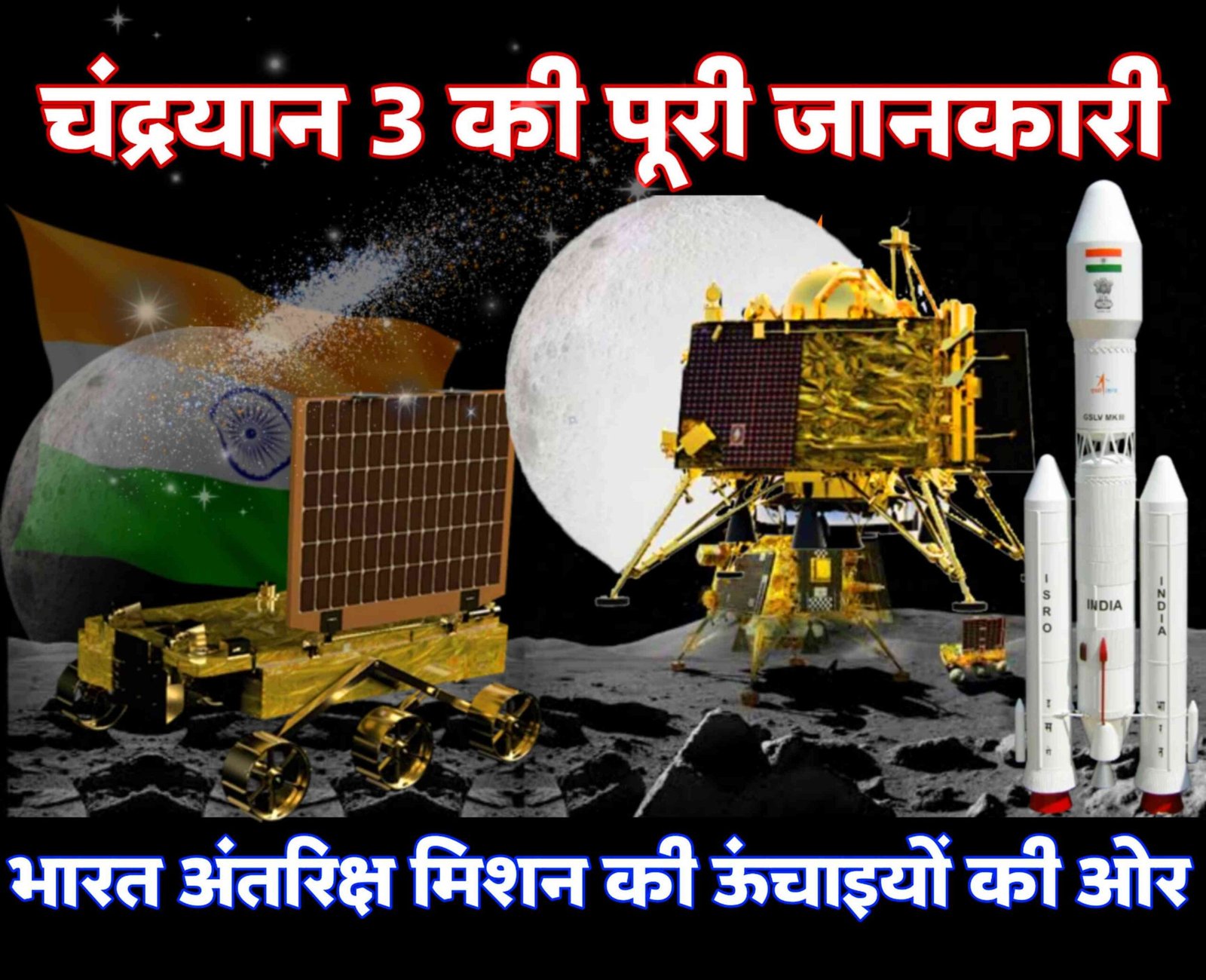
Chandrayaan-3 is a significant space mission undertaken by the Indian Space Research Organisation (ISRO). Building upon the legacy of its predecessors, this mission aims to achieve a soft landing on the lunar surface and conduct in-depth scientific research to understand the Moon’s composition and geology. It represents a crucial step forward in India’s space exploration capabilities and its ambition to contribute meaningfully to global scientific knowledge.
Key Objectives of Chandrayaan-3
The primary goals of the Chandrayaan-3 mission are multifaceted:
- To successfully demonstrate a soft landing on the lunar surface.
- To conduct in-situ scientific experiments on the Moon’s regolith (soil) and rocks.
- To study the Moon’s atmosphere, surface topography, and mineralogical composition.
- To investigate the potential for human habitability on the Moon in the future.
Significance of the Chandrayaan-3 Mission
Chandrayaan-3 is more than just a scientific endeavor; it is a symbol of India’s growing prowess in space technology and engineering. The mission underscores the dedication and expertise of Indian scientists and engineers who have worked tirelessly to overcome challenges and achieve new milestones. Its success is a testament to India’s commitment to advancing space science and contributing to humanity’s understanding of the cosmos. This mission aims to push the boundaries of our knowledge about the lunar environment and its potential resources.
Technical Aspects and Preparations
The development of Chandrayaan-3 involved meticulous planning and the use of advanced technological components. ISRO focused on ensuring the reliability and robustness of the spacecraft, including its lander and rover modules. Key technical considerations included:
- Propulsion System: Ensuring a precise trajectory and controlled descent for a safe landing.
- Lander Module: Designed to withstand the harsh lunar environment and execute a soft touchdown.
- Rover Module: Equipped with scientific instruments to analyze the lunar surface in detail.
- Navigation and Communication: Maintaining stable communication links with Earth throughout the mission.
The mission’s design incorporated lessons learned from previous lunar missions, aiming for enhanced safety and mission success rates.
What did Chandrayaan-3 achieve?
Chandrayaan-3 successfully achieved its primary objective of soft-landing on the lunar south pole on August 23, 2023. This historic feat made India the first country to land a spacecraft near the lunar south pole and the fourth country overall to achieve a lunar landing. The mission’s rover, Pragyan, explored the lunar surface, collecting valuable data on its composition and environment. The scientific instruments aboard the lander and rover provided unprecedented insights into the lunar south polar region, contributing significantly to our understanding of the Moon.
Frequently Asked Questions (FAQs)
What is the main goal of Chandrayaan-3?
The main goal of Chandrayaan-3 is to achieve a soft landing on the Moon’s surface and conduct scientific research to study its geology, mineralogy, and potential for future human exploration.
When did Chandrayaan-3 launch?
Chandrayaan-3 was launched on July 14, 2023.
What are the key components of Chandrayaan-3?
The key components of Chandrayaan-3 include a lander module (Vikram) and a rover module (Pragyan). It also has a propulsion module that carried the lander and rover to lunar orbit.
Why is the lunar south pole important for Chandrayaan-3?
The lunar south pole is of significant scientific interest because it is believed to harbor water ice in permanently shadowed craters. Studying this region could provide crucial insights into the Moon’s history and resources.
What is the significance of Chandrayaan-3 for India?
Chandrayaan-3’s success marks a major milestone for India’s space program, demonstrating its advanced technological capabilities and positioning it as a leading nation in space exploration. It inspires future generations and fosters scientific innovation.
What scientific experiments did Chandrayaan-3 conduct?
The mission carried several scientific payloads to study the lunar surface, including instruments to analyze elemental composition, measure seismic activity, and study the lunar plasma environment.
Conclusion
Chandrayaan-3 represents a monumental achievement for India and a significant contribution to lunar science. Its successful landing and subsequent exploration have opened new avenues for understanding our closest celestial neighbor. The data gathered by Chandrayaan-3 will undoubtedly fuel further research and inspire future missions, solidifying India’s position on the global space exploration stage.