
Where do you start when you do not want concealer?
You do not have to wear makeup to make your face acceptable. If you prefer a bare face and notice a darker under-eye area, the next step does not have to be a new home remedy every morning. A clearer understanding of the problem can save both worry and unnecessary shopping.
An under-eye shadow may look stronger during a video call and softer beside a window. That difference can be confusing, but every photograph is not a reliable assessment of your skin. Colour, swelling and a shadow from facial structure are different observations. A single product promising to fix all of them deserves questions.
This guide is about everyday care and sensible expectations, rather than a deadline for making circles disappear. You can choose makeup on some days and skip it on others. Neither choice proves whether you are looking after yourself well.
FACT: dark circles are not always a sleep problem
Mayo Clinic lists genetics, rubbing, dermatitis, sun exposure and age-related changes among possible causes. Puffy eyelids or hollows can also create shadows that look like dark circles. A mirror alone cannot reliably identify which explanation applies to you.
Think about what has changed rather than trying to name a diagnosis from a photograph. Has the appearance been similar for years? Do relatives have a similar under-eye area? Did discomfort begin after a new product? These questions help you describe the situation clearly at an appointment.
A seller who promises the same rapid result for every type of circle should be able to explain what cause the product addresses. An attractive photo does not answer that question. Before you spend money, separate the visible feature you dislike from the mechanism someone claims to treat. That is useful whether you eventually choose treatment or simply a smaller routine.
Reference: Mayo Clinic: causes of dark circles
Improve sleep without making it a cosmetic guarantee
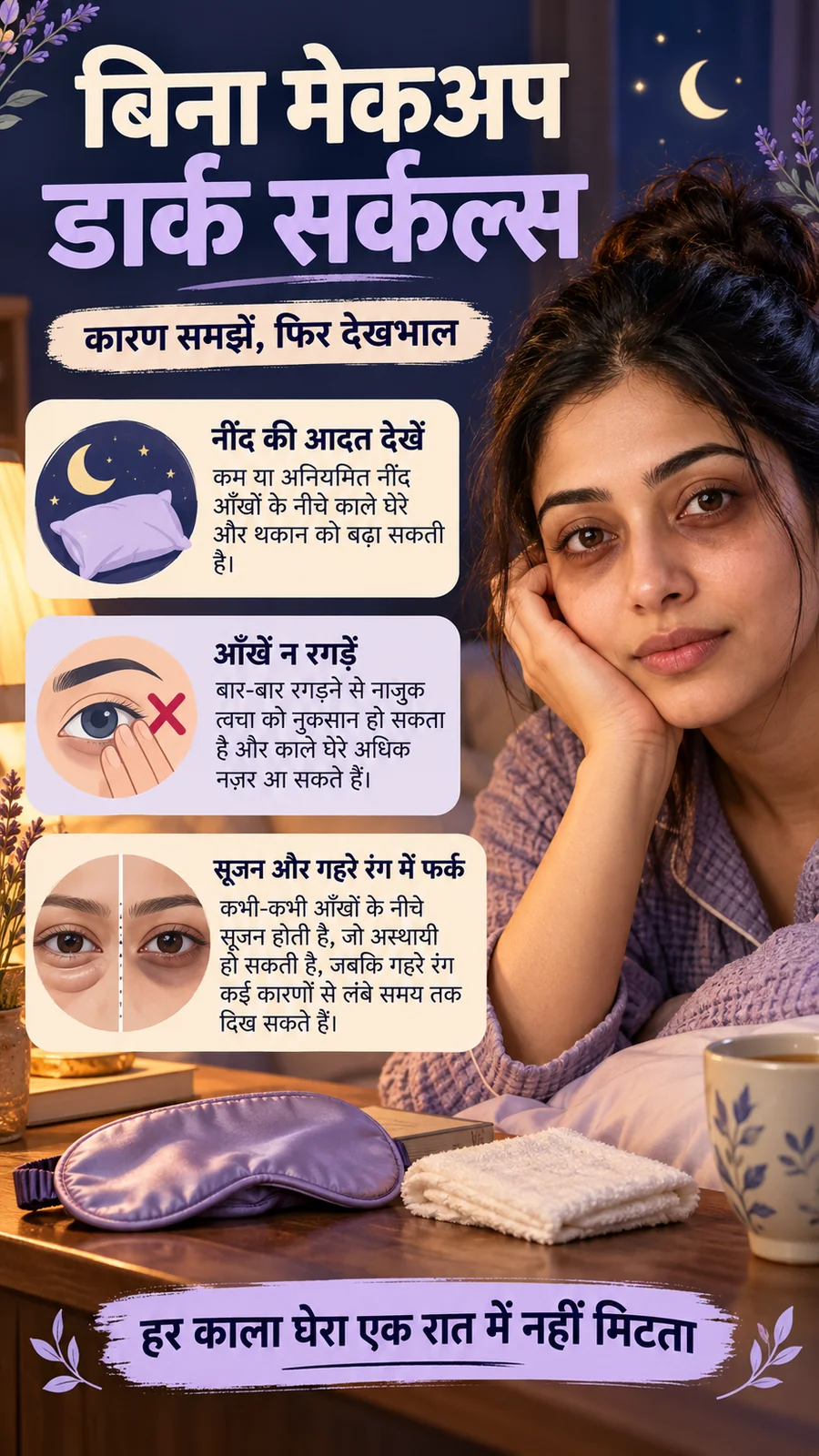
Mayo Clinic notes that short nights are not always the sole cause, though tiredness can make existing circles more noticeable. Better sleep is a worthwhile goal; it is not a rule that your under-eye area must change after one good night.
Keep a simple record of your real evenings. Note when you went to bed, what delayed you and how the next morning felt. The useful version is honest and manageable, not a perfect schedule you cannot follow alongside work or family responsibilities.
For example, you could give late scrolling a finishing time or prepare tomorrow's essentials before bedtime. These are ways to organise your evening, not a promised dark-circle treatment. If ongoing sleep difficulty is affecting your day, discuss that concern in its own right. You do not need to wait for the appearance of your face to prove that the problem deserves attention. Choose a habit you can repeat rather than judging yourself after every morning photograph.
Reference: Mayo Clinic: causes of dark circles
Notice rubbing and discomfort, not only the colour
If you frequently touch or rub your eyes because they feel uncomfortable, include that detail when asking for help. Describe itching, watering and when symptoms occur. An online photograph cannot establish the cause, and your complaint may need a different conversation from ordinary cosmetic care.
Handle the area gently during washing. Trying to remove every trace of dirt by rubbing harder is not a useful daily target. Keep products out of your eyes and follow any instruction that says to avoid the eye area. A face product does not automatically become an appropriate eyelid product.
You can use a simple reminder: when your hand reaches your eye, pause and notice whether it is a habit or a response to discomfort. That observation is more informative than adding an eye cream without considering the symptom. Do not use another person's leftover drops or medicine as a substitute for assessment.
Reference: AAD: gentle face washing
A cool cloth has a limited role
Mayo Clinic includes a cool compress as a self-care option for circles related to puffiness. Use a clean cloth with comfortable coolness and gentle contact. Avoid direct ice and pressure. It is not a guaranteed solution for persistent pigmentation or a hollow under-eye area.
Treat it as a small comfort measure rather than a daily experiment that must produce a dramatic before-and-after result. If you already have an eye or skin condition, or cool contact bothers you, ask for advice before continuing. Pain or a change in vision deserves medical attention rather than repeated home trials.
Before an event, plan time to rest and prepare instead of combining several unfamiliar remedies. Even if your face looks different afterwards, you will not know which change mattered when the lighting, products and schedule all changed at once. Describe what you actually noticed: less puffiness, greater comfort or simply a brighter photograph.
Reference: Mayo Clinic: when to seek advice and self-care
Sun protection and eye products: decide their jobs
Plan shade, sunglasses and suitable sunscreen around the outdoor parts of your day. AAD sunscreen-selection guidance emphasises broad-spectrum protection and SPF 30 or higher. Follow the product directions and avoid getting it into your eyes.
An eye cream needs a clear job before it becomes a purchase. Are you buying for comfortable moisture, a particular diagnosed concern or the hope of changing colour? Those are different expectations. You can ask a clinician whether a separate eye product is relevant to your own routine rather than assuming it is an essential item for everyone.
A label such as brightening does not establish that every cause of a dark appearance will respond. If an advertisement shows only a filtered transformation, look for more useful information. A product feeling luxurious and a product producing the change you wanted are also different outcomes. Keep your original reason for buying it visible when you decide whether it was worthwhile.
Reference: AAD: sunscreen selection
Know when an appearance concern needs medical advice
Cleveland Clinic advises contacting a healthcare provider about a dark circle or swelling under just one eye. Mayo Clinic also recommends assessment for changes on one side that worsen. New pain, injury or visual difficulty should not become a reason to keep trying cosmetic routines at home.
Long-standing, similar circles on both sides can still bother you enough to discuss. Bring a brief history and your actual concerns. Avoid deciding from the colour alone that you must have a vitamin deficiency or need a package of blood tests. Ask how a suggested test would help explain your symptoms or change the plan.
If you track appearance, use occasional photos in similar light. Daily pictures from different angles can make the comparison less meaningful. It is also reasonable not to take photos at all. Your goal can be comfort and an understandable routine, without turning your face into a continuous measurement project.
Reference: Cleveland Clinic: dark circles
Advice
Make a three-part note: when the appearance seems different, what discomfort occurs and what products you have used. A few clear dates and names are enough. A lengthy diary is not required for a useful appointment, and you do not need to diagnose yourself before asking questions.
Choose a small routine around your actual day: a manageable evening schedule, gentle handling and practical outdoor protection. Avoid promising yourself that everything must disappear before a particular meeting or celebration. A deadline often encourages extra spending without improving the quality of the decision.
If you consider a treatment, ask about the suspected cause, expected benefit, risks, total cost and follow-up. Ask what happens if the result is limited. Make the decision after an assessment, rather than choosing a procedure from one dramatic clip. Going without makeup is a valid preference. The value of your work, conversations or photographs is not set by the shade beneath your eyes.
FAQ
Can every dark circle disappear without makeup?
No. Causes and facial structure differ. Care and concealer also do different jobs; neither should be confused with a guaranteed cure.
Is sleeping more always enough?
No. Better sleep can be helpful, but pigmentation, genetics or shadows may involve a different explanation.
Are cucumber packs a proven universal fix?
No. Coolness can feel soothing, but a kitchen ingredient cannot promise to remove every kind of dark circle.
Must I buy a separate eye cream?
No. Clarify the purpose and your own needs first. A separate eye product is not automatically essential for everyone.
What if a new circle appears on one side?
Contact a healthcare provider, especially with swelling, pain, injury or changes in vision. Do not rely only on home remedies.
Sources
- Mayo Clinic: causes of dark circles
- Mayo Clinic: when to seek advice and self-care
- Cleveland Clinic: dark circles
- AAD: gentle face washing
- AAD: sunscreen selection
Health disclaimer: This article provides general information, not a personal diagnosis or treatment plan. Ask a qualified clinician before starting a medicine, supplement or skin procedure. Seek medical care for sudden or severe symptoms.