1946. A year before independence and Partition. Margaret Bourke-White was in India for Life. The feature later ran as India’s Leaders. In an ashram near Poona, Gandhi spun every morning — often from 4 a.m., about an hour. Bourke-White put that wheel in the frame. The picture became one of the photographs people attach to his name.
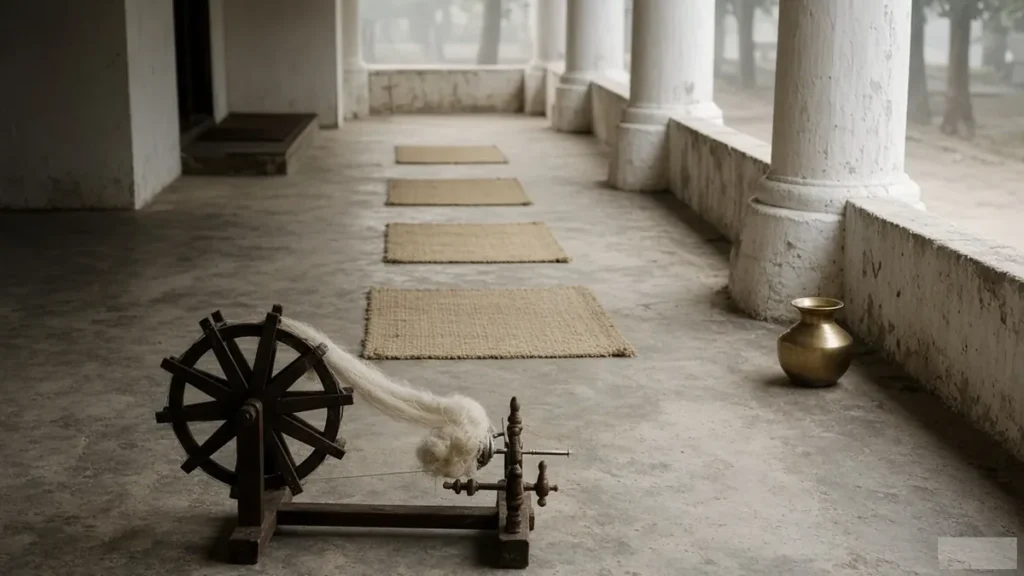
We do not reprint that profile — Gandhi, glasses, the charkha at one angle. Life/Time still hold it. This article is the veranda, the wheel, and the rule: learn to spin, then shoot.
How the 1946 photograph was made
The house rules were tight. No flash. No noise. No barging into prayer. Bourke-White was taught to spin — frames exist of her practicing with Gandhi’s granddaughter Sita. When the shutter opened the light was thin, morning light. The notes to New York said: Gh reading clippings, his personal wheel in the foreground; you could not overstate the reverence for that wheel in the ashram.
The 27 May 1946 issue ran two Gandhi frames; the famous wheel picture was not the lead then. It later sat small on a “nature cure” page, then grew in books. He was 76, about 110 pounds — the caption measured the body; the wheel measured the politics. Swadeshi was not only cloth. It was home thread set against the mill.
The family photographer Kanu Gandhi had been cutting different angles for years. Bourke-White arrived from outside, accepted the terms, and left with an icon. After 30 January 1948 the same wheel also meant mourning.
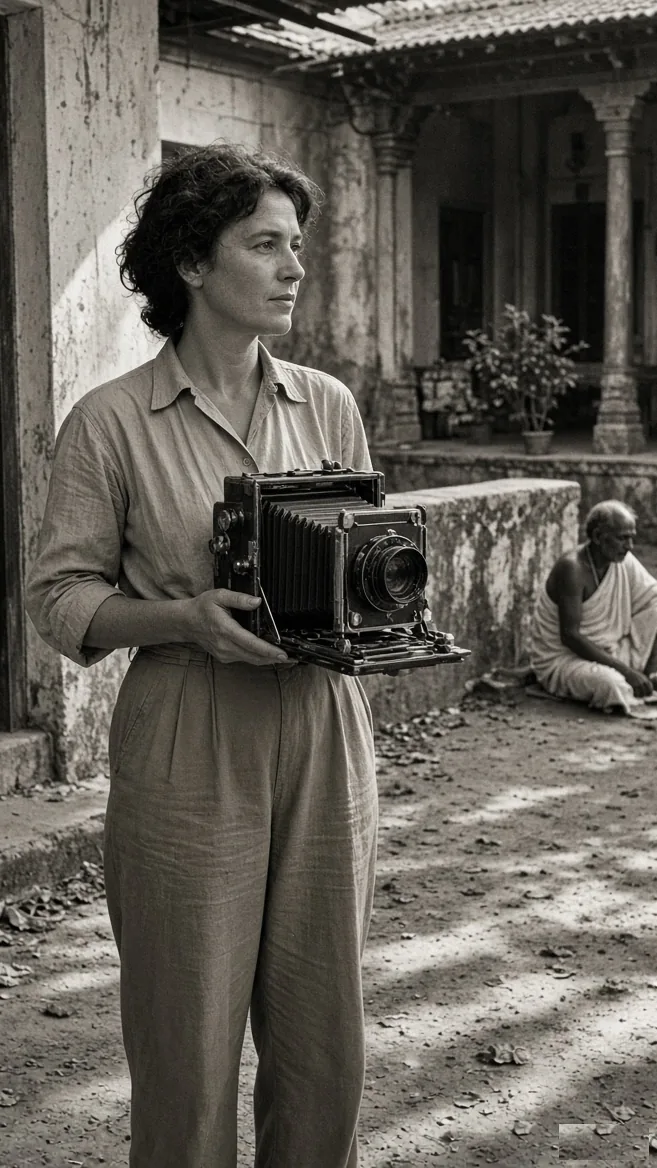
The Life assignment was India’s Leaders. It ran in the 27 May 1946 issue.
Why the wheel held
The camera asked for a tool before it asked for a face. Show the charkha and the policy shows: boycott, village, hand. That is why searches still type “Gandhi spinning wheel 1946,” not only “Gandhi portrait.”
Cold floor, brass pot, mats. The frame is clean because the room was spare. We give the spare room. The face can stay with Life.
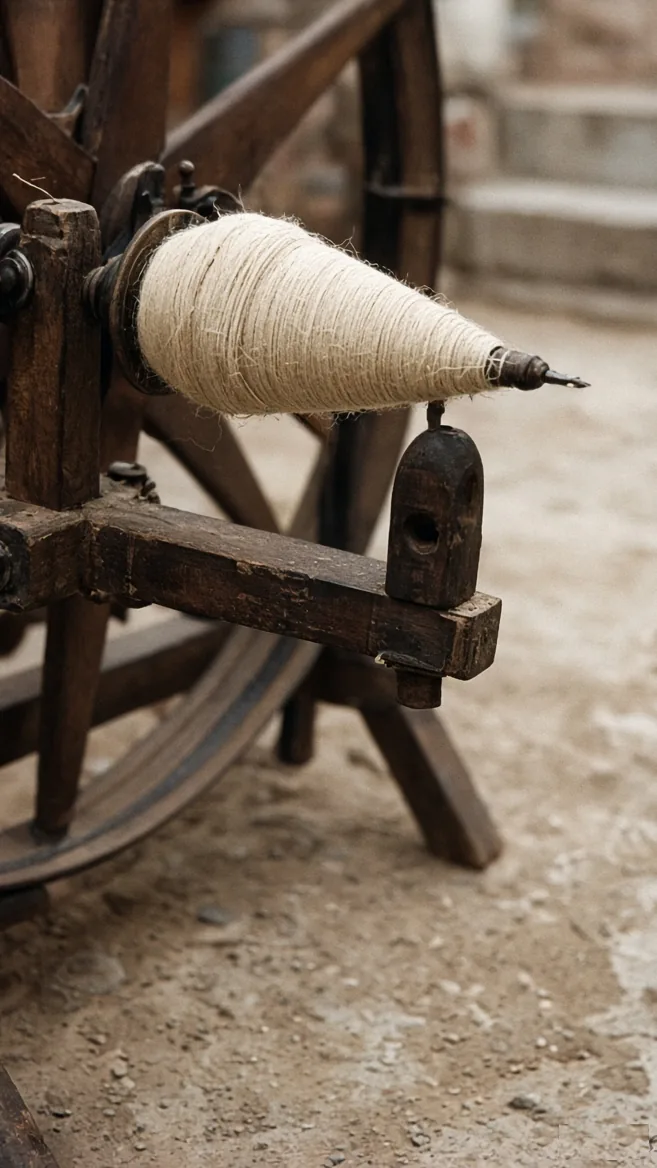
About an hour every morning. The notes called the wheel an icon.
What people type
Some search Gandhi spinning wheel. Some search Margaret Bourke-White Gandhi. Some search charkha 1946. All three open a veranda. We give the veranda and the thread, not the seated portrait.
The picture lives because the argument for freedom sat on a wooden wheel. This page shows the wheel. Not a copy of the man.