16 October 1968. Mexico City. Men’s 200 meters. Tommie Smith in 19.83, a world record, gold. Peter Norman in 20.06, silver — an Oceania mark that lasted decades. John Carlos in 20.10, bronze. The anthem started. Smith raised a black glove on the right, Carlos on the left. Heads down. No shoes, black socks. All three wore Olympic Project for Human Rights badges. The photographer was John Dominis.
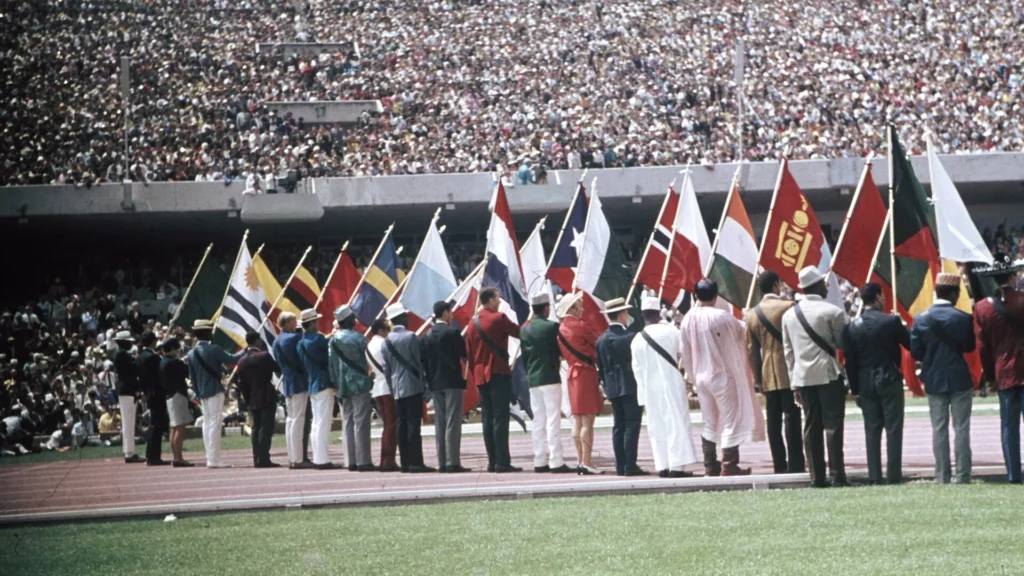
We do not reprint that podium of fists. Life/Getty still hold it. This article is the stadium, the race, and the third man.
How the 1968 photograph was made
Harry Edwards’s OPHR had asked Black athletes to boycott. Smith and Carlos chose the podium instead. Bare feet for poverty. Smith’s black scarf for pride. Carlos’s jacket unzipped for workers. Beads for lynchings and the unnamed dead. Carlos had left his gloves in the village. Norman said split the pair. Smith took the right, Carlos the left. Norman did not raise a fist. He wore the badge. He had already fought Australia’s White Australia policy in his own lane.
The crowd did not cheer. The IOC sent the two Americans home. The press spat. Norman flew back and found the 1972 door shut. In 2006 Smith and Carlos carried his coffin.
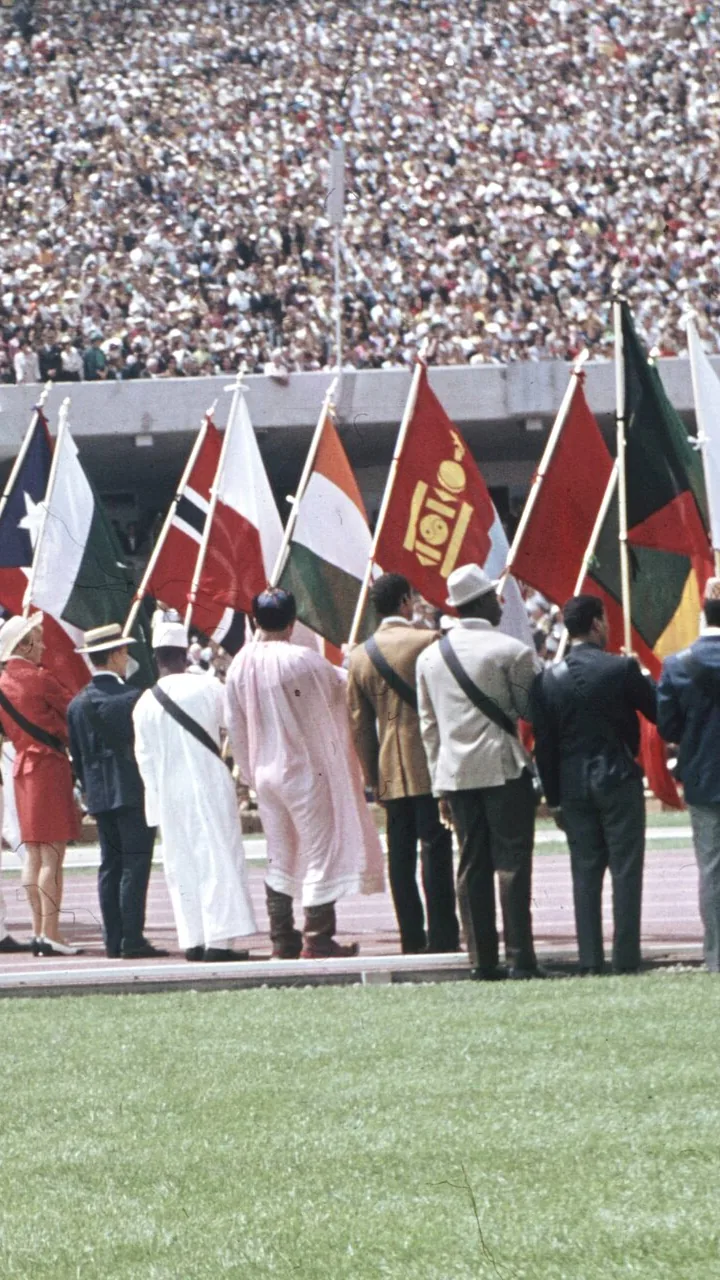
John Dominis was there for Life. Smith gold, Norman silver, Carlos bronze.
The third man
The picture is remembered for two fists. In the middle a white Australian stands still. That stillness cost him a career. Sydney 2000 did not give him an official place. Smith’s line: Norman asked what we were doing, we told him, he said I am with you.
Dominis cut more than one frame. The one that traveled is the straight podium. We give the stadium, not that straightness.

One pair of gloves. Carlos left his at the village. Norman said: one each.
What people type
Some search Black Power salute 1968. Some search Tommie Smith John Carlos. Some search Peter Norman. All three open a track. We give the track and an empty podium, not the raised fists.
The picture lasts because a medal ceremony had forbidden politics, and three men refused the ban.