Most people who type Annabelle doll real story are hunting one face: cracked porcelain, wide painted eyes, a Victorian dress. That face belongs to the movies. The object whose name launched the searches is described as an ordinary cloth Raggedy Ann doll. The whole internet argument sits on that gap. Is the legend true, a campfire story, or a Hollywood brand?
The answer has three layers. One is a pair of student nurses in Hartford around 1970. The second is Ed and Lorraine Warren, who later kept the doll in their collection. The third starts after 2013, when The Conjuring redesigned the face and the internet never let that face go.
The movie Annabelle is not the museum doll
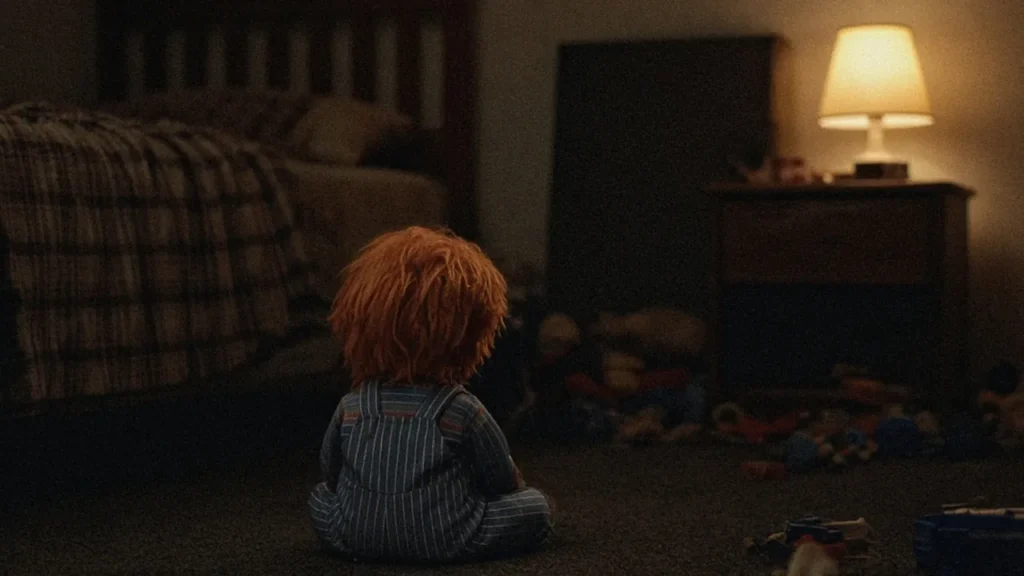
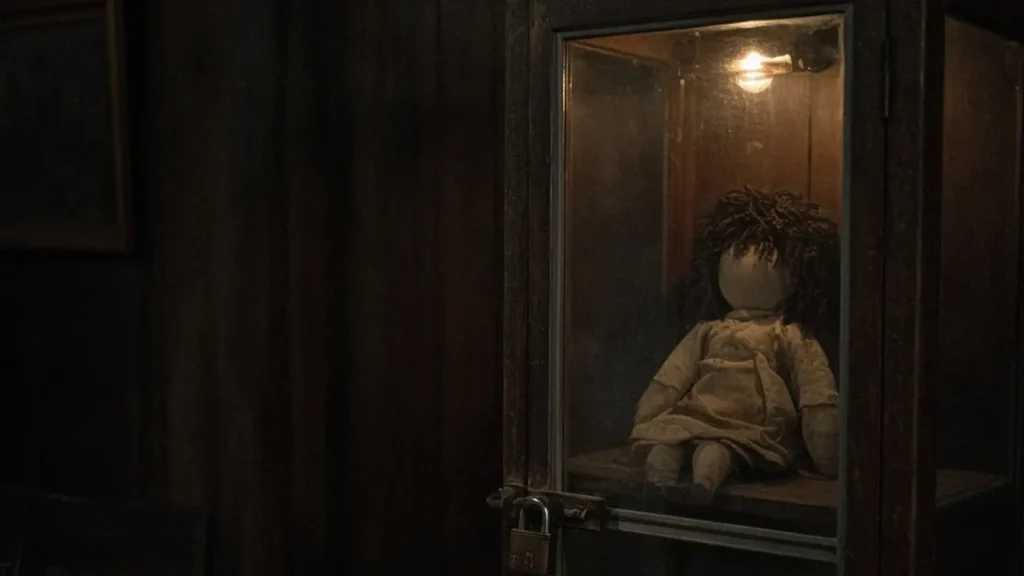
This is the line that cools the search. The franchise doll is porcelain, costumed to scare. The object the Warrens displayed was a shop-bought cloth toy — yarn hair, button eyes, a stitched smile. A child’s thing. It is not frightening because the design is monstrous. It becomes frightening because the story says something stayed inside a normal object.
That is why the query splits. Some people want the poster face. Others ask whether the thing locked in the Warren museum is the same object. Both questions share a name. They do not share a body.
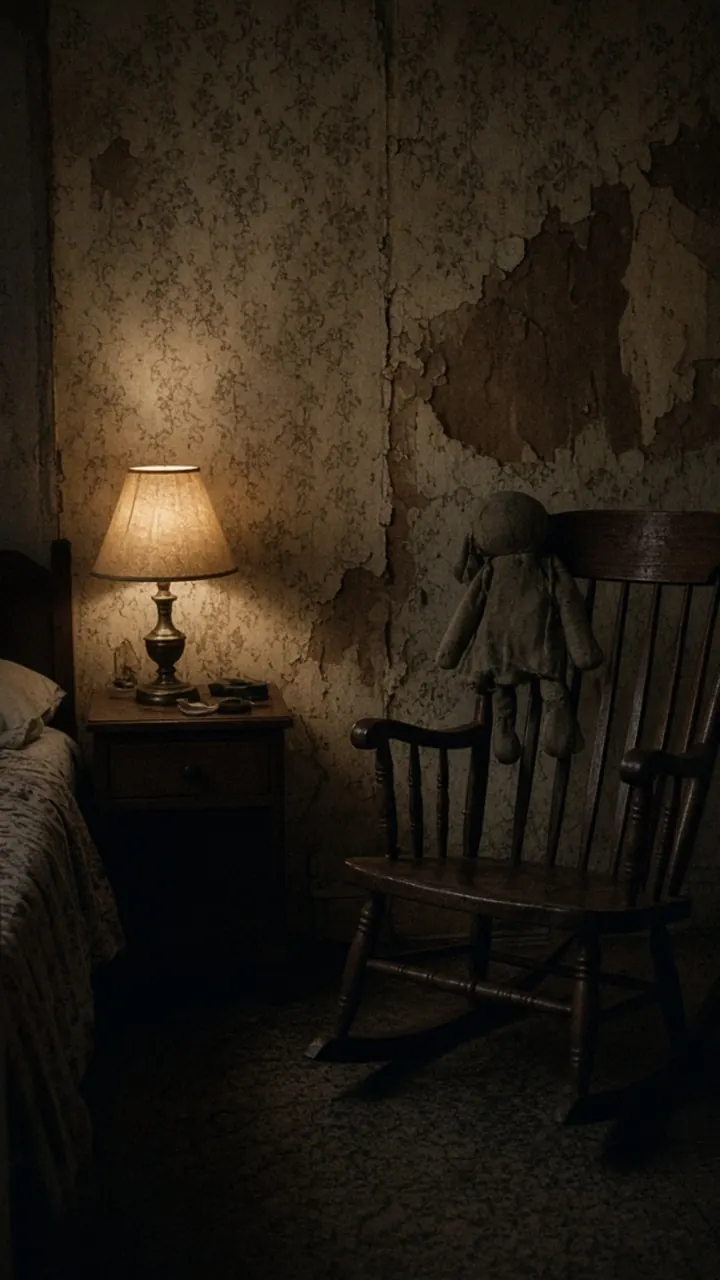
The story begins in a nurse’s flat
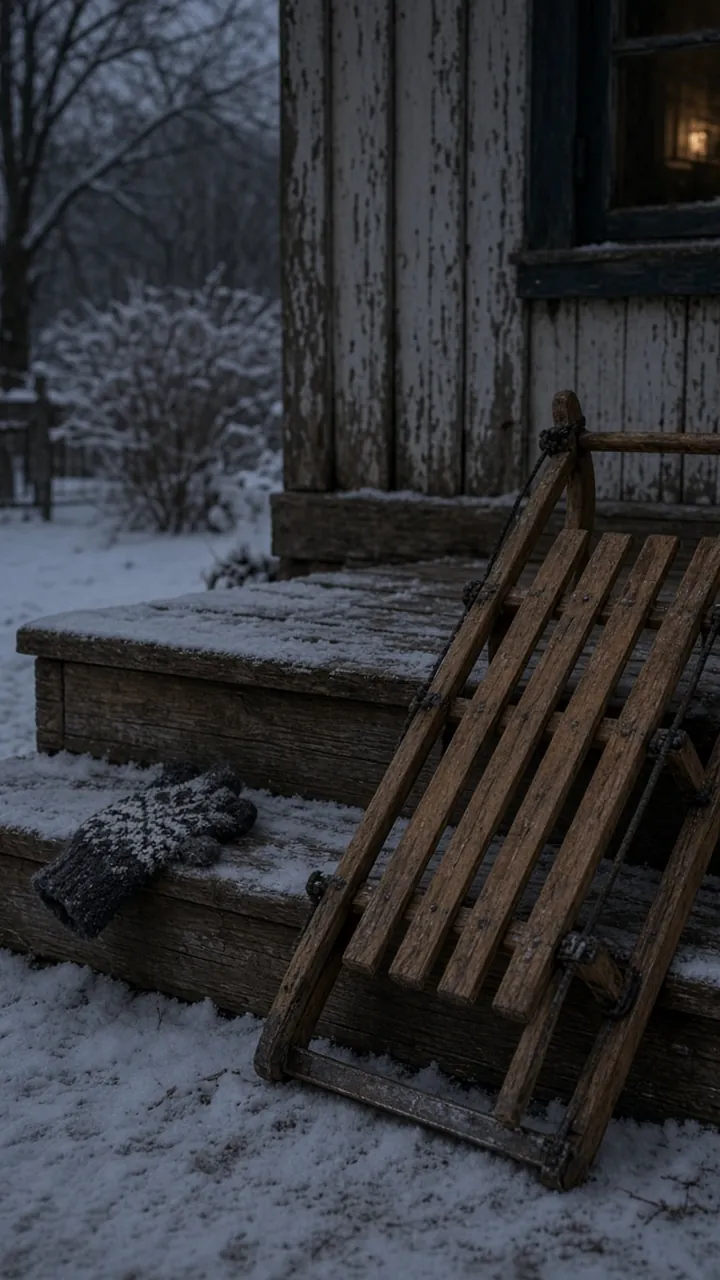
In the version repeated by the Warrens and later books, a nursing student named Donna received the doll as a birthday gift around 1968–1970. She shared an apartment in Hartford, Connecticut. Within weeks the two women described small wrong details — the doll shifting rooms, notes appearing, a sense of company.
A medium was called. The medium said a seven-year-old dead girl named Annabelle Higgins had died in a road accident and wanted a home. The nurses agreed. Here the tale turns. The Warrens said the presence was not a child. It was something non-human wearing pity as a mask. A friend named Angie was later said to have been attacked. Only then did the couple call in investigators.
This is where folklore and a case file collapse into each other. There is no public stack of police records stamping every claim. What exists is memory, lectures, and a story retold for decades. Skeptical writers call it a modern urban legend. Believers say events around the object never quite stopped.
The museum case and the lock
Ed and Lorraine Warren placed the doll in a glass case at their Occult Museum in Monroe, Connecticut. A warning on the box. Stories grew around priests who blessed it and visitors who touched the case. In 2020 a rumour claimed the doll had “escaped.” The claim was walked back.
The museum later closed. Reports in 2025 described new custodians for the collection. The object had already left a family shelf and become a pop-culture relic. People no longer search only for a ghost. They ask where the doll is, whether the case was opened, and why the movie face does not match.
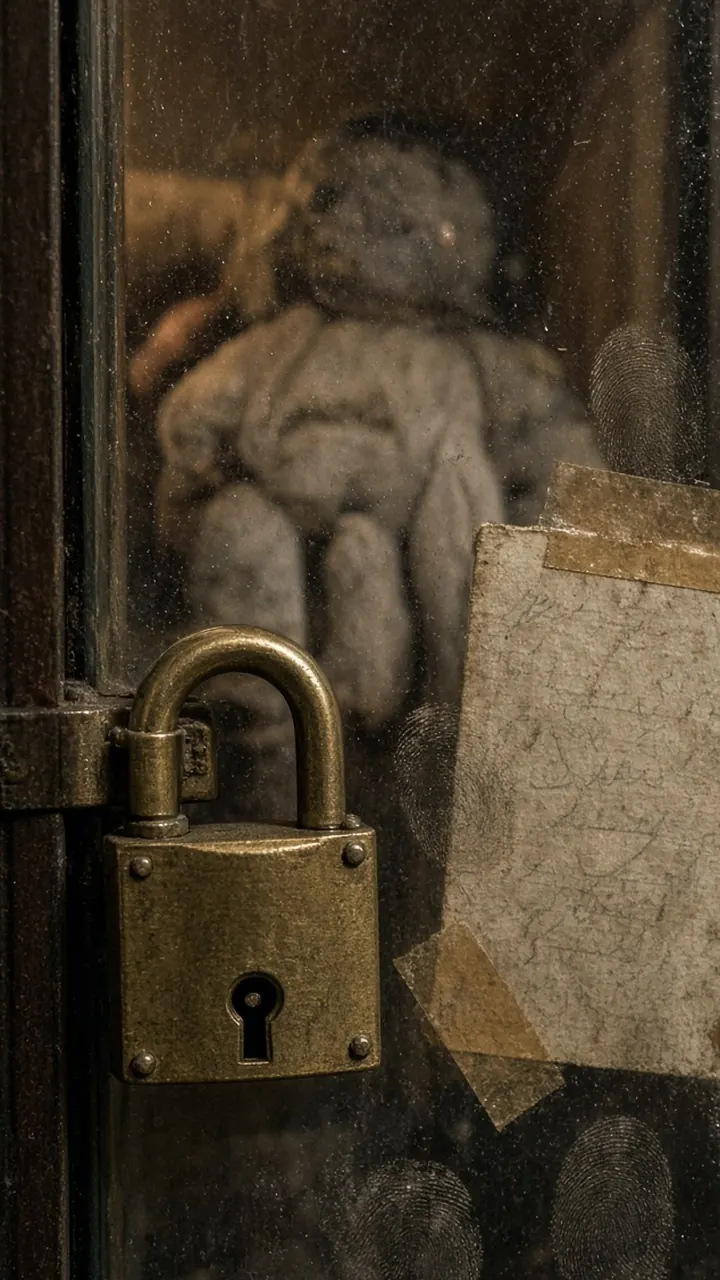
After 2013 the name went global
The Conjuring sat Annabelle in the first ten minutes. Three films then carried the name alone — Annabelle (2014), Annabelle: Creation (2017), Annabelle Comes Home (2019). The box office proved the doll was now a character, not a museum exhibit. Designers dropped the cloth-toy look on purpose. The camera needed a face that would stick to a poster.
Search broke after that. Children want the movie face. Parents ask if the story is true. Skeptics ask whether the Warren claims were ever tested. All three queries land on one page. A useful article has to answer all three, not one.
By comparison, Chucky is clean fiction — a killer’s soul inside a toy. Annabelle’s posters say “inspired by a true story.” That is the marketing difference. Fear sells the same way.
Is Annabelle real? A straight answer
The doll is a real object. Cloth, old, taken from someone’s home. That much is solid. What is not solid: a spirit inside it, handwritten notes from the doll, attacks tied to the toy. The scientific side says toys do not walk; stories do. The faith side says some objects do not stay quiet. Both sides argue over the same photograph.
The movie face is not the original. It is a design. The Warren doll does not look like the poster. If an image shows porcelain and the caption says “real Annabelle,” it is a prop or a costume, not the 1970s object.
Later in this series, Valak / The Nun and Manjulika walk through the same question — how much the screen shows, and how much the claim can prove. Annabelle stays the most searched of the three because a museum lock still sits on the story. A lock makes the tale feel present tense.
Why the name does not cool off
Searches rise at Halloween, but Annabelle does not die in March. The reason is simple. People want two fears at once — a child’s toy, and the suspicion that the toy is watching. A clown and a nun are distant shapes. A doll sits near a bed. The query feels private.
Someone typing Annabelle real story at night does not want a trailer. They want a verdict: believe it, or close the tab. The job of the piece is not to leave them shaking. It is to keep the film, the case, and the evidence in separate drawers. After that the reader decides whether the cloth doll behind glass is only a prop, or an unfinished file.