 Vista
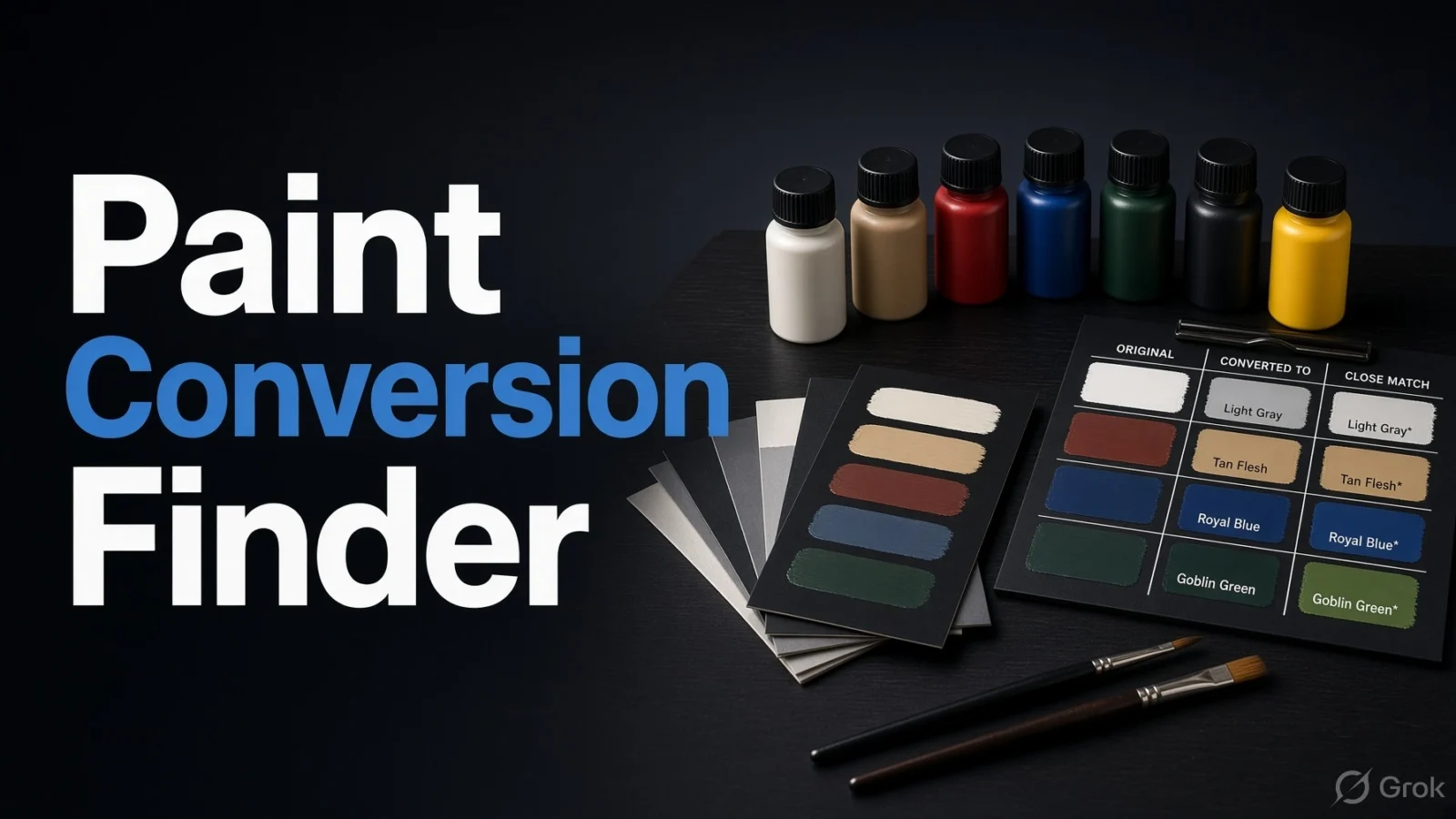
Painters often ask which Vallejo, Army Painter or Two Thin Coats paint is closest to a Citadel colour. The honest answer is that there is no official, complete brand-to-brand conversion, and unofficial charts disagree with each other. A better method is to shortlist by colour maths and then test physical paint on a spare model. This guide explains how that works, what a hex-based finder can and cannot tell you, and how to avoid common matching mistakes. Brand names appear only to describe the question; no equivalence between any two named paints is claimed.
For a shortlist from your own paint list, open the free paint colour match finder.
How miniature paint matching works
Matching means finding a paint whose dried colour and behaviour are close to another. Colour is only part of that: coverage, thinning, gloss and pigment all change how a paint performs on a model.
Pigments, finish and screen colour limits
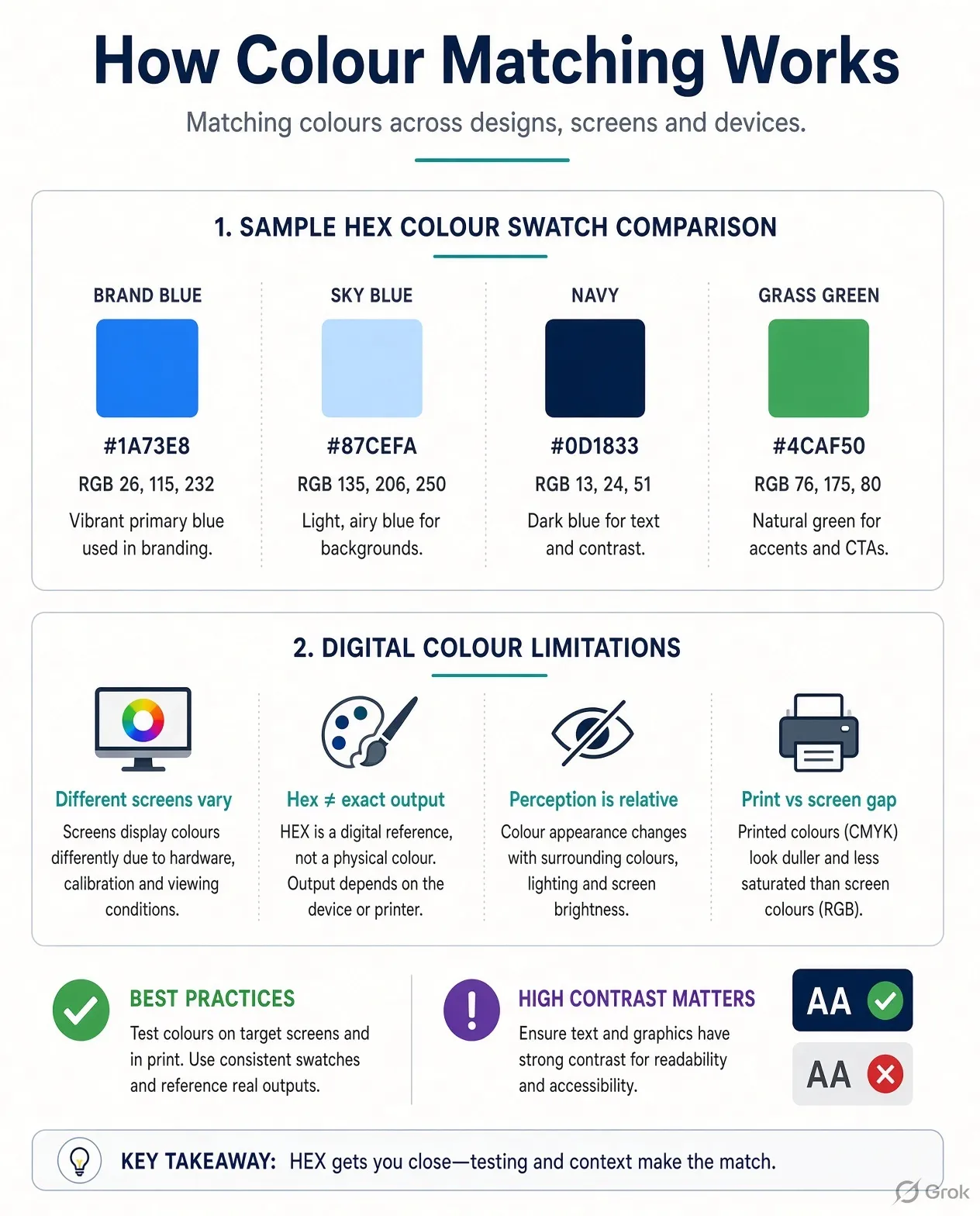
- A hex code from a website is a screen colour; it depends on the display, the photo and lighting.
- Finish matters: metallics, glosses, washes, inks and contrast-style paints behave differently, and a hex code cannot show that.
- Two paints with similar hex codes can differ in coverage and pigment, so always test.
Comparing paint ranges and product codes
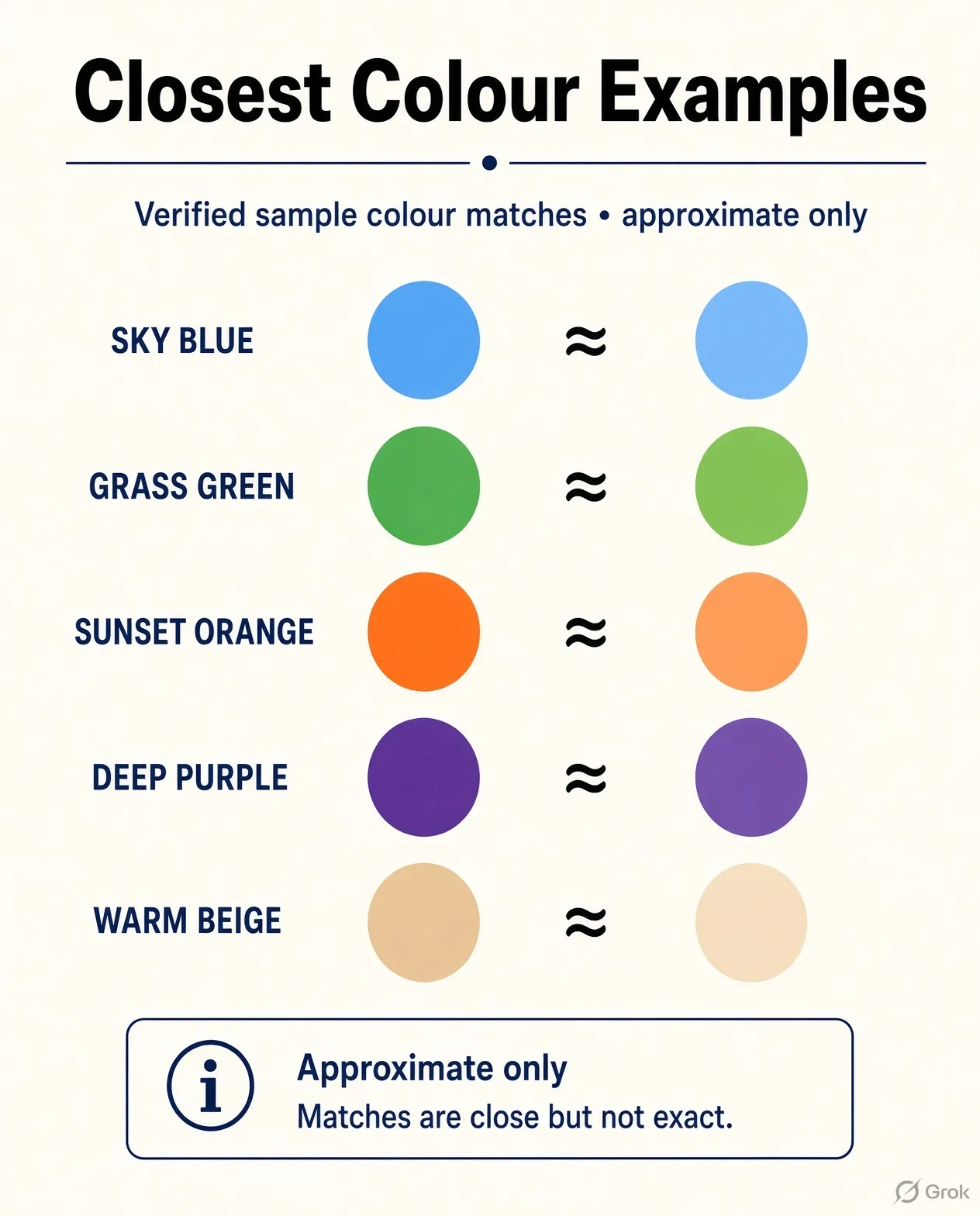
Ranges are renamed and reformulated over time, and shops and hobbyists publish their own conversion charts. At least one such chart states on its own page that it is unofficial and not endorsed by the paint makers. For that reason this guide does not reproduce a “Brand A equals Brand B” table.
Verified references versus approximate matches
| Source type | How to treat it |
|---|---|
| Maker’s own colour chart or product page | Best source for that paint’s own colour and finish |
| Maker-published equivalence list (if one exists) | Verify the date and the exact range |
| Fan or shop conversion chart | Approximate starting point only |
| Your own swatch test | The deciding check |
Finding the closest colour using hex codes
Hex codes are sRGB values. A finder can convert them to CIELAB colour values and measure the straight-line distance between two colours: ΔE = √(ΔL² + Δa² + Δb²). This is the original CIE76 formula. Smaller means closer, and 0 means identical hex codes.
Why digital distance is not exact physical equivalence
CIE76 is a simple formula and newer ones track human vision better in some colour ranges. More importantly, the distance only ranks the colours you supplied; it cannot tell you that a paint behaves like another, and a paint missing from your list cannot be matched at all.
Using the paint colour match finder
In the paint colour match finder, type the hex code of the colour to match, paste your own paint list as name,#hex on separate lines, choose how many matches to show (1 to 10) and press Find closest. It shows swatches with colour-difference numbers. Nothing is stored and it contains no built-in brand database.
Swatch tests and lighting checks
- Paint each shortlisted colour on a spare model or card, let it dry fully and compare in the light you paint under.
- Photograph side by side, but trust your eyes in daylight over the photo.
- Test thinned and unthinned, since dilution changes the look.
Worked examples, practical checks and limitations
Example using the finder’s invented sample list: matching #8B1A1A against the samples gives Sample Red (#B22222) a difference of about 15.0, Sample Brown (#6B4423) about 33.2, Sample Grey (#808080) about 60.1, Sample Bone (#D9CBA3) about 70.8, Sample Green (#2E6B34) about 79.4 and Sample Blue (#1F4E9A) about 83.7. The ranking says which to try first; it does not say the red is the same paint. These sample names are invented and are not real products.
Common mistakes and when to seek expert confirmation
- Treating a conversion chart as official.
- Matching a metallic or wash by hex code alone.
- Judging colour from a phone photo under warm light.
- Buying a whole set before one test.
For competition or commission work, check the paint maker’s own guidance or ask an experienced painter about specific products.
Frequently asked questions
What Vallejo paint matches Citadel colours?
There is no official complete list. Shortlist by hex colour distance from your own Vallejo paints, then compare real swatches.
Does the tool convert Citadel to Vallejo?
Not by itself; it ranks the paints in the list you give it.
Where do I get hex codes?
From the maker’s colour chart, a swatch image or an image editor’s colour picker.
What does a colour difference of 0 mean?
The two hex codes are identical.
Conclusion
Use colour maths to shortlist, then let a physical swatch decide. Treat any brand conversion chart as approximate.















Share Your Opinion
Comments are closed on this post.