 Vista
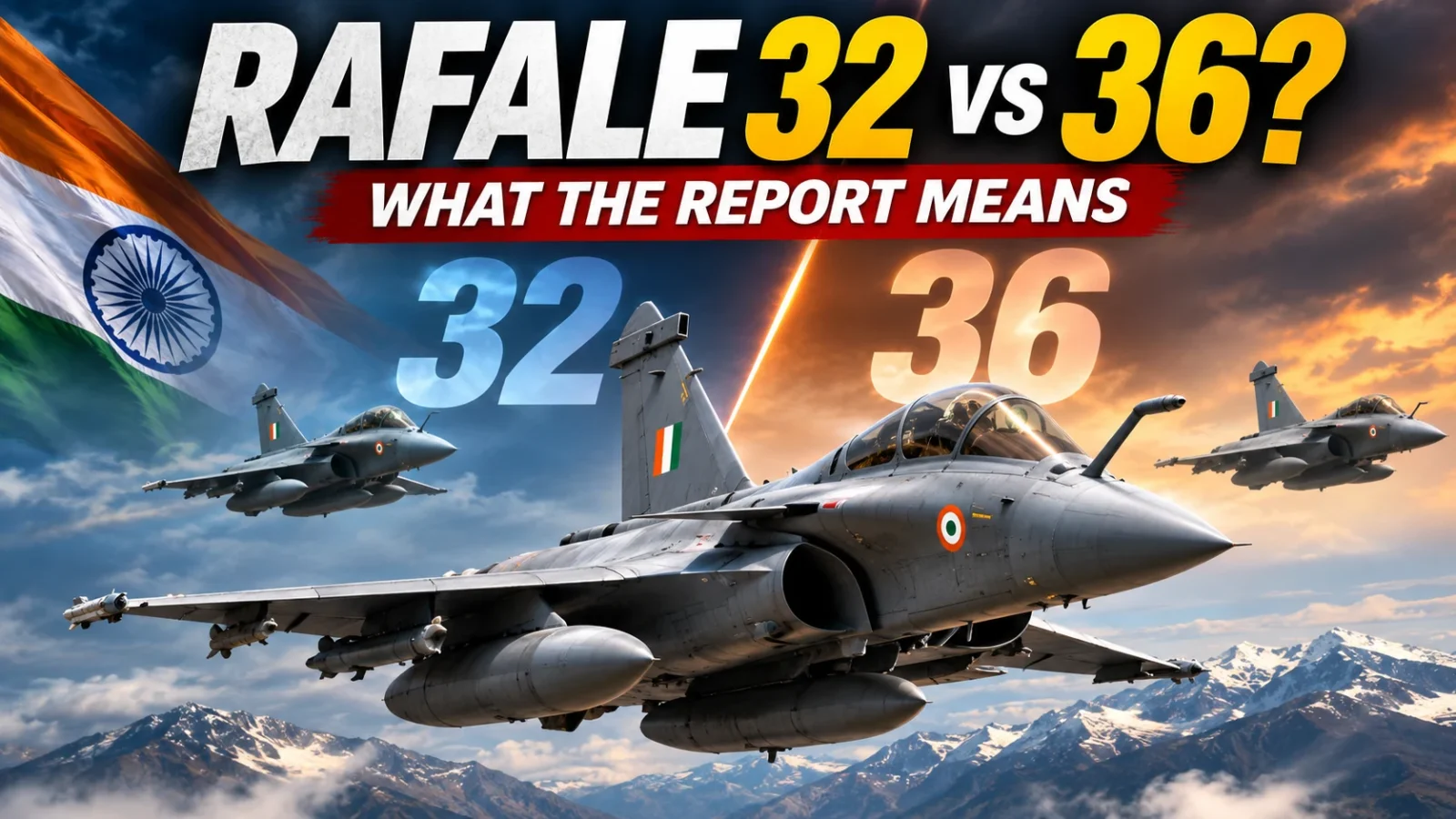
The phrase India Rafale 32 vs 36 is trending after coverage of FlightGlobal’s World Air Forces 2027 directory reported a figure of 32 active Rafale fighters for the Indian Air Force, compared with 36 aircraft originally ordered. The difference has revived online arguments about losses, readiness and Operation Sindoor. But a directory’s ‘active inventory’ count is not a published crash investigation or evidence that four aircraft were destroyed. This explainer separates the figure printed in a commercial directory, the original order, and claims that require much stronger proof. Updated: 20 November 2026.
What triggered the India Rafale 32 vs 36 controversy?
FlightGlobal’s World Air Forces directory is an annual reference publication summarising global military aircraft inventories. In the 2027 edition, reporting says the Rafale line for the Indian Air Force lists 32 active jets. India bought 36 Rafales under the 2016 intergovernmental agreement. The four-aircraft gap immediately became a political and military talking point, particularly because previous international coverage had speculated about losses during cross-border tensions.
The headline needs careful framing: FlightGlobal is a respected aviation publication, but its tables are compiled estimates and classifications. A public table does not show the full underlying fleet records or maintenance logs of a national air force. Reporting a difference between counts is reasonable. Declaring the cause of that difference, without source documentation or a confirmed military statement, is a separate claim not proved by the number alone.
What does the 2027 World Air Forces directory say?
The 2027 directory reportedly lists 32 active Indian Rafales. A previous edition published in late 2025 showed 35, according to Scroll’s comparison. These published entries are relevant because readers can follow how a reference table has changed over time. But differences across editions may reflect changing sources, counting assumptions or reclassification as well as real fleet changes. Researchers should read the methodology and footnotes rather than comparing two screenshots without context.
The publication title ‘2027’ is an edition label, not proof that its data measures a particular hour in calendar year 2027. Such reference publications may be researched and published in the preceding year. A newly published table does not automatically represent a live operational dashboard. If an aircraft is undergoing deep maintenance, its classification may depend on the compiler’s definition of active. The independent directory is not the IAF’s confidential readiness ledger.
Why 36 Rafales? India’s original procurement explained
India contracted for 36 Rafale fighter aircraft from France in 2016. The acquisition was intended to strengthen the Indian Air Force’s combat capability, with aircraft delivered over subsequent years and assigned to operational squadrons. The original number is the procurement quantity. It is an important comparison point, but procurement, delivery, physical existence, assignment and current operational readiness are not interchangeable measures.
For example, if a fleet has 36 aircraft originally ordered, a third-party ‘active’ count can be lower for reasons unrelated to permanent loss. Even if a genuine loss has occurred, the directory difference alone does not identify which airframes, dates or causes are involved. Avoid describing the ordered number as ’36 jets flying today’ without an official and dated fleet status. A precise headline should say 36 ordered and 32 listed as active by the source.
Does 32 active mean India lost four jets?
No such conclusion follows logically from this one entry. An active inventory estimate is not the same as an incident report. To establish four combat losses, a reliable investigation would need identifiable aircraft or corroborated records of their loss, the date and circumstances, and a clear connection to the total fleet. A difference in a summary table provides none of those details. It is therefore wrong to convert ’36 ordered, 32 listed active’ into an independently established claim that four aircraft were shot down.
Equally, a disputed count should not be waved away as proof that every aircraft is serviceable. The measured question is what the compiler counted and what a reliable official source can confirm. The publication reported the number; the cause of any gap remains unverified in the information reviewed. Making that uncertainty explicit protects readers from politically charged misinformation, particularly when an online post uses an image of smoke or an unrelated aircraft accident as supposed proof.
What has India said about the FlightGlobal number?
Indian defence-focused reporting on 20 November described Indian officials questioning the lower figure and disputing suggestions that the directory represented a verified record of losses. Those responses are part of the public debate and should be attributed to the reporting organisations rather than presented as a full inventory document. The IAF has not provided a complete publicly accessible airframe-by-airframe list for every aircraft in the directory’s table in the sources checked for this article.
An official clarification, if published, would be significant evidence. It would still need to be read precisely: words like ‘fleet strength’, ‘active’, ‘serviceable’ and ‘combat losses’ are not automatically synonymous. Statements about ongoing readiness can be limited by security requirements. An article should quote only what a statement actually says and not infer a classified deployment detail from a politician’s reaction.
Active, serviceable, in maintenance and ordered: key differences
An ‘ordered’ aircraft is part of a purchase contract. A ‘delivered’ aircraft has been transferred to the buyer under the contract. An ‘in service’ aircraft belongs to a military’s operational inventory; an ‘active’ classification can be a publisher-defined subset. ‘Serviceable’ describes whether the aircraft is currently ready to perform its intended tasks, and maintenance can temporarily reduce immediate availability. Different aviation directories do not necessarily use every term the same way.
Imagine an airline purchasing forty planes but temporarily placing several into extended maintenance: a daily usable count would differ from the total owned fleet. Military aviation is more complex, but the analogy shows why two figures need compatible definitions before subtracting them. Readers should ask who supplied each figure, which date it refers to, and whether the same category was used in both years. Without those answers, a neat subtraction can be a misleading conclusion.
World Air Forces 2027 vs 2026: why historical comparisons matter
Scroll notes that the previous directory listed 35 active Rafales, whereas the latest entry says 32. The movement from 35 to 32 is different from the original procurement total of 36 to 32. Both comparisons may appear in social media graphics, and neither alone establishes why the numbers differ. The first is comparing two published annual estimates; the second compares a contract quantity with a reported active inventory figure.
A careful analyst would examine FlightGlobal’s explanatory notes, changes in sourcing, and any correction notices. In other datasets, aircraft transferred between categories, modifications to inventory methodology, and delayed updates can affect totals. There is no basis to claim any specific one of those happened to the Rafales without evidence. These are possibilities explaining why subtraction is insufficient—not assertions about what happened.
What does Operation Sindoor have to do with the search trend?
The phrase Rafale aircraft count gained heightened attention after conflict-related claims and counterclaims involving India and Pakistan. Some commentators are trying to connect the directory figure with those events. But reports about a military clash and a line in an annual inventory table are independent evidence streams. To demonstrate a specific aircraft was lost in an operation, investigators would need reliable and attributable documentation, not merely a difference in two summary numbers.
This distinction is particularly important because social media can circulate edited videos, images from past accidents or AI-generated fighter scenes as current footage. The visual attached to this article is AI-generated editorial concept art, not authentic evidence of any aircraft loss, sortie or military incident. Its purpose is to explain the 32 versus 36 comparison, not reconstruct an event.
What would settle the Rafale count question?
The strongest public evidence would be a dated statement or official document from the Indian Air Force or Ministry of Defence specifying the inventory category, the relevant date and the reason for any change, or a documented correction by FlightGlobal. In the absence of that, it is appropriate to report what the directory claims and separately note any response. Independent experts can provide context, but a confident conclusion about exact losses should not exceed their evidence.
Useful future searches include India Rafale active vs ordered, FlightGlobal World Air Forces 2027 India table, Rafale 32 count official response, Indian Air Force squadron strength and Rafale fleet maintenance meaning. These are emerging informational search angles rather than guaranteed trending queries. The article is a dated explainer about sources and definitions, not a live operational tracker.
Frequently Asked Questions
Did FlightGlobal list 32 Indian Rafales?
According to current reporting on its World Air Forces 2027 directory, yes, under its active-inventory count.
How many Rafale fighters did India order?
India’s 2016 agreement covered 36 fighters.
Does 32 mean four were shot down?
No. A directory count difference alone does not establish losses or their cause.
What did the earlier directory report?
Reporting cited by Scroll says the previous edition listed 35 active Rafales.
Is FlightGlobal an official Indian Air Force source?
No. It is an independent aviation publication compiling reference data.
What does active aircraft mean?
It is an inventory classification whose scope should be checked against the compiler’s methodology.
Is the featured image real battle footage?
No. It is AI-generated illustrative art, not evidence of a combat incident.
Sources: Scroll.in, 20 November 2026 on FlightGlobal Rafale count · FlightGlobal World Air Forces directory – publications · Independent defence analysis and Indian response
Image disclosure: AI-generated illustrative image, not authentic evidence of a military incident. No informational poster added.






















Share Your Opinion
Comments are closed on this post.