What is Rainwater and Why Consider Drinking It?
Raindrops falling from the sky evoke a sense of purity and refreshment. For many, especially in childhood, rainwater is perceived as nature’s purest gift, directly drinkable. The idea of collecting and drinking water straight from the heavens, perhaps in a pristine forest setting, is appealing. However, in our increasingly polluted urban and semi-urban environments, the assumption of purity is often misguided. As pollution becomes a significant global concern, the safety of drinking rainwater warrants careful consideration. This article delves into five crucial scientific aspects you need to understand before considering rainwater for consumption, empowering you to make informed decisions about your health and your family’s well-being.
The Water Cycle vs. Reality: Is Rainwater Truly Pure?
The water cycle teaches us that water evaporates, rises, condenses, and falls back as rain, suggesting a natural purification process. In theory, this is true. However, the reality is more complex. As raindrops descend, they interact with numerous elements:
- Atmospheric Pollutants: Airborne particles like dust, pollen, smoke, industrial emissions (sulfur dioxide, nitrogen oxides), and vehicle exhaust dissolve into rainwater.
- Microorganisms: Bacteria, viruses, and fungal spores present in the air can be carried down by raindrops.
- Acid Rain: In industrial areas, pollutant gases can combine with water to form acid rain, which has a lower pH level and can be harmful to health.
Consequently, rainwater, which may appear clean, can be significantly more contaminated than we assume.
Potential Benefits of Rainwater (with Caveats)
Under specific, controlled circumstances, rainwater might offer certain advantages, but these must always be weighed against the inherent risks:
- Soft Water: Rainwater is naturally soft due to its low mineral content. This can be beneficial for hair and skin and prevents scale buildup in appliances.
- Natural and Renewable Source: It’s a sustainable water source, particularly valuable in water-scarce regions, though primarily for non-potable uses.
- Initially Chemical-Free: If collected in a pollution-free environment, it lacks chemicals like chlorine often found in tap water.
It’s crucial to remember that these potential benefits often pale in comparison to the risks associated with drinking it directly.
Serious Risks and Health Impacts of Drinking Rainwater
Consuming untreated rainwater can lead to several severe health issues:
Microbial Contamination
Roofs, gutters, pipes, and storage tanks can accumulate bird droppings, dead insects, leaves, and dust. Rainwater washes these contaminants, potentially introducing bacteria (like E. coli), viruses, and parasites (such as Giardia and Cryptosporidium) into the water. Ingesting such water can cause gastrointestinal infections, diarrhea, vomiting, and stomach pain, posing a significant danger to children and individuals with weakened immune systems.
Chemical Pollutants
Industrial areas, agricultural lands, and urban environments release various harmful chemicals into the air. These can include heavy metals (lead, cadmium, mercury), pesticides, herbicides, and other industrial compounds. Raindrops can dissolve these chemicals, bringing them down with the rain. Long-term consumption of such contaminated water can damage the kidneys, liver, and nervous system, and increase the risk of serious diseases like cancer.
Acid Rain
Excessive atmospheric sulfur dioxide and nitrogen oxides lead to acid rain. This water has a low pH and can leach harmful elements from metal pipes and containers. Continuous consumption of acidic water may damage tooth enamel and negatively impact internal organs.
Lack of Essential Minerals
Similar to distilled water, rainwater lacks essential minerals like calcium, magnesium, and potassium. These minerals are vital for bodily functions, including maintaining electrolyte balance. Prolonged consumption of only rainwater could lead to mineral imbalances, causing fatigue, muscle cramps, and potentially heart-related issues.
5 Essential Considerations Before Drinking Rainwater
If you are contemplating using rainwater for drinking, pay close attention to these scientific and practical points:
1. Understand Your Local Pollution Levels
- Urban vs. Rural: Air pollution is significantly higher in urban and industrial zones. Rainwater collected here is likely much more contaminated than in rural or less populated areas.
- Check Air Quality Index (AQI): Regularly monitor the AQI for your city or region. A high AQI indicates more airborne pollutants, leading to more contaminated rainwater.
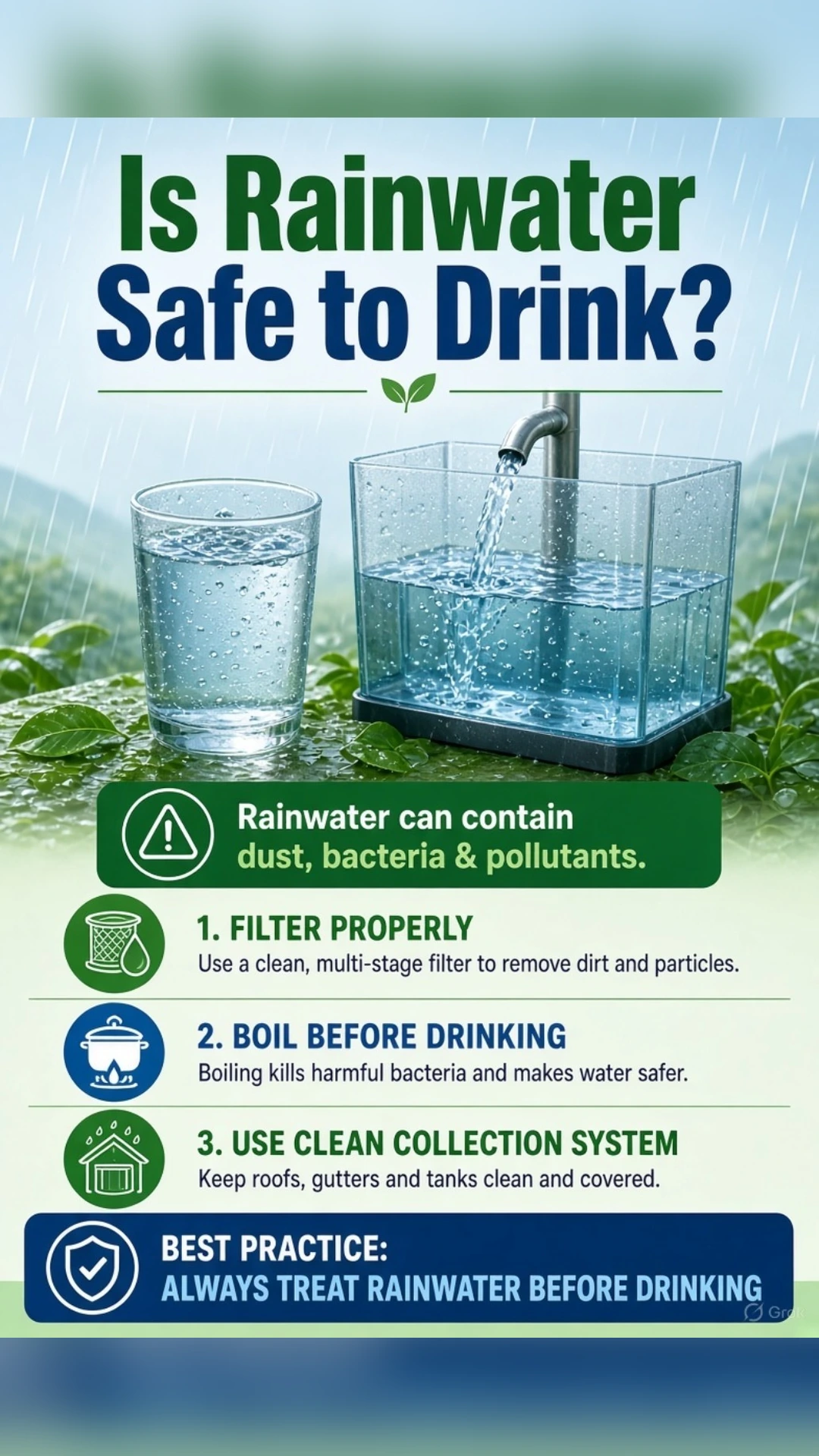
- Discard the First Flush: Never collect the first 10-15 minutes of rainfall (the ‘first flush’). This initial runoff washes away accumulated dust, dirt, bird droppings, and other contaminants from surfaces.
2. Implement Proper Water Collection Methods
- Clean Collection Surface: Ensure the surface from which you collect water (e.g., your roof) is thoroughly clean, free from leaves, twigs, dust, or droppings. Regular roof cleaning is essential.
- Food-Grade Containers: Use food-grade plastic or stainless steel tanks/containers for storage. Opt for containers that seal completely to prevent entry by insects, rodents, or other animals.
- Regular Maintenance: Clean and maintain your entire collection system (roof, pipes, filters, tanks) regularly to prevent the buildup of microorganisms and debris.
- First Flush Diverter: Install a system that automatically diverts the initial dirty runoff, allowing only cleaner water into the storage tank.
3. Purification is Non-Negotiable
- Boiling: This is the most effective and affordable method. Boiling water for at least 1 minute (3 minutes at higher altitudes) kills most bacteria, viruses, and parasites.
- Filtration: Use multi-stage water filters (e.g., carbon filters, sediment filters, Ultrafiltration – UF). These help remove suspended particles, some chemicals, and microorganisms. Reverse Osmosis (RO) systems are highly effective but also remove essential minerals.
- UV Purification: Ultraviolet (UV) purifiers inactivate the DNA of microorganisms, preventing them from reproducing and causing illness.
- Chemical Treatment: In emergencies, chlorine tablets or bleach can be used, but this is a temporary solution and not recommended for regular use.
4. Regularly Test Your Water
If you plan to regularly drink rainwater, it is crucial to have it tested for chemical and microbial contaminants at a local laboratory. This helps detect harmful bacteria (like E. coli), heavy metals, and other chemicals. Ensure water testing is done at least once or twice a year, or after any significant changes (like installing a new roof).
5. Address Mineral Deficiencies
As mentioned, rainwater lacks essential minerals. Long-term consumption solely of rainwater can lead to mineral imbalances and electrolyte deficiencies. If you drink rainwater, ensure you obtain these vital minerals from other sources, such as a balanced diet or mineral-enriched water. You can also add mineral drops to your collected rainwater to supplement.
Safe Uses for Rainwater (Beyond Drinking)
Given the risks associated with drinking untreated rainwater, it has numerous safe and beneficial non-potable uses:
- Watering plants and gardens.
- Washing cars.
- Flushing toilets.
- Doing laundry.
- General house cleaning.
- Bathing or washing hands (if adequately filtered).
Conclusion: Prioritize Safety
Rainwater is a wonderful natural resource, but in today’s polluted world, drinking it directly is not advisable. If you consider using it for drinking, extreme caution and adherence to the methods outlined above are essential. Without proper collection, purification, and regular testing, rainwater can pose serious health risks. Always prioritize the safety of yourself and your family.
Frequently Asked Questions About Drinking Rainwater
Q1: Can I drink rainwater collected from my roof?
It is generally not recommended to drink rainwater collected directly from your roof without proper treatment. Roofs can accumulate dust, debris, bird droppings, and other contaminants that can make the water unsafe for consumption. Always purify rainwater before drinking.
Q2: How can I make rainwater safe to drink?
To make rainwater safe to drink, you must purify it. The most effective methods include boiling the water for at least one minute, using a multi-stage water filter (like RO or UV purifiers), or a combination of filtration and boiling.
Q3: What are the risks of drinking untreated rainwater?
Untreated rainwater can contain harmful bacteria, viruses, parasites, chemical pollutants, and heavy metals. Drinking it can lead to gastrointestinal illnesses, infections, and long-term health problems affecting organs like the kidneys and liver.
Q4: Is rainwater acidic?
Rainwater can become acidic if it absorbs pollutants like sulfur dioxide and nitrogen oxides from the atmosphere, leading to acid rain. While normal rainwater is slightly acidic (pH around 5.6), acid rain has a lower pH, which can be harmful.
Q5: What minerals are missing in rainwater?
Rainwater is naturally low in essential minerals such as calcium, magnesium, and potassium, similar to distilled water. These minerals are important for various bodily functions.