
Why Do You Wake Up Tired? 10 Major Reasons and How to Fix Them
Do you find yourself dreading the alarm clock, or waking up after 8 hours of sleep feeling like you have no energy, a heavy head, and a grumpy mood? If so, you’re not alone. Millions experience this ‘morning fatigue’ daily. Often, we blame insufficient sleep, but sometimes our own habits and lifestyle choices are slowly draining our energy overnight. This article delves into 10 common causes of morning tiredness that are often overlooked. By understanding and addressing these issues, you can make your mornings feel fresh and energetic again.
1. Excessive Blue Light Exposure

Most of us spend hours scrolling on smartphones, tablets, or laptops even after getting into bed. This is a major culprit. The ‘blue light’ emitted by these devices tricks your brain into thinking it’s still daytime. It suppresses the production of melatonin, the hormone essential for deep, restful sleep. As a result, you might fall asleep, but your brain doesn’t enter the ‘deep sleep’ mode properly, leading to poor sleep quality.
Solution: Keep digital screens away at least an hour before bed. Instead, read a book, listen to music, or talk with family.
2. The Snooze Button Addiction
That common refrain, “Just 5 more minutes…” is a daily deception. When you hit ‘snooze’ and fall back asleep, you initiate a new sleep cycle. However, when the alarm rings again 5-10 minutes later, you’re pulled out of this new cycle. This confuses your body and brain, leading to increased grogginess and sluggishness, a phenomenon known as ‘sleep inertia’.
Solution: Place your alarm clock across the room so you have to get up to turn it off. Once you’re up, leave your bed immediately.
3. Irregular Sleep Pattern
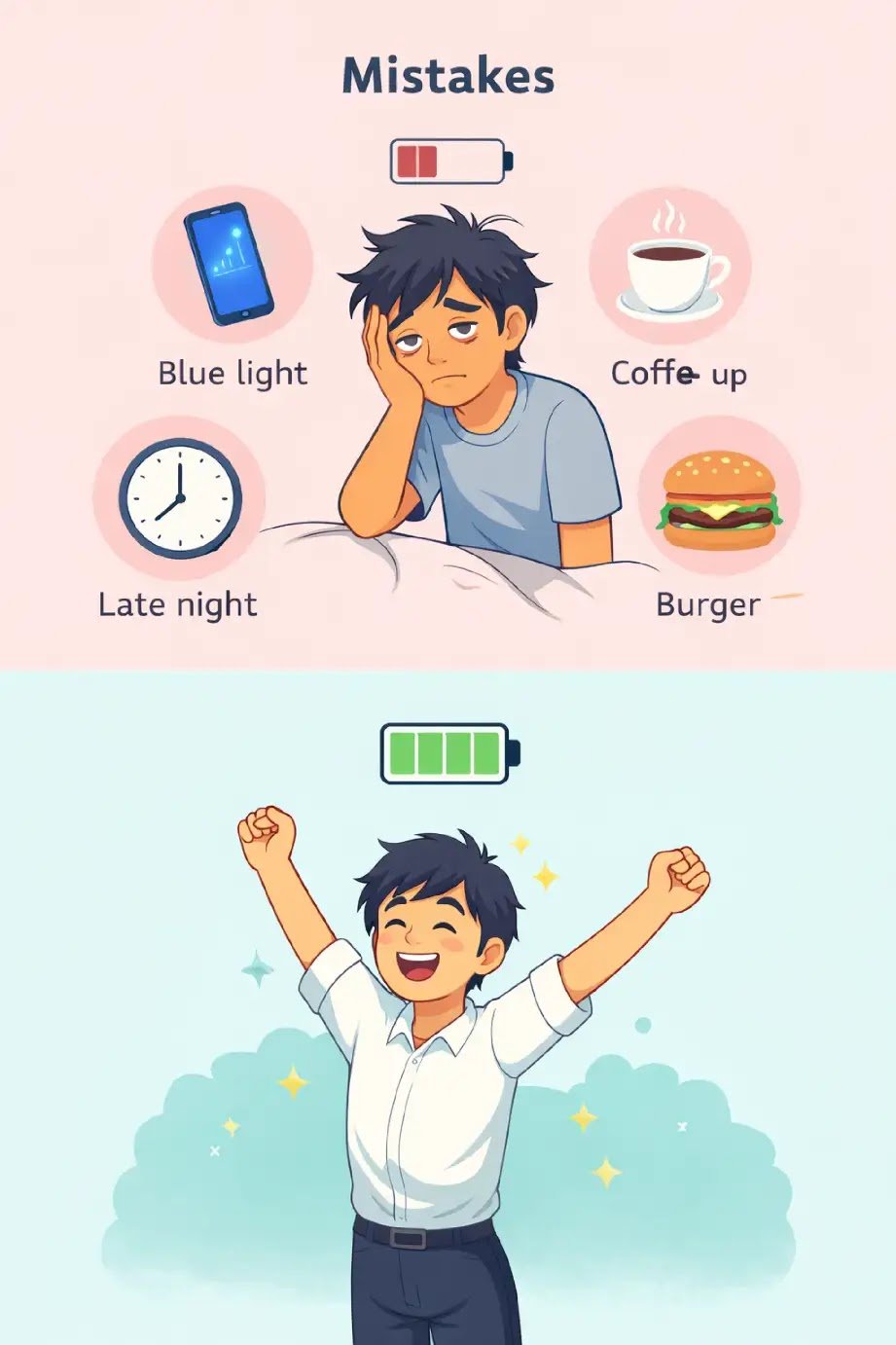
Staying up late on weekends and then trying to wake up early on weekdays disrupts your body’s internal clock, or circadian rhythm. When your sleep and wake times are constantly shifting, your body struggles to regulate melatonin production and energy levels, impacting sleep quality and causing morning fatigue.
Solution: Aim to go to bed and wake up around the same time every day, including weekends, to establish a consistent pattern.
4. Heavy Meals, Caffeine & Alcohol Before Bed
Eating heavy, spicy, or fatty meals late at night, or consuming coffee, tea, or alcohol before sleep can significantly harm your rest. Heavy meals require more digestive effort, keeping your system active. Caffeine is a stimulant, while alcohol, though it might make you drowsy, disrupts deep sleep stages and can cause nighttime awakenings.
Solution: Have a light dinner at least 2-3 hours before bedtime. Avoid caffeine after 4 PM and alcohol 3-4 hours before sleep.
5. Inadequate Hydration
Not drinking enough water throughout the day or going to bed dehydrated can contribute to morning tiredness. Our bodies lose water overnight through sweat and respiration. If you’re already dehydrated, you might wake up with a headache, sluggishness, and fatigue.
Solution: Drink sufficient water during the day. Avoid excessive water right before bed to prevent nighttime bathroom trips, but have a glass of water upon waking.
6. Poor Sleep Environment
The condition of your bedroom plays a crucial role in sleep quality. Excessive light, noise, a room that’s too hot or too cold, or an uncomfortable mattress and pillow can prevent you from entering deep sleep.
Solution: Keep your bedroom dark, quiet, and cool (around 18-20°C or 64-68°F). Invest in a comfortable mattress and pillows.
7. Lack of Physical Activity
If you’re not physically active, you might struggle to get good quality sleep at night. Regular exercise helps tire the body and promotes deeper sleep. A sedentary lifestyle can lead to lower energy levels throughout the day and poor sleep at night.
Solution: Engage in at least 30 minutes of moderate-intensity exercise daily. Avoid strenuous workouts right before bed, as they can be stimulating.
8. Stress and Anxiety
In today’s fast-paced world, stress and anxiety are major enemies of sleep. When you’re stressed, your mind remains active, making it difficult to fall asleep and reducing sleep quality. Racing thoughts overnight leave you feeling exhausted in the morning.
Solution: Practice meditation, deep breathing exercises, or yoga before bed. Write down your worries in a journal to clear your mind.
9. Lack of Morning Light Exposure
Not getting exposed to natural light soon after waking up can also affect your sleep-wake cycle. Morning sunlight signals your body to wake up and stop producing melatonin. If you always wake up in darkness, your body doesn’t receive this signal, leading to persistent grogginess.
Solution: Open your curtains immediately after waking up or spend a few minutes outdoors in the sunlight.
10. Certain Health Conditions
Sometimes, persistent morning fatigue can be a sign of an underlying health issue. Conditions like sleep apnea, anemia, thyroid problems, Vitamin D deficiency, depression, or chronic fatigue syndrome can cause severe morning tiredness.
Solution: If you continue to feel tired despite improving your habits, consult a doctor. They can provide a proper diagnosis and recommend appropriate treatment.
Adopt These Habits for Morning Freshness
Incorporating these habits can be an effective way to combat morning fatigue:
- Get 7-9 hours of quality sleep every night.
- Maintain a regular sleep and wake schedule.
- Avoid caffeine, alcohol, and heavy meals before bed.
- Create a sleep-conducive bedroom: dark, quiet, and cool.
- Exercise regularly during the day, but not right before sleep.
- Manage stress with meditation or yoga.
- Get exposed to natural light upon waking.
- Stay adequately hydrated throughout the day.
Conclusion
Feeling tired immediately after waking up is a common issue but shouldn’t be ignored. Small lifestyle habits significantly impact sleep quality. By identifying and making positive changes based on the reasons discussed, you can reclaim your mornings and fill them with energy and freshness. Remember, a good morning is the foundation of a good day. If fatigue persists despite these changes, seeking advice from a healthcare professional is crucial. Prioritize your sleep; it’s vital for your overall health and well-being.
FAQs
Q1: Why do I feel tired even after 8 hours of sleep?
This can be due to poor sleep quality caused by factors like blue light exposure, irregular sleep patterns, stress, or an unhealthy sleep environment, rather than just the duration of sleep.
Q2: What is sleep inertia?
Sleep inertia is the feeling of grogginess and disorientation experienced immediately after waking up, especially when awakened abruptly from a sleep cycle. It’s often exacerbated by hitting the snooze button.
Q3: How can I improve my morning energy levels?
Improve your morning energy by establishing a regular sleep schedule, getting morning sunlight exposure, staying hydrated, exercising regularly, and managing stress. Avoiding screens before bed and not hitting snooze are also key.
Q4: Can stress cause morning fatigue?
Yes, stress and anxiety can keep your mind racing, making it difficult to fall asleep and leading to fragmented, less restorative sleep, resulting in morning fatigue.
Q5: When should I see a doctor for morning tiredness?
You should consult a doctor if you experience persistent morning fatigue despite making lifestyle changes, or if you suspect an underlying health condition like sleep apnea, anemia, or thyroid issues.