A loud bang when falling asleep: start with the details
A loud bang when falling asleep can feel as if something has exploded nearby. You sit up, then find the house quiet. Exploding head syndrome is one possible explanation. Still, the timing and sound alone do not confirm it. A brief bang, a familiar voice and prolonged ringing should not all receive the same label.
Seek emergency help for a sudden extremely severe headache, fainting, new facial or body weakness, or trouble speaking. In India call 112; elsewhere use your local emergency number. Do not wait on the assumption that it is EHS. See NHS headache warning signs.
What is exploding head syndrome?
EHS is a sleep-related parasomnia involving a sudden perceived loud bang around falling asleep or waking, without an external sound. Diagnosed EHS is considered painless and benign. See Cleveland Clinic’s EHS information.
The dramatic name does not describe a physical explosion in the head. Learning the name can be reassuring, but it should not replace a clinician’s assessment of your actual symptoms.
Someone else not hearing the sound does not establish its cause: they may have been asleep or farther away. Timing, the nature of the noise and any associated symptoms provide more useful information.
A bang, a familiar voice and tinnitus are different descriptions
Brief words or voices while drifting off can be a hypnagogic sleep-related experience; similar experiences on waking are termed hypnopompic. A familiar voice is not automatically EHS. See Cleveland Clinic’s sleep-related hallucination guide.
Tinnitus may involve ringing, buzzing or hissing without an outside source, intermittently or persistently. Have regular or troublesome tinnitus assessed. See the NHS tinnitus guide.
Tell a clinician whether it was one brief crash, clear words or ringing that continued. These descriptions help explain the event; they are not a home test for choosing among diagnoses.
Is the brain misfiring? The cause remains uncertain
The precise mechanism of EHS is unknown. Altered activity during sleep–wake transitions is one proposed explanation. A proven “auditory cortex shutdown misfire” would be too definite a claim. See the StatPearls EHS review.
A large 2020 online study found associations between EHS and some poorer sleep measures. Association does not establish that every episode results only from stress or lost sleep, or that one routine will stop it for everyone.
FACT: “I heard a bang” describes an experience. It does not by itself confirm an external explosion, establish EHS or exclude other explanations.
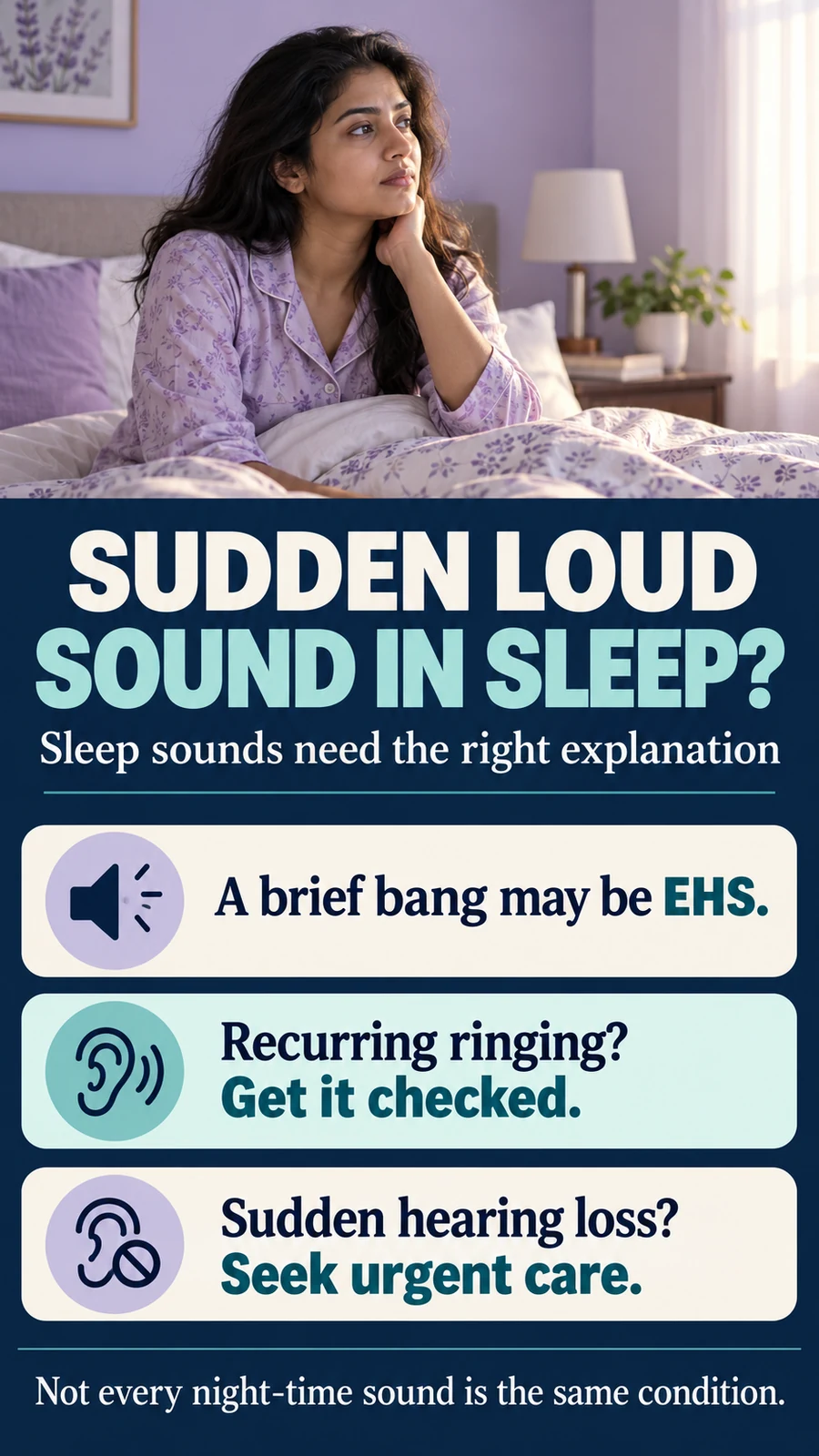
Advice: what to do safely that night
Use a gentle light and check for an ordinary explanation, such as a phone alert, outside noise or something that fell. Clear evidence of fire, damage or another actual hazard needs an appropriate safety response first.
If useful, ask someone at home calmly what they noticed. Staying awake on guard or repeatedly playing recordings to capture a noise is not an essential part of managing the problem. A short note can be enough to support a later conversation.
Do not assume a burst eardrum and put oil, unprescribed drops or objects into the ear. Do not test hearing with loud headphones. Avoid abruptly stopping prescribed medication or taking someone else’s sleeping tablet.
When to seek urgent assessment and what to tell the clinician
Sudden hearing loss in one or both ears needs urgent medical advice. Hearing changes with earache or discharge also warrant prompt assessment. See NHS hearing-loss guidance.
Tinnitus with sudden hearing loss, facial weakness, vertigo or following a head injury needs emergency assessment. Pulse-synchronous tinnitus warrants an urgent appointment. Do not assume EHS explains these signs. See NHS tinnitus warning signs.
Mention whether you were falling asleep, waking or fully awake; how long the sound lasted; and any pain, hearing changes or daytime episodes. Share changes in medication, dosage or sleep. Estimates are fine—say what you are unsure about.
Arrange an appointment for recurring events, fear of sleeping or interference with daytime functioning. A clinician can decide whether ear, sleep or other assessment is appropriate. You do not need to book an MRI or EEG for yourself simply because a syndrome name appears online.
Related reading: Hearing Your Name Called at Night: Sleep Experiences and What to Do
Related reading: A Sudden Jerk While Falling Asleep: Pulled Feet, Hypnic Jerks and Brain Zaps
Sleep habits, treatment and a useful follow-up plan
A regular wake time, a quiet wind-down period and sufficient opportunity for sleep are useful habits. Avoid relying on evening caffeine or alcohol to manage sleep. See the NHS insomnia guide.
Treat these as supportive habits rather than a guaranteed EHS cure. A clinician can help clarify the experience, address concerns and manage coexisting sleep difficulties. Medication and testing decisions should follow individual assessment.
Ask: What explanation fits my symptoms? Do I need a hearing assessment? What should I do if this happens again? Which symptoms mean I should return urgently? A clear follow-up plan is more useful than a frightening label alone.
Frequently asked questions and disclaimer
Does the head physically explode in EHS? No. The name refers to a perceived sound.
Is every familiar voice EHS? No. Hearing words and experiencing a sudden bang can describe different phenomena.
Is persistent ringing the same thing? Do not assume so. Have recurring ringing or hearing changes assessed.
Is stress the only cause? No single definite cause has been established. Share sleep and stress patterns without diagnosing yourself.
Can I ignore a severe headache? No. Sudden extreme headache or new weakness calls for emergency help.
Disclaimer: General health education only, not an individual diagnosis or treatment plan. Relevant sources are linked throughout. Seek timely medical care for new, severe or sudden symptoms.